The best trolling motors for bass fishing help you control boat position, work precise shoreline cover, and stay focused without constantly adjusting your main engine. The right choice depends on your boat size, fishing style, water type, and need for features such as GPS anchoring or sonar.
We selected 10 options ranging from straightforward transom-mounted motors to powerful, electronically controlled bow-mount models. Use the guide below to compare thrust, shaft length, controls, battery demands, and the features that matter most on the water.
Best 10 Trolling Motors for Bass Fishing Picks for 2026
Best GPS Imaging Motor
Terrova 80 lb. MEGA Down Imaging

- Built-in MEGA Down Imaging
- GPS Spot-Lock with Jog
- Digital Maximizer power management
Best For: Bass anglers seeking precise positioning and integrated sonar
Best Quiet Sonar-Ready Motor

- Quiet brushless motor
- GPS Anchor positioning
- HDI nosecone with upgrade options
Best For: Lowrance users fishing clear or shallow water
Best Budget Transom Motor

- 55 lb. 12-volt thrust
- Eight forward/reverse speeds
- LED battery indicator
Best For: Small boats needing simple, economical trolling
Best Remote-Control Value
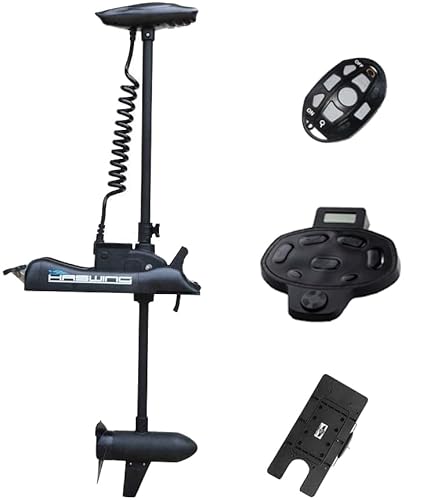
- 80 lb. thrust for boats up to 4,000 lb.
- Remote and wireless foot control
- Fresh- and saltwater compatible
Best For: Anglers wanting strong, flexible control without GPS
Saltwater Power Pick
- 62lb thrust for larger boats and demanding conditions
- Saltwater-ready, corrosion-resistant construction
- LED battery indicator and eight-speed control
Best For: Larger boats and mixed freshwater or saltwater use
Premium Quiet Control

- Ultra-quiet brushless motor with no electromagnetic interference
- 97/120lb configurable thrust for freshwater use
- Includes CHIRP sonar and DownScan Imaging
Best For: Lowrance-equipped freshwater anglers seeking stealth and power
Simple Freshwater Value
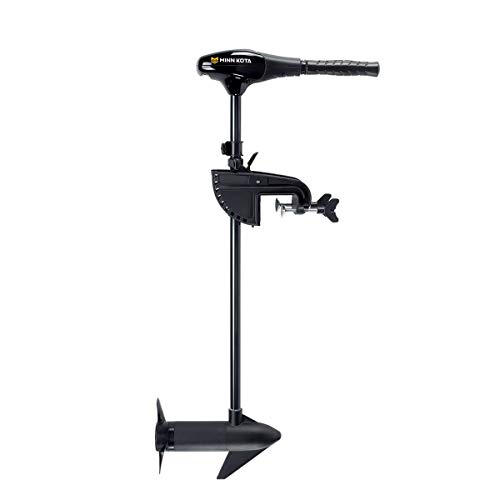
- 40lb thrust with a 12-volt transom mount
- Power Prop helps handle heavy vegetation
- Telescoping tiller and integrated battery meter
Best For: Smaller freshwater boats and straightforward tiller control
Best Quiet Variable-Speed Pick
Haswing Cayman 55 lb Bow-Mount Motor

- Quiet 55 lb thrust motor with variable speed
- Wireless remote reaches up to 164 feet
- Freshwater and saltwater capable
Best For: Anglers seeking quiet, flexible control
Best High-Thrust Sonar Pick
Minn Kota Fortrex 80 lb Trolling Motor
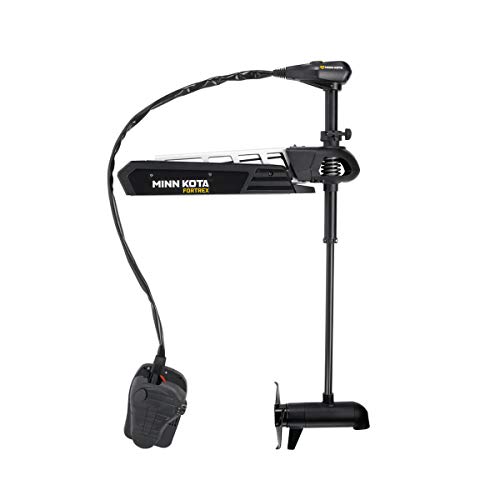
- 80 lb thrust with a 24-volt system
- Built-in Dual Spectrum CHIRP sonar
- Lift assist and responsive foot pedal
Best For: Anglers wanting thrust and integrated sonar
Best Simple Pick
Minn Kota Edge 45 lb Trolling Motor
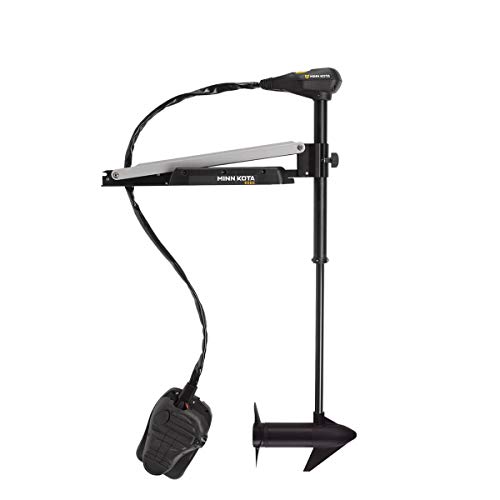
- 12-volt, 45 lb bow-mount motor
- Heel-toe cable-steer foot pedal
- Power Prop for heavy vegetation
Best For: Anglers wanting simple freshwater control
Best GPS Imaging Motor – Terrova 80 lb. MEGA Down Imaging
For anglers comparing trolling motors for bass fishing, the Minn Kota Terrova combines precise GPS positioning, integrated imaging, and strong 24-volt thrust. Its 60-inch shaft and bow-mount design suit larger freshwater fishing boats, while variable-speed power management helps extend battery life.
Best For: Bass anglers who want GPS-assisted positioning, underwater imaging, and all-day freshwater trolling performance.
Pros:
- Built-in MEGA Down Imaging shows fish, structure, and contour changes up to 200 feet below the boat.
- Spot-Lock, Jog, drift, follow, and dodge modes support precise boat control.
- Digital Maximizer can extend runtime up to five times on a single charge.
- Electric foot pedal offers heel/toe and left/right steering with integrated controls.
Cons:
- Requires a 24-volt setup and is likely more feature-rich than necessary for basic trolling.
- The 60-inch shaft may be excessive for smaller boats.
This is a strong premium choice when GPS anchoring and sonar visibility are central to your bass-fishing strategy. The Weedless Wedge 2 propeller and efficient power management also make it practical for extended days around vegetation.
Best Quiet Sonar-Ready Motor – Lowrance Recon 72-Inch
The Lowrance Recon is a capable option among trolling motors for bass fishing, especially for anglers who value quiet operation and hands-free control. Its brushless motor, GPS Anchor, joystick remote, and sonar-ready HDI nosecone are designed for controlled approaches in clear or shallow water.
Best For: Bass anglers using compatible Lowrance electronics who want quiet propulsion, GPS anchoring, and flexible sonar upgrades.
Pros:
- Quiet brushless motor helps reduce underwater disturbance near fish.
- FreeSteer joystick remote and wireless foot pedal support hands-free operation.
- GPS Anchor helps maintain position in changing wind or water conditions.
- HDI nosecone supports optional Lowrance imaging systems.
Cons:
- Advanced imaging options require compatible Lowrance systems and may be additional purchases.
- The 72-inch shaft may not suit smaller or shallow-draft boats.
Choose the Recon when low noise and integration with a Lowrance setup matter more than a simple, standalone motor. Its carbon-fiber-infused shaft and three-year warranty add appeal for long-term use.
Best Budget Transom Motor – Newport NV-Series 55 lb.
The Newport NV-Series offers a straightforward, budget-friendly approach to trolling motors for bass fishing. Its 12-volt transom mount, 55 pounds of thrust, eight speed settings, and 30-inch shaft make it a practical fit for smaller boats and anglers who do not need GPS features.
Best For: Small-boat anglers who want simple, quiet electric trolling with adjustable speed and a visible battery meter.
Pros:
- 55 pounds of thrust provides useful power from a 12-volt battery.
- Eight speeds include five forward and three reverse settings.
- LED battery indicator helps monitor remaining charge.
- Transom angle, height, and direction can be adjusted and locked.
Cons:
- Battery is not included and a 50Ah deep-cycle battery is recommended.
- Transom mounting is less suited to anglers specifically seeking bow-mounted control.
- Top speed is about 4 mph and varies with boat and water conditions.
This motor is best when dependable basic propulsion matters more than automated positioning or sonar integration. The 12-volt requirement can also simplify battery planning for smaller fishing boats.
Best Remote-Control Value – Haswing Cayman 80 lb.
The Haswing Cayman is a versatile choice among trolling motors for bass fishing when you want substantial thrust, wireless controls, and fresh- and saltwater capability without built-in GPS. Its 24-volt, 80-pound motor supports boats up to 4,000 pounds and includes both a remote and wireless foot control.
Best For: Anglers who want strong bow-mount performance, remote operation, and quick-release convenience in fresh or salt water.
Pros:
- 80 pounds of thrust is rated for boats up to 4,000 pounds.
- Wireless remote works from up to 180 feet, while the foot control supports hands-free steering.
- Variable speed can reduce power consumption and improve control.
- Quick-release bracket and stow/deploy pedal simplify handling and storage.
Cons:
- It does not include GPS or Spot-Lock; cruise control maintains speed, not position.
- Manual direction corrections may be needed in wind or current.
- Accessory warranties are limited to three months.
The Cayman is a good middle ground for anglers who want remote and foot-control flexibility without paying for integrated GPS features. Its corrosion-resistant design and dual-water suitability broaden its use beyond freshwater bass trips.
Saltwater Power Pick – Newport NV-Series 62LB
For anglers comparing trolling motors for bass fishing, the Newport NV-Series offers substantial 62-pound thrust in a 12-volt transom-mount design. Its saltwater-ready construction, large three-blade propeller, and eight-speed controls make it suited to boats that need extra control in wind, current, or heavier loads.
Best For: Larger boats and anglers who fish in freshwater or saltwater and want strong transom-mounted control.
Pros:
- 62 pounds of thrust helps manage bigger boats, wind, and current.
- Corrosion-resistant construction is designed for saltwater use.
- LED battery indicator helps monitor remaining power.
- Includes a 60A manual-reset circuit breaker and carries a two-year warranty.
Cons:
- Transom mounting may be less convenient than a bow-mount setup for bass-boat positioning.
- The 23-pound motor and 12-volt requirement may be more than lightweight boats need.
The Newport is a practical choice when thrust and versatility matter more than compact size. Its battery indicator and responsive eight-speed control add useful confidence during longer outings.
Premium Quiet Control – Lowrance Ghost
The Lowrance Ghost stands out among trolling motors for bass fishing when stealth and integrated electronics are priorities. Its brushless motor is designed for ultra-quiet operation, while the included HDI nosecone transducer provides Lowrance CHIRP sonar and DownScan Imaging out of the box.
Best For: Freshwater bass anglers with compatible Lowrance electronics who want quiet bow-mounted operation and high thrust.
Pros:
- Brushless operation is designed to minimize noise and electromagnetic interference.
- Offers configurable 97/120-pound thrust for demanding freshwater applications.
- Includes an HDI nosecone transducer with CHIRP sonar and DownScan Imaging.
- Configurable foot pedal provides shortcut access to key functions.
Cons:
- Freshwater use only.
- Its 36-volt system requires a more substantial battery setup than 12-volt models.
- At 38.56 kg, it is a notably heavy motor to install or transport.
The Ghost is a feature-rich option for anglers building a serious freshwater setup. Its quiet brushless motor, sonar integration, and bow mount favor precise fish-finding and positioning over simple portability.
Simple Freshwater Value – Minn Kota Endura C2 40
Minn Kota Endura C2 Transom-Mount Electric Trolling Motor – 40 Lb. Thrust, 36 In. Shaft, Freshwater
Check Price On AmazonFor anglers seeking straightforward trolling motors for bass fishing, the Minn Kota Endura C2 combines 40 pounds of thrust with an easy-to-use transom mount. Its telescoping tiller, battery meter, multiple speed settings, and vegetation-ready Power Prop make it a practical freshwater choice for smaller boats.
Best For: Freshwater anglers with smaller boats who want simple tiller control and dependable performance around vegetation.
Pros:
- Telescoping tiller supports comfortable control during long fishing trips.
- Power Prop is designed to push through heavy vegetation.
- Five forward and three reverse speeds allow flexible positioning.
- Composite shaft resists flexing, warping, and UV damage.
Cons:
- Freshwater use only.
- Its 40-pound thrust is less suited to larger boats or strong wind and current.
- Transom mounting may provide less forward positioning control than a bow mount.
The Endura C2 keeps the feature set focused and approachable. It is a sensible fit for anglers who value easy tiller operation, vegetation performance, and uncomplicated 12-volt freshwater use.
Best Quiet Variable-Speed Pick – Haswing Cayman 55 lb Bow-Mount Motor
For anglers comparing trolling motors for bass fishing, the Haswing Cayman combines 55 pounds of thrust with variable speed, a 48-inch shaft, and bow mounting. Its quiet operation, wireless remote, and quick-release bracket make it a flexible choice for freshwater or saltwater boats up to 2,750 pounds.
Best For: Bass anglers who want quiet, variable-speed control and convenient wireless operation.
Pros:
- Variable speed enables smoother adjustments and can help conserve battery power.
- Wireless remote works from up to 164 feet and can be recharged by USB.
- Quick-release bracket, ergonomic handle, and single-hand or foot stow/deploy features simplify handling.
- Designed for freshwater and saltwater use with corrosion-resistant construction.
Cons:
- Cruise control is not spot lock and may require manual directional corrections.
- The 48-inch shaft may require careful depth adjustment for different boats.
The Cayman is a practical all-around option when quiet running and flexible control matter more than integrated sonar or automatic boat positioning. Its two-year motor warranty adds useful ownership support.
Best High-Thrust Sonar Pick – Minn Kota Fortrex 80 lb Trolling Motor
Among trolling motors for bass fishing, the Minn Kota Fortrex stands out for its 80 pounds of thrust, 24-volt system, and built-in Dual Spectrum CHIRP sonar. The 45-inch bow-mount motor also adds lift assist and a responsive foot pedal for anglers who fish long days and want more detailed underwater information.
Best For: Freshwater bass anglers who prioritize high thrust, integrated sonar, and foot-pedal control.
Pros:
- 80 lb thrust provides strong propulsion for larger or heavier fishing boats.
- Built-in Dual Spectrum CHIRP sonar displays fish, structure, and bottom contours.
- Lift-assist design reduces stow and deploy effort.
- Digital Maximizer variable-speed operation can extend run time up to five times on one charge.
Cons:
- Requires a 24-volt setup rather than a simpler 12-volt system.
- The included control is a corded foot pedal, so it lacks wireless operation.
- Its feature set may be more than needed for anglers who do not use sonar.
The Fortrex is the strongest fit here for anglers who want substantial thrust and sonar in one bow-mount platform. Its counter-tension lift assist and quiet design help make a powerful motor easier to manage on the water.
Best Simple Pick – Minn Kota Edge 45 lb Trolling Motor
The Minn Kota Edge is a straightforward choice for trolling motors for bass fishing, pairing 45 pounds of thrust with a 36-inch shaft and a 12-volt setup. Its cable-steer heel-toe pedal, five speed settings, and vegetation-cutting Power Prop focus on direct, dependable control.
Best For: Freshwater bass anglers who want a simple 12-volt bow-mount motor with foot-pedal control.
Pros:
- Heel-toe cable-steer pedal provides speed, momentary, and constant-on/off controls.
- Five speed settings make basic trolling-speed adjustments easy.
- Power Prop is designed to deliver extra thrust through heavy vegetation.
- Latch and door bracket supports secure stowing and easy removal.
Cons:
- It offers fixed five-speed control rather than variable speed.
- The 45 lb thrust rating is less powerful than the other motors in this lineup.
- It is specified for freshwater use and does not include wireless control or sonar.
The Edge is a sensible pick for anglers who value uncomplicated foot-pedal operation over advanced electronics. Its 36-inch shaft and 12-volt design can suit smaller freshwater fishing setups, while the Power Prop helps in thick cover.
How We Picked the Best Trolling Motors for Bass Fishing
We focused on the specifications that directly affect bass-fishing performance: thrust, shaft length, mounting position, control method, power system, freshwater or saltwater suitability, and available navigation or sonar features. The lineup includes choices for small boats, kayaks and jon boats, as well as larger bass boats that need stronger bow-mounted motors.
Because no single motor is ideal for every angler, we included both feature-rich systems and simpler, lower-cost models. Duplicate product listings were treated as one option, and recommendations are based on intended use rather than price alone.
Quick Comparison
| Best For | What to Look For |
|---|---|
| Small boats and light fishing rigs | 40–55 lb thrust, 12V power, compact transom or bow mount |
| Large bass boats | 80 lb or more, an appropriate shaft length, and a 24V or 36V battery system |
| Hands-free boat positioning | GPS anchoring, route control, or a wireless remote |
| Quiet presentations | Low-noise motor operation and smooth variable-speed control |
| Structure and depth changes | Integrated sonar or a compatible transducer |
Key Buying Factors for Trolling Motors for Bass Fishing
Thrust and Voltage
Choose enough thrust to control the boat in wind, current, and vegetation. A common starting point is about 2 lb of thrust per 100 lb of fully loaded boat weight, but heavier boats and rougher conditions benefit from additional reserve. Higher-thrust motors often require 24V or 36V systems, while compact 12V models are easier to install and maintain.
Shaft Length and Mounting Position
A bow motor needs enough shaft to keep the propeller submerged when the bow rises in waves. Measure from the mounting surface to the waterline, then allow extra clearance for changing conditions. Transom motors are often simpler for small boats, but bow mounts usually provide better control for casting and holding a productive position.
Controls, GPS, and Sonar
Foot pedals are useful when you want both hands available for casting. Remotes offer flexible positioning, while GPS features such as electronic anchoring and route recording can make boat control more consistent. Integrated sonar or a compatible nosecone is valuable when you want the trolling motor to support structure-finding and depth awareness.
Battery and Durability
Confirm the motor’s voltage before buying batteries, chargers, and wiring. Variable-speed models generally offer finer control and can be more efficient than fixed-speed designs. For saltwater, choose a motor specifically rated for saltwater use; freshwater-only models should not be treated as interchangeable.
Who Should Buy Which Trolling Motors for Bass Fishing?
- Choose a compact transom model if you fish from a small jon boat, skiff, or lightweight setup and want uncomplicated controls.
- Choose a 45–55 lb bow mount for smaller bass boats and anglers who want improved casting control without a large battery upgrade.
- Choose an 80 lb-class motor for larger freshwater boats, heavy vegetation, or frequent windy conditions.
- Choose a GPS-equipped premium motor if precise positioning, electronic anchoring, wireless control, or repeatable routes are central to your fishing style.
- Choose a sonar-ready or sonar-integrated model if locating cover and tracking depth from the bow is a priority.
Before ordering, verify shaft length, mounting space, battery voltage, propeller clearance, and whether the included controls and transducer match your boat’s setup.