The right marine radio can make routine boat trips easier and emergency communication far more dependable. This roundup compares 10 handheld and fixed-mount VHF models selected for different boating needs, from compact backup radios to higher-power helm installations.
We focus on practical features that matter on the water, including transmit power, waterproofing, floating design, channel coverage, weather alerts, battery life, and installation requirements.
Best 10 Marine Radios Picks for 2026
Top Floating Pick
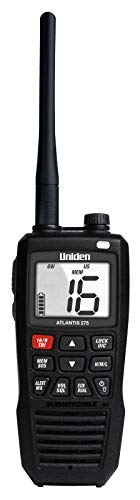
- IPX8 floating and submersible design
- Selectable output up to 6 watts
- Large dual-color display with NOAA alerts
Best For: Boaters needing a durable, high-power handheld
Easy-Use Handheld
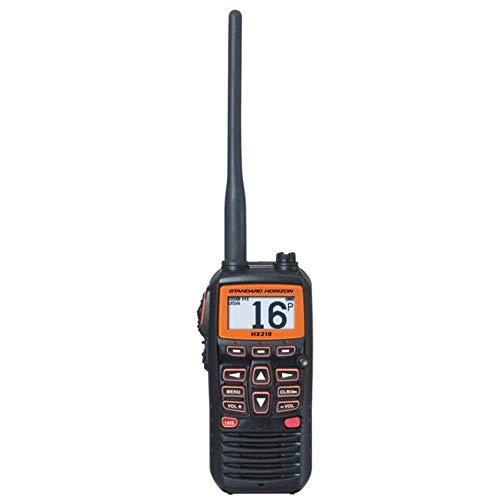
- Floating IPX7 waterproof construction
- Selectable output up to 6 watts
- Large display with FM and weather reception
Best For: Recreational boaters wanting simple controls
Fixed-Mount Safety Choice

- 25-watt fixed-mount VHF radio
- Class D DSC distress and position functions
- Triple watch and SAME weather alerts
Best For: Helm installations requiring DSC safety features
Noise-Canceling Value Pick

- One-button AI noise cancellation
- IP67 floating design with warning light
- Up to 10 hours of stated operation
Best For: Crews working around engine and wave noise
Rugged Fixed-Mount Choice
Uniden UM435BK VHF Marine Radio

- IPX8 completely submersible design
- USA, international, and Canadian channel support
- 1-watt/25-watt transmission with DSC
Best For: Permanent boat installations needing broad channel coverage
Lightweight Floating Pick

- Floats and flashes when dropped
- Lightweight 7.8-ounce handheld design
- USB-C charging and up to 11-hour battery life
Best For: Kayaking, recreational boating, and portable use
Feature-Rich Handheld
Cobra BlueBound 350 VHF Marine Radio

- Switchable 1/3/6-watt transmission power
- Floating IPX7 waterproof construction
- Tri-Watch and NOAA weather alerts
Best For: Handheld users wanting adjustable power and safety features
Best Fixed-Mount Pick
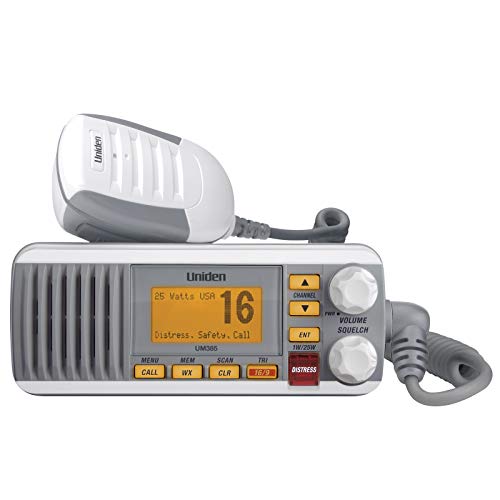
- 25-watt fixed-mount VHF design
- Class D DSC with distress button
- Triple Watch and NOAA weather alerts
Best For: Permanent helm installations with emergency features
Best Rugged Handheld
Uniden MHS75 Waterproof Marine Radio

- JIS8/IPX8 submersible construction
- Selectable 1, 2.5, or 5 watts
- Floating design with NOAA alerts
Best For: Portable use in wet and demanding conditions
Best Compact Floating Radio

- IPX8/JIS8 floating handheld design
- Dual-color display for day and night
- Includes rechargeable batteries and charging cable
Best For: Recreational boating and portable backup use
Top Floating Pick – Uniden Atlantis 275
The Uniden Atlantis 275 is a strong choice for boaters who want a capable handheld among today’s marine radios. Its floating IPX8 waterproof design, selectable 6-watt output, large dual-color display, and NOAA alerts make it practical for everyday communication and emergency readiness.
Best For: Boaters who want a compact, floating handheld with high transmit power and clear day-or-night display options.
Pros:
- IPX8-rated, submersible, floating design with water-clearing speaker
- Selectable 6W, 2.5W, or 1W transmit power
- Large paper-white daytime and red nighttime backlit display
- Built-in flashlight, emergency strobe, and NOAA weather alerts
Cons:
- Its listed dimensions and 1.5-pound weight make it less pocket-friendly than some compact handhelds
- It uses a built-in lithium battery pack rather than standard replaceable batteries
With broad USA, Canadian, and international channel coverage plus a three-year waterproof warranty, the Atlantis 275 is a well-rounded handheld for demanding conditions.
Easy-Use Handheld – Standard Horizon HX210
The Standard Horizon HX210 is a straightforward handheld option for boaters comparing marine radios with practical controls and safety features. It combines selectable 6-watt output, a floating IPX7 waterproof case, a large dot-matrix display, and access to marine, weather, and FM broadcast channels.
Best For: Recreational boaters who prioritize simple operation, a readable display, and included charging accessories.
Pros:
- Floating and submersible IPX7 waterproof construction
- Selectable 6W, 2.5W, or 1W output power
- Oversized full dot-matrix display and easy-to-operate menu
- Includes rapid charging cradle, AC/DC cables, and a water-activated emergency strobe
Cons:
- Its stated maximum talking range is 5 miles
- It lacks the higher IPX8 rating listed for some competing handhelds
The HX210 is a balanced choice when usability matters as much as core VHF performance, especially for users who appreciate an FM receiver and programmable function keys.
Fixed-Mount Safety Choice – Uniden UM385BK 25W Fixed VHF
The Uniden UM385BK takes a different approach from handheld marine radios, offering a 25-watt fixed-mount setup for a boat’s console. Its Class D DSC capability, distress button, position functions, triple watch, and SAME weather alerts support communication and emergency response from the helm.
Best For: Boat owners installing a 12-volt fixed radio with DSC functions and a wheel-mounted handheld microphone.
Pros:
- 25-watt fixed-mount VHF transceiver
- Full Class D DSC with distress button, position send, and position request
- Triple watch and USA, international, and Canadian channel coverage
- SAME weather alerts and rugged handheld microphone
Cons:
- IPX4 protection is intended for rain and splashing, not submersion
- Requires fixed installation and a 12-volt power source
- Does not offer the portability of handheld marine radios
The UM385BK is best viewed as a helm-centered communication and safety system rather than a grab-and-go radio. Its DSC features are particularly useful for boaters who want one-button distress capability.
Noise-Canceling Value Pick – Retevis RM21 Marine Radio
The Retevis RM21 is a practical handheld among marine radios for users who frequently deal with engine noise, wind, or waves. Its one-button AI noise cancellation, floating IP67 construction, selectable 5-watt output, 10-hour battery rating, and NOAA alerts give it a useful feature set for boating and other water-based activities.
Best For: Fishing crews, watermen, and boaters who need clearer voice transmission in noisy outdoor conditions.
Pros:
- One-button AI noise cancellation helps reduce engine, wind, and wave noise
- IP67 waterproof floating design with red water-activated warning light
- Selectable 5W, 3W, or 1W output and battery-saver mode
- 1800mAh battery provides up to 10 hours of operation, according to the supplied details
Cons:
- Its stated maximum talking range is 5 watts, with no mileage range specified
- Its 7-color display may be less specialized for nighttime use than radios with a dedicated red backlight
- Accessory warranty coverage is listed as one year, compared with two years for the radio body
The RM21 stands out for hands-on practicality: noise reduction, floating protection, channel 16 access, and a long-running rechargeable battery make it a useful choice for active crews.
Rugged Fixed-Mount Choice – Uniden UM435BK VHF Marine Radio
For boaters who want a dependable fixed installation, the Uniden UM435BK is one of the more capable marine radios in this roundup. It supports USA, international, and Canadian marine channels, including newer 4-digit and Canadian “B” channels, with selectable 1-watt or 25-watt transmission power.
Best For: Boat owners seeking a permanently mounted, highly water-resistant VHF radio with broad channel coverage and DSC functionality.
Pros:
- IPX8-rated, completely submersible design
- Supports USA, international, and Canadian marine channels
- Selectable 1-watt/25-watt transmit power
- Includes memory scan, triple/dual watch, and digital selective calling
Cons:
- Fixed-mount design is less portable than handheld marine radios
- At 3.9 pounds, it is considerably heavier than the handheld options here
The UM435BK stands out when installation, channel flexibility, and water protection matter more than portability. Its DSC features can also support position sending and requests when used with compatible equipment.
Lightweight Floating Pick – Icom M25EVO Marine VHF Radio
The Icom M25EVO is a compact handheld option for boaters, kayakers, and other users who prioritize easy carrying. This marine radio weighs 7.8 ounces, floats when dropped, and uses a flashing feature to make retrieval easier in the water.
Best For: Recreational boaters and paddlers who want a lightweight, floating handheld radio with USB-C charging.
Pros:
- IPX7 waterproof, floating design with flashing retrieval aid
- Lightweight 7.8-ounce ergonomic body
- USB-C charging supports convenient charging from various power sources
- Up to 11 hours of battery life
Cons:
- Five-mile stated maximum talking range is shorter than the fixed-mount model’s range
- Lists 15 channels, fewer than the Cobra handheld’s 98 channels
Choose the M25EVO for portability and straightforward water protection. Its floating design and long battery life make it particularly practical for activities where accidental drops and extended time away from shore power are possible.
Feature-Rich Handheld – Cobra BlueBound 350 VHF Marine Radio
The Cobra BlueBound 350 combines handheld portability with useful safety and visibility features. This marine radio floats, offers switchable 1-, 3-, and 6-watt output, and includes NOAA weather channels, Tri-Watch monitoring, and a selectable day/night display.
Best For: Boaters who want a versatile handheld radio with adjustable power, weather alerts, and easy-to-read controls.
Pros:
- IPX7 waterproof design with a high-visibility floating core
- Switchable 1/3/6-watt power for range and battery management
- Tri-Watch monitors Channels 9, 16, and a user-selected channel
- Includes 12 weather channels and NOAA emergency broadcasts
Cons:
- At 10.04 inches tall, it is less compact than the Icom handheld
- Its stated battery life is 12 hours, so extended trips may still require charging planning
The BlueBound 350 is a strong all-around handheld for users who want more control over transmitting power and added situational awareness. Its floating construction, weather access, and day/night display make it well suited to changing conditions on the water.
Best Fixed-Mount Pick – Uniden UM385 Marine VHF Radio
If you want a dependable fixed installation, the Uniden UM385 is one of the more fully equipped marine radios in this roundup. It combines 25-watt transmission, USA/International/Canadian channel coverage, NOAA weather alerts, Triple Watch, and Class D DSC in a compact console-mounted design.
Best For: Boat owners who want an installed VHF radio with emergency-calling and weather-alert features.
Pros:
- Class D DSC includes a distress button plus position send and request functions.
- Triple Watch monitors channels 16 and 9 while you listen to another channel.
- Supports USA, International, and Canadian marine channels, including newer channel formats.
- IPX4 water resistance helps protect against rain and splashing water.
Cons:
- Fixed-mount design is less portable than a handheld radio.
- IPX4 protects against splashes and rain but is not a submersible rating.
The UM385 is a practical choice when your priority is a permanent helm installation with robust communication and emergency features. Its included mounting hardware and rugged microphone make it ready for wheelhouse or console use.
Best Rugged Handheld – Uniden MHS75 Waterproof Marine Radio
The Uniden MHS75 is a rugged handheld option for boaters who need marine radios that can handle serious exposure to water. Its JIS8/IPX8 construction is submersible for up to 30 minutes at five feet, while selectable 1-, 2.5-, and 5-watt power lets you balance range and battery use.
Best For: Boaters who want a highly water-resistant handheld radio with adjustable transmit power.
Pros:
- JIS8/IPX8 waterproof construction is submersible for up to 30 minutes at five feet.
- Selectable 1-, 2.5-, and 5-watt transmission supports different communication ranges.
- Floats, helping make recovery easier if it goes overboard.
- Includes USA, International, and Canadian channels plus NOAA weather alerts.
Cons:
- Its listed battery life is up to 12 hours, so extended trips may require charging planning.
- As a handheld unit, it has less maximum power than the 25-watt fixed-mount model.
Choose the MHS75 when durability and portability matter more than a permanent installation. Triple Watch and instant access to channels 16 and 9 add useful safety-oriented monitoring while underway.
Best Compact Floating Radio – Uniden Atlantis 155
The Uniden Atlantis 155 is a compact choice for boaters comparing portable marine radios with strong water protection and an easy-to-read display. It floats, meets IPX8/JIS8 waterproof standards, includes a dual-color backlight, and comes with rechargeable batteries and a DC charging cable.
Best For: Recreational boaters who want a compact floating handheld with a large day-and-night display.
Pros:
- IPX8/JIS8 waterproof design floats and can clear water from the speaker after submersion.
- Large LCD uses a paper-white daytime backlight and red nighttime backlight.
- Receives USA, International, and Canadian marine channels plus NOAA weather alerts.
- Includes four rechargeable AAA batteries, a charging cable, and a belt clip.
Cons:
- Selectable transmit power is 1 or 3 watts, below the MHS75’s 5-watt maximum.
- Listed battery life is 10 hours, shorter than the MHS75’s stated 12 hours.
The Atlantis 155 stands out for its floatable design, visibility, and compact profile. It is a sensible everyday backup or primary handheld for recreational users who value simple operation and included rechargeable power.
How We Picked These Marine Radios
We selected models across the main categories boaters shop: floating handheld VHFs, compact personal radios, and fixed-mount units with higher transmitting power. Our comparison emphasizes specifications that affect real-world use, including 1W, 2.5W, 5W, and 6W power settings; 25W fixed-mount output; waterproof or submersible construction; NOAA weather support; DSC capability; charging options; and USA, International, or Canadian channel coverage.
Because the best choice depends on your boat and operating habits, the list includes both feature-rich radios and straightforward budget-friendly options rather than treating one design as suitable for everyone.
Quick Comparison
| Type | Best suited to | Main advantage |
|---|---|---|
| Floating handheld | Small boats, tenders, kayaks, and backup use | Portable, waterproof, and easy to keep close |
| Fixed-mount 25W | Powerboats and sailboats with a dedicated helm | Greater range potential with a proper antenna |
| Compact handheld | Casual boating and emergency backup | Simple operation and convenient storage |
Key Buying Factors for Marine Radios
Handheld or Fixed-Mount
Handheld radios are portable and useful in an emergency if the boat loses power. Fixed-mount radios typically deliver up to 25W and work with an external antenna, making them better suited to regular cruising and longer-range communication. Many boaters carry both types.
Waterproofing and Flotation
Look for a clearly stated IP rating or submersible construction. A floating radio is easier to recover after going overboard, while a waterproof charging design helps protect the radio during spray, rain, and accidental drops.
Power, Battery, and Charging
Higher wattage can improve range, but antenna height and conditions matter just as much. For handhelds, compare battery capacity, selectable power levels, USB charging, charge time, and whether the radio can be used while charging.
Channels and Safety Features
Confirm that the radio supports the channel plan used where you boat. NOAA weather alerts are valuable for changing conditions, while triple watch, dual watch, scanning, and Digital Selective Calling can improve monitoring and emergency response. DSC features may require registration and a connected GPS source, depending on the radio.
Who Should Buy Which Marine Radios?
Choose a floating 5W or 6W handheld if you need a versatile radio for a small boat, tender, paddle craft, or backup kit. A lightweight USB-chargeable model is especially convenient for occasional outings and travel.
Choose a 25W fixed-mount model if you have a permanent helm, an appropriate marine antenna, and regular communication needs. It is the stronger primary-radio choice for larger boats, while a handheld remains a worthwhile backup.
For the simplest setup, prioritize waterproof construction, readable controls, weather alerts, and battery convenience over advanced features you may not use. Before buying, verify local radio regulations, licensing requirements, antenna compatibility, and the exact channel coverage for your cruising area.