Motion can make a waterfowl spread look more active and convincing, especially on calm days when stationary decoys lose much of their realism. The right setup can add ripples, splashing, rocking, or feeding action without making your spread unnecessarily complicated.
We selected 10 motion waterfowl decoys and motion systems spanning powered swimmers, butt-up designs, jerk rigs, spreaders, and multi-function water devices. Use the guide below to match the design, power system, and setup style to your hunting conditions.
Best 10 Motion Waterfowl Decoys Picks for 2026
High-Output Motion

- Sprays water and creates rocking feeding motion
- Works in fresh, salt, and brackish water
- Up to seven-hour runtime with IPX7 housing
Best For: High-visibility motion in varied water conditions
Feeding-Ripple Motion

- Mimics a duck feeding on the water
- Creates realistic ripples for a spread
- Runs six to eight hours on four AA batteries
Best For: Simple ripple motion around mallard decoys
Natural Group Motion

- Moves decoys in a natural flock formation
- Sets up quickly and packs easily
- Includes 100 feet of line and a five-foot bungee
Best For: Manual, spread-wide motion without batteries
Ripple-Spreading Motion

- Creates ripples that move nearby decoys
- Runs six to eight hours on four AA batteries
- Removable screw-lock housing aids battery access
Best For: Adding subtle movement to still-water spreads
Water-Action Specialist

- Feeder-butt design with kicking webbed feet
- Creates splashes, ripples, and wake patterns
- 12-hour full-on or 24-hour intermittent modes
Best For: Realistic feeding motion and extended rechargeable operation
Spinning-Wing Classic

- Designed for smoother, quieter spinning-wing operation
- Removable housing with realistic feather detail
- Uses four AA batteries; batteries not included
Best For: Straightforward spinning-wing motion with easy setup
Rugged Feeding Action

- Butt-up spitter motion mimics feeding behavior
- Foam-filled body is built for demanding conditions
- Rechargeable unit provides up to seven hours of motion
Best For: Durable feeding realism in marsh and rough-water settings
Best Water-Motion Add-On
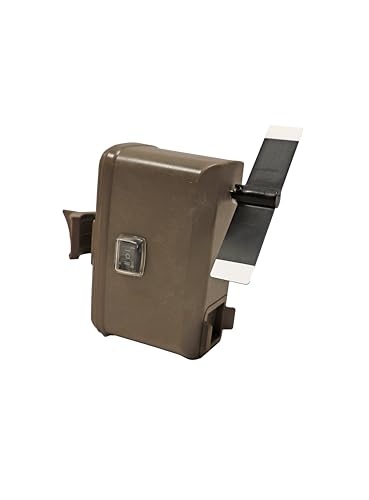
- Creates ripples and airborne droplets
- Fits round or square decoy poles
- Runs up to 12 hours on Normal Cycle II
Best For: Adding visible water activity to an existing decoy spread
Best Motorized Swimmer

- Creates swimming action and spreading ripples
- Runs over 10 hours in intermittent mode
- Remote-controlled foam-filled mallard drake
Best For: Remote-controlled movement during all-day hunts
Best Manual Rig System

- Creates random multi-decoy movement
- Includes 100-foot line and adjustable cords
- Rustproof, tangle-free spreader design
Best For: Battery-free movement across a flexible decoy spread
High-Output Motion – Higdon Pulsator PRO
For hunters seeking motion waterfowl decoys with pronounced surface activity, the Higdon Pulsator PRO combines a rocking and feeding motion with a visible water spray. Its timer-controlled pump works in fresh, salt, or brackish water as shallow as six inches.
Best For: Hunters who want strong, highly visible motion and extended battery runtime in varied water conditions.
Pros:
- Creates rocking and feeding motion with a surging spray and noticeable surface disturbance.
- Works in fresh, salt, and brackish water with as little as six inches of depth.
- Runs for up to seven hours and charges in about three hours.
- Waterproof battery housing carries an IPX7 rating.
Cons:
- Requires a decoy cord and weight for setup.
- The spray and pump system may be more equipment than hunters seeking subtle ripple-only motion need.
The Pulsator PRO is a feature-rich choice when visibility, water movement, and all-day runtime matter. Its magnetic switch and revised pump housing also support convenient handling and durability.
Feeding-Ripple Motion – Mojo Butt Up Rippler
Mojo Outdoors Mojo Butt Up Rippler, Mallard | Creates Realistic Water Movement
Check Price On AmazonThe Mojo Butt Up Rippler is a straightforward option among motion waterfowl decoys, designed to imitate a duck feeding on the water. Its ripples add movement to a spread without relying on a visible spray.
Best For: Hunters who want simple, battery-powered ripple motion to complement an existing mallard spread.
Pros:
- Replicates a duck feeding in the water.
- Creates ripples that mimic feeding activity.
- Provides approximately six to eight hours of battery life.
- Compact 8-by-6-by-6-inch design is easy to add to a spread.
Cons:
- Requires four AA batteries, which are not included.
- Provides ripple motion rather than a spray or pronounced rocking action.
This Rippler is a practical, focused choice for adding feeding-style water movement. It is especially useful when you want a complementary motion decoy with uncomplicated battery operation.
Natural Group Motion – Motion Ducks Spreader System
The Motion Ducks Single Decoy Spreader and Jerk System offers a non-motorized approach to motion waterfowl decoys. It moves multiple decoys in a natural flock formation rather than a single-file arrangement and sets up in seconds.
Best For: Hunters who prefer manually driven, spread-wide movement and quick setup without battery-powered components.
Pros:
- Creates natural-looking movement across a flock instead of a single-file line.
- Packs easily and sets up quickly.
- Includes one spreader, a handle with 100 feet of line, and a five-foot bungee.
- Multiple spreaders can be connected to create larger moving flocks.
Cons:
- Requires hunter input through the jerk-system handle.
- Includes one spreader, so expanding the setup requires additional units.
This system suits hunters who value controllable, natural movement over automated operation. Its included line and bungee make it a ready starting point for a compact jerk-style setup.
Ripple-Spreading Motion – MOJO Vibrating Rippler
MOJO Outdoors Rippler - Premium Waterfowl and Duck Hunting Decoy | Creates Realistic Water Movement
Check Price On AmazonThe MOJO Vibrating Rippler is designed for hunters comparing motion waterfowl decoys that influence the rest of the spread. Its built-in vibrating housing creates ripples around a mallard drake body, adding movement on otherwise still water.
Best For: Hunters who want a compact ripple creator that can add motion to nearby decoys.
Pros:
- Uses vibration to create ripples and movement around other decoys.
- Runs for approximately six to eight hours on four AA batteries.
- Removable screw-lock housing simplifies access to the moving parts and batteries.
- Designed for the demands of duck hunting.
Cons:
- Four AA batteries are not included.
- Creates ripple movement rather than the spray and rocking action of a pump-driven decoy.
The Vibrating Rippler is a useful middle ground for still-water spreads: it adds motion without the more complex spray system of a pump-driven model. The removable housing also makes routine battery access more convenient.
Water-Action Specialist – Avian-X Power Butt Kicker
The Avian-X Power Butt Kicker is one of the more distinctive motion waterfowl decoys for hunters who want feeding-duck movement on the water. Its kicking feet create splashes, ripples, and wake patterns, while two run modes let you prioritize either longer runtime or continuous activity.
Best For: Hunters seeking realistic water movement and rechargeable, all-day operation.
Pros:
- Feeder-butt design and webbed feet mimic a feeding mallard.
- Kicking action produces natural-looking splashes, ripples, and wakes.
- Full-on and intermittent modes provide up to 12 or 24 hours of stated runtime.
- Pre-assembled kit includes the body, power module, and dual kicking feet.
Cons:
- Its specialized feeding motion may not suit hunters looking specifically for spinning-wing action.
- Requires charging the included lithium-ion battery before use.
The Power Butt Kicker stands out when visible water activity is central to your spread. Its rechargeable system and selectable modes add convenience, while the feeder-butt presentation gives it a purpose distinct from traditional spinning-wing decoys.
Spinning-Wing Classic – MOJO Mini Mallard Drake
The MOJO Mini Mallard Drake is a practical choice among motion waterfowl decoys for hunters who prefer a familiar spinning-wing setup. Its redesigned internal structure is intended to reduce wobble and noise, while the removable housing and magnetic-attached wings simplify setup and maintenance.
Best For: Hunters who want a compact spinning-wing drake with straightforward battery operation.
Pros:
- Structural support frame is designed for smoother, quieter operation with less wobble.
- Realistic feather detail and color are built into the removable decoy skin.
- Cam-lock pole, drop-in battery holder, and magnetic wings support easy setup.
- Removable housing makes cleaning and maintenance simpler.
Cons:
- Runs on four AA batteries, which are not included.
- Spinning-wing motion provides a different presentation from water-splash or feeding-action decoys.
This MOJO model fits hunters who value a proven spinning-wing format and accessible maintenance. The drake styling, quieter structural design, and simple AA-battery system make it a versatile option for adding overhead motion to a spread.
Rugged Feeding Action – Avery GHG Finisher Spitter
The Avery GHG Finisher Spitter is built for hunters who want feeding-duck realism from their motion waterfowl decoys. Its butt-up body uses a spitter-style movement, while foam-filled construction and an internal rechargeable power unit support repeated use in demanding marsh and water conditions.
Best For: Hunters prioritizing lifelike feeding behavior, durability, and rechargeable convenience.
Pros:
- Life-like feeding motion is designed to attract wary waterfowl.
- Butt-up body includes realistic feather texture and coloring.
- Rechargeable internal power unit provides up to seven hours of continuous motion.
- Foam-filled construction adds durability in icy water, muddy marshes, and rough cover.
Cons:
- Its stated continuous runtime is shorter than the extended intermittent mode offered by some competing designs.
- Charging is required between uses rather than relying on readily replaceable AA batteries.
The Finisher Spitter is a strong fit when natural feeding behavior and rugged construction matter more than spinning-wing visibility. Its foam-filled body and rechargeable power system make it a durable, specialized addition to a realistic spread.
Best Water-Motion Add-On – MOJO Triple Whammy
The MOJO Triple Whammy is a practical choice for hunters looking to add visible movement to motion waterfowl decoys. It creates ripples and projects droplets while offering selectable motion modes and a rotating, dual-color blade.
Best For: Hunters who want a compact water-motion accessory for round or square decoy poles.
Pros:
- Creates ripples and airborne droplets to add lifelike water activity.
- Fits round or square decoy poles and uses a simple grip knob for installation.
- Offers two motion cycles with up to 12 hours of operation on Normal Cycle II.
- Rotating dual-color blade allows some motion customization.
Cons:
- Requires four AA batteries, which are not included.
- It is a motion device rather than a complete decoy.
Choose the Triple Whammy when you already have a compatible spread and want an easy way to add ripples and splash visibility without a more involved setup.
Best Motorized Swimmer – Avian-X Power Swimmer
The Avian-X Power Swimmer is a full mallard drake decoy designed to add swimming action and spreading ripples to motion waterfowl decoys. Its remote operation, foam-filled body, and rechargeable lithium-ion battery suit hunters who want blind-controlled movement.
Best For: Hunters seeking a remote-controlled swimming decoy for a full day in the blind.
Pros:
- Electric motor creates swimming motion and pushes ripples across the spread.
- 6-volt lithium-ion battery runs for more than 10 hours in intermittent mode.
- Non-fouling motor is designed to shed mud and weeds.
- Foam-filled body adds buoyancy, stability, and protection from stray shot.
Cons:
- At 2.11 kg packaged weight, it is less compact than a simple motion accessory.
- Limited warranty coverage is noted in the product details.
The Power Swimmer makes sense when remote control and independent swimming action matter more than carrying the lightest possible motion unit.
Best Manual Rig System – VIFDERU Duck Decoy Spreader
The VIFDERU Duck Decoy Spreader is a manual jerk-rig system for creating random movement across multiple decoys. For hunters comparing motion waterfowl decoys, its adjustable cords, 100-foot line, and tangle-free spreader offer a lightweight alternative to powered units.
Best For: Hunters who want natural multi-decoy movement without batteries or an electric motor.
Pros:
- Creates random swimming motion rather than a single-file line.
- Includes a 100-foot line, handle, bungee, four adjustable cords, and stainless crimp snaps.
- Rustproof connecting poles and quick-release snaps help simplify setup and retrieval.
- Adjustable cords accommodate waters with different depths.
Cons:
- Movement depends on manually operating the handle.
- It is a spreader and jerk rig, not a powered standalone decoy.
This rig is a strong fit for hunters who prioritize lightweight gear, flexible depth adjustment, and flock-style movement over remote operation.
How We Picked the Best Motion Waterfowl Decoys
We focused on the features that matter most in the field: the type and realism of movement, water compatibility, setup speed, portability, durability, and power requirements. The roundup includes complete motion decoys as well as spreaders and jerk systems that add movement to standard decoys.
We also considered how easily each option can fit into an existing spread. A specialized powered decoy may create more visible action, while a jerk rig or spreader can provide a lower-cost, quieter way to animate several decoys at once.
Quick Comparison
| Type | Best For | Main Advantage | Consideration |
|---|---|---|---|
| Powered swimmer | Open water | Strong, continuous movement | Requires batteries and transport space |
| Butt-up or feeder | Realistic feeding scenes | Distinctive, visible action | May suit specific species or spread styles |
| Jerk rig or spreader | Flexible DIY spreads | Moves multiple standard decoys | Needs line management and anchoring |
| Multi-function motion device | Versatile setups | More than one motion effect | Can add setup complexity |
Key Buying Factors for Motion Waterfowl Decoys
Movement and Visibility
Match the motion to the water and hunting pressure. Ripples and subtle rocking can look natural in small, calm water, while stronger swimming or splashing action may be more visible across larger, wind-affected areas. Avoid choosing the most aggressive movement by default; realistic motion should support the rest of the spread.
Water and Weather Compatibility
Check whether the unit is intended for fresh, salt, or brackish water, and look for corrosion-resistant hardware if you hunt near coastal water. Seals, switches, propellers, cords, and battery compartments deserve particular attention because they face repeated exposure to moisture and mud.
Power, Runtime, and Transport
Battery-powered decoys are convenient but add weight and maintenance. Confirm the battery type, expected runtime, charging needs, and how easily the unit fits in your boat or decoy bag. A manual jerk system eliminates battery concerns and can be a practical choice for remote walks or long hunts.
Setup and Retrieval
Look for tangle-resistant lines, stable anchors, simple controls, and a design that can be deployed without disturbing nearby decoys. A motion system is most useful when you can adjust or retrieve it quickly as wind, water level, or bird behavior changes.
Who Should Buy Which Motion Waterfowl Decoys?
Choose a powered swimmer or high-action decoy if you hunt larger water and want movement that remains visible at a distance. A butt-up, feeding, or splashing design is a better fit when you want a specific natural behavior represented in the spread.
Choose a jerk rig or spreader if you already own standard decoys and want an economical, flexible upgrade. These systems are also well suited to hunters who prefer quiet operation, fewer batteries, and control over how much movement the spread produces. For mixed conditions or changing locations, a versatile multi-function device can provide more adjustment options, provided its added components do not slow your setup.