Overlanding exposes your vehicle—and your camera—to rough roads, changing light, remote locations, and long hours behind the wheel. The right dash camera should capture useful evidence without adding unnecessary complexity to your setup.
We selected 10 options spanning dual-channel, three-channel, four-channel, mirror-style, and compact designs, with attention to image quality, night recording, storage, connectivity, and parking protection.
Best 10 Dash Cameras for Overlanding Picks for 2026
Best Detail-Focused Dual Cam

- Upscaled 4K front and 1080p rear recording
- STARVIS 2 sensor with GPS and 5.8GHz Wi-Fi
- Includes 128GB card and multiple parking modes
Best For: Overlanders prioritizing detailed front footage and included storage
Best Full-Coverage 3-Channel Cam

- Records front, interior, and rear views
- Triple STARVIS 2 sensors with HDR and plate-focused night imaging
- Buffered parking mode and 1TB storage support
Best For: Overlanders needing comprehensive cabin and road coverage
Best Touchscreen Value
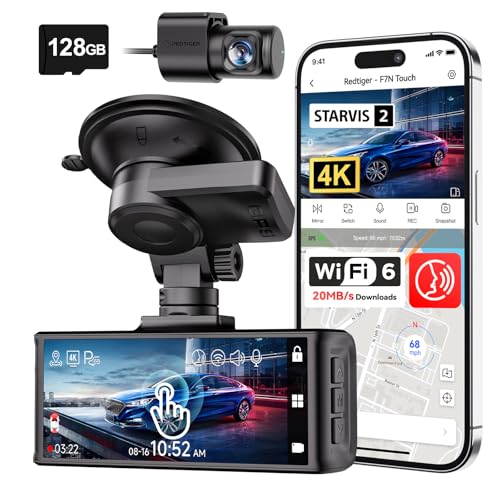
- 4K front and 1080p rear recording
- Touchscreen, voice control, GPS, and 5GHz Wi-Fi
- Includes 128GB card and 18-month guarantee
Best For: Overlanders seeking simple controls and strong dual-camera value
Best Mirror-Style Display

- Large 12-inch mirror-mounted display
- 4K front and 1080p rear cameras with wide views
- GPS, 5.8GHz Wi-Fi, reverse assist, and parking mode
Best For: Overlanders wanting a large display and integrated rear-view assistance
Best All-Around Coverage
BOTSLAB 4-Channel 360° Dash Cam

- Four-channel recording with 3K front video
- Hardwire kit and 128GB card included
- GPS, voice control, touchscreen, and fast Wi-Fi
Best For: Overlanders wanting maximum camera coverage and parking monitoring
Best for High-Resolution Front Video

- 4K front recording with three additional camera views
- 128GB card included with support for up to 512GB
- GPS, Wi-Fi 6 transfers, and side-camera IR lights
Best For: Overlanders wanting detailed front footage and expandable storage
Best Value 360° Setup

- Four-channel 2K recording with adjustable side cameras
- 128GB card included and 48-hour parking modes available
- Wi-Fi 6, GPS, and eight-LED infrared night vision
Best For: Overlanders seeking broad coverage and a practical included-storage package
Compact Wide-Angle Pick

- 1440p HDR video with a 180-degree field of view
- Compact design with GPS and voice control
- Wi-Fi Vault uploads and optional parking monitoring
Best For: Overlanders wanting discreet, wide forward coverage
Dual-Camera 4K Pick
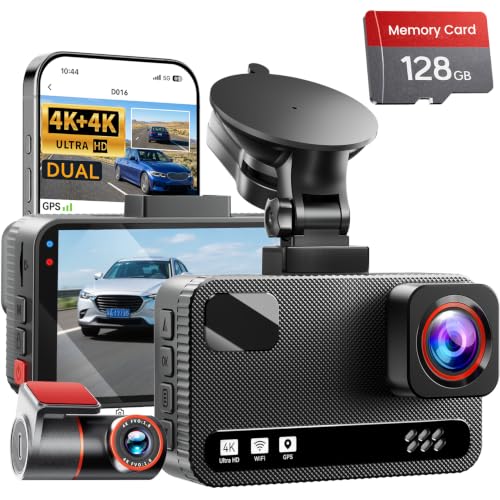
- Simultaneous 4K recording from front and rear cameras
- Starlight night vision, WDR, and GPS positioning
- Includes a 128GB card with fast 5GHz Wi-Fi
Best For: Overlanders needing high-detail two-way coverage
Best Simple Pick

- Four 1080p cameras cover front, rear, left, and right
- Includes 128GB card, 5GHz Wi-Fi, and supercapacitor
- Supports time-lapse, loop recording, and incident locking
Best For: Larger vehicles needing broad surrounding coverage
Best Detail-Focused Dual Cam – ROVE R2-4K Dual Dash Cam
For drivers comparing dash cameras for overlanding, the ROVE R2-4K Dual offers simultaneous front and rear coverage, GPS data, and strong low-light features. Its front footage is captured at 2.5K and intelligently upscaled to 4K, while the rear camera records in 1080p.
Best For: Overlanders who want detailed front footage, rear coverage, GPS evidence, and convenient phone transfers.
Pros:
- Sony STARVIS 2 front sensor, HDR, and wide-aperture lenses support clearer low-light footage.
- Includes a 128GB microSD card and supports cards up to 1TB.
- Built-in GPS, 5.8GHz Wi-Fi, and downloads up to 20MB/s simplify reviewing footage.
- Offers motion, collision, and time-lapse parking modes with a hardwire kit.
Cons:
- The front image is upscaled 4K rather than native 4K.
- Parking mode requires a separately purchased hardwire kit.
The ROVE is a practical choice when front image detail and included storage matter most. It combines useful expedition-ready conveniences with straightforward dual-camera coverage.
Best Full-Coverage 3-Channel Cam – Vantrue N4 Pro S 4K 3-Channel
The Vantrue N4 Pro S is designed for broad coverage, making it a strong option among dash cameras for overlanding. It records front, interior, and rear views using three STARVIS 2 sensors, with a flexible rear camera that can rotate to monitor traffic or the cabin.
Best For: Overlanders who need front, interior, and rear monitoring in one system.
Pros:
- Three-channel recording provides 4K front, 1080p interior, and 2.5K rear coverage.
- Triple STARVIS 2 sensors, HDR, and PlatePix technology target clearer nighttime plates.
- Buffered parking mode records 10 seconds before detected motion or impact.
- Supports 5GHz Wi-Fi, GPS, voice control, supercapacitor operation, and cards up to 1TB.
Cons:
- A memory card is not included.
- Parking mode requires a separately sold hardwire kit.
- Triple-camera recording can use storage quickly.
Choose the Vantrue when complete cabin-and-road coverage is more important than a simple installation. Its three-camera layout is especially useful for extended trips, passenger monitoring, and parked-vehicle surveillance.
Best Touchscreen Value – REDTIGER F7N TOUCH 4K
The REDTIGER F7N TOUCH combines 4K front and 1080p rear recording with a touchscreen, voice control, GPS, and fast Wi-Fi. For dash cameras for overlanding, the included 128GB card and simple controls make it a convenient dual-camera setup.
Best For: Overlanders who want touchscreen operation, broad dual-camera coverage, and included storage.
Pros:
- Records 4K front and 1080p rear video with 170- and 140-degree viewing angles.
- STARVIS 2, WDR, and HDR support visibility in low-light and challenging conditions.
- Touchscreen, physical buttons, and voice commands offer flexible control.
- Includes a 128GB card, GPS, 5GHz Wi-Fi, and an 18-month guarantee.
Cons:
- Parking monitoring requires a separate hardwire kit.
- Its rear recording resolution is limited to 1080p.
The F7N TOUCH is a well-rounded pick for travelers who value ease of use without giving up high-resolution front footage. Its included card and multiple control methods reduce setup friction.
Best Mirror-Style Display – WOLFBOX G840S 12-Inch
The WOLFBOX G840S replaces the conventional rearview mirror with a large 12-inch display while adding 4K front and 1080p rear recording. Among dash cameras for overlanding, its wide screen and reverse-assist functionality can be useful when visibility and maneuvering matter on longer trips.
Best For: Overlanders who want a large mirror-mounted display with front recording and rear-view assistance.
Pros:
- Large 12-inch screen provides 1.5 times the viewing area of a standard mirror.
- 4K front and 1080p rear cameras offer broad 170- and 140-degree views.
- Includes GPS, 5.8GHz Wi-Fi, touchscreen controls, and a 32GB card.
- Time-lapse parking monitoring helps conserve storage and power.
Cons:
- Parking monitoring requires a hardwire kit.
- The included memory card is smaller than the 128GB cards supplied with some alternatives.
- It uses a mirror-mounted design rather than a compact windshield form factor.
The G840S makes the most sense for drivers who want a large, integrated rearview display rather than a traditional small dash cam screen. Its mirror format also adds rear-view and reversing support for larger vehicles.
Best All-Around Coverage – BOTSLAB 4-Channel 360° Dash Cam
For drivers seeking dash cameras for overlanding, the BOTSLAB G980H stands out with simultaneous four-channel recording, flexible camera placement, and a supplied hardwire kit for parking monitoring. It combines broad coverage with GPS, voice control, and fast phone transfers.
Best For: Overlanding vehicles that need extensive exterior and interior coverage, route tracking, and built-in parking surveillance.
Pros:
- Records four views at once with up to 3K front footage and 1080P from the other cameras.
- Includes a 128GB card and hardwire kit for 24/7 parking modes.
- Offers GPS route tracking, voice control, a touchscreen, and 5.8GHz Wi-Fi.
- Super-capacitor design is rated for operation from -20°C to 70°C.
Cons:
- The full setup uses multiple cameras and may require more installation effort than a basic dash cam.
- The included display is relatively compact at 3.18 inches.
The BOTSLAB is a strong fit when all-around visibility and parking protection matter more than a simple installation. Its detachable side cameras also provide flexibility for different vehicle layouts.
Best for High-Resolution Front Video – Icesky 4K 4-Channel Dash Cam
The Icesky S03 is a practical option among dash cameras for overlanding, pairing 4K front recording with simultaneous rear, interior, left, and right views. Its 3-inch display and app-based Wi-Fi 6 transfers make reviewing footage convenient while traveling.
Best For: Overlanders who prioritize 4K front footage, full vehicle coverage, and flexible storage capacity.
Pros:
- Records 4K from the front and 1080P from the additional cameras simultaneously.
- Includes a 128GB card and supports microSD cards up to 512GB.
- Built-in GPS records speed, route, location, and time.
- Eight infrared lights improve low-light recording from the side cameras.
Cons:
- The hardwire kit required for 24-hour parking mode is sold separately.
- Four-camera installation may take more time than a front-and-rear system.
Choose the Icesky if sharp front detail and expandable storage are key priorities. It delivers broad coverage without requiring the hardwire kit unless you specifically want continuous parking protection.
Best Value 360° Setup – IIWEY N6 4-Channel Dash Cam
The IIWEY N6 offers a ready-to-use four-camera setup for drivers comparing dash cameras for overlanding. It records 2K video from the front, rear, and sides, includes a 128GB card, and adds GPS and Wi-Fi 6 for convenient footage access.
Best For: Overlanders who want broad 360° coverage, included storage, and optional long-duration parking surveillance.
Pros:
- Simultaneous 2K recording from four cameras helps reduce blind spots.
- Includes a 128GB card, loop recording, and G-sensor emergency locking.
- Wi-Fi 6 supports fast app previews and downloads, while GPS logs routes and speed.
- Eight IR LEDs and Vision Enhance technology support low-light and detail capture.
Cons:
- The hardwire kit required for parking mode is sold separately.
- The camera has no built-in battery and must be connected to vehicle power.
- Correct rear-camera setup is important if using the reversing-assistance guidelines.
The N6 is a sensible choice for an overlanding vehicle needing comprehensive coverage without paying for a higher front-camera resolution. Its included card makes it usable out of the box, while the optional hardwire kit expands its parking capabilities.
Compact Wide-Angle Pick – Garmin Dash Cam 67W
For drivers seeking discreet dash cameras for overlanding, the Garmin Dash Cam 67W combines a compact design with 1440p recording and an extra-wide 180-degree field of view. GPS, voice control, Wi-Fi uploads, and optional parking monitoring add useful convenience for long trips and everyday driving.
Best For: Overlanders who want a small, reputable camera with broad forward coverage and connected features.
Pros:
- Compact, low-profile design with a 180-degree lens.
- 1440p video with Garmin Clarity HDR for day-and-night detail.
- Includes a 16GB microSD card and supports storage up to 512GB.
- Offers voice control, GPS, Vault uploads, Live View, and Parking Guard features.
Cons:
- Parking Guard and Live View require constant power, Wi-Fi, and a compatible smartphone.
- Some driver-alert and camera-warning features vary by conditions or region.
- Voice control is limited to supported languages.
The 67W is a strong choice when a clean installation and wide forward visibility matter more than multi-camera coverage. Its connected functions can be particularly useful when monitoring a vehicle at camp, provided the required power and Wi-Fi setup is available.
Dual-Camera 4K Pick – 4K+4K Front and Rear Dash Cam
This dual-channel model is designed for overlanders who want high-resolution evidence at both ends of the vehicle. It records 4K video from the front and rear cameras simultaneously, while Starlight-level night vision, GPS, Wi-Fi, and a supplied 128GB card support practical trip recording.
Best For: Drivers who prioritize detailed front-and-rear footage and convenient smartphone video management.
Pros:
- Records both front and rear video at 4K resolution.
- Wide 170-degree front and 160-degree rear viewing angles.
- Includes a 128GB memory card and supports up to 1TB of external storage.
- Provides 5GHz Wi-Fi, GPS, WDR, emergency video locking, and night-vision features.
Cons:
- 24/7 parking mode requires a separately purchased hard-wiring kit.
- Dual-camera installation is more involved than a front-only setup.
- The supplied details do not specify the rear-camera cable length or installation method.
For overlanding routes where incidents may happen ahead or behind the vehicle, simultaneous 4K recording offers unusually detailed coverage. It is a feature-rich option, but buyers should plan for the additional wiring and optional hardwire kit if parked-vehicle monitoring is important.
Best Simple Pick – ZMOPO D435 4-Channel Dash Cam
The ZMOPO D435 takes a comprehensive approach to dash cameras for overlanding, recording the front, rear, left, and right sides simultaneously. Its four 1080p channels can also capture interior views, while loop recording, incident locking, Wi-Fi, and an included 128GB card support extended travel use.
Best For: RV, truck, SUV, and overlanding setups that need coverage around the entire vehicle rather than maximum resolution.
Pros:
- Four Full HD cameras cover the front, rear, left, and right sides.
- Adjustable front cameras can provide interior coverage and flexible angles.
- Includes a 128GB card, 5GHz Wi-Fi, app support, and a built-in supercapacitor.
- Supports time-lapse recording, loop recording, and automatic incident locking.
Cons:
- Video resolution is 1080p rather than 4K.
- GPS tracking requires a separately purchased GPS logger.
- Parking mode requires an optional ACC hardwire kit.
The D435 is compelling when side and interior visibility are more important than ultra-high-resolution footage. Its four-camera layout can help document tight trails, campsites, and activity around a larger vehicle, though buyers should budget for the optional GPS and hardwire accessories if those functions are needed.
How We Picked the Best Dash Cameras for Overlanding
We compared these Dash Cameras for Overlanding by looking at the features that matter most on extended road trips: front and rear coverage, cabin or side-camera options, low-light performance, GPS, Wi-Fi transfer, storage support, mounting flexibility, and parking-mode capabilities. We also considered whether each camera includes useful accessories such as a memory card, rear camera, hardwire kit, or backup-camera display.
Resolution alone does not determine real-world usefulness. A camera with dependable HDR, a wide but usable field of view, clear license-plate detail, and stable recording can be more valuable than a higher-resolution model with weak nighttime performance or a difficult app.
Quick Comparison
| Type | Best For | Main Advantage | Trade-Off |
|---|---|---|---|
| Compact front camera | Minimal installations | Small footprint and simple setup | Limited coverage |
| Front and rear | Most travelers | Balanced protection | Rear-camera wiring required |
| Three-channel | Cabin and passenger visibility | Front, rear, and interior recording | More storage and cable management |
| Four-channel or 360-degree | Maximum vehicle coverage | Side and interior views | More complicated installation |
| Mirror dash cam | Large vehicles and campers | Integrated rear-view display | May require careful mirror and rear-camera positioning |
Key Buying Factors for Dash Cameras for Overlanding
Coverage and Camera Placement
Front-and-rear recording is a strong baseline for highway travel. Add an interior camera if you carry passengers, sleep in the vehicle, or want evidence of activity inside the cabin. Four-channel systems can cover the sides as well, but check whether the cameras can be positioned around roof racks, camper bodies, spare tires, or other accessories.
Night Performance and Weather Conditions
Look for STARVIS or STARVIS 2 sensors, HDR, WDR, and infrared illumination where appropriate. These features can improve detail in shadow, glare, and nighttime scenes, but they do not eliminate the need for a clean lens and a correctly aimed camera. Confirm that exposed rear or side cameras have suitable weather protection.
Storage, Power, and Durability
High-resolution multi-camera recording fills cards quickly. Choose a compatible high-endurance microSD card, verify the maximum supported capacity, and format it regularly. For parking monitoring, confirm whether a hardwire kit is included or sold separately, and make sure the installation will not drain the vehicle battery during extended stops.
Connectivity and Navigation Features
GPS can record speed and location, while 5GHz Wi-Fi may make large video files faster to transfer. Smartphone apps vary widely, so review the workflow for downloading and sharing clips before committing to a model. Voice control is helpful when you need to save footage without reaching toward the camera.
Who Should Buy Which Dash Cameras for Overlanding?
Choose a compact front-facing model if you want the simplest installation and primarily need forward-facing evidence. A dual-channel camera is the best fit for most overlanders who want balanced road coverage without excessive wiring. Pick a three-channel system if cabin recording matters, particularly for family travel or vehicle-based camping.
Four-channel and 360-degree cameras suit drivers who prioritize comprehensive coverage and are comfortable with a longer installation. A mirror-style model is worth considering for vans, trucks, and campers where an integrated digital rear view is more useful than a small windshield-mounted screen. Whatever you choose, pair it with reliable storage, secure mounts, and a power setup suited to the length of your stops.