Compact thermal monoculars make it easier to detect heat signatures in darkness, light fog, brush, and other low-visibility conditions. They are popular with hunters, landowners, search teams, and outdoor users who want a lightweight handheld view without bulky gear.
In this roundup, we focus on models that balance image quality, size, and usability so you can choose the right option for your budget and use case.
Best 9 Compact Thermal Monoculars Picks for 2026
Best for Long Battery Life
TOPDON TS004 Thermal Monocular

- 11-hour battery life for extended outings
- 256x192 IR resolution with 50Hz refresh
- IP67 rugged build with wireless phone viewing
Best For: Hunters and outdoor users who want a rugged thermal monocular with long runtime.
Best for Mid-Range Scanning
Pulsar Axion Compact Thermal Monocular

- 384x288 sensor for practical mid-range heat detection
- 640x400 AMOLED display with high contrast and vivid detail
- <20 NETD and <18mK sensitivity help in fog, rain, and brush
Best For: Hunters who want a compact thermal monocular for reliable mid-range scanning in variable conditions.
Best for Clear Thermal Detail
AGM Taipan V2 Thermal Monocular

- 384×288 sensor with sub-20mK sensitivity
- 1024×768 OLED display with 50Hz refresh
- Recording, Wi‑Fi, and IP67 field-ready design
Best For: Buyers who want a compact thermal monocular with sharp imaging and useful field features.
Best for Long-Range Spotting
ATN BlazeSeeker 6 10 mm Thermal Monocular

- Sensitive 256×192 thermal sensor with ≤20 mK NETD
- 10 mm lens reaches up to 460 m in open terrain
- Compact 270 g IP67 body with up to 8 hours runtime
Best For: Users who need a compact thermal monocular for longer-distance scanning and rugged outdoor use.
Best for Versatile Use

- 256x192 thermal sensor with 12μm detector
- Six palettes, 4X zoom, and 16GB storage
- IP65 rating with 6+ hour replaceable batteries
Best For: Hunters and campers who want a compact thermal monocular with useful app and storage features.
Best Compact Pick
Pulsar Axion Compact Thermal Monocular

- Compact body is easy to carry and use one-handed
- Quick-scanning design suits field spotting and scouting
- Good choice when portability matters more than bulk
Best For: Hunters and outdoor users who want a lightweight thermal monocular for fast, grab-and-go use.
Best Mid-Range Thermal Detail
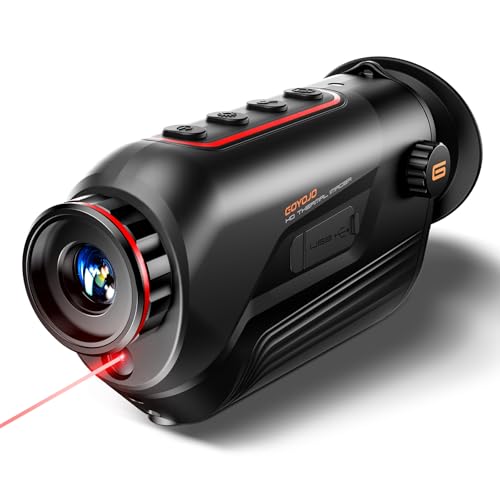
- 256x192 sensor with 50Hz refresh
- Six display palettes plus 4X zoom
- IP65 rating, WiFi app support, and 16GB storage
Best For: Hunters and outdoor users who want a portable thermal monocular with useful extras.
Best for Helmet-Mounted Use
RIX Stride ST3 Lite 384 Thermal Monocular

- True 1x viewing is ideal for helmet-mounted use
- Lightweight 0.42 lb build is easy to carry or wear
- Wide FOV and 384×288 thermal imaging improve scanning
Best For: Hunters, patrol users, and night observers who need a helmet-friendly thermal monocular with flexible handheld and vehicle use.
Best for Handheld Clarity
RIX Pocket K3 Portable Thermal Monocular

- Pocket-sized body for easy carry in the field
- 384x288 sensor with 50Hz refresh for smoother motion
- Wi-Fi, recording, and 8GB storage add convenience
Best For: Hunters and outdoor users who want a portable thermal monocular with stabilization and recording features.
Best for Long Battery Life – TOPDON TS004 Thermal Monocular
For buyers comparing compact thermal monoculars, the TOPDON TS004 stands out for its strong mix of portability, 50Hz smooth imaging, and a 13mm lens that reaches useful detection distances. It’s a practical pick if you want a lightweight thermal viewer that can handle field use without constant charging.
Best For: Hunters, hikers, and outdoor users who want a compact thermal monocular with long runtime and weather-ready construction.
Pros:
- Up to 11 hours of battery life from the 5000mAh battery
- 256×192 IR resolution with 50Hz refresh for smoother thermal viewing
- IP67 rating and drop resistance for rough outdoor use
- Wireless phone connection for live viewing and recording
Cons:
- App-based features may not suit users who prefer fully standalone operation
- Detection range is solid, but not class-leading for long-distance scanning
The TS004 is a well-rounded option if your priority is dependable runtime and rugged portability rather than maximum reach. Among compact thermal monoculars, it offers an appealing balance of image quality, battery life, and field durability.
Best for Mid-Range Scanning – Pulsar Axion Compact Thermal Monocular
If you want one of the more capable compact thermal monoculars for real hunting conditions, the Pulsar Axion XQ19 is built for practical mid-range scanning. It pairs a 384×288 thermal sensor with a sharp AMOLED display, making it easier to pick out heat signatures in brush, fog, and low-contrast terrain.
Best For: Hunters and outdoors users who want a compact thermal monocular with strong mid-range detection and a crisp display for scanning fields, brush, and timber.
Pros:
- 384×288 thermal sensor delivers clear heat detection for mid-range use
- 640×400 AMOLED screen provides strong contrast and vivid detail
- <20 NETD sensitivity helps in fog, rain, humidity, and thick cover
- 19mm f/1.0 lens with 1.5–6x digital zoom adds field flexibility
Cons:
- Not the highest-resolution option if you need maximum long-range detail
- Digital zoom can reduce image clarity at the upper end
- May be more feature-rich than casual users need
The Axion Compact stands out among compact thermal monoculars for buyers who care more about usable field performance than flashy specs. It’s a smart pick if you need a small, dependable thermal viewer that balances portability, image quality, and real-world hunting utility.
Best for Clear Thermal Detail – AGM Taipan V2 Thermal Monocular
If you want compact thermal monoculars that prioritize image clarity, the AGM Global Vision Taipan V2 is a strong all-around pick. Its 384×288 sensor, 12-micron detector, and bright OLED display make it easy to pick out heat signatures for hunting, property checks, and night-time observation.
Best For: Users who want a compact thermal monocular with sharp imaging, solid range, and useful field features like recording and Wi‑Fi.
Pros:
- 384×288 thermal sensor with sub-20mK sensitivity for detailed heat detection
- 1024×768 OLED display with 50Hz refresh for smooth, high-contrast viewing
- 16GB storage, Wi‑Fi app support, and built-in photo/video recording
- IP67 waterproofing plus USB-C external power support for field use
Cons:
- Not as budget-friendly as entry-level thermal monoculars
- Digital zoom is useful, but image quality drops at higher magnification
For buyers comparing compact thermal monoculars, the Taipan V2 stands out for balancing portability, image quality, and practical extras. It’s a good choice if you need dependable thermal performance without jumping to a larger, more expensive unit.
Best for Long-Range Spotting – ATN BlazeSeeker 6 10 mm Thermal Monocular
ATN BlazeSeeker 6, 10 mm Thermal Monocular, 1.7–13.6X, 256×192 Sensor, 12μm, ≤20 mK NETD
Check Price On AmazonIf you want compact thermal monoculars that reach beyond close-in scanning, the ATN BlazeSeeker 6 is built for open fields, fence lines, and longer sight lines. Its 256×192 thermal sensor, 12 μm pixel pitch, and ≤20 mK NETD are tuned to pull out faint heat signatures, while the 10 mm lens narrows the view for better reach.
Best For: Hunters, landowners, and nighttime observers who need a compact thermal monocular with stronger long-range detection and clear target separation.
Pros:
- 256×192 sensor with 12 μm pitch and ≤20 mK NETD for sensitive heat detection
- 10 mm lens offers extended detection up to 460 m for open-area scanning
- 800×600 OLED display, hot point tracking, and multiple color palettes
- Compact 270 g IP67 body with up to 8 hours of battery life
Cons:
- Narrower field of view is less ideal for very close-range searching
- Resolution is solid, but not as detailed as higher-end thermal units
- Feature set may be more than casual users need for simple spotting
Overall, the BlazeSeeker 6 is a strong fit if you prioritize reach and heat sensitivity over wide-angle scanning. Among compact thermal monoculars, it stands out as a practical long-range option for users who need a lightweight unit that can still handle rugged field work.
Best for Versatile Use – GOYOJO G210 Thermal Monocular
The GOYOJO G210 is a practical pick for buyers comparing compact thermal monoculars, especially if you want a feature-rich unit without moving into a larger, more expensive platform. Its 256×192 sensor, 12μm detector, 4X zoom, and six display palettes give it enough flexibility for hunting, camping, and general night-use scanning.
Best For: Hunters, campers, and outdoor users who want a compact thermal monocular with app sharing, storage, and weather resistance.
Pros:
- 256×192 thermal sensor with 12μm detector for reliable heat detection
- Six color palettes plus 4X zoom for easier target identification
- 16GB storage and app connectivity for sharing and review
- IP65 rating and replaceable batteries with 6+ hours of runtime
Cons:
- 25Hz refresh rate is fine for casual use but not the smoothest option
- 10mm lens is better for general scanning than long-range detail
- Less polished than higher-end thermal monoculars for serious professionals
For shoppers focused on compact thermal monoculars, the G210 stands out as a versatile midrange choice that balances portability, battery life, and useful features. It is a smart fit if you want a compact thermal device for field use more than a specialized long-range tool.
Best Compact Pick – Pulsar Axion Compact Thermal Monocular
The Pulsar Axion Compact Thermal Monocular is built for buyers who want serious thermal performance in a small, easy-to-carry package. If you’re comparing compact thermal monoculars for field use, this model stands out for portability, fast target spotting, and a form factor that’s easy to keep on hand.
Best For: Hunters, property owners, and outdoor users who want a lightweight thermal monocular that’s easy to pack and quick to deploy.
Pros:
- Compact body is easy to carry, stash, and use one-handed
- Designed for fast scanning and quick target detection in the field
- Good fit for users who prioritize portability over a larger handheld thermal unit
Cons:
- Compact sizing may mean fewer comfort features than larger models
- Not the best choice if you want the biggest possible screen or grip
Overall, the Axion is a strong fit for compact thermal monoculars buyers who care most about grab-and-go convenience without giving up the core thermal scouting experience.
Best Mid-Range Thermal Detail – GOYOJO G215 Thermal Monocular
If you want compact thermal monoculars that balance useful image detail with a practical feature set, the GOYOJO G215 is a strong mid-range option. Its 256×192 sensor, 50Hz refresh rate, and 15mm lens make it a capable pick for night hunting, property checks, and general outdoor use without getting overly complicated.
Best For: Hunters and outdoor users who want a compact thermal monocular with solid basics, multiple color modes, and app connectivity.
Pros:
- 256×192 thermal sensor with 50Hz refresh for smooth viewing
- Six color palettes help adapt to different detection scenarios
- 4X zoom and 16GB storage add flexibility for spotting and saving images
- IP65 weather resistance and replaceable batteries support long field use
Cons:
- Resolution is good for the class, but not top-tier
- Best suited to practical spotting rather than advanced imaging needs
For buyers comparing compact thermal monoculars, the G215 stands out as a feature-rich, field-ready choice that covers the essentials well. It is especially appealing if you want a portable thermal viewer with app support and decent battery life more than a bare-bones budget model.
Best for Helmet-Mounted Use – RIX Stride ST3 Lite 384 Thermal Monocular
If you want one of the most adaptable compact thermal monoculars for hands-free work, the RIX Stride ST3 Lite stands out with true 1x viewing, a wide field of view, and a lightweight body that’s easy to wear or carry. It’s built to move between helmet, handheld, and vehicle use without making you relearn the image every time.
Best For: Hunters, patrol users, and night observers who want a compact thermal monocular that works especially well on a helmet but still stays useful in the hand or in a vehicle.
Pros:
- True 1x base magnification makes helmet-mounted viewing feel natural and less distorted.
- Compact 0.42 lb design reduces fatigue during long observation sessions.
- Wide 17.5° × 13.1° field of view helps you scan faster and cover more area.
- 384×288 sensor with NETD <20mK and 50Hz refresh delivers clear, smooth thermal detail.
Cons:
- 1x–6x digital zoom is helpful, but it won’t match higher-end thermal optics for long-range identification.
- Feature set is geared toward utility, so it may be more than casual users need.
This is a smart pick if helmet mounting is your priority, because the ST3 Lite combines a natural 1x view with enough flexibility for handheld and vehicle use. Among compact thermal monoculars, it’s especially compelling for users who value mobility, wide coverage, and practical field setup over maximum magnification.
Best for Handheld Clarity – RIX Pocket K3 Portable Thermal Monocular
If you want one of the more practical compact thermal monoculars for field use, the RIX Pocket K3 focuses on portability without giving up core thermal performance. Its 384×288 sensor, 50Hz refresh rate, and built-in stabilization make it a solid fit for hunting, scouting, and quick handheld checks where a larger unit would be cumbersome.
Best For: Hunters and outdoors users who want a pocketable thermal monocular with smooth viewing, Wi-Fi, and recording features for on-the-go observation.
Pros:
- Compact, pocket-friendly body with a tripod mount for flexible field use
- 384×288 thermal resolution and 50Hz refresh rate for clearer moving-target viewing
- Wi-Fi, photo/audio/video recording, and 8GB storage for easy documentation
- Electronic Image Stabilization helps steady handheld observations
Cons:
- 2x base magnification may feel limited for distant detail work
- Performance depends heavily on weather, contrast, and target size
- Smaller form factor may not suit users who want a larger grip or screen
The RIX Pocket K3 is a smart fit if your priority is a lightweight thermal tool that’s easy to carry and quick to deploy. Among compact thermal monoculars, it stands out for balancing usable image quality, stabilization, and connectivity in a very portable package.
How We Picked These Compact Thermal Monoculars
We prioritized portability first, then image clarity, detection range, refresh rate, battery practicality, and overall value. Because Compact Thermal Monoculars are often used handheld for long periods, comfort and ease of use mattered as much as raw specs.
We also looked for a mix of sensor resolutions and feature sets so this guide covers entry-level units, midrange all-rounders, and higher-detail options for more demanding users.
Quick Comparison: What Matters Most
The biggest differences come down to sensor resolution, lens size, and thermal sensitivity. A 256×192 unit can be a solid budget-friendly choice, while 384×288 models usually offer more detail and better target separation. Smaller lenses tend to keep the unit more compact, while larger lenses can improve long-range performance.
Wi-Fi, wireless app support, and helmet-mount compatibility are useful extras, but they should not outweigh image quality and ergonomics if your main goal is handheld field use.
Key Buying Factors for Compact Thermal Monoculars
Resolution and Image Detail
Higher resolution helps you distinguish animals, people, and background features more clearly. If you routinely scan open ground or wooded edges, the extra detail from a higher-resolution sensor can be worth it.
Lens Size and Field of View
A shorter focal length usually gives you a wider field of view, which helps when scanning close to medium range. Longer focal lengths can improve observation at distance, but may feel less forgiving in tight terrain.
Refresh Rate and Thermal Sensitivity
A smoother refresh rate can make moving targets easier to follow. Lower NETD values generally indicate better sensitivity, which can help with contrast in tough conditions such as damp nights or partial obscurants.
Portability and Controls
Since Compact Thermal Monoculars are often carried in a pocket, pack, or chest rig, weight, grip shape, and button layout should be easy to manage with gloves. A unit that is simple to operate in the dark is often more useful than one with extra features you will never use.
Who Should Buy Which Compact Thermal Monoculars?
Budget-minded buyers should look for dependable 256×192 models that cover basic scanning and detection. Hunters and serious field users may prefer 384×288 options for better detail and more confidence at distance. If you want the most versatile setup, choose a compact model with good wireless connectivity, a comfortable body shape, and enough magnification flexibility for your typical terrain.
For most people, the best choice is the smallest unit that still delivers the resolution, sensitivity, and battery life needed for their real-world use. That balance is what makes the best Compact Thermal Monoculars worth carrying every time.