A night-capable scope can help you see a target after daylight fades, but not every rifle-style optic is a good match for a crossbow. Mounting, close-range focus, eye relief, and a usable aiming point matter as much as image quality.
These 10 selections span infrared-assisted digital scopes, thermal optics, and feature-rich multispectral models. Use the buying guide below to narrow the field by where, when, and how you plan to shoot.
Best 10 Crossbow Night Vision Scopes Picks for 2026
Best for Adjustable Eye Relief

- Extendable, light-blocking eyecup
- 5–20x digital zoom
- Waterproof aluminum construction
Best For: Day-to-night viewing with adjustable eye relief
Best for Long-Range Heat Detection

- Stated heat detection up to 1,250 yards
- Up to 11.5 hours of runtime
- IP67-rated with automatic recording
Best For: Long-distance thermal detection
Best for Built-In Distance Readings

- In-optic ranging from 5 to 1,200 yards
- Picture-in-picture viewing
- Full HD recording and USB-C
Best For: Integrated ranging with digital viewing
Best for Wide-View Thermal Scanning

- 2.5x base magnification and wider view
- Up to 11.5 hours of runtime
- IP67-rated with automatic recording
Best For: Close- to mid-range thermal scanning
1080p Digital Pick

- 5–25x digital zoom
- 1080p sensor and OLED display
- Weather-resistant; lifetime defect warranty
Best For: Digital zoom buyers who can verify night use and crossbow fit
Thermal Hybrid Pick

- Thermal and digital day/night views
- Picture-in-picture display modes
- Rangefinder and ballistic calculator
Best For: Dual-mode nighttime observation with verified mount compatibility
4K Day/Night Pick

- 4K digital day/night imaging
- 3.5–28x magnification
- 1,500m rangefinder; ballistic calculation
Best For: High-resolution day/night viewing with verified crossbow fit
Best for Smart Features
ATN X-Sight 5 3–15x Power Bundle

- 3–15x Ultra HD 4K+ day/night optic
- Ballistic calculator and customizable reticles
- Records and streams video simultaneously
Best For: Feature-focused users who can verify crossbow fit
Best for Built-In IR
Triton StarStrike-S Pro HDX 6–24x

- Built-in 940nm IR illuminator
- 6–24x zoom with picture-in-picture
- 1080p recording; 32GB card included
Best For: IR-equipped viewing on a verified compatible rail
Best for Weather Resistance
DS-X7 5–20x Digital Night Vision Scope
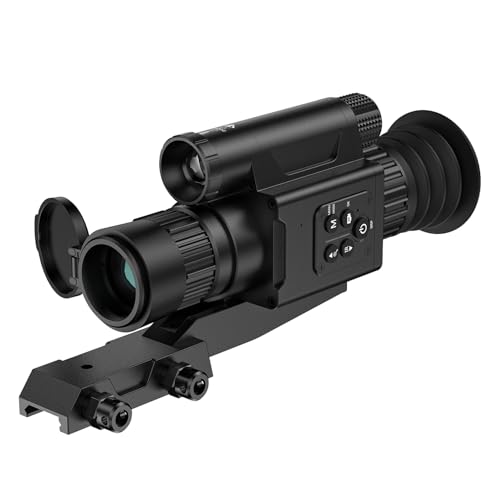
- 850nm IR with three adjustment levels
- IP56 rating and listed 1200G resistance
- Eight reticles and 1080p recording
Best For: Weather-conscious buyers who can confirm Weaver mount fit
Best for Adjustable Eye Relief – Triton StarStrike Gen II
Among crossbow night vision scopes, the Triton StarStrike Gen II stands out for its extendable eyecup, which reduces light leakage and lets you adjust eye relief. Its digital 5–20x zoom and illuminator support target identification up to 200 yards, according to the supplied specifications.
Best For: Buyers who want a day-to-night digital optic with an adjustable eyecup and Picatinny mounting.
Pros:
- Extendable eyecup helps block stray light and improve viewing comfort.
- Supports 24-hour viewing without swapping optics.
- Aircraft-grade aluminum construction is waterproof and backed by an unconditional lifetime warranty.
Cons:
- Listed weight is 3 pounds.
- Crossbow fit depends on having a suitable Picatinny rail; verify compatibility before buying.
This is a practical choice if eyecup comfort and one-optic day/night use matter more than low weight. Check your crossbow’s rail and mounting clearance first.
Best for Long-Range Heat Detection – AGM Rattler V2 25-256
If you’re comparing crossbow night vision scopes for detecting heat rather than amplifying available light, the AGM Rattler V2 25-256 is a thermal option. Its 25mm lens and 3.5x base magnification accompany a stated heat-detection range of up to 1,250 yards—not a promised crossbow shooting range.
Best For: Buyers prioritizing long-distance thermal detection and extended runtime, subject to crossbow fit.
Pros:
- Up to 11.5 hours of runtime, with two rechargeable batteries included.
- Offers 10 reticle options, up to 8x digital zoom, and a stadiametric rangefinder.
- IP67 waterproofing and shot-activated video recording with audio.
Cons:
- Listed as rifle-compatible, so crossbow mounting and suitability need confirmation.
- Thermal detection distance does not establish target-identification or shooting distance.
Its stronger base magnification and stated detection reach distinguish it from the wider-view 19-256 model. Confirm rail fit and your intended shooting setup before choosing it for a crossbow.
Best for Built-In Distance Readings – Triton StarStrike-R
The Triton StarStrike-R adds in-optic distance readings to the crossbow night vision scopes conversation. Its stated RangeTrace system measures from 5 to 1,200 yards, while picture-in-picture viewing enlarges the aiming area without losing the wider scene. The supplied notes do not specify a crossbow mounting system.
Best For: Buyers interested in integrated ranging and picture-in-picture viewing who can verify mounting compatibility.
Pros:
- Displays distance readings directly through the optic.
- Picture-in-picture view preserves a wider field of view around the magnified aiming area.
- Records Full HD footage and provides USB-C connectivity.
Cons:
- Crossbow compatibility and mounting hardware are not specified in the supplied details.
- The listed sport type is airsoft; confirm suitability for your intended use.
The integrated ranging and responsive digital processor are useful differentiators, but verify fit and operating requirements before treating this as a ready-to-mount crossbow scope.
Best for Wide-View Thermal Scanning – AGM Rattler V2 19-256
For buyers considering thermal alternatives to crossbow night vision scopes, the AGM Rattler V2 19-256 favors a wider field of view and 2.5x base magnification for closer-range scanning. Its supplied specifications list a 19mm lens, Picatinny mount, and 256×192 thermal sensor.
Best For: Buyers who value a wider thermal view for close- to mid-range scanning and can confirm crossbow compatibility.
Pros:
- Wide field of view helps with scanning and tracking moving targets.
- Offers 10 reticle styles, four color options, up to 8x digital zoom, and a stadiametric rangefinder.
- Up to 11.5 hours of runtime, IP67 waterproofing, and shot-activated recording with audio.
Cons:
- Listed for rifles, not specifically crossbows; check mounting and suitability.
- Its 2.5x base magnification may not suit buyers who prefer a tighter initial view.
Choose this version over the 25-256 when a broader starting view matters more than higher base magnification. As with any rifle-listed thermal optic, confirm your crossbow setup before purchasing.
1080p Digital Pick – Triton StarStrike-S Pro 5–25x
Triton StarStrike-S Pro 5-25x Digital Scope | 5-25x digital scope with OLED display, adjustable,
Check Price On AmazonFor shoppers comparing crossbow night vision scopes, the Triton StarStrike-S Pro offers 5–25x digital zoom, a 1080p sensor, and an OLED display. Its notes describe high light sensitivity but do not establish a dedicated night-vision mode or crossbow compatibility, so check those requirements before buying.
Best For: Buyers seeking a weather-resistant digital scope with flexible zoom and a lifetime manufacturer-defect warranty.
Pros:
- 5–25x digital zoom for adjusting the view.
- 1080p photo and video capture.
- Weather-resistant construction and straightforward controls.
- Lifetime warranty covering manufacturer defects.
Cons:
- Night-vision capability is not specified in the supplied details.
- Crossbow mounting compatibility is not specified.
This is the digital-zoom option of the three, but verify its low-light capabilities and fit before treating it as a crossbow night-vision solution.
Among crossbow night vision scopes, the DNT Optics ThermNight TNC225R stands out for pairing thermal imaging with digital day/night vision. You can switch between viewing modes or use picture-in-picture, although the supplied compatibility information lists rifles rather than crossbows.
Best For: Buyers who want thermal detection and digital night-vision identification in one scope and can confirm their mounting setup.
Pros:
- Thermal, day/night, and hybrid picture-in-picture viewing.
- Integrated laser rangefinder and ballistic calculator.
- One-shot zeroing workflow supports aligning thermal and day/night reticles.
- Detachable IR illuminator; an alternative 940nm unit is available separately.
Cons:
- Listed for rifles with a Picatinny mount; crossbow compatibility is unconfirmed.
- 940nm IR illuminator requires a separate purchase.
Its dual imaging systems offer more ways to observe after dark than a digital-only scope. Confirm mount fit and whether its ranging and ballistic features suit your crossbow before ordering.
If you are comparing crossbow night vision scopes for use in daylight and after dark, the RIX Tourer T50 combines 4K digital imaging, a 3.5–28x magnification range, and IR-assisted night viewing. Its listed Picatinny mount and rifle compatibility make crossbow fit a point to verify.
Best For: Buyers prioritizing 4K day/night imaging, built-in ranging, and a broad magnification range.
Pros:
- 4K sensor and 3.5–28x magnification.
- 50mm objective and F1.2 aperture support brighter dawn-and-dusk imaging.
- Integrated laser rangefinder rated to 1,500 meters and ballistic calculation.
- Three-year manufacturer warranty.
Cons:
- Crossbow compatibility is not specified.
- At 1.8 pounds, its weight may matter on a crossbow setup.
The T50 is a feature-rich digital choice for changing light conditions. Check mounting, balance, and whether its ballistic settings meet your needs before buying it for a crossbow.
Best for Smart Features – ATN X-Sight 5 3–15x Power Bundle
Among crossbow night vision scopes, the ATN X-Sight 5 stands out for its 3–15x day/night viewing and extensive digital tools. The included Signature Series Power Bundle adds to this feature-heavy package, but confirm how its mounting and ballistic settings will work with your crossbow before buying.
Best For: Crossbow owners who want customizable aiming tools and hunt recording, subject to a compatible mounting setup.
Pros:
- Ultra HD 4K+ sensor supports day and night viewing.
- Ballistic calculator, adjustable Smart Mil Dot reticle, and custom reticle editor offer aiming options.
- Records to an SD card while simultaneously streaming video to a mobile device.
Cons:
- At 1.9 pounds, it adds noticeable weight to a crossbow setup.
- The notes do not establish crossbow-specific mounting or ballistic compatibility.
Choose this if recording and configurable reticles matter more than a simple sighting setup. Check mount fit and verify your crossbow’s trajectory settings before relying on its ballistic calculator.
Best for Built-In IR – Triton StarStrike-S Pro HDX 6–24x
The Triton StarStrike-S Pro HDX brings built-in 940nm illumination to a search for crossbow night vision scopes, with a stated ability to identify deer-sized targets up to 400 yards when IR is active. Its included Picatinny mount is specified for standard-rail rifles, so crossbow fit needs separate confirmation.
Best For: Buyers who want integrated IR, picture-in-picture viewing, and included recording storage on a compatible rail setup.
Pros:
- Built-in 940nm IR supports viewing from daylight to zero ambient light.
- 6–24x digital magnification and picture-in-picture mode provide two ways to inspect a target area.
- Records 1080p video at 30 fps; a 32GB microSD card is included.
- Offers five reticle patterns and digital zeroing.
Cons:
- Picatinny mount and compatibility are described for rifles, not crossbows.
- Its 6x minimum magnification may be less convenient for close-range aiming.
This is a strong feature match if your crossbow has a suitable rail and the high starting magnification suits your shooting distances. Confirm mounting and zeroing suitability rather than assuming rifle-focused specifications transfer directly.
Best for Weather Resistance – DS-X7 5–20x Digital Night Vision Scope
The DS-X7 offers 5–20x magnification, an 850nm infrared illuminator, and an IP56 rating for buyers comparing crossbow night vision scopes for outdoor use. Its listed Weaver mount and rifle compatibility make crossbow mount fit an important check.
Best For: Buyers prioritizing a weather-resistant digital optic with adjustable IR and multiple reticle choices, provided it fits their crossbow.
Pros:
- Three IR levels and a stated viewing reach of up to 984 feet.
- IP56-rated weather resistance and listed 1200G impact resistance.
- Eight reticle styles and a display with five brightness levels.
- Supports 1080p video recording and playback.
Cons:
- Compatibility is specified for rifles with a Weaver mount, not crossbows.
- The stated warranty lasts six months.
Its adjustable illumination and weather rating make it worth considering for damp, low-light conditions. The product notes also use a thermal-scope description, but the specified imaging is digital night vision with infrared illumination—not confirmed thermal imaging.
How We Picked These Crossbow Night Vision Scopes
We looked at the features that matter most when adapting a night-capable optic to a crossbow: image technology, close-range usability, mounting requirements, aiming and zeroing tools, power needs, and overall complexity. The selections include digital night vision, thermal, and combined thermal-and-digital options so buyers can weigh visibility against cost and intended use. Product specifications alone cannot confirm crossbow compatibility; check your bow and the optic’s documentation before buying.
Quick Comparison: Digital Night Vision Vs. Thermal
Digital night vision uses a camera sensor and display. Many models work in daylight and use a built-in or separate infrared (IR) illuminator in darkness. It is a sensible starting point if you want to recognize visible details and are comfortable managing IR illumination.
Thermal displays differences in heat rather than reflected light. It can make a warm animal easier to detect against a cooler background without an IR light, but detection is not the same as positive identification. Thermal images may show less identifying detail, and thermal models often cost more.
Multispectral scopes combine viewing modes and may add a rangefinder or ballistic tools. They offer flexibility, but extra controls, weight, and setup may be unnecessary for a simple short-range crossbow rig.
Key Buying Factors for Crossbow Night Vision Scopes
Mounting, Eye Relief, and Balance
Confirm that the mount fits your crossbow’s rail and leaves enough clearance for the string path, bolt loading, and cocking mechanism. Check eye relief from your normal shooting position. A large scope or external battery can change how the bow balances, particularly when shooting offhand.
Close-Range Image and Aiming
Crossbow shots are commonly taken at shorter distances than rifle shots. Look for a minimum focus distance and field of view that suit your expected range, not just impressive maximum magnification. Confirm that the reticle, zeroing system, and available aiming points work with your bolt trajectory. A rifle-oriented ballistic calculator should not be assumed to model crossbow bolts accurately.
Power, IR, and Practical Limits
Check runtime with the display and IR illuminator in use, plus whether batteries are replaceable in the field. If using IR, consider its effective distance and local rules on artificial illumination. Weather resistance also matters, but verify the manufacturer’s stated rating rather than assuming every optic can tolerate heavy rain.
Who Should Buy Which Crossbow Night Vision Scopes?
Choose a straightforward digital day/night scope if you want one sight for daylight and permitted low-light use. Consider thermal if finding heat signatures in dark, brushy surroundings is the priority and your budget allows it. A multispectral model makes more sense for buyers who will actually use both imaging modes and the added ranging tools. If you mainly shoot at known, short distances, favor a clear image, secure fit, and reliable zero over high magnification or a long feature list.
Before using any of these scopes for hunting, check local regulations on nighttime hunting, thermal optics, IR illumination, and eligible species. Never take a shot without positively identifying the target and what lies beyond it.