Deer can do serious damage fast, especially when they learn where the easy food is. The right charger helps you build a reliable fence that keeps pressure on without constant guesswork.
This roundup focuses on practical options for different property sizes, power sources, and installation needs, so you can choose a charger that fits your fence and your budget.
Best 10 Electric Fence Chargers for Deer Control Picks for 2026
AC High-Output Fence Power
Zareba 25 Mile AC Powered Low Impedance Electric Fence Charger

- Up to 25 miles in ideal conditions
- 1.0 output joule low-impedance design
- Works with high tensile, polywire, and polytape
Best For: Large properties with AC power that need broad, rugged fence coverage
Solar Portable Predator Defense
20 Miles Solar Powered Electric Fence Charger, 0.32J for Gardens, Livestock

- Solar-powered with internal battery backup
- Claims 5700-10200V output for deer control
- Portable and weather-resistant design
Best For: Off-grid gardens and livestock fences that need portable solar power
Flexible Multi-Power Security
Electric Fence Charger 12V Input to 12KV Output, 2 Joule, 120 Acre Plug-in Electric Fence Energizer

- Runs on AC, 12V battery, or solar panel
- 2 J stored energy for large-area fencing
- Includes warning signs and conductive wire
Best For: Large properties needing a versatile, weatherproof charger with multiple power options
Solar Low-Impedance Compact
Zareba Solar Electric Fence Charger, 5 Mile Range Low Impedance Energizer
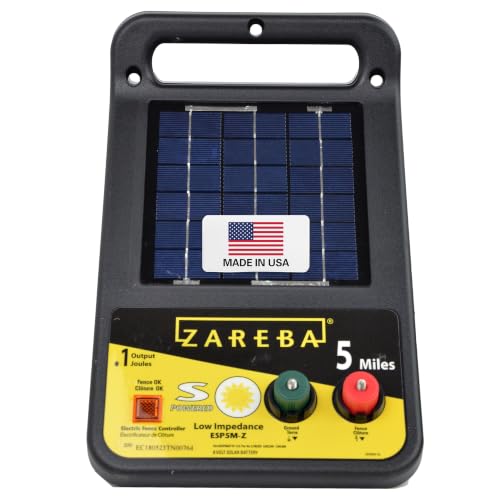
- Solar-powered with up to 5-mile ideal coverage
- Can run up to 2 weeks without sunlight
- Built-in mounting bracket for multiple post types
Best For: Small off-grid fence lines that need simple solar operation and easy mounting
Compact AC Fence Power

- 110V AC plug-in power with no batteries or solar needed
- Rated for up to 2 miles of single-wire fencing
- Weather-resistant and works with wire, poly wire, and netting
Best For: Small gardens, chicken runs, and simple deer deterrence
High-Output Multi-Use Guard

- 2J output with up to 15 miles of fence coverage
- Works with AC, 12V battery, or solar-ready setups
- Digital display and alarm add status and tamper alerts
Best For: Longer fence lines, deer control, and mixed power setups
Solar Day-Night Fence Guard
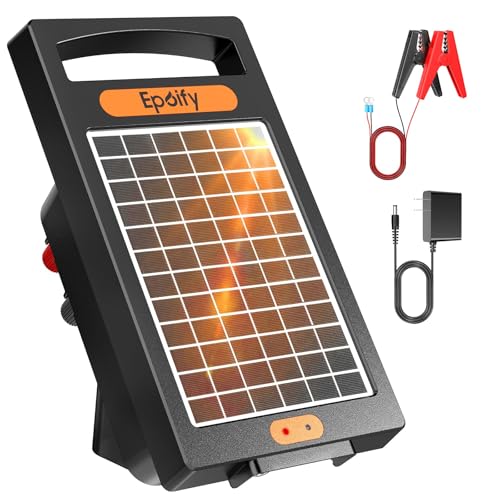
- Solar-powered with built-in battery for overnight operation
- Up to 10 miles of fence coverage
- Portable design for off-grid and temporary fencing
Best For: Remote gardens and small to medium fences needing solar power
Smart LCD Power Monitor
Ortis 12,000V 3 Joules Fence Charger

- 12,000V output with 3 joules of pulse energy
- Backlit LCD and flashing LED help spot issues fast
- Tool-free knobs speed up installation
Best For: Gardens, coops, and small farms needing simple perimeter control
Go-Anywhere Solar Option
10 Miles Solar Powered Electric Fence Charger

- Solar-powered and portable with no external batteries required
- Up to 10 miles of coverage with 0.18J output
- Waterproof, snow-resistant, and anti-collision build
Best For: Remote gardens, poultry areas, and temporary fence lines
High-Power Long-Range Pick
9J Electric Fence Charger Energizer
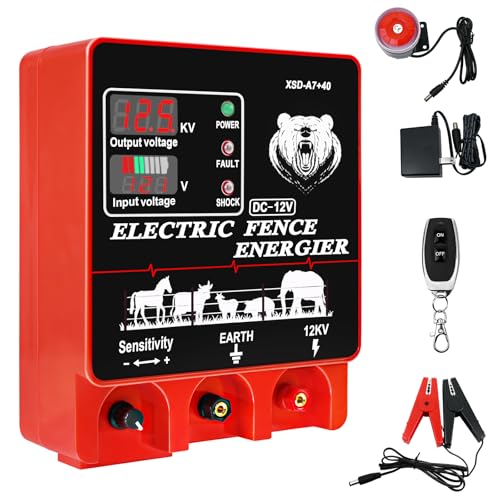
- 9J stored energy and 8J output energy
- Up to 20 miles of coverage in clear conditions
- Works with AC, battery, or solar setups
Best For: Large fence lines and users wanting high-output flexibility
AC High-Output Fence Power – Zareba 25 Mile AC Powered Low Impedance Electric Fence Charger
If you need electric fence chargers for deer control on a larger property with access to mains power, this Zareba AC unit is built to deliver steady coverage and handle tougher fence setups. Its low-impedance design and 1.0 output joule rating make it a practical choice when you want strong, dependable output across multiple fence types.
Best For: Larger farms or pastures using AC power and needing a rugged charger for broad fence coverage.
Pros:
- Rated up to 25 miles in ideal conditions and up to 6 miles in heavy weeds.
- Works with high tensile, polywire, and polytape fencing.
- Heavy-duty cabinet helps protect the circuitry from weather extremes.
- Made in the USA and tested with a 2-year limited warranty.
Cons:
- Requires AC power, so it is not suited to remote areas without electricity.
- Performance drops as weed pressure increases.
For buyers who want a plug-in charger with broad compatibility and solid output, this model is a straightforward option. It is especially appealing where deer pressure is part of a larger livestock or perimeter-fencing plan.
Solar Portable Predator Defense – 20 Miles Solar Powered Electric Fence Charger, 0.32J for Gardens, Livestock
For electric fence chargers for deer control in remote spots, this solar-powered unit stands out for portability and all-day operation. It is designed to keep a fence energized without AC access, making it useful for gardens, livestock areas, and temporary boundaries where deer pressure is a concern.
Best For: Remote garden or livestock fencing where solar power and easy repositioning matter most.
Pros:
- Solar-powered operation with internal battery support for day and night use.
- Claims high-voltage output of 5700-10200V for deer control and bear repellent use.
- Portable design makes it easy to move between fence locations.
- Weather-ready build includes waterproof, snow-resistant, and anti-collision features.
Cons:
- Listed fence coverage varies in the notes, with a 20-mile product title but 10-mile coverage detail.
- Solar performance depends on charging conditions and sunlight availability.
This is a flexible pick if you need a go-anywhere energizer for temporary or off-grid fencing. It leans more toward convenience and mobility than heavy-duty stationary installations.
Flexible Multi-Power Security – Electric Fence Charger 12V Input to 12KV Output, 2 Joule, 120 Acre Plug-in Electric Fence Energizer
If you want electric fence chargers for deer control with flexible power options, this model is built to run from AC mains, a 12V battery, or a solar panel. The 2 joule stored energy rating and wide acreage claim make it a strong fit for larger fence systems aimed at keeping wildlife and intruders out.
Best For: Large-acreage fence setups that need versatile power input and weatherproof protection.
Pros:
- Supports AC mains, 12V battery, or solar panel input.
- Rated for 70 to 120 acres with 2 J stored energy.
- Includes warning signs and conductive wire in the package.
- Weatherproof and rainproof casing is designed for harsh conditions.
Cons:
- Large-acreage claims depend on fence and ground conditions.
- Single-port output may be less flexible than multi-zone systems.
This energizer is a practical choice when you want one charger that can adapt to different power sources. It is especially attractive for mixed-use properties where wildlife pressure and changing installation needs matter.
Solar Low-Impedance Compact – Zareba Solar Electric Fence Charger, 5 Mile Range Low Impedance Energizer
For smaller-scale electric fence chargers for deer control, this Zareba solar unit offers a compact, low-impedance option that works well where AC power is unavailable. It is designed for remote fence lines and can stay running through extended cloudy periods, which makes it useful for basic perimeter protection around pastures and gardens.
Best For: Small to medium off-grid fences that need a simple solar charger with dependable backup runtime.
Pros:
- Solar-powered design energizes up to 5 miles in ideal conditions.
- Can operate for up to 2 weeks without sunlight.
- Low-impedance output helps reduce battery drain and fence-line power loss.
- Built-in mounting bracket supports T-posts, Y-posts, and round-wood posts.
Cons:
- Lower output joules make it better suited to lighter-duty fence needs.
- Coverage is much shorter than larger AC-powered chargers.
This is a sensible choice if you need a portable solar charger for a modest fence line. It is less about heavy-duty power and more about easy installation, off-grid convenience, and steady everyday operation.
Compact AC Fence Power – Plug-In Fence Energizer
If you want electric fence chargers for deer control in a simple plug-in setup, this 110V AC energizer is built for steady, around-the-clock use on smaller properties. It delivers pulsed deterrence without batteries or solar panels, and its 0.25J output is positioned as a practical way to discourage unwanted visitors while keeping day-to-day operation straightforward.
Best For: Gardens, chicken runs, and small farms that need a plug-in fence charger for basic deer and predator deterrence.
Pros:
- Runs on 110V AC power, so there are no batteries or solar charging concerns.
- Rated to power up to 2 miles of single wire for compact fence lines.
- Weather-resistant housing is designed for indoor or outdoor mounting.
- Works with electric fence wire, poly wire, and poultry netting.
Cons:
- 2-mile coverage is better suited to smaller setups than large pasture fencing.
- Lower 0.25J output is more of a deterrent unit than a heavy-duty livestock charger.
This is a straightforward choice if you value easy setup and consistent plug-in power over off-grid flexibility. For deer control around gardens or backyard fencing, it focuses on simplicity and dependable daily operation.
High-Output Multi-Use Guard – AC/DC Solar-Ready Charger
Among electric fence chargers for deer control, this 2-joule unit stands out for users who want more reach and more monitoring. It supports AC, 12V battery, and solar-ready operation, and the built-in display and alarm add useful feedback when you need to watch voltage or spot tampering on a larger perimeter.
Best For: Farmers and landowners who want a higher-output, multi-power fence charger for deer and wildlife control across longer fence lines.
Pros:
- 2J output and up to 15 miles of coverage for larger fence runs.
- AC/DC and solar-ready design supports grid, battery, or off-grid use.
- Digital display shows real-time voltage and battery status.
- Audible alarm helps alert you to voltage drops or tampering.
Cons:
- Solar panel is sold separately if you want full solar operation.
- Higher-capacity setup may be more than needed for small garden fences.
This model is the most versatile option in the group if you need one charger for multiple fence scenarios. It is a strong fit for deer pressure, livestock containment, and properties that benefit from better visibility into fence performance.
Solar Day-Night Fence Guard – 24-Hour Solar Charger
If you need electric fence chargers for deer control without relying on a constant plug-in source, this 24-hour solar model is designed for continuous operation. It stores power during the day and keeps the fence energized overnight, with a 0.18J output and up to 10-mile coverage for small to medium pasture or garden fencing.
Best For: Off-grid gardens, temporary fencing, and small to medium grazing areas that need solar-powered deer deterrence.
Pros:
- Solar-powered with a built-in battery for day charging and night protection.
- Up to 10 miles of coverage for small to medium fence layouts.
- Portable all-in-one design is easy to move and install.
- Works for livestock containment while helping deter raccoons, foxes, and stray animals.
Cons:
- Performance depends on sunlight, grounding, and vegetation management.
- Initial setup requires careful attention to charging and grounding steps.
- 0.18J output is modest compared with higher-output fence chargers.
This charger makes sense if you want a low-maintenance solar option and can keep the fence system well grounded and maintained. It is a practical pick for remote spots where daytime charging and overnight protection are more important than maximum output.
Smart LCD Power Monitor – Ortis 12,000V 3 Joules Fence Charger
If you need electric fence chargers for deer control in a smaller setup, this Ortis energizer offers a practical mix of power and visibility. Its 12,000V output and 3 joules of pulse energy are designed for fences up to 6.2 miles, while the LCD screen and flashing LED make it easier to keep an eye on performance at a glance.
Best For: Gardens, coops, and small farms that want an easy-to-monitor charger for everyday perimeter protection.
Pros:
- Up to 12,000V and 3 joules for fences up to 6.2 miles
- Backlit LCD display shows real-time voltage, even in sunlight
- Red LED flashes with each pulse and stops flashing if a fault occurs
- Tool-free terminal knobs make installation quick and simple
Cons:
- Fence wires and ground rods are not included
- Outdoor use may benefit from a waterproof cover for added reliability
- Best suited to small wild animals and perimeter protection rather than heavy-duty long-range needs
This is a solid choice if you want a straightforward charger with helpful status feedback and fast setup. It focuses more on easy monitoring and compact-fence coverage than on maximum range.
Go-Anywhere Solar Option – 10 Miles Solar Powered Electric Fence Charger
For electric fence chargers for deer control in remote or temporary setups, this solar-powered unit is built around portability and convenience. It offers up to 10 miles of coverage, 0.18J output, and a claimed 5700-10200V range, making it a flexible option for protecting gardens, poultry areas, and grazing boundaries without needing external batteries.
Best For: Portable fences, remote properties, and small farm setups that need solar-powered protection.
Pros:
- Solar-powered design with no external batteries required
- Up to 10 miles of fence coverage with 0.18J output
- Claims 24/7 operation with day charging and night battery backup
- Waterproof, snow-resistant, and anti-collision construction
Cons:
- Lower 0.18J output may be better for lighter-duty fencing
- Not the strongest option in this roundup for larger containment jobs
- Performance depends on solar charging conditions and battery storage
This charger makes sense if mobility and off-grid use matter more than maximum punch. It’s a practical solar pick for users who want a lightweight fence energizer that can move with changing pasture or garden layouts.
High-Power Long-Range Pick – 9J Electric Fence Charger Energizer
If you’re comparing electric fence chargers for deer control and want more output, this plug-in fencer is built for larger, more demanding setups. With 9 joules of stored energy, 8 joules of output energy, and support for up to 20 miles of fence line in vegetation-free conditions, it’s aimed at serious livestock and predator protection.
Best For: Larger fence lines and mixed-power setups that need high output and long-range coverage.
Pros:
- 9 joules stored energy and 8 joules output energy
- Up to 20 miles of coverage in vegetation-free conditions
- LCD display shows input voltage and battery level
- Supports AC, battery, or solar-panel combinations
Cons:
- Best performance requires proper grounding with 1–3 steel rods
- Coverage is based on vegetation-free conditions
- Higher-power unit may be more than needed for small gardens
This is the strongest long-range option in the group and the most flexible on power input. It’s a good fit when you need more headroom for larger perimeters or more demanding containment tasks.
How We Picked the Best Electric Fence Chargers for Deer Control
We focused on Electric Fence Chargers for Deer Control that offer a sensible mix of output, range, and power source flexibility. We also prioritized models that fit real-world setups, from small garden runs to larger perimeter fences, with attention to low-impedance performance, portability, and ease of installation.
Quick Comparison
If you need simple plug-in reliability, AC-powered chargers are usually the easiest choice. If your fence is remote or temporary, solar and AC/DC-compatible units offer more placement freedom. Higher joule ratings generally support longer fence runs and heavier vegetation, while lower-output chargers can be a better fit for short, clean fences around gardens or small plots.
Key Buying Factors for Electric Fence Chargers for Deer Control
Fence Length and Load
Match the charger to the actual fence length, not just the property size. Brush, wet vegetation, and multiple wire strands all increase load and reduce performance. If your fence line has heavy vegetation, consider a stronger low-impedance charger with more output headroom.
Power Source
Choose AC if you have reliable access to mains power and want set-it-and-forget-it operation. Choose solar for remote sites, temporary fencing, or areas where running power is inconvenient. Battery or AC/DC-compatible models can add flexibility if your setup may change later.
Output and Animal Pressure
For deer, a charger needs enough voltage and pulse energy to create a memorable deterrent. Larger properties or fences under heavier pressure often benefit from higher-output units, while smaller gardens may be well served by modest solar models if the fence is well built and maintained.
Installation and Maintenance
Good grounding, proper insulators, and clean wire connections matter as much as the charger itself. Even strong Electric Fence Chargers for Deer Control can underperform if grounding is weak or the fence is shorting out on weeds or damaged hardware.
Who Should Buy Which Electric Fence Chargers for Deer Control?
Small gardens and backyard growers often do best with compact solar or low-wattage plug-in chargers. Larger farms, orchards, and wildlife-heavy properties usually need higher-output AC or AC/DC units with more range. If portability matters, choose solar; if consistent power matters most, choose plug-in. The best choice is the one that matches your fence layout, local conditions, and how often you want to maintain it.