Electronic earmuffs let you hear instructions and conversation while reducing the impact of gunfire. The right pair should fit securely, work with your shooting setup, and provide enough protection for your range.
These 10 selected listings span slim everyday muffs, higher-rated options, and models with gel pads, rechargeable power, or Bluetooth. Here’s what matters when comparing them.
Best 10 Electronic Ear Muffs for Shooting Picks for 2026
Best for Glasses Wearers
PROHEAR 022 Gel-Pad Electronic Earmuffs
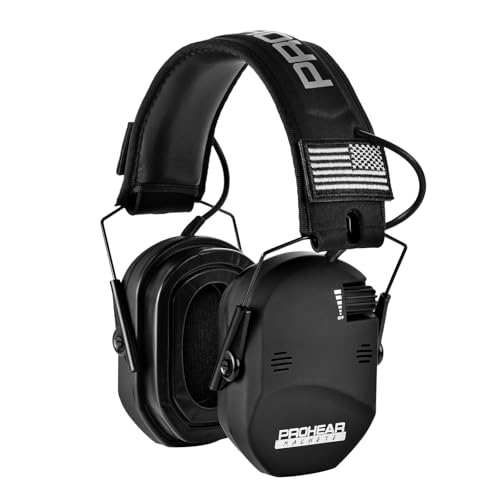
- Gel-core silicone pads are easy to clean.
- Four microphones with up to 5× amplification.
- 29 dB SNR; two AAA batteries not included.
Best For: Glasses wearers seeking wipe-clean pads.
Best Lightweight Pick
PROHEAR 066 Electronic Shooting Earmuffs
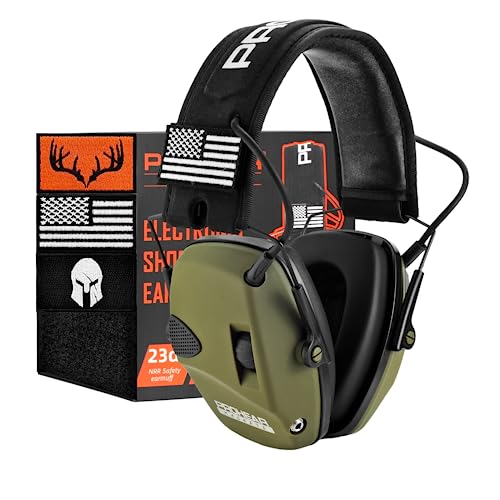
- Listed weight of 9.6 ounces.
- 23 dB NRR and up to 4× amplification.
- Foldable, with IPX4 resistance.
Best For: Portable range and hunting use.
Best Low-Profile Classic
Walker's Razor Slim Electronic Muff

- Extra-slim cups and 23 dB NRR.
- Two microphones amplify ambient sound.
- Recessed volume knob and audio input.
Best For: Simple controls in a slim, rugged muff.
Best for Long Battery Life
Howard Leight Impact Sport Earmuffs
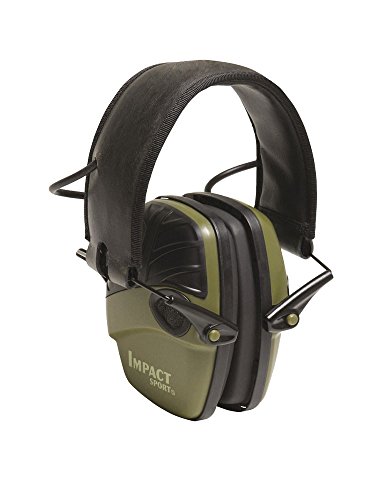
- Approximately 350 hours of stated battery life.
- 22 dB NRR with directional microphones.
- Folds compactly; AAA batteries included.
Best For: Longer use between battery changes.
Best for 360-Degree Awareness
Walker's Razor Quad Bluetooth Muffs

- Four microphones capture sound in all directions.
- Bluetooth with separate ambient-volume adjustment.
- 23 dB NRR and folding, low-profile cups.
Best For: Shooters seeking all-around sound pickup and Bluetooth.
Best for Gel-Pad Comfort
Savior Equipment Apollo Electronic Earmuffs

- 24 dB NRR and two ambient-sound microphones.
- Gel pads and padded headband included.
- Three-year warranty on electronic parts.
Best For: Range users who want included gel pads and an adjustable fit.
Best Rechargeable Option
Walker's Razor Rechargeable Muffs
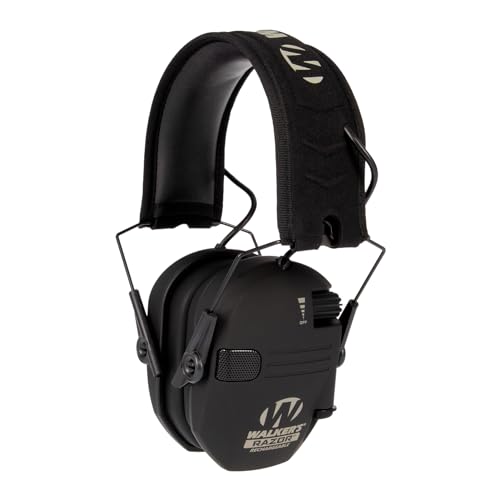
- Up to 80 hours of battery life; USB-C charging.
- 21 dB NRR and fast sound-activated compression.
- Two microphones and a 3.5 mm audio jack.
Best For: Shooters who prefer rechargeable power and wired audio input.
Best for Bluetooth Control

- Stated 25 dB NRR
- Adaptive impulse-noise suppression
- Separate Bluetooth and ambient controls
Best For: Shooters who want Bluetooth audio with independent ambient-volume control
Best for Listening Modes
Walker’s XCEL Bluetooth Earmuffs

- Stated 26 dB NRR
- Four listening modes
- Bluetooth for calls and notifications
Best For: Shooters and hunters who want selectable listening modes
Best Slim-Cup Pick
Walker’s Razor Slim Electronic Muff

- Stated 23 dB NRR
- Extra-slim ear cups
- Recessed volume knob and audio jack
Best For: Shooters who prefer slim cups and straightforward controls
Best for Glasses Wearers – PROHEAR 022 Gel-Pad Electronic Earmuffs
Among electronic ear muffs for shooting, the PROHEAR 022 stands out for its silicone ear pads with a cool gel core and glasses-friendly ear cups. Its stated 29 dB SNR and four microphones make it a feature-rich choice for range sessions or hunting.
Best For: Shooters who wear glasses or want wipe-clean ear pads for longer sessions.
Pros:
- Four omnidirectional microphones and up to 5× amplification help you hear quieter sounds.
- Gel-core silicone pads are sweat-resistant and easy to clean.
- Adjustable padded headband, volume control, and 3.5 mm audio jack.
Cons:
- Two AAA batteries are required but not included.
- At 16 ounces, it is heavier than the listed PROHEAR 066 model.
The combination of glasses-friendly padding and directional sound pickup is appealing if comfort and situational awareness matter most. Note that its 29 dB figure is an SNR rating, so it should not be compared directly with products listing NRR.
Best Lightweight Pick – PROHEAR 066 Electronic Shooting Earmuffs
If you want lightweight electronic ear muffs for shooting, the PROHEAR 066 weighs a listed 9.6 ounces and has slim cups designed for firearm stock clearance. It pairs a 23 dB NRR with up to 4× amplification of quieter sounds.
Best For: Shooters who prioritize a lighter, foldable muff for range trips and hunting.
Pros:
- Low-profile cups and an adjustable padded headband support a comfortable fit.
- Listed IPX4 resistance helps with water and sweat exposure.
- Foldable design, carrying pouch, and accessible single-knob volume control.
- Listed battery life is up to 300 hours on two AAA batteries.
Cons:
- Required AAA batteries are not included.
- Its 23 dB NRR is lower than the PROHEAR 022’s stated 29 dB SNR, though the two rating systems are not directly interchangeable.
The PROHEAR 066 makes a practical portable option, especially if you value low weight and slim cups over the 022’s gel pads and four-microphone setup.
Best Low-Profile Classic – Walker's Razor Slim Electronic Muff
The Walker’s Razor Slim is a straightforward option among electronic ear muffs for shooting: extra-slim cups, a 23 dB NRR, and two microphones that amplify safer ambient sounds. Its recessed volume knob is designed to be accessible without being easy to bump.
Best For: Shooters who want a slim, rugged muff with simple controls.
Pros:
- Low-profile ear cups provide a less bulky fit.
- Two hi-gain microphones amplify ambient sounds, with enhanced low-end frequencies.
- Rubberized coating, sound-dampening housing, and padded metal-wire headband.
- Audio input jack allows a wired connection to a phone or other source.
Cons:
- At a listed 15.2 ounces, it is heavier than the PROHEAR 066.
- Its two-microphone setup offers fewer pickup points than the four-microphone PROHEAR 022.
Choose this model if a slim profile and uncomplicated controls appeal more than extra microphones or specialized ear-pad materials.
Best for Long Battery Life – Howard Leight Impact Sport Earmuffs
For buyers comparing electronic ear muffs for shooting, the Howard Leight Impact Sport offers a 22 dB NRR, directional microphones, and low-profile cups intended to clear a firearm stock. It also includes the two AAA batteries needed to get started.
Best For: Shooters who want extended stated battery life and a compact folding design.
Pros:
- Directional microphones amplify range commands and ambient sound, with amplification shutting off at 82 dB.
- Approximately 350 hours of stated battery life and a four-hour automatic shutoff.
- Foldable design, adjustable headband, and low-profile ear cups.
- Includes AAA batteries, an AUX input, and a 3.5 mm connection cord.
Cons:
- Its 22 dB NRR is the lowest NRR among the products in this roundup that list one.
- The four-hour auto shutoff may require restarting the electronics during an extended session.
The Impact Sport is a convenient pick if you want batteries included and do not want to replace them often. Its compact fit and included audio cord add to its everyday range appeal.
Best for 360-Degree Awareness – Walker's Razor Quad Bluetooth Muffs
Among electronic ear muffs for shooting, the Walker’s Razor Quad stands out for four omnidirectional microphones that pick up sound around the shooter. Its Bluetooth connection lets you listen to a device while adjusting ambient sound separately.
Best For: Shooters who want all-around sound pickup and Bluetooth connectivity at the range.
Pros:
- Four microphones provide 360-degree sound pickup.
- Bluetooth, a built-in microphone, and independent ambient-volume adjustment add flexibility.
- 23 dB NRR, 0.02-second sound-activated compression, and a folding, low-profile design.
Cons:
- Requires two AAA batteries, though they are included.
- Its 23 dB NRR is lower than the 24 dB NRR of the Savior Apollo in this roundup.
The Quad is a practical pick when hearing activity around you matters as much as device connectivity. Check whether its 23 dB NRR suits your shooting conditions.
Best for Gel-Pad Comfort – Savior Equipment Apollo Electronic Earmuffs
The Savior Equipment Apollo is a comfort-focused option among electronic ear muffs for shooting. Gel ear pads and a padded mesh headband come included, along with two microphones for hearing your surroundings.
Best For: Range users who prioritize included gel pads, an adjustable fit, and a 24 dB NRR.
Pros:
- 24 dB NRR with two high-gain omnidirectional microphones.
- Included gel pads and padded headband are designed for extended wear.
- ABS shell, steel frame, included AAA batteries, and a three-year warranty on electronic parts.
Cons:
- Uses two AAA batteries rather than a rechargeable battery.
- Bluetooth and an audio-input jack are not listed in the supplied features.
The Apollo makes sense if comfort accessories and a sturdy build are higher priorities than connecting an audio device. Its included ID patch is a useful touch for shared range spaces.
Best Rechargeable Option – Walker's Razor Rechargeable Muffs
If you want electronic ear muffs for shooting without replacing AAA batteries, the Walker’s Razor Rechargeable offers up to 80 hours of battery life. It charges by USB-C and has an LED battery-level indicator.
Best For: Shooters who prefer rechargeable power and want an audio jack for a wired device.
Pros:
- Up to 80 hours of battery life, with a USB-C cable included.
- Two omnidirectional microphones and 0.02-second sound-activated compression.
- 3.5 mm audio jack, comfort headband, and collapsible design.
Cons:
- 21 dB NRR is the lowest stated rating of the three products in this roundup.
- Audio-device connection is via a 3.5 mm jack; Bluetooth is not listed.
This model trades the higher stated NRR of the other two picks for rechargeable convenience. Consider the 21 dB rating when choosing protection for your range setup.
Best for Bluetooth Control – Peltor Sport Tactical 500
The Peltor Sport Tactical 500 is a feature-rich option among electronic ear muffs for shooting. It pairs a stated 25 dB NRR with adaptive suppression for loud impulse noises, plus microphones designed to preserve voices and low-level sounds.
Best For: Shooters who want Bluetooth audio and separate controls for device audio and ambient sound.
Pros:
- Dynamic suppression adjusts its response to gunshots and other loud impulses.
- Clear Voice Tracking helps reduce unwanted background and wind noise.
- Low-profile cups, a vented headband, and conformable cushions are designed for comfort around long guns.
- Foldable design includes a storage bag.
Cons:
- Two AA batteries are not included.
- The compatible rechargeable battery pack is sold separately.
Choose this pair if independent Bluetooth and ambient-volume controls matter to you. Its voice-focused sound processing and adjustable fit add practical appeal for range use.
Best for Listening Modes – Walker’s XCEL Bluetooth Earmuffs
Walker's XCEL Digital Electronic Hearing Protection Earmuffs with Bluetooth & Voice Clarity – Grey
Check Price On AmazonWalker’s XCEL stands out among electronic ear muffs for shooting with four listening modes and a stated 26 dB NRR. Its omnidirectional microphones amplify environmental sounds, while sound-activated compression and dynamic suppression respond to louder noise.
Best For: Range shooters and hunters who want selectable listening modes alongside Bluetooth connectivity.
Pros:
- Four listening modes offer options for different listening preferences.
- Hi-gain omnidirectional microphones support awareness of surrounding sounds.
- Bluetooth connects to a mobile device for calls and notifications.
- Voice prompts, auto shut-off, and a low-battery warning aid operation.
Cons:
- At a listed 16 ounces, it weighs more than the listed 12.96-ounce Peltor model.
The XCEL makes the strongest case for buyers who will use its mode selection. If you prefer fewer settings, a simpler pair may be easier to operate.
Best Slim-Cup Pick – Walker’s Razor Slim Electronic Muff
The Walker’s Razor Slim is a straightforward choice among electronic ear muffs for shooting if you prefer extra-slim cups. It has a stated 23 dB NRR, two hi-gain microphones for amplifying safe sounds, and sound-activated compression.
Best For: Shooters who prioritize a slim profile and simple external controls over wireless connectivity.
Pros:
- Extra-slim cups keep the fit low-profile.
- Two microphones amplify safe sounds for awareness of your surroundings.
- A slightly recessed external volume knob helps limit accidental adjustments.
- An audio input jack lets you connect a compatible sound source.
Cons:
- Its stated 23 dB NRR is lower than the ratings listed for the other two models here.
- Audio connection uses a jack rather than Bluetooth.
This is the simpler, slim-cup alternative in the group. The rubberized coating, padded headband, and accessible battery door add useful everyday touches without adding menu-based controls.
How We Picked These Electronic Ear Muffs for Shooting
We compared the selected listings on their stated noise-reduction ratings, microphone features, fit-related design, and extras such as gel pads, rechargeable power, and Bluetooth. A specification is a starting point, not a guarantee of real-world protection: the seal around your ears and how you use the muffs matter just as much. We did not treat a higher price or a longer feature list as proof of a better fit for every shooter.
Quick Comparison: Which Features Matter Most?
Start with the kind of range you use. For a straightforward range kit, slim electronic muffs such as the Walker’s Razor Slim and Howard Leight Impact Sport are worth comparing for fit, controls, and stock clearance. If you want to prioritize a stated noise rating, the PROHEAR 022 lists 29 dB SNR, while the Savior Equipment Apollo lists 24 dB NRR. Those figures use different rating systems and should not be compared as if they were identical.
For convenience features, look at the Savior Apollo’s listed gel pads, the Walker’s rechargeable listing for its power setup, or the Peltor Sport Tactical 500 and Walker’s XCEL for Bluetooth. Check the exact model and included accessories before buying. Walker’s Razor Slim appears twice in the selected listings, so compare the offers rather than assuming they are two different muffs.
Key Buying Factors for Electronic Ear Muffs for Shooting
Protection and Seal
Check whether a listing reports NRR or SNR, and compare like with like. Ratings are measured under standardized conditions; glasses arms, hair, hats, or a poorly adjusted headband can break the ear-cup seal. At especially loud ranges, including many indoor ranges, consider wearing properly fitted earplugs under your muffs and follow the range’s hearing-protection rules.
Fit, Sound, and Controls
Low-profile cups may interfere less with a rifle or shotgun stock, but they still need to cover your ears comfortably. Look for accessible volume controls and microphones that help you hear speech and range commands. Electronic amplification is a convenience, not a substitute for sufficient passive protection when the electronics are off or the batteries run down.
Power and Extras
Decide whether replaceable batteries or charging better suits your routine, and check the stated runtime, charging method, and spare-power options for the exact model. Bluetooth can be useful, but it should not distract you from range commands. Gel pads may improve comfort for some wearers; confirm whether they are included or sold separately.
Who Should Buy Which Electronic Ear Muffs for Shooting?
Choose a slim, simple model if you mainly want to hear instructions without adding features you will rarely use. Prioritize a secure seal and a suitable protection rating if you shoot frequently or use loud ranges. Consider gel pads for longer sessions, rechargeable power if you dislike replacing batteries, and Bluetooth only if you have a practical use for it. Whichever pair you choose, test its fit with your usual eyewear before relying on it at the range.