Choosing the right fence stretcher can make tense, time-consuming fence repairs faster and more consistent. The best tools hold wire securely, distribute pulling force evenly, and help you finish cleaner, tighter lines.
Below, we focus on practical options for woven wire, barbed wire, chain link, and general fence repair so you can match the tool to the job.
Best 10 Fence Stretchers Picks for 2026
Hands-Free Wire Repair
Fence Stretcher-Splicer for High-Tensile, Barbed, or Smooth Wire

- Controlled-release ratchet reduces line stress
- Splices, stretches, and repositions wire
- Holds ends in place for hands-free splicing
Best For: Farm and ranch fence repairs with wire splicing
Woven Wire Tensioning
4ft Woven Wire Fence Stretcher Bar with 5 Wedges

- Double-sided hooks add strong grip
- Five wedges help straighten and stabilize wire
- Rust-proof steel for outdoor use
Best For: Woven wire fence installation and repair
Endless Wire Support
Goldenrod 415 Third-Hook Fence Stretcher-Splicer
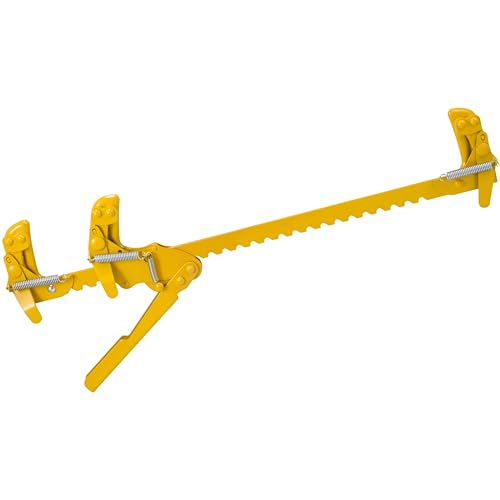
- Third hook supports endless wire stretching
- Compatible with high-tensile, barbed, and smooth wire
- Combines stretching and splicing
Best For: Continuous wire stretching on common fence types
Quick Short-Run Repairs
Texas Fence Fixer Barbed Wire Tightener

- Claims about 60-second tightening
- Works with barbed, electric, horse, and net wire
- No staple removal or tying required
Best For: Fast repairs on short fence runs and watergaps
Five-Hook Stretcher

- Five hooks help distribute tension evenly.
- Galvanized steel body with powder coating.
- Works for chain link and other wire fencing.
Best For: Even tension across chain link fabric and wire fence projects
Rugged Ratchet Puller
Heavy Duty Wire Fence Stretcher

- Carbon steel build with cast components.
- Long-arm lever aims to reduce effort.
- Ratchet design delivers strong pulling force.
Best For: Agricultural, ranch, and residential wire fence repair
Heavy-Duty Wire Puller
4ft Woven Wire Fence Stretcher Bar

- Carbon steel build for heavy use
- Five wedges for stronger grip
- Red coating helps resist rust
Best For: Farms, ranches, and outdoor fencing
Ratchet Wire Tensioner
Heavy Duty Carbon Steel Fence Stretcher Tool

- Ratchet mechanism for easier tightening
- Handles barbed, high tensile, and smooth wire
- Built-in splicer helps even tension
Best For: Mixed wire fencing on farms, ranches, and homes
Simple Fence Repair Pick
Miyake Fence Wire Stretcher Tool

- Heavy-duty build for fence maintenance
- Works for new installs and repairs
- Backed by a 30-day warranty
Best For: Basic tightening and repair work
Hands-Free Wire Repair – Fence Stretcher-Splicer for High-Tensile, Barbed, or Smooth Wire
If you need a practical fence stretcher for routine repairs and tightening, the Goldenrod 405 is built to splice, stretch, and reposition wire without a complicated setup. Its controlled-release ratchet is designed to reduce line stress when wire is let go, which makes it useful when you want more control during fence work.
Best For: Farmers, ranchers, and landowners who need one tool for stretching and splicing high-tensile, barbed, or smooth wire.
Pros:
- Controlled-release holding ratchet helps reduce line stress
- Can quickly tighten high-tensile, barbed, or smooth wire
- Holds wire ends in place so both hands are free for splicing
- Made in the U.S.A.
Cons:
- Focused on wire fencing rather than woven wire panels
- Metal construction may feel more tool-like than lightweight options
This is a straightforward fence stretcher-splicer for anyone who wants a single tool that can handle tightening and joining wire. If your work involves frequent wire repairs, its hands-free splicing support is the standout feature.
Woven Wire Tensioning – 4ft Woven Wire Fence Stretcher Bar with 5 Wedges
This woven wire fence stretcher is made for stretching and straightening field fence more efficiently, especially when you want stronger grip during installation. The double-sided hook design and five built-in wedges are intended to help hold the wire firmly while you tension and align it.
Best For: Woven wire fence installation, maintenance, and repair on farms, ranches, and similar outdoor properties.
Pros:
- Double-sided hooks provide strong grip and stretching force
- Five wedges help improve stability and reduce looseness
- Made of high-quality steel with rust-proof treatment
- Suitable for farms, ranches, garden barriers, and zoo fences
Cons:
- Primarily designed for woven wire, not general all-purpose fence work
- At 4 ft, taller fences may need section-by-section tensioning
For woven wire jobs, this tool is aimed at making tensioning faster and more controlled. The wedge system adds useful holding power if you regularly deal with fence net that is hard to keep straight.
Endless Wire Support – Goldenrod 415 Third-Hook Fence Stretcher-Splicer
The Goldenrod 415 is a fence stretcher-splicer built for stretching wire with an added third hook to support endless wire stretching. It is compatible with high-tensile, barbed, and smooth wire, making it a focused option for wire fence work where extra reach and flexibility matter.
Best For: Wire fencing projects that need endless stretching support with compatibility across common wire types.
Pros:
- Third hook supports endless wire stretching
- Works with high-tensile, barbed, and smooth wire
- Designed as a stretcher-splicer for wire fence tasks
Cons:
- Feature set is narrower than more all-in-one fence tools
- No extra details provided about handle, release, or materials
If you want a stretcher-splicer with an extra hook for continuous wire work, this model keeps the design simple and task-focused. It is best suited to users who already know they need third-hook stretching support.
Quick Short-Run Repairs – Texas Fence Fixer Barbed Wire Tightener
The Texas Fence Fixer is a fence stretcher and tightener designed to make quick work of barbed wire repairs, especially on shorter sections. It is described as working in about sixty seconds and can be used with barbed wire, electric fence wire, horse fencing, or net wire fencing.
Best For: Fast tightening on short fence runs, watergaps, garden fences, corrals, and turning wings.
Pros:
- Claims to stretch and tighten barbed wire in about sixty seconds
- Works with barbed wire, electric wire, horse fencing, and net wire
- Particularly useful on watergaps and short runs
- No need to remove staples or tie wires
Cons:
- Most useful for short runs rather than larger stretches
- Not much detail provided on construction or adjustment features
For quick fence fixes, this tool is clearly aimed at speed and convenience. If your main job is tightening short sections without pulling staples or retying wire, it stands out as a simple repair solution.
Gear-Driven Puller – Heavy-Duty Chain Link Stretcher
If you need fence stretchers for chain link work, this heavy-duty puller is built around a ratchet gear drive and long lever handle to reduce effort during installation or repair. It is designed to tension chain link fabric efficiently with one-person operation and offers a 9-inch rack travel range for precise control.
Best For: Chain link fence installation and repair when you want strong tension control without needing extra help.
Pros:
- Ratchet gear drive and long lever help deliver strong pulling force with less effort.
- 9-inch rack travel allows fine tension adjustment and smooth tightening.
- Three-point bracing includes a 2 5/8-inch angled base foot and deep-groove hook for better stability.
- Heavy-duty iron construction with anti-rust coating supports outdoor use.
Cons:
- Built specifically for chain link and similar wire fence fabric, so it is less general-purpose than some alternatives.
- Requires proper post sizing for the angled base foot to fit securely.
This is a practical pick if you want a fence stretcher tool focused on secure chain link tensioning and repeatable results. Its strength is in the controlled ratchet action and stable bracing, which make solo fence work more manageable.
Five-Hook Stretcher – 31.5 Inch Woven Wire Tool
Among fence stretchers for fabric and wire fencing, this 31.5-inch steel model focuses on even pull distribution with its five-hook design. The galvanized steel body and black powder coating are intended to resist rust and support long-term use on chain link and other wire fence projects.
Best For: Stretching chain link fabric and other wire fencing with even tension across multiple hook points.
Pros:
- Five-hook design helps spread tension evenly while stretching fence fabric.
- Galvanized steel construction with powder coating is made for durability and rust resistance.
- 31.5-inch length gives it broad contact across the fence fabric.
- Suitable for building or repairing chain link and other wire fencing.
Cons:
- Does not emphasize ratchet or lever features found on some other stretcher tools.
- Users should wear protective equipment such as gloves during use.
This option makes sense if your priority is a straightforward stretcher with multiple hook points for more even tension. It is a solid choice for basic fence fabric work where durability and simple function matter most.
Rugged Ratchet Puller – Heavy Duty Wire Fence Stretcher
If you want fence stretchers that handle a range of wire fence jobs, this heavy-duty carbon steel puller is built for installation and repair of barbed, smooth, and high-strength wire. Its long-arm lever design and ratchet action are meant to make tightening easier while still delivering strong pulling force.
Best For: Agricultural, ranch, and residential wire fence repair where you want a rugged, easy-to-use puller.
Pros:
- Solid carbon steel construction with cast arms, handles, and hooks adds sturdiness.
- Long-arm lever design is intended to save effort during fence tightening.
- Ratchet operation simplifies repair tasks and helps create powerful pulling force.
- Works with barbed, smooth, and high-strength wire fencing.
Cons:
- Focuses on wire fence repair, so it may be more tool than needed for very simple jobs.
- More specialized for tensioning than for general fence assembly tasks.
This is a strong all-purpose pick when you need a durable fence stretcher tool for demanding wire fence work. The leverage and ratchet design should appeal to users who want less effort without giving up pulling power.
Heavy-Duty Wire Puller – 4ft Woven Wire Fence Stretcher Bar
If you need fence stretchers that can handle woven wire, chain link, or barbed wire, this 4.4-foot stretcher bar is built for demanding outdoor work. The carbon steel body, staggered wedges, and dual side handles are all aimed at making tensioning more secure and less tiring.
Best For: Farms, ranches, and DIY fence installs that need strong wire grip and visible, weather-resistant construction.
Pros:
- High-strength carbon steel construction is designed to resist bending under tension.
- Five staggered wedges help improve grip and reduce wire slippage.
- Dual side handles make pulling and maneuvering easier during installation.
- Red powder coating adds corrosion resistance and improves visibility outdoors.
Cons:
- Designed around 4FT wire fences, so it may be less suitable for other fence heights.
- Best suited to users who need a manual stretcher bar rather than a ratcheting tool.
This is a practical pick if you want a straightforward fence stretcher bar that prioritizes grip, durability, and outdoor toughness over extra moving parts.
Ratchet Wire Tensioner – Heavy Duty Carbon Steel Fence Stretcher Tool
Among fence stretchers, this carbon steel tool stands out for its ratchet mechanism and 360° swivel design, which make tightening barbed, high tensile, or smooth wire more manageable. It is built for users who want a practical all-purpose tensioner for agricultural, ranch, or residential fence work.
Best For: Users who want a versatile wire tensioner with easier ratcheting control and splicing support.
Pros:
- Premium carbon steel construction is made for strength and long service life.
- Works with barbed, high tensile, and smooth wire fences.
- Ratchet mechanism and 360° swivel design support easier left- or right-handed use.
- Integrated splicer helps keep tension more uniform across fence wires.
Cons:
- At 8 pounds, it is heavier than simpler fence tools.
- Better suited to users who need a ratcheting tensioner than those wanting a basic stretcher bar.
If you want one of the more flexible fence stretchers for mixed wire tasks, this model offers useful control features without sacrificing durability.
Simple Fence Repair Pick – Miyake Fence Wire Stretcher Tool
This Miyake option is a straightforward choice among fence stretchers for barbed wire fencing, tightening, and repair work. Its heavy-duty build is meant to support everyday fence maintenance, whether you’re putting up a new line or correcting slack in an existing one.
Best For: Basic wire tightening and repair jobs where durability and simple operation matter most.
Pros:
- Heavy-duty materials are built for lasting use under demanding conditions.
- Useful for installing new fences or repairing existing ones.
- Designed to handle various wire types for more flexible use.
- Includes a 30-day manufacturer warranty for added peace of mind.
Cons:
- Feature details are simpler than some competing fence stretcher tools.
- Does not list specialized grip or ratchet features like some alternatives.
For buyers who want a no-fuss fence stretcher focused on core tightening and repair tasks, this is a solid utility-first pick.
How We Picked the Best Fence Stretchers
We looked for Fence Stretchers that balance pulling strength, grip security, and ease of use. Important factors included hook design, bar or frame rigidity, compatibility with different fence types, corrosion resistance, and whether the tool is better suited to repair work or full fence installation. We also favored options that are straightforward for farm, ranch, and property maintenance tasks.
Quick Comparison
In simple terms, some Fence Stretchers are built for woven wire and field fence, while others are better for barbed wire, smooth wire, or chain link fabric. Long bar-style tools generally spread tension across a wider section, which helps with larger pulls. Hook-based and splicer-style tools are often more versatile for targeted repairs or joining wire ends.
Key Buying Factors for Fence Stretchers
Fence Type Compatibility
Start by matching the tool to your fence. Woven wire and field fence usually benefit from a stretcher bar or wedge system. Barbed and smooth wire often need a strong tensioner or splicer. Chain link projects typically require a fabric stretcher designed to pull mesh evenly without distortion.
Grip, Leverage, and Control
A good fence stretcher should hold wire firmly without slipping. Look for secure hooks, solid welds, and enough leverage to reduce strain during tightening. For larger sections, a longer bar can help keep tension more uniform.
Durability and Corrosion Resistance
Because these tools are often used outdoors, steel construction and protective coatings matter. Heavy-duty carbon steel, anti-corrosion finishes, and reinforced contact points can improve service life, especially in wet or high-use environments.
Job Size and Ease of Use
For occasional repairs, a lighter all-purpose tool may be sufficient. For frequent field work or full-line installation, a more robust stretcher can save time and produce better results. Consider whether you need a compact tool for quick fixes or a larger setup for sustained tensioning.
Who Should Buy Which Fence Stretchers?
If you work mainly with woven wire or field fence, choose a bar-and-wedge style stretcher for broader, cleaner tensioning. If your work is mostly barbed wire repairs, a dedicated wire stretcher-splicer or tightener is usually the better fit. For chain link installations and fabric repairs, use a chain link fence stretcher built for mesh alignment. If you want one tool for mixed-property maintenance, an all-purpose fence stretcher is the most flexible option.
Overall, the best Fence Stretchers are the ones that match your fence material, give you steady control, and hold up to repeated outdoor use.