Shopping for FLIR thermal scopes? This roundup takes a broader look at thermal gear for hunting: the selected listings include riflescopes and handheld monoculars from GOYOJO, AGM, and TOPDON, rather than FLIR-branded models.
The first decision is whether you need a sight designed for a rifle or a handheld device for scanning. From there, compare the exact model configuration and specifications before you buy.
Best 7 Flir Thermal Scopes Picks for 2026
Best High-Resolution Riflescope
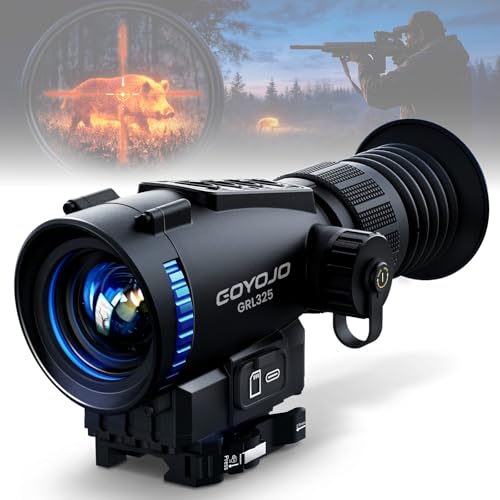
- 384×288 thermal sensor and 1024×768 OLED
- 55Hz refresh rate; 3×–12× magnification
- Recoil-activated recording and 64GB storage
Best For: Hunters seeking smooth rifle-mounted thermal imaging and recording
Best Handheld Long-Lens Option
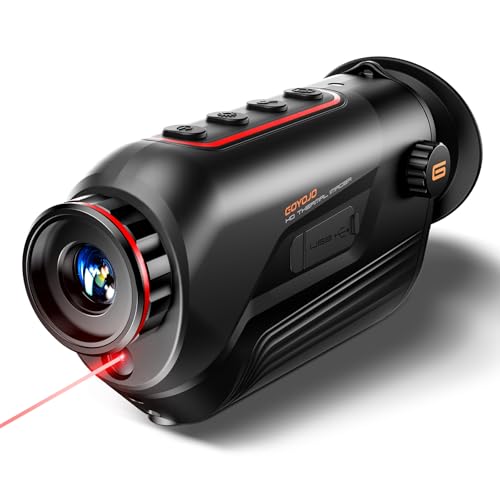
- Handheld 256×192 thermal monocular
- 15mm lens and 50Hz refresh rate
- Wi-Fi sharing and 16GB built-in storage
Best For: Handheld thermal scanning and outdoor observation
Best Wide-View Monocular

- 256×192 sensor with 10mm lens
- Listed 17.5-degree field of view
- Six palettes, app sharing, and 16GB storage
Best For: Broad-view handheld scanning rather than rifle mounting
Best Long-Runtime Riflescope

- Up to 11.5 hours; two batteries included
- IP67 waterproof rating
- Shot-activated recording and ten reticles
Best For: Long hunting sessions in wet or cold conditions
Long-Battery Handheld Pick
TOPDON TS004 Thermal Monocular

- 256 × 192 IR resolution at 50Hz
- Up to 11 hours of battery life
- IP67-rated handheld design
Best For: Long wildlife-viewing sessions without a rifle mount
Rifle-Mounted Hunting Pick
AGM Rattler V2 19-256 Thermal Scope

- Picatinny-mounted thermal riflescope
- Ten reticle styles and 8× digital zoom
- Shot-activated recording with audio
Best For: Close- to mid-range thermal hunting with a rifle
Feature-Rich Scanning Pick
AGM Taipan V2 Thermal Monocular

- Sub-35mK thermal detector
- 16GB storage for recordings with sound
- Replaceable battery; up to 7 hours
Best For: Handheld scanning with recording and app controls
Best High-Resolution Riflescope – GOYOJO GRL325
Shoppers comparing flir thermal scopes with other rifle-mounted options should consider the GOYOJO GRL325 for its 384×288 sensor, 25mm lens, and 55Hz refresh rate. Its stated heat-detection range is up to 1,546 yards, though detection does not guarantee target identification at that distance.
Best For: Hunters who want a rifle-mounted thermal scope with smooth imaging and built-in recording.
Pros:
- 384×288 sensor, <25mK sensitivity, and 1024×768 OLED display.
- 55Hz refresh rate and adjustable 3×–12× magnification.
- Recoil-activated recording, 64GB storage, and app streaming.
Cons:
- IP65 protection is less extensive than an IP67 rating.
- Quoted battery runtime is 6–8 hours.
The GRL325 offers a strong mix of image specifications and recording features. Choose it if those matter more to you than all-night operation on a single charge.
Best Handheld Long-Lens Option – GOYOJO G215
If your search for flir thermal scopes includes handheld alternatives, the GOYOJO G215 offers a 256×192 sensor, 15mm lens, and 50Hz refresh rate. It is a monocular for observation, not a rifle-mounted scope.
Best For: Hunters and outdoor users who want to scan by hand before deciding what needs a closer look.
Pros:
- 50Hz imaging and six selectable color palettes.
- 4× zoom, 16GB built-in storage, and Wi-Fi app viewing.
- Replaceable battery with a stated runtime of over six hours.
Cons:
- Cannot serve as a rifle-mounted sight.
- Does not support an SD card for storage expansion.
The G215 makes sense as a dedicated scanning tool, especially if app sharing is useful. Its handheld format is the deciding distinction from a thermal riflescope.
Best Wide-View Monocular – GOYOJO G210
For buyers looking at flir thermal scopes but needing a handheld scanner instead, the GOYOJO G210 pairs a 256×192 sensor with a 10mm lens and a listed 17.5-degree field of view. It is designed for observation rather than rifle mounting.
Best For: Users who prioritize a broad handheld view for scanning campsites, trails, or hunting areas.
Pros:
- 17.5-degree listed field of view and six thermal color palettes.
- Built-in 16GB storage and app-based image sharing.
- Replaceable battery, over six hours of stated runtime, and IP65 protection.
Cons:
- 25Hz refresh rate is lower than the G215’s stated 50Hz.
- Not a rifle-mounted aiming device.
The G210 is the more view-focused handheld pick in this group. Note that the supplied specifications conflict on zoom—listing both 4× capability and a 2× zoom ratio—so verify that detail before buying.
Best Long-Runtime Riflescope – AGM Rattler V2 25-256
Among rifle-mounted alternatives shoppers may encounter while researching flir thermal scopes, the AGM Rattler V2 25-256 stands out for its removable batteries and stated runtime of up to 11.5 hours. Its 25mm lens and 256×192 sensor offer a stated heat-detection range of up to 1,250 yards.
Best For: Hunters planning long sessions who want a weather-resistant thermal riflescope with spare power included.
Pros:
- Up to 11.5 hours of stated runtime; two rechargeable batteries included.
- IP67 waterproof rating and operation down to −22°F.
- Ten reticle options, stadiametric rangefinder, and shot-activated recording with audio.
Cons:
- 256×192 sensor has fewer pixels than the GRL325’s 384×288 sensor.
- Stadiametric ranging estimates distance rather than measuring it directly.
The Rattler V2 is a practical choice when battery flexibility and wet-weather protection take priority. Its detection-range figure should not be mistaken for a guaranteed identification or shooting distance.
Long-Battery Handheld Pick – TOPDON TS004 Thermal Monocular
If you are comparing flir thermal scopes but need a handheld viewer rather than a rifle-mounted optic, the TOPDON TS004 is worth a look. Its 256 × 192 IR resolution, 50Hz refresh rate, and 13mm lens suit scanning trails or watching wildlife after dark.
Best For: Hikers and wildlife watchers who want a durable handheld thermal monocular with long battery life.
Pros:
- Up to 11 hours of operation from its 5000mAh battery.
- IP67-rated housing and stated resistance to drops of up to 2 meters.
- Wireless phone connection supports live viewing and image or video capture through the TopInfrared app.
Cons:
- Handheld monocular, not a rifle-mounted scope.
- Detection is listed up to 410 meters, but clear detail visibility is specified within 100 yards.
Choose this one for prolonged observation and convenient phone viewing, not for an aiming reticle or firearm mounting.
Rifle-Mounted Hunting Pick – AGM Rattler V2 19-256 Thermal Scope
For shoppers browsing flir thermal scopes who actually need a rifle-mounted option, the AGM Rattler V2 19-256 offers a Picatinny mount, 2.5× base magnification, and a 256 × 192 thermal sensor. Its field of view is intended for close- to mid-range scanning.
Best For: Hunters seeking a mounted thermal sight with recording and adjustable reticles.
Pros:
- Ten reticle styles, four color options, and up to 8× digital zoom.
- Shot-activated video recording with onboard audio.
- IP67 waterproofing, recoil resistance, and up to 11.5 hours of stated runtime on a single charge.
Cons:
- 256 × 192 sensor resolution may offer less detail than higher-resolution thermal optics.
- Digital zoom enlarges the image rather than adding sensor detail.
The Rattler V2 is the purpose-built shooting choice here; its reticles, mount, and recording features matter more if you plan to use thermal imaging on a rifle rather than simply scan by hand.
Feature-Rich Scanning Pick – AGM Taipan V2 Thermal Monocular
Among alternatives shoppers may encounter while researching flir thermal scopes, the AGM Taipan V2 is a handheld thermal monocular for observation rather than aiming. It combines a stated sub-35mK detector with a 1280 × 960 LCOS display, onboard recording, and smartphone connectivity.
Best For: Wildlife observers and hunters who want handheld scanning with built-in recording and app controls.
Pros:
- Records photos and videos with sound to 16GB of built-in storage.
- Up to 7 hours of runtime from a replaceable rechargeable battery, with a power-saving tilt sensor.
- IP67-rated housing, four thermal color palettes, and AGM Connect app support.
Cons:
- Not a rifle-mounted thermal scope.
- Its stated battery runtime is shorter than the up-to-11-hour TOPDON TS004.
Pick the Taipan V2 if recording, display quality, and adjustable viewing tools take priority over maximum stated runtime; choose a dedicated riflescope if you need an aiming setup.
How We Picked the Best Flir Thermal Scopes
We organized the selected listings around their most important practical difference: riflescopes are intended for aiming when properly mounted and zeroed, while monoculars are handheld tools for spotting and observation. We also looked at the specifications stated in the product names, such as the GOYOJO G215’s 256 × 192 sensor, 15 mm lens, and 50 Hz refresh rate, and the G210’s 256 × 192 sensor and 10 mm lens. These are listing details, not independent performance tests; confirm the exact specifications on the product page.
The list contains two AGM Rattler V2 entries with the same supplied name. They should not be treated as two distinct models without checking their variant, lens, sensor, and included accessories. Likewise, none of these seven listings is identified as a FLIR-branded product.
Quick Comparison: Scope or Monocular?
For a rifle-mounted option, start with the GOYOJO GRS/GRL Series or the AGM Rattler V2 listings, then verify the specific configuration you are purchasing. For handheld scanning, compare the GOYOJO G215 and G210, TOPDON TS004, and AGM Taipan V2. A monocular can help locate heat signatures, but it is not a substitute for a properly mounted, zeroed riflescope. If you specifically want a FLIR-made scope, verify the manufacturer before choosing from results labeled “Flir Thermal Scopes.”
Key Buying Factors for Flir Thermal Scopes and Alternatives
Sensor, Lens, and Viewing Distance
Sensor resolution affects how much detail an image can show; lens choice affects field of view and apparent reach. Compare both rather than relying on a single advertised detection-distance figure. Detection means noticing a heat source—not necessarily identifying an animal or making a safe shot. Match the field of view to your terrain: wider for nearby scanning, narrower for observing farther out.
Refresh Rate and Field Use
A stated 50 Hz refresh rate, as listed for the G215 and TS004, can make moving subjects look smoother. Also check battery runtime, replaceable-battery options, weather resistance, display controls, and glove-friendly operation. For a riflescope, confirm compatible mounting hardware, zeroing features, reticles, and recoil suitability for your firearm; do not assume every variant includes the same equipment.
Rules and Safe Identification
Check local hunting rules before using thermal equipment. Thermal imagery shows heat contrast, not all the visual detail needed to identify a target and what lies beyond it. Use a separate means of positive identification whenever conditions require one, and follow all firearm-safety rules.
Who Should Buy Which Flir Thermal Scopes?
Choose a riflescope listing if you need a dedicated, compatible aiming optic and are prepared to mount and zero it. Choose a monocular if your priority is handheld scanning without pointing a firearm at everything you inspect. Compare the G210’s listed 10 mm lens with the G215’s listed 15 mm lens if field of view versus apparent reach matters to you, but verify full specifications before deciding. Buyers considering the Rattler V2 should resolve the duplicate listing and compare exact variants, while anyone set on FLIR should look for a confirmed FLIR-manufactured model.