Choosing the right enclosure can make home backup power safer, quieter, and easier to live with during outages.
Below, we’ve rounded up 10 strong options for protecting portable generators in everyday use and bad weather.
Best 10 Generator Enclosures for Home Backup Picks for 2026
Manual Power Transfer Switch

- Supports utility-to-generator or solar switching
- 100A, 24,000W rated for major household loads
- NEMA 3R galvanized steel enclosure
Best For: Homeowners adding hardwired backup power to a residence
Running Weather Tent

- Built for safe operation in rain and snow
- NFPA 701 and UL V-0 rated components
- Tool-free clamp system for 78" to 104" perimeters
Best For: Open-frame generator owners running backup power in wet weather
Aluminum Quiet Enclosure

- Sized for generators up to 39.4 x 32 x 31.7
- Cooling fan plus vents for heat management
- Foam-lined panels help reduce noise
Best For: Home backup buyers wanting a durable, quieter enclosure for a larger generator
Weather-Ready Tent
Generator Tent with Bracket, Waterproof Rooftop Design

- Pointed roof sheds water instead of pooling it.
- Roll-up flaps help with ventilation and fueling.
- 1680D canvas and stainless steel bracket add durability.
Best For: Home backup setups needing weather protection while running
Secure Steel Shed
Lockable Generator Box for Outside, Ventilated Enclosure
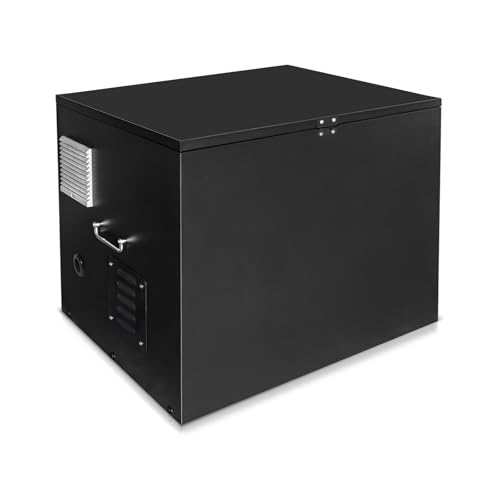
- Heavy-gauge steel build with powder coating.
- Lockable hasp adds theft deterrence.
- Fan and exhaust vents support airflow and cooling.
Best For: Outdoor backup generator storage with added security
Easy-Access Shelter
Porch Shield Running Generator Rain Tent

- Pre-assembled pole design unfolds quickly.
- Top opens for fueling and sides roll up for access.
- 600D PVC polyester improves tear resistance and waterproofing.
Best For: Fast-deploy backup power coverage with simple access
Dual-Purpose Run & Store Shed
Generator Shed For Storing & Running Generator Outdoor

- Combines running and storage protection
- Tool-free assembly and disassembly
- Side covers adjust for ventilation and viewing
Best For: Users who want one enclosure for both storage and generator operation
Heavy-Duty Waterproof Tent
GenArmor Generator Covers While Running

- 100% waterproof running protection
- Bolted one-piece frame and fabric design
- Quick access for refueling and panel checks
Best For: Home backup users who need a sturdy weatherproof running cover
Ultra-Heavy Duty Weather Shield
IGAN Generator Covers While Running

- Patented waterproof running protection
- Stainless steel frame for stability
- Works as a storage and running cover
Best For: Users needing a tough all-weather enclosure for running a portable generator
Weather-Sealed Running Cover – Universal 32 x 24 x 24
If you need generator enclosures for home backup that can stay on while the unit is running, this cover is built for that use case. It’s sized for many 5000W–10000W tubular or square-frame generators and adds all-weather protection while still allowing side access for airflow, wiring, and fuel stops.
Best For: Home backup buyers who want a running cover for a compatible open-frame generator in wet, windy, or dusty conditions.
Pros:
- Universal 32″ x 24″ x 24″ sizing fits many popular 5000W–10000W generators
- Three-layer build with 600D waterproof polyester, PU coating, and inner lining
- Openable side and top design supports airflow, heat dissipation, and refueling
- Hook-and-loop plus zipper closure helps keep the cover secure in wind
Cons:
- Fit depends on matching your generator’s external frame size exactly
- Designed for generators with an external frame, not every generator type
Overall, this is a practical running cover if your priority is weather protection without fully boxing in the generator. Just verify dimensions before buying, since the right fit is what makes it effective and easy to use.
Manual Power Transfer Switch – 100A Home Backup Control
Among generator enclosures for home backup, a transfer switch is the piece that makes standby power usable. This 100A manual switch is designed to move power from utility to generator or solar with a simple lever, while supporting whole-house loads like dryers, stoves, and HVAC equipment.
Best For: Homeowners who want a straightforward manual transfer switch for hardwired backup power.
Pros:
- 100A capacity and 24,000W handling for whole-house and circuit-level backup
- Galvanized steel NEMA 3R enclosure for indoor or outdoor use
- No electronic components, which can help with long-term durability
- Locking capability adds a layer of safety during power transfer
Cons:
- Installation is recommended for a professional electrician
- Requires proper wiring setup and space for the conductors
This is a solid choice if you want reliable backup power control without electronics that can be affected by moisture or dust. It’s built for long-term use, but the system is only as good as the installation, so professional setup is the smart move.
Running Weather Tent – Universal Open-Frame Shelter
If you’re comparing generator enclosures for home backup and need a solution that works while the generator is running, this tent is purpose-built for open-frame models. It sheds rain and snow, preserves airflow and exhaust clearance, and provides easy access for refueling without removing the cover.
Best For: Owners of open-frame portable generators who need safe wet-weather operation outdoors.
Pros:
- Designed for operation in rain, snow, sleet, ice, and wind
- Fire-rated materials with NFPA 701 and UL V-0 rated components
- Universal clamp system fits open-frame generators with 78″ to 104″ perimeter dimensions
- Tool-free installation with no drilling or permanent modification
Cons:
- Only for open-frame generators within the specified perimeter range
- Not a fully enclosed sound-reducing box
For running backup power in bad weather, this tent stands out because it is engineered around airflow and operating safety. It’s a strong fit if you want weather protection without blocking cooling or exhaust.
Aluminum Quiet Enclosure – Large Generator Box
For buyers looking at generator enclosures for home backup, this aluminum box focuses on protection, airflow, and noise reduction. It’s built to house larger generators, manage heat with vents and a cooling fan, and reduce operating sound with foam-lined panels.
Best For: Home backup users who want a larger, weather-resistant enclosure with noise control.
Pros:
- Fits generators up to 39.4″ x 32″ x 31.7″
- Louvered vents, airflow openings, and a high-speed cooling fan help manage heat
- Phenolic foam-lined panels are designed to reduce operating noise
- High-strength SD aluminum construction resists corrosion and harsh weather
- Lock adds security against unauthorized access
Cons:
- Large and more complex than a simple running cover
- May be heavier to handle than lightweight cover-style options
This enclosure is a good option if you want a more finished, protective setup than a fabric cover can provide. Its strongest appeal is the combination of ventilation, noise reduction, and durable aluminum construction.
Weather-Ready Tent – Generator Tent with Bracket, Waterproof Rooftop Design
If you want generator enclosures for home backup that stay practical during rain or snow, this tent-style cover is built around running protection. The pointed roof helps prevent water pooling, while the roll-up flaps support ventilation, exhaust, and fuel access when the generator is in use.
Best For: Home backup users who need a waterproof running cover with easy fueling access and an open, ventilated design.
Pros:
- Pointed top helps prevent water and debris buildup.
- Roll-up flaps support heat dissipation, exhaust, and circuit connection.
- 1680D marine-grade outer fabric with 210D nylon lining adds tear resistance.
- Stainless steel bracket and wire frame provide a sturdy roof support structure.
Cons:
- Size is limited to generators that fit the 28″ x 20″ x 20″ footprint.
- Best suited to external-frame generators rather than enclosed models.
This is a solid pick if you want a lightweight but heavy-duty running cover that prioritizes weather resistance and access. It focuses more on outdoor protection and usability than full enclosure security.
Secure Steel Shed – Lockable Generator Box for Outside, Ventilated Enclosure
Among generator enclosures for home backup, this steel box is the most security-focused option in the group. It combines lockable storage with a ventilated metal shell, making it a strong choice when you want to protect a portable generator outdoors while still allowing airflow and some noise reduction.
Best For: Users who want a lockable outdoor generator enclosure with steel construction and built-in ventilation.
Pros:
- Heavy-gauge steel construction with black powder coating for outdoor durability.
- Lockable hasp supports theft deterrence.
- 12V cooling fan and exhaust vents help manage airflow and overheating.
- 30″ x 22″ x 24″ interior fits many standard portable generators.
Cons:
- Heavier at 42 pounds, so it is less portable than a soft cover.
- Assembly is required, even though hardware and instructions are included.
If your priority is keeping a backup generator outdoors with a more secure, shed-like setup, this enclosure stands out. It trades portability for protection, locking capability, and a more permanent feel.
Easy-Access Shelter – Porch Shield Running Generator Rain Tent
If you want generator enclosures for home backup that are quick to use during an outage, this running tent emphasizes simplicity. Its pre-assembled pole design means you unfold it and get to work, while the top-opening layout and roll-up sides keep fueling and plug access straightforward.
Best For: Owners who want a fast-deploy running cover with easy access to the top and sides.
Pros:
- Pre-assembled pole design reduces setup hassle.
- Top-opening design makes fueling easier.
- Roll-up sides improve ventilation and access to plugs.
- 600D PVC polyester offers stronger tear resistance and waterproofing than 420D PU fabric.
Cons:
- Noisy-reduction claims are limited to the materials and enclosure style, not a fully sealed box.
- Fit is limited to generators in the 3500W-12000W range and 36″ x 28″ x 20″ size.
This cover is a practical middle ground for home backup use: fast to deploy, weather-resistant, and easy to service while the generator runs. It is a strong match if you value convenience more than hard-shell security.
Dual-Purpose Run & Store Shed – Generator Shed For Storing & Running Generator Outdoor
If you want generator enclosures for home backup that can stay in one place for both operation and storage, this shed is built around that workflow. It combines a running generator cover and a storage box, then lets you switch modes by flipping the side covers.
Best For: Homeowners who want one enclosure that handles both outdoor storage and safe generator operation in the same spot.
Pros:
- Works as both a running cover and an outdoor storage enclosure
- Lets you move or rotate the generator with the shed attached
- Fabric stays outside the steel frame, away from hot generator surfaces
- Side covers open to adjust observation and ventilation needs
Cons:
- Assembly is tool-free, but the multi-part shed setup may take more time than a simple cover
- Best suited to users who want a more structured enclosure rather than a lightweight tarp
This is a practical pick if you want a single enclosure to cover storage and backup-power use without changing products. The design focuses on safe clearance, airflow control, and easy repositioning, which makes it especially useful for fixed outdoor setups.
Heavy-Duty Waterproof Tent – GenArmor Generator Covers While Running
Among generator enclosures for home backup, this GenArmor tent is aimed at users who need a waterproof running cover with a sturdier built-in frame. It uses bolts to secure the frame and fabric into a one-piece design, with quick access for refueling and power-panel checks.
Best For: Home backup users who want a heavy-duty, weather-ready running enclosure with fast access.
Pros:
- 100% waterproof protection for running in bad weather
- Integrated frame-and-fabric build adds stability in strong wind
- Heavy-duty construction with a 14-pound build for durability
- Quick access to refuel and reach the power panel
Cons:
- Compatibility is limited to most 4000W-13000W generators
- Heavier design may be less convenient than a lighter cover
This model makes sense if weather protection and structural stability are the top priorities. The design is more robust than a basic cover, but that added strength also means it is best for owners who want a more permanent-style outdoor solution.
Ultra-Heavy Duty Weather Shield – IGAN Generator Covers While Running
If you need generator enclosures for home backup that can handle rain, snow, and wind, the IGAN cover is built as a rugged all-weather option. It uses a patented structure, a waterproof tarp, and a stainless steel frame to protect the generator while it is running.
Best For: Owners who want a durable, universal running cover for harsh weather and year-round use.
Pros:
- Designed for running safely in rain, snow, high winds, or wet conditions
- Patented structure is built to shield sensitive components
- 100% waterproof tarp with a 9-pound heavy-duty build
- Stainless steel frame adds long-term stability and durability
Cons:
- Universal fit still depends on having a compatible tubular or square frame
- Less focused on storage-specific use than a dual-purpose enclosure
This is a strong choice if you mainly want dependable weather protection during generator operation. It balances durability, compatibility, and simple assembly, making it a solid option for buyers who want a straightforward heavy-duty enclosure.
How We Picked the Best Generator Enclosures for Home Backup
We focused on Generator Enclosures for Home Backup that balance airflow, weather protection, portability, and compatibility with common portable generator sizes. We also looked at build quality, access for refueling and maintenance, and whether the design supports running the unit safely outdoors.
Quick Comparison
In broad terms, soft running tents are usually the easiest to move and store, while metal boxes and sheds tend to offer more security, noise reduction, and a cleaner permanent setup. Transfer switches are not enclosures, but they matter if you’re building a more complete home backup system and want safer power connection options.
Key Buying Factors for Generator Enclosures for Home Backup
Ventilation and Heat Control
Your enclosure must allow exhaust to exit freely and give the generator enough cooling airflow. Poor ventilation can shorten engine life and create dangerous heat buildup.
Weather Protection
Look for materials and shapes that shed rain, resist wind, and keep snow or standing water away from the generator. A good roofline and sturdy seams matter as much as waterproof claims.
Noise and Placement
If the generator will run near living spaces, enclosed metal units or heavier designs may help reduce noise. Just make sure sound reduction never comes at the expense of airflow or service access.
Size and Fit
Measure the generator with clearance for cords, fuel access, and exhaust routing. Many Generator Enclosures for Home Backup are sized for popular 3500W to 12000W models, but fit varies widely.
Security and Storage
If theft prevention matters, a lockable box or shed can be a better choice than a soft cover. For seasonal use, portability and quick setup may be more valuable than full-time protection.
Who Should Buy Which Generator Enclosures for Home Backup?
If you need the simplest field-ready option, choose a lightweight running tent or weather cover. If you want a more permanent backyard setup with better security and noise control, a rigid box or shed is usually the better fit. Homeowners who already plan to connect backup power through a safe electrical path should pair the enclosure with proper transfer equipment and local code compliance.
The best choice depends on how often you run the generator, how close it sits to the house, and whether your priority is mobility, storage, noise reduction, or all-around weather protection.