A good lightweight bipod gives your rifle a steadier rest without adding unnecessary bulk. The right choice depends less on a product name than on how it mounts, how high it needs to reach, and where you shoot.
These 10 listings cover Picatinny, M-LOK-style rail, and sling-stud options for hunting and range use. Use the guide below to narrow them down before checking the fit of a specific model.
Best 10 Lightweight Rifle Bipods Picks for 2026
Best for Positional Flexibility
CVLIFE Carbon Fiber Picatinny Bipod

- 1.2-pound carbon-fiber-and-polymer build
- 8–11-inch height range with seven settings
- Rotating, tilting head and quick-release mount
Best For: Picatinny setups needing versatile positioning
Best for Direct M-Rail Mounting
CVLIFE Quick Release M-Rail Bipod

- Tool-free, direct M-rail attachment
- 7.5–10-inch height range
- Five foldable leg positions
Best For: M-rail setups needing quick removal
Best for Low-Profile Height Adjustment
CVLIFE 6–9-Inch Picatinny Bipod
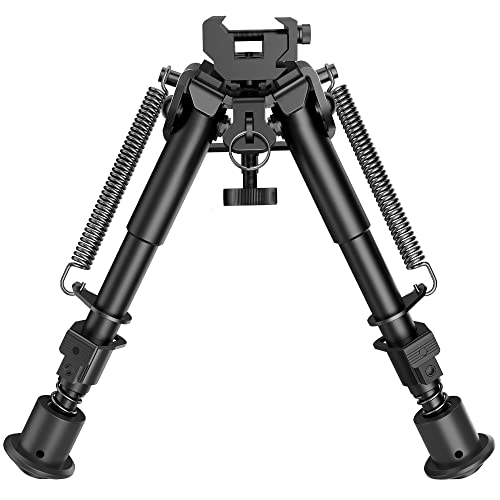
- Five settings from 6 to 9 inches
- Picatinny adapter included
- Spring-return legs and rubber feet
Best For: Shorter shooting positions with Picatinny compatibility
Best for Sling-Stud Mounting

- Quick-attach sling-stud mount
- 7–10-inch legs with seven settings
- 1.73-inch folded stack height
Best For: Sling-stud stocks needing compact stowage
Best Compact Height Range
CVLIFE Carbon Fiber 6–9-Inch Bipod

- 8.8-ounce carbon-fiber-leg design
- Five settings from 6 to 9 inches
- Picatinny adapter included
Best For: Compact, lower-height setups
Best Sling-Stud Mount
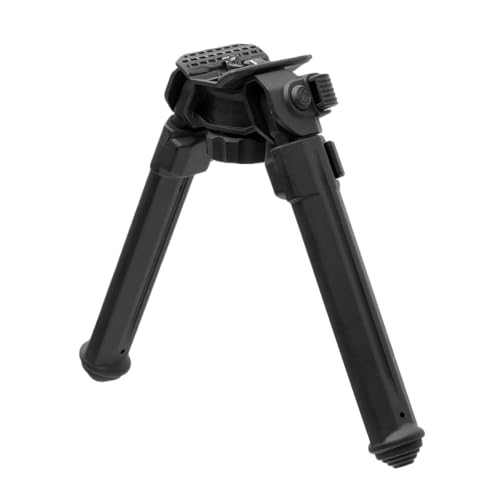
- Rapid-attach sling-stud mount
- Seven settings from 7 to 10 inches
- Low 1.73-inch folded stack
Best For: Sling-stud rifles needing a slim folded bipod
Best Angle Adjustment
CVLIFE Quick-Release Carbon Fiber Bipod

- Quick-release Picatinny mount
- 360-degree swivel and left-right tilt
- Six settings from 7.8 to 10.6 inches
Best For: Picatinny setups needing flexible angle adjustment
Best Low-Profile M-Lock Pick

- Listed weight: 8.7 oz
- Direct M-Lock attachment
- Five height positions
Best For: Compact prone or bench setups with M-Lock handguards
Best for Uneven Ground
CVLIFE 30% Carbon Fiber M-Rail Bipod

- 360° swivel and tilt
- Six heights: 7.8–10.6 in
- Forward- or backward-folding legs
Best For: M-rail setups on uneven ground
Best Sling-Stud Option
CVLIFE 30% Carbon Fiber Sling-Stud Bipod

- Direct sling-stud mounting
- Six heights: 7.5–10.6 in
- Integrated sling loop
Best For: Rifles with a sling swivel stud
Best for Positional Flexibility – CVLIFE Carbon Fiber Picatinny Bipod
Among lightweight rifle bipods, this CVLIFE model prioritizes adjustable positioning over minimum weight. Its carbon-fiber-and-polymer construction weighs 1.2 pounds and attaches to a Picatinny rail with a quick-release lever.
Best For: Picatinny-equipped setups that need height, leg-angle, and aiming adjustments.
Pros:
- Seven height settings span 8 to 11 inches.
- Head rotates 360 degrees and allows minor lateral tilt.
- Five leg-position notches include forward and backward stowage.
Cons:
- At 1.2 pounds, it is not the lightest option in this roundup.
- Designed for Picatinny mounting rather than direct M-rail attachment.
Choose it when quick removal and varied shooting positions matter more than shaving every ounce.
Best for Direct M-Rail Mounting – CVLIFE Quick Release M-Rail Bipod
If your priority in lightweight rifle bipods is a straightforward M-rail connection, this CVLIFE option attaches directly without tools. Its aluminum-and-polymer construction, widened leg spacing, and rubber feet are designed for stable support.
Best For: M-rail setups that benefit from tool-free removal and foldable legs.
Pros:
- Quick-detach knob enables tool-free attachment and removal.
- Six height positions cover 7.5 to 10 inches.
- Five locking leg positions allow forward or backward folding.
Cons:
- Requires a compatible M-rail mounting point.
- No tilt or rotation feature is specified in the supplied details.
This is the practical pick for direct M-rail mounting; the supplied details do not give an item weight for comparing ounces.
Best for Low-Profile Height Adjustment – CVLIFE 6–9-Inch Picatinny Bipod
This CVLIFE model gives shoppers comparing lightweight rifle bipods a compact 6-to-9-inch height range. It combines a sling-stud bipod with an included Picatinny adapter, plus spring-return legs for quick deployment.
Best For: Setups needing shorter leg settings and an included Picatinny adapter.
Pros:
- Five leg-length settings span 6 to 9 inches.
- Includes a Picatinny adapter.
- External springs aid leg deployment; rubber feet add grip.
Cons:
- Maximum height is limited to 9 inches.
- Mounting through the included adapter adds a component compared with a direct rail mount.
It suits buyers who want shorter support heights and spring-assisted legs, provided the 9-inch maximum meets their needs.
Best for Sling-Stud Mounting – Magpul MOE Bipod
For lightweight rifle bipods that attach to a sling swivel stud, the Magpul MOE is a strong candidate. Magpul describes the bipod as weighing 8 ounces, while the supplied item details list 11.84 ounces, so verify which figure applies to your buying comparison.
Best For: Sling-stud-equipped stocks where compact folding and easy leg adjustment matter.
Pros:
- Rapid-attach sling-stud mount uses self-locating clasps and a thumbwheel.
- Seven half-inch leg settings span 7 to 10 inches.
- Folds to a 1.73-inch stack height; rubber feet are replaceable.
Cons:
- Designed for sling swivel stud mounting, not direct Picatinny or M-rail attachment.
- Supplied weight figures conflict: 8 ounces in the product bullets and 11.84 ounces in the item details.
Its mounting system and slim folded profile stand out, but confirm the listed weight if ounces are your deciding factor.
Best Compact Height Range – CVLIFE Carbon Fiber 6–9-Inch Bipod
Among lightweight rifle bipods, this CVLIFE model pairs 8.8-ounce carbon-fiber legs with a compact 6–9-inch height range. It includes a Picatinny adapter and installation accessories for mounting.
Best For: Shooters who want a compact-height bipod with a Picatinny adapter and five leg-length settings.
Pros:
- 8.8-ounce design with carbon-fiber legs.
- Five height settings between 6 and 9 inches.
- Leg-release buttons and included Picatinny adapter.
Cons:
- Maximum height is limited to 9 inches.
- No swivel or tilt adjustment is specified.
Choose this one if lower shooting positions and a light carry weight matter more than extra height or angle adjustment.
Best Sling-Stud Mount – Magpul MOE Bipod
The Magpul MOE is a practical pick among lightweight rifle bipods for a rifle with an Uncle Mike’s-style sling swivel stud. Magpul describes the bipod as 8 ounces, though the supplied item details also list a 12-ounce item weight, so check the listed weight if every ounce matters.
Best For: Shooters who want a quick-attaching sling-stud bipod with a low folded profile.
Pros:
- Rapid-attach sling-stud mount with self-locating clasps and a thumbwheel.
- Seven leg positions spanning 7 to 10 inches.
- Legs fold to a 1.73-inch stack height; non-marring saddle protects the stock.
Cons:
- Requires a compatible sling swivel stud rather than mounting directly to a Picatinny rail.
- Supplied specifications conflict on weight: 8 ounces in the description versus 12 ounces in item details.
Its straightforward stud attachment and slim folded shape stand out; confirm mount compatibility and weight before buying.
Best Angle Adjustment – CVLIFE Quick-Release Carbon Fiber Bipod
For buyers comparing lightweight rifle bipods with more positioning options, this CVLIFE model combines a 30% carbon-fiber-and-polymer construction with a quick-release Picatinny mount. Its 360-degree swivel and left-right tilt provide adjustment beyond leg height alone.
Best For: Shooters who want quick Picatinny removal and swivel-and-tilt adjustment.
Pros:
- Quick-release lever for attaching and removing the Picatinny mount after initial width adjustment.
- 360-degree swivel and left-right tilt controlled by a knob.
- Six height settings from 7.8 to 10.6 inches, plus forward- and backward-folding legs.
Cons:
- Initial mount-width adjustment is needed before using the quick-release lever.
- No product weight is supplied, making its weight hard to compare with the other options.
This is the most adjustment-focused choice here, but check its actual weight if minimizing carry load is your main priority.
Best Low-Profile M-Lock Pick – Feyachi B13 6–9-Inch Bipod
Feyachi B13 Bipod 6-9 Inch Lightweight Bipod Directly Attach to System for Hunting
Check Price On AmazonAmong lightweight rifle bipods, the Feyachi B13 stands out for its direct M-Lock attachment and listed 8.7-ounce weight. Its 6–9-inch adjustment suits prone shooting and bench rests.
Best For: Shooters who want a compact, direct-mount M-Lock bipod for prone or bench use.
Pros:
- Attaches directly to an M-Lock handguard without an adapter.
- Five height positions and quick-fold legs.
- Aluminum and hardened-steel construction with non-slip rubber feet.
Cons:
- Requires an M-Lock mounting surface.
- Its 9-inch maximum height may not suit those seeking a taller setup.
Choose this one if low weight and a straightforward, low-profile mount matter more than extra height.
Best for Uneven Ground – CVLIFE 30% Carbon Fiber M-Rail Bipod
If you’re comparing lightweight rifle bipods for changing terrain, this CVLIFE M-rail model pairs 30% carbon fiber material with a head that swivels 360 degrees and tilts for leveling.
Best For: M-rail users who want swivel and tilt adjustment for uneven shooting positions.
Pros:
- Six locking height settings from 7.8 to 10.6 inches.
- Legs fold forward or backward for storage.
- Anti-slip rubber feet help maintain footing outdoors.
Cons:
- Requires a compatible M-rail mounting surface.
- No product weight is provided, so its weight is difficult to compare directly.
The adjustable head is the main reason to pick this model over a simpler fixed-position option; check its height range against your usual shooting position.
Best Sling-Stud Option – CVLIFE 30% Carbon Fiber Sling-Stud Bipod
For shoppers seeking lightweight rifle bipods that mount to an existing sling swivel stud, this CVLIFE model uses 30% carbon fiber legs and base. An integrated sling loop helps preserve a sling attachment point.
Best For: Rifles with a sling swivel stud whose owners want adjustable support and a sling loop.
Pros:
- Mounts to a sling swivel stud without a separate rail adapter.
- Six locking height positions from 7.5 to 10.6 inches.
- Legs fold forward or backward, and rubber feet provide grip.
Cons:
- M-rail and Picatinny mounting require adapters that are not included.
- No exact product weight is listed for comparison.
This is the more natural fit of the three if your rifle already has a sling stud; factor in a separate adapter if you plan to mount it to a rail instead.
How We Picked These Lightweight Rifle Bipods
We focused on the buying decisions that distinguish these 10 selected listings: mounting interface, stated height range, quick-release convenience, and materials described as carbon fiber or lightweight. The list includes repeated or closely related product names, so a different listing does not necessarily mean a different design. We did not treat a carbon-fiber label or a tactical name as proof of lower weight or better stability; check each listing’s current specifications for those details.
Quick Comparison: Start with the Mount
Picatinny: Several CVLIFE options use a Picatinny attachment, including quick-release models and a 6–9-inch spring-return model. These are the first listings to check if your rifle already has a suitable rail section.
M-LOK-style rail: The Feyachi B13 and CVLIFE M-Rail listings target direct attachment to a compatible handguard. Confirm the actual interface in the seller’s specifications rather than assuming similarly named rail systems are interchangeable.
Sling stud: CVLIFE sling-stud listings suit rifles with a compatible swivel stud; one listing also mentions an adapter. Check what hardware is included and whether the mount leaves the sling usable. The Magpul MOE Bipod appears twice in this selection, so compare those listings for differences in configuration rather than counting them as two distinct designs.
Key Buying Factors for Lightweight Rifle Bipods
Fit Comes First
Identify the mounting point on your rifle before comparing prices. A Picatinny clamp needs a suitable rail; an M-LOK attachment needs compatible slots; and a sling-stud mount needs the right stud arrangement. Also check clearance around the handguard, sling, and any other mounted accessories. If an adapter is required, account for its cost and added weight.
Choose a Useful Height
The stated 6–9-inch options are a starting point for low shooting positions, but the best height depends on your shooting position, stock, optic, and terrain. Uneven ground can make independently adjustable legs useful. Confirm the adjustment range and leg controls on the exact model you plan to buy.
Balance Weight, Handling, and Stability
Look for a published total weight that includes the mounting hardware, not just a lightweight or carbon-fiber description. Quick-release hardware may be convenient when moving a bipod between rifles, while a simpler direct mount may better suit a setup you rarely change. Check how the legs deploy and stow, and whether the feet suit the surfaces where you shoot. A low weight is only an advantage if the mount stays secure and the bipod provides the support you need.
Who Should Buy Which Lightweight Rifle Bipods?
Choose a Picatinny quick-release option if you have a rail and frequently remove the bipod. Start with the direct-attach M-LOK-style listings if your compatible handguard has no Picatinny section and you want to avoid an adapter. Look at sling-stud options if you use a traditional hunting stock. If your priority is a known low height range, compare the stated 6–9-inch models first. For any of these paths, verify the exact listing’s mount, included hardware, weight, and return terms before ordering.