Dim indoor lanes and fading daylight can make sights and targets harder to see. The right shooting glasses should protect your eyes without making an already dark scene look darker.
These 10 picks cover clear and contrast-enhancing lenses, plus interchangeable kits for changing conditions. Lens color matters, but so do fit, fog resistance, and verified impact protection.
Best 10 Low Light Shooting Glasses Picks for 2026
Best for Front-Sight Focus
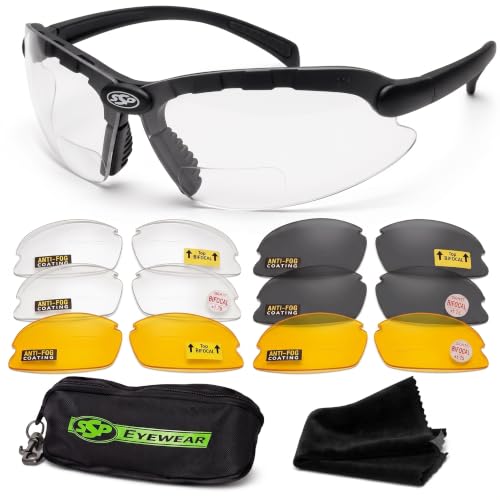
- Top-mounted 2x magnification
- Amber, clear, and smoked lens options
- ANSI Z87.1+ impact protection
Best For: Shooters needing front-sight focus and interchangeable tints
Best Adjustable Yellow Pair

- Yellow contrast-enhancing lenses
- Adjustable SoftPad frame
- ANSI Z87-rated wraparound coverage
Best For: Shooters seeking yellow lenses and a customizable fit
Best Adjustable Clear Pair

- Clear wraparound lenses
- Adjustable temples and nose pad
- ANSI Z87.1-rated protection
Best For: Shooters wanting a clear view with an adjustable fit
Best Simple Amber Option

- Amber-yellow polycarbonate lens
- Meets or exceeds ANSI Z87.1+
- Adjustable fit
Best For: Shooters seeking a straightforward amber-tinted pair
Most Lens Options
Walker's Sport Glasses 4-Lens Kit

- Four interchangeable lens colors
- Adjustable frame and nose pad
- Pouch, sleeve, and case included
Best For: Changing outdoor light conditions
Standards-Focused Pick

- Three interchangeable lenses
- Listed ANSI Z87.1+ and military compliance
- Retention strap and pouch included
Best For: Documented safety-standard compliance
Ear-Protection-Friendly Fit
XAegis Tactical Shooting Glasses

- Yellow, clear, and smoke gray lenses
- ANSI Z87.1 impact-standard claim
- Bendable temples for hearing protection
Best For: Range use with hearing protection
Best with Extra Features
Radians Shift Interchange Shooting Glasses
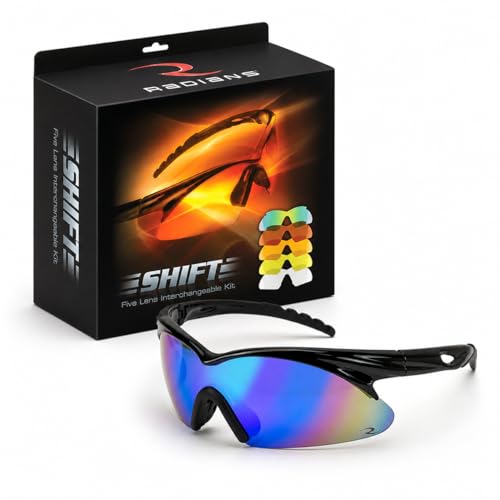
- Five interchangeable lenses
- Slip-resistant nose piece and temples
- Exceeds ANSI Z87.1 standards
Best For: Shooters adapting to changing light
Best Accessory Kit
Tactical Shooting Glasses with 3 Lenses

- Yellow lens for dawn and fog
- Strap, lanyard, and hard case included
- Prescription insert bracket included
Best For: Shooters wanting low-light tint and fit accessories
Easiest Lens Changes

- Four interchangeable lens sets
- One-touch pop-out lens changes
- Anti-fog lenses and hard case
Best For: Shooters who swap tints frequently
Best for Front-Sight Focus – SSP Top Focal 6-Lens Kit
For low light shooting glasses that also help bring a blurry front sight into focus, this SSP kit offers top-positioned bifocal magnification and interchangeable amber, clear, and smoked lenses. The 2x magnifier is designed to let you view the sight without tilting your head into a traditional bifocal position.
Best For: Shooters who need front-sight magnification and lens options for changing light.
Pros:
- Includes amber, clear, and smoked top-focal lenses, plus three bottom-bifocal lenses.
- ANSI Z87.1+ polycarbonate lenses provide impact protection.
- Double-sided anti-fog coating helps maintain visibility.
Cons:
- Fixed 2x magnification may not match every shooter’s vision needs.
- More lenses to manage than a single-lens pair.
The six-lens kit is a versatile choice if sight clarity is your priority. Choose the lens tint for your lighting conditions rather than assuming the smoked option will suit dim settings.
Best Adjustable Yellow Pair – NoCry EyeArmor+ Pro
These yellow NoCry low light shooting glasses are intended to boost contrast when illumination is limited. Their adjustable SoftPad frame and wraparound lenses make them worth considering if fit and side coverage matter as much as lens tint.
Best For: Shooters who want yellow contrast-enhancing lenses with an adaptable fit.
Pros:
- Yellow lenses are designed to improve contrast in low light.
- ANSI Z87-rated, impact-resistant wraparound lenses offer protective coverage.
- Replaceable lenses have anti-fog and anti-scratch coating.
Cons:
- Yellow tint may not suit shooters who prefer a neutral view.
- The supplied package lists one pair, not a set of alternate lens tints.
This is a practical single-tint pick for dimmer range conditions. If you routinely switch between very different lighting conditions, consider whether one yellow lens will cover your needs.
Best Adjustable Clear Pair – NoCry EyeArmor+
If you prefer an untinted view, these clear NoCry low light shooting glasses offer wraparound coverage without a yellow or smoked lens. Adjustable temples and a soft, adjustable nose pad help you dial in the fit for range use.
Best For: Shooters who prefer clear lenses and adjustable, lightweight protection.
Pros:
- ANSI Z87.1-rated wraparound design provides impact protection.
- Adjustable temple length and angle, nose pad, and non-slip tips support a secure fit.
- Anti-fog and anti-scratch coating helps keep the lenses usable.
Cons:
- Clear lenses do not provide the yellow-tint contrast boost offered by some low-light glasses.
- Only one lens color is listed.
Choose this pair when fit and a clear view are higher priorities than tint-based contrast enhancement. The supplied specifications conflict on light transmission, so confirm lens details before buying if that measurement matters to you.
Best Simple Amber Option – Radians Revelation
Radians Revelation Protective Shooting Glasses (Amber Yellow Lens/Black Frame)
Check Price On AmazonThe Radians Revelation is a straightforward amber-lens option for shoppers comparing low light shooting glasses. It pairs an adjustable fit with impact-resistant polycarbonate lenses, without the extra lenses or magnification of more specialized kits.
Best For: Shooters who want a simple amber-tinted protective pair.
Pros:
- Amber-yellow polycarbonate lenses provide a tinted view.
- Lenses meet or exceed ANSI Z87.1+ requirements.
- Adjustable fit and 99.9% UV protection.
Cons:
- No alternate lens colors are listed.
- No anti-fog coating is specified in the supplied details.
This pair keeps the choice simple if amber lenses are what you want. Because the supplied specifications also list 15% visible light transmission, check whether its tint is suitable for your particular low-light setting before purchasing.
Most Lens Options – Walker's Sport Glasses 4-Lens Kit
For low light shooting glasses that can also adapt to brighter conditions, this Walker’s kit includes yellow, amber, clear, and smoke gray lenses. Its adjustable frame and nose pad help you dial in the fit.
Best For: Shooters who want four lens choices for changing outdoor light.
Pros:
- Four interchangeable lens colors offer flexible light management.
- Adjustable frame and nose pad support a customized fit.
- Includes a pouch, sleeve, and weatherproof case.
Cons:
- You need to swap lenses as lighting changes.
- The listed visible light transmission is not broken down by lens color.
The yellow and amber options make this a versatile kit to consider for dimmer conditions, while the clear and smoke gray lenses extend its usefulness beyond low light.
Standards-Focused Pick – ESS Crossbow 3LS Kit
If you prioritize documented impact standards when shopping for low light shooting glasses, the ESS Crossbow 3LS pairs one frame with three interchangeable lenses. The supplied details identify a yellow lens, though they do not list every included lens color.
Best For: Shooters who prioritize listed safety-standard compliance and interchangeable lenses.
Pros:
- 2.4 mm polycarbonate high-impact lenses provide 100% UVA/UVB protection.
- Listed as compliant with ANSI Z87.1+, U.S. MIL-PRF-31013, OSHA, and CE EN 166.
- Includes a microfiber pouch and snap-on elastic retention strap.
Cons:
- The supplied notes do not identify all three lens colors.
- Uses one frame, so changing lenses requires a swap.
This kit stands out for its stated compliance credentials. Check the included lens colors if a particular low-light tint is essential to your setup.
Ear-Protection-Friendly Fit – XAegis Tactical Shooting Glasses
These XAegis low light shooting glasses include a yellow lens alongside clear and smoke gray options, letting you change lenses as conditions shift. Bendable rubber temple arms are designed to work with hearing protection.
Best For: Range users who want a yellow-lens option and temples compatible with ear protection.
Pros:
- Includes yellow, clear, and smoke gray interchangeable lenses.
- Meets ANSI Z87.1 high-mass and high-velocity impact standards.
- All lenses have anti-fog and scratch-resistant coatings.
- Bendable temples accommodate hearing protection.
Cons:
- Adapting to different light requires changing lenses.
- No visible light transmission figures are supplied for the individual tints.
The combination of lens choices, coated lenses, and flexible temples makes this a practical option for range sessions where lighting and hearing-protection needs vary.
Best with Extra Features – Radians Shift Interchange Shooting Glasses
If you need low light shooting glasses that can adapt as conditions change, the Radians Shift kit offers five interchangeable lenses rather than a single fixed tint. Its rubber-tipped temples and nose piece help keep the frame in place.
Best For: Shooters who want several lens choices for changing light.
Pros:
- Five interchangeable lenses provide flexibility across lighting conditions.
- Slip-resistant rubber contact points help maintain a secure fit.
- Exceeds ANSI Z87.1 standards and blocks 99.9% of UVA and UVB rays.
Cons:
- You need to carry and swap lenses to take full advantage of the kit.
- No dedicated storage case is listed in the supplied details.
The main draw is choice: you can select a lens to suit the available light while retaining the same familiar frame.
Best Accessory Kit – Tactical Shooting Glasses with 3 Lenses
These low light shooting glasses include a yellow lens intended to boost contrast at dawn or in fog, plus clear and smoke-gray options for other conditions. The semi-rimless, wraparound frame also comes with fit and storage accessories.
Best For: Shooters who want a yellow low-light option and a versatile accessory kit.
Pros:
- Tool-free swaps between yellow, clear, and smoke-gray lenses.
- Adjustable nose pads, an elastic head strap, and a neck lanyard offer wearing options.
- Includes a prescription insert bracket and a hard storage case.
- Lenses are described as ANSI Z87.1+ certified with anti-fog and scratch-resistant coatings.
Cons:
- Only three lens tints are included, so tint selection is narrower than in larger interchangeable kits.
- The prescription insert requires separate custom lenses for corrected vision.
Choose this kit if the yellow lens and included accessories matter more to you than having the widest possible tint selection.
Easiest Lens Changes – Smith & Wesson M&P Harrier
For low light shooting glasses that are straightforward to reconfigure, the Smith & Wesson M&P Harrier offers four lens sets, including amber and vermillion. Its one-touch pop-out system lets you change lenses without flexing the frame.
Best For: Shooters who prioritize quick lens swaps and anti-fog lenses.
Pros:
- Four lens sets include amber, vermillion, smoke, and clear mirror options.
- One-touch lens changes do not require bending the frame.
- Anti-fog lenses and rubber nose and ear pieces support use in changing conditions.
- ANSI Z87+ certified and supplied with a hard zippered case and microfiber cloth.
Cons:
- Switching tints still requires carrying the spare lenses.
- The semi-rimless frame may not suit buyers who prefer a full-rim design.
The Harrier stands out for its lens-change method, making it a practical pick when you expect to move between brighter and dimmer settings.
How We Picked the Best Low Light Shooting Glasses
We focused on features that matter when available light is limited: lens tint, stated impact rating, coverage, anti-fog treatment, and whether lenses can be swapped. The selection includes simple clear and yellow-lens options alongside multi-lens kits, so buyers can weigh convenience against versatility. Product names and listed features are a starting point, not proof that every lens in a kit has the same certification. Confirm the exact model and lens markings before purchase.
Quick Comparison: Which Lens Makes Sense?
Clear lenses preserve the most available light and are a sensible first choice for dim indoor ranges or dusk. Yellow and amber lenses may make some targets or backgrounds appear more distinct, but any tint can reduce light transmission; try them in your actual conditions rather than assuming they will improve visibility. Interchangeable kits suit shooters moving between indoor lanes, overcast outdoor ranges, and bright sun. They add flexibility, but you will need to carry and protect spare lenses.
If you want one straightforward pair, compare the clear NoCry model with yellow-lens choices such as the NoCry Yellow or Radians Revelation. If conditions vary, consider the ESS Crossbow 3LS, Radians Shift, or other listed interchangeable options. Check each kit’s included lens colors rather than relying on the number of lenses alone.
Key Buying Factors for Low Light Shooting Glasses
Impact Protection and Coverage
Look for a clearly identified impact rating appropriate to your range’s rules, such as ANSI Z87.1 with the applicable impact marking. Check the markings on the eyewear itself and any replacement lenses. Wraparound coverage and a secure fit help protect against debris arriving from the side, while a close fit should not obstruct your view or interfere with hearing protection.
Light Transmission, Clarity, and Fog
For Low Light Shooting Glasses, prioritize a lens you can see through comfortably over a tint that looks bright on a product page. A clear lens is usually the least complicated choice when light is scarce. Scratch resistance helps preserve optical clarity; anti-fog coatings and ventilation are especially useful in humid weather or when wearing a face covering. Coatings help, but they do not guarantee fog-free performance.
Fit and Sight Picture
Make sure frames stay put when you shoulder a firearm and that the upper rim does not cross your sight picture. Check compatibility with earmuff seals. Shooters who need help seeing a front sight may prefer a properly positioned bifocal option, but its focal placement must match their stance and prescription needs.
Who Should Buy Which Low Light Shooting Glasses?
Mostly indoor or dusk shooter: start with clear, well-fitting impact-rated eyewear. Shooter seeking more perceived contrast: try yellow or amber only if it remains comfortable and clear at your range. Mixed-light shooter: choose an interchangeable kit with a clear lens included. Reader-lens user: examine the SSP tactical bifocal’s focal position before choosing it. Whichever style you buy, follow your range’s eye-protection requirements and replace damaged lenses.