A good primer seating tool helps you seat primers consistently without making every case a struggle. The right choice depends on whether you value portability, bench-mounted leverage, fast primer feeding, or a simple press-mounted setup.
These 10 options span hand, bench, and press-based designs. Use the buying guide below to narrow your choice by workflow, compatibility, and the amount of control you want at the handle.
Best 10 Primer Seating Tools Picks for 2026
Best Bench-Mounted Option
Lee Precision Auto Bench Priming Tool
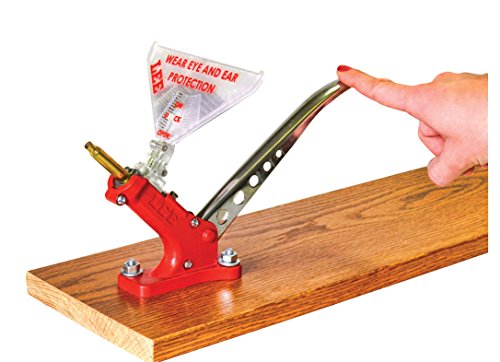
- Bench-based, ergonomic design
- Large and small primer trays
- Tray accepts all primer-box brands
Best For: Reloaders wanting a dedicated bench priming tool
Best Universal Case Holder
RCBS Universal Hand Priming Tool

- Accepts .32 ACP through .45-70 cases
- No separate shell holders in stated range
- Safety gate isolates the seated primer
Best For: Hand priming across the stated cartridge range
Best Press-Mounted Choice

- Fits single-station presses of all brands
- Handles large and small primers
- Uses Universal Shell Holders
Best For: Reloaders with a single-station press
Best Lever-Operated Setup

- Single-stage lever system
- Two primer rod assemblies included
- Two primer feed tubes included
Best For: Reloaders wanting a lever-operated priming setup
Simple Handheld Option
Hornady 0500021 Handheld Priming Tool

- Handheld aluminum tool
- No-risk, lifetime warranty listed
- Accessory compatibility not specified
Best For: Reloaders seeking a straightforward handheld tool
Feel-Focused Hand Primer
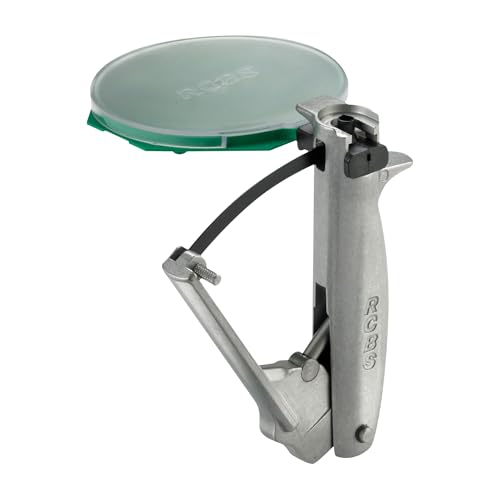
- Seats primers by hand for tactile feedback
- Seating isolated from primer tray
- Includes large and small primer plugs
Best For: Reloaders with post-1980 RCBS press shell holders
Micrometer Press-Mounted Pick
Poorman's PCPS Precision Priming Die

- 0.01 mm micrometer increments stated
- Fits compatible 7/8-14 die presses
- Primer tubes and shell holders sold separately
Best For: Press users seeking fine seating-depth adjustment
Manual Bench Pick
Accu-Prime Manual Bench Priming Tool
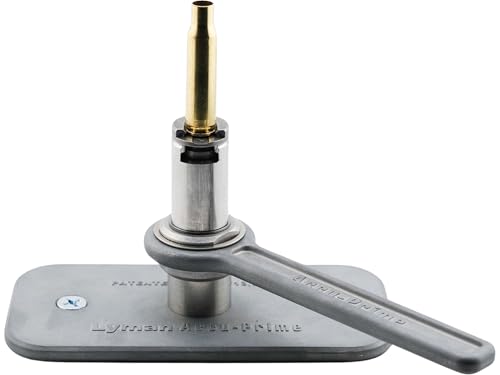
- Manual bench-priming model
- 12.4 x 6.97 x 3.62 inches
- Listed weight: 2.2 pounds
Best For: Reloaders seeking a manual bench priming tool
Best Heavy-Duty Pick
PCPS-LITE Precision Priming Die

- Fits presses accepting 7/8-14 dies
- Large- and small-primer accessories included
- Tubes and shell holders sold separately
Best For: Press users who prefer feel-based primer seating
Auto-Load Bench Pick

- Auto-load bench priming model
- Package: 16.06 x 6.54 x 6.22 inches
- Listed package weight: 3.26 pounds
Best For: Reloaders seeking an auto-load bench priming tool
Best Bench-Mounted Option – Lee Precision Auto Bench Priming Tool
For shoppers comparing primer seating tools, the Lee Precision Auto Bench Priming Tool offers a bench-based design with an ergonomic layout and separate large and small primer trays.
Best For: Reloaders who prefer a bench priming tool with trays for both primer sizes.
Pros:
- Includes large and small primer trays.
- Triangular tray accepts primer boxes from all brands.
- Ergonomic design.
Cons:
- Bench format is less suited to shoppers seeking a handheld tool.
This is a practical pick if a dedicated bench setup and flexible primer-box compatibility matter more to you than portability.
Best Universal Case Holder – RCBS Universal Hand Priming Tool
Among handheld primer seating tools, the RCBS Universal Hand Priming Tool stands out for its built-in case holder, which accepts cases from .32 ACP through .45-70 without separate shell holders.
Best For: Reloaders working across the stated case range who want handheld seating feedback without changing shell holders.
Pros:
- Universal case holder eliminates separate shell holders across its stated range.
- Hand operation lets you feel the primer seat.
- Safety gate isolates the primer being seated from the tray.
- Large tray holds and orients primers and fits standard primer packaging.
Cons:
- Stated case compatibility stops at .45-70; check other cartridges before buying.
Its combination of case flexibility, tactile control, and an isolating safety gate makes it a strong choice when those features are priorities.
Best Press-Mounted Choice – Lee Precision Ram Prime
If you want primer seating tools that work with an existing single-station press, the Lee Precision Ram Prime is a compact option made to fit all brands of those presses.
Best For: Reloaders who already use a single-station press and Universal Shell Holders.
Pros:
- Fits all brands of single-station presses.
- Works with large and small primers.
- Uses Universal Shell Holders.
Cons:
- Requires a single-station press rather than operating as a standalone tool.
- Uses Universal Shell Holders, which may be an added consideration if you do not have them.
Choose this model when press compatibility and support for both primer sizes are more useful to you than a separate hand or bench unit.
Best Lever-Operated Setup – RCBS 9460 Auto Priming Tool
The RCBS 9460 Auto Priming Tool is a substantial option among primer seating tools, using a single-stage lever system that the manufacturer describes as fast and accurate.
Best For: Reloaders seeking a lever-operated priming tool with included feed tubes and rod assemblies.
Pros:
- Single-stage lever system is designed for fast, accurate operation.
- Includes two primer rod assemblies.
- Includes two primer feed tubes.
- Metal construction is listed in the product specifications.
Cons:
- At approximately 2.3 pounds, it is heavier than the other listed tools.
Its included feeding components and lever design make it worth considering if you prefer this style of priming setup and do not need a lightweight tool.
Simple Handheld Option – Hornady 0500021 Handheld Priming Tool
The Hornady 0500021 is a handheld choice among primer seating tools for reloaders who want a compact, aluminum tool rather than a press-mounted setup. The supplied product details identify it as a single handheld priming tool, with no additional components listed.
Best For: Reloaders looking for a straightforward handheld priming tool.
Pros:
- Handheld format does not require mounting in a press.
- Aluminum construction.
- Listed with a no-risk, lifetime warranty.
Cons:
- The supplied details do not specify included shell holders or primer accessories.
- No seating-depth adjustment is described in the supplied notes.
This is the simplest pick here on the information provided; check accessory compatibility before buying if you do not already have the required reloading components.
The RCBS Hand Priming Tool stands out among primer seating tools for its hand-operated seating feel and separation between the seating area and primer tray. It uses post-1980 RCBS press shell holders and includes plugs for both large and small primers.
Best For: Reloaders who use compatible RCBS shell holders and prefer to feel each primer seat by hand.
Pros:
- Hand operation lets you feel the primer as it seats.
- Primer seating is isolated from the primer tray.
- Includes large and small primer plugs.
- Works with post-1980 RCBS press shell holders.
Cons:
- Shell holder compatibility is limited to the specified RCBS type.
- Shell holders are not listed among the included components.
If you already use compatible RCBS shell holders, this tool offers a practical way to prime by feel without buying separate large and small primer plugs.
DERRACO ENGINEERING Poorman's PCPS Precision Priming die/Primer Seating Tool (Silver)
Check Price On AmazonThe Poorman’s PCPS is the press-mounted option among these primer seating tools. It fits presses that accept 7/8-14 dies and standard T-shaped shell holders, and its detent micrometer provides stated 0.01 mm (0.0004-inch) adjustment increments for setting seating depth.
Best For: Reloaders who want press-operated priming with fine, repeatable seating-depth adjustments.
Pros:
- Micrometer hard stop offers fine seating-depth adjustment.
- Compatible with presses accepting 7/8-14 dies and standard T-shaped shell holders.
- Includes large- and small-primer conversion accessories and one shell-holder-shaped anvil.
- Uses stainless steel and hard-anodized aluminum components.
Cons:
- Primer tubes and shell holders are not included.
- Requires a compatible reloading press rather than working as a standalone handheld tool.
Choose the PCPS if adjustment precision and press operation matter more to you than portability, and budget separately for the required primer tubes and shell holders.
Manual Bench Pick – Accu-Prime Manual Bench Priming Tool
Among primer seating tools, the Lyman Accu-Prime Manual is a bench priming option for buyers who want a manually operated setup. It measures 12.4 x 6.97 x 3.62 inches and weighs 2.2 pounds.
Best For: Reloaders looking specifically for a manual bench priming tool.
Pros:
- Manual bench-priming design.
- Listed dimensions make it easier to plan bench space.
- 2.2-pound listed weight.
Cons:
- The supplied product details do not specify primer-feeding method or included accessories.
- No seating-depth adjustment details are provided.
Choose this model if a manual bench tool fits your workflow, but confirm its feeding method and included components before buying.
Best Heavy-Duty Pick – PCPS-LITE Precision Priming Die
DERRACO ENGINEERING Poorman's PCPS-LITE Precision Priming die/Primer Seating Tool
Check Price On AmazonThe PCPS-LITE stands out among primer seating tools as a press-mounted priming die. It fits presses that accept 7/8-14 dies and standard T-shaped shell holders, and it uses compatible primer tubes for feeding.
Best For: Reloaders who want press-mounted priming with feel-based seating rather than micrometer adjustment.
Pros:
- Compatible with presses accepting 7/8-14 dies and standard T-shaped shell holders.
- Includes large- and small-primer conversion accessories.
- Spring-loaded shutter bar and an 8 mm tube opening designed for 7.92 mm standard primer tubes.
- Uses machined T6 aluminum alloy components and stainless-steel priming pins and top plate.
Cons:
- Primer tubes and shell holders are not included.
- No micrometer seating adjustment; seating is controlled by feel.
This is a practical choice if you already have a compatible press and prefer to judge seating by feel. Budget separately for the required tubes and shell holders.
Auto-Load Bench Pick – Lyman Accu-Prime Auto-Load
For shoppers comparing bench-style primer seating tools, the Lyman Accu-Prime Auto-Load is the auto-load model in this lineup. Its listed package measures 16.06 x 6.54 x 6.22 inches and weighs 3.26 pounds.
Best For: Reloaders seeking an auto-load bench priming tool.
Pros:
- Identified as an auto-load bench priming model.
- Package dimensions are provided for delivery and storage planning.
- Listed package weight is 3.26 pounds.
Cons:
- The supplied details do not explain how the auto-load mechanism works.
- Included accessories and primer compatibility are not specified.
If auto-loading is your priority, this model merits a closer look. Verify its feeding system, compatibility, and included parts before ordering.
How We Picked These Primer Seating Tools
We included hand, bench, and press-mounted designs so reloaders can compare different ways to work, rather than only different brands. The selection covers tools intended for one-at-a-time seating as well as models with primer-feeding systems. We focused on practical differences: mounting requirements, case-holder compatibility, primer handling, and how much leverage or tactile feedback each style can offer. Confirm current specifications and included accessories before ordering; similarly named tools can have different case-holder and primer-tray requirements.
Quick Comparison by Tool Type
Hand priming tools suit reloaders who want a portable setup and direct feedback while seating each primer. They require repeated hand pressure, which may be less comfortable during long sessions. Bench tools keep the operation at a fixed station and can offer more comfortable leverage, but need workspace and, in some cases, mounting hardware. Press-mounted tools and priming dies make sense if you prefer to use an existing press and are comfortable handling primers in smaller batches or individually. An auto-feed design can reduce interruptions, but its tray, feed path, and setup steps deserve close attention.
Key Buying Factors for Primer Seating Tools
Fit Your Cases and Primers
Check supported primer sizes, cartridge families, and the exact shellholder or case-holder system before buying. Do not assume a shellholder from one brand—or even another tool from the same brand—will fit. Note whether small- and large-primer parts are included or sold separately.
Choose the Right Feel and Pace
A clear seating feel helps you notice when a primer meets the bottom of the pocket. Handle shape and leverage matter if you prime many cases at once or have limited grip strength. If speed matters, compare how easily each tool loads, feeds, and changes primer sizes—not just how quickly its handle moves.
Plan for a Safe, Repeatable Setup
Follow the tool and primer manufacturers’ instructions for loading, orientation, handling, and protective equipment. Prepare primer pockets consistently and check seated primers using the method specified for your components. If a primer resists seating, stop and inspect the case rather than forcing it. Keep your work area organized, particularly when changing primer types or sizes.
Who Should Buy Which Primer Seating Tools?
Choose a hand tool for compact storage, occasional batches, and seating feedback without a permanent station. Choose a bench-mounted tool if you regularly prime larger batches and want a stable, comfortable workflow. A press-mounted tool or priming die is a sensible option when you already have a compatible press and prefer minimal extra equipment. If interruptions bother you, consider an auto-feed model—but verify its primer-feed components and case-holder requirements first. The best choice is the one that fits your cases, your workspace, and a pace you can maintain consistently.