A good bullet seating die helps you set seating depth consistently and make adjustments without losing track of your setup. The right choice depends first on your cartridge, then on how much adjustment control you need.
These 10 selections span rifle and handgun options, from straightforward caliber-specific dies to micrometer models. Use the guide below to narrow the field before checking each die’s exact fit.
Best 10 Reloading Bullet Seating Dies Picks for 2026
Most Versatile
Frankford Arsenal Universal Bullet Seating Die
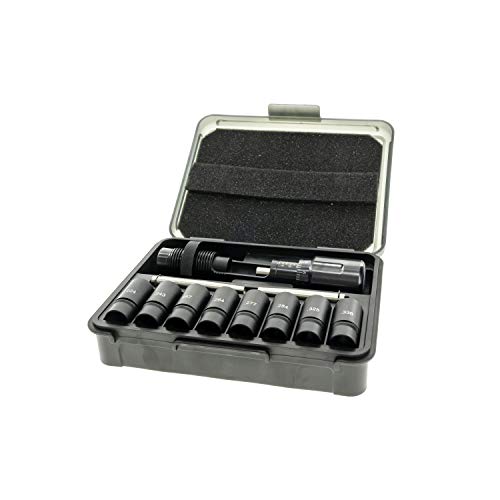
- Stated .224–.338 caliber range
- Micrometer seating-depth adjustment
- Nine sleeves, three VLD stems, and case
Best For: Multiple calibers within the stated range
Fine-Adjustment Pick
Forster Bench Rest Ultra Micrometer Seater Die

- Micrometer adjusts in either direction
- Clearly marked .001-inch increments
- Cartridge not identified in supplied notes
Best For: Fine seating-depth adjustments with readable markings
45-70 FTX Pick
Redding 45-70 Government FTX Seating Die

- Named for 45-70 Government FTX
- Seats bullets to a selected depth
- Storage box included
Best For: A 45-70 Government FTX seating-die setup
30-06 Micrometer Pick
Forster Bench Rest Ultra Seater Die

- Listed size: 30-06 Springfield
- Micrometer adjusts in either direction
- White .001-inch graduations
Best For: Micrometer seating adjustment for 30-06 Springfield
Dual-Crimp Option
Lee Precision 91183 Seating Die

- Listed for .38 Short, .38 Long Colt, and .38 S&W
- Slight taper-crimp shoulder
- Full roll-crimp shoulder
Best For: Reloaders wanting two crimp styles for the listed cartridges
9mm Micrometer Pick
Redding Competition Seating Die

- 9mm Luger handgun model
- .001-inch micrometer adjustment
- Competition seating-die designation
Best For: 9mm Luger reloaders seeking fine seating adjustment
6mm ARC Alignment Pick
Lee Precision Micrometer Seating Die

- Designed for 6mm ARC
- Laser-engraved micrometer and floating guide
- Reversible guide enables seating and crimping
Best For: 6mm ARC reloaders wanting adjustable seating and guided alignment
Progressive Press Pick
Redding 9mm Luger Pro Series Seat Die
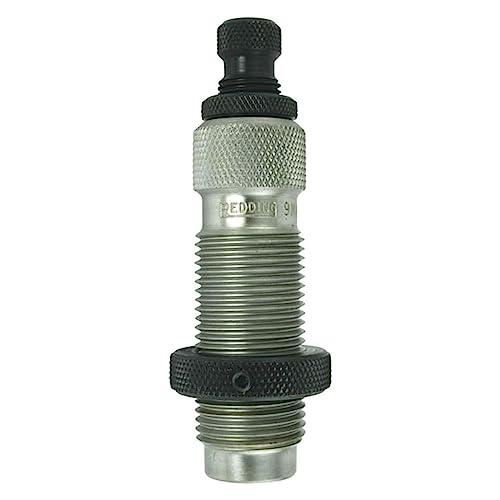
- Large-radius mouth aids case entry
- Designed for progressive presses
- Seats bullets without crimping
Best For: 9mm progressive-press users who crimp separately
Sleeve-Guided Pick
Redding Competition 6.5mm Creedmoor Seating Die
- Micrometer marked in 0.001-inch increments
- Zero-set feature for a preferred depth
- Sleeve supports case and bullet alignment
Best For: 6.5mm Creedmoor reloaders prioritizing seating-depth adjustment
Dead-Length Pick
Lee 9mm Luger Precision Micrometer Seating Die
- Laser-engraved 0.001-inch divisions
- Dead-length seating contacts shell holder
- Sliding guide supports bullet alignment
Best For: 9mm Luger reloaders seeking fine, readable adjustments
Most Versatile – Frankford Arsenal Universal Bullet Seating Die
Among reloading bullet seating dies, this Frankford Arsenal model stands out for its stated .224–.338 caliber range. Its micrometer stem adjusts seating depth, while the alignment sleeve holds the bullet in place during seating.
Best For: Reloaders who want one seating die with supplied components for multiple calibers in the stated range.
Pros:
- Micrometer provides fine seating-depth adjustments.
- Includes nine bullet alignment sleeves and three VLD seating stems.
- Standard 7/8 x 14 thread and molded storage case.
Cons:
- Stated caliber range does not cover bullets outside .224–.338.
- Changing setups may require swapping the supplied sleeves or stems.
The included components make it a flexible choice, provided your bullets fall within its stated range.
Forster Products Bench Rest Ultra Micrometer Seater Die for 308 Win & 308 National Match
Check Price On AmazonFor shoppers comparing reloading bullet seating dies by adjustment controls, this Forster Bench Rest Ultra adds a micrometer to the Bench Rest Seater Die design. Its white markings show .001-inch increments, and the supplied notes state that it can be adjusted to .0005 inch.
Best For: Reloaders who want a clearly marked micrometer for fine seating-depth changes.
Pros:
- Micrometer adjusts seating depth in either direction.
- White .001-inch markings are designed to be easy to read.
- Listing states adjustment to .0005 inch.
Cons:
- The supplied title and notes do not identify a cartridge; verify the specific die configuration before buying.
This is a strong option when readable, incremental adjustment matters, but confirm that the listed configuration matches your cartridge.
If you are narrowing down reloading bullet seating dies for a 45-70 Government FTX setup, this Redding die is the cartridge-specific option listed here. The supplied description identifies it as a bullet seater for setting the bullet to a chosen depth.
Best For: Buyers seeking a seating die specifically listed for 45-70 Government FTX.
Pros:
- Title explicitly identifies the 45-70 Government FTX application.
- Includes a storage box.
Cons:
- Supplied notes do not describe a micrometer or adjustment graduations.
- Compatibility beyond the named application is not specified.
This is the focused choice for the named application; check the manufacturer’s specifications if you need more detail on fit or adjustment features.
For 30-06 Springfield shoppers comparing reloading bullet seating dies, this Forster Bench Rest Ultra pairs a specified cartridge size with micrometer seating-depth adjustment. Its white markings are graduated in .001-inch increments, with adjustment to .0005 inch stated in the supplied notes.
Best For: Reloaders seeking micrometer adjustment in a die listed as 30-06 Springfield.
Pros:
- Size is identified as 30-06 Springfield.
- Micrometer allows adjustment in either direction.
- White .001-inch graduations are designed for easy reading.
Cons:
- Listed size is 30-06 Springfield, not a universal caliber range.
Choose this listing when the stated 30-06 Springfield size and readable micrometer adjustments match your needs.
Dual-Crimp Option – Lee Precision 91183 Seating Die
Among reloading bullet seating dies, the Lee Precision 91183 is a focused choice for the cartridges named in its listing: .38 Short, .38 Long Colt, and .38 S&W. It is a bullet seating die only, with two crimp shoulders for different crimp styles.
Best For: Reloaders seeking a seating die with taper- and roll-crimp options for the listed cartridges.
Pros:
- First shoulder applies a slight taper crimp.
- Second shoulder applies a full roll crimp.
- Described as durable and long-lasting.
Cons:
- Seating die only; not a complete die set.
- No micrometer adjustment is listed in the supplied details.
Choose this die if its listed cartridge fit and two crimp shoulders match your needs; check cartridge compatibility before ordering.
9mm Micrometer Pick – Redding Competition Seating Die
If you are comparing reloading bullet seating dies for 9mm Luger, the Redding Competition handgun model offers a micrometer for adjustable bullet seating. Its supplied details specify .001-inch adjustment, making it a fit for buyers who want a marked adjustment feature.
Best For: 9mm Luger handgun reloaders who want a micrometer-adjustable seating die.
Pros:
- Specified for 9mm Luger.
- Micrometer provides .001-inch adjustment increments.
- Listed as a competition handgun seating die.
Cons:
- Listed for 9mm Luger, not other calibers.
- Supplied details do not describe a crimping feature.
This is the adjustment-focused option in the group. Its appeal rests on the stated micrometer feature and 9mm Luger designation, rather than any unlisted crimp capability.
6mm ARC Alignment Pick – Lee Precision Micrometer Seating Die
For 6mm ARC reloaders comparing reloading bullet seating dies, this Lee Precision model combines a laser-engraved micrometer with a floating bullet guide. The supplied description says the guide helps maintain alignment and can be reversed for simultaneous seating and crimping.
Best For: 6mm ARC reloaders who want fine seating-depth adjustment and the listed reversible-guide feature.
Pros:
- Laser-engraved micrometer supports fine seating-depth changes.
- Floating guide is designed to maintain bullet alignment.
- Reversible guide allows simultaneous seating and crimping.
- Stem accommodates various point-style bullets without damage, according to the supplied description.
Cons:
- Specified for 6mm ARC, so it is not a general-purpose caliber choice.
- Supplied details do not state the micrometer’s adjustment increments.
Consider this model if its combination of micrometer adjustment, bullet guidance, and reversible seating-and-crimping guide suits your 6mm ARC setup.
Progressive Press Pick – Redding 9mm Luger Pro Series Seat Die
Among reloading bullet seating dies for 9mm Luger, this Redding Pro Series model is built with progressive-press use in mind. Its large-radius mouth helps cases enter the die, while its seating-only design leaves crimping to a separate operation.
Best For: 9mm Luger reloaders using a progressive press who prefer to seat and crimp in separate steps.
Pros:
- Large-radius mouth helps guide cases into the die.
- Designed for progressive-press use.
- Dedicated seating operation avoids combining seating and crimping.
Cons:
- Does not crimp; a separate crimp die is needed if you want that operation.
- Specified for 9mm Luger cartridges only.
Choose this die if smooth case entry and a separate-crimp workflow matter more to you than an all-in-one seating and crimping die.
For shoppers comparing reloading bullet seating dies for 6.5mm Creedmoor, the Redding Competition die offers a micrometer marked in 0.001-inch increments. A close-fitting sleeve supports and aligns the cartridge case and bullet before seating begins.
Best For: 6.5mm Creedmoor reloaders who want repeatable seating-depth adjustments and guided bullet alignment.
Pros:
- Micrometer has 0.001-inch markings and infinitely adjustable settings.
- Zero-set feature lets you reference a preferred seating depth.
- Precision-ground sleeve supports the case and bullet before seating.
Cons:
- No crimping capability; crimping requires a separate die.
- Made for 6.5mm Creedmoor rather than other cartridges.
This is the more adjustment-focused option in the lineup if its cartridge fit matches your setup; the guided sleeve and zero-set micrometer are its practical differentiators.
For 9mm Luger users considering reloading bullet seating dies with fine adjustments, this Lee model combines a laser-engraved micrometer with dead-length seating. In that setup, the die body contacts the shell holder to help maintain uniform seating depth.
Best For: 9mm Luger reloaders who want readable, fine seating-depth adjustments and a dead-length seating setup.
Pros:
- Laser-engraved micrometer markings are divided into thousandths of an inch.
- Dead-length setup uses shell-holder contact for uniform seating depth.
- Sliding bullet guide is intended to reduce bullet runout.
Cons:
- Specified for 9mm Luger cartridges, not other calibers.
- Supplied notes do not specify a crimping function.
The appeal here is the combination of an easy-to-read micrometer and a clearly defined dead-length setup. Check that its 9mm Luger fit suits your loading plans.
How We Picked These Reloading Bullet Seating Dies
We considered the listed cartridge or caliber compatibility, adjustment style, and whether each die is aimed at general loading or more controlled seating-depth changes. The selection includes rifle and handgun dies, conventional designs, and micrometer-equipped options. Two listings name the same Forster Bench Rest Ultra Micrometer Seater Die; treat them as duplicate listings, not two different designs. Product names alone do not establish measured runout or accuracy, so verify the manufacturer’s specifications before buying.
Quick Comparison: Where to Start
Want a micrometer for a specific rifle cartridge? Look at the Lee 6mm ARC or Redding 6.5mm Creedmoor options, provided the stated cartridge matches your brass. Loading 9mm Luger? Compare the Redding Competition, Redding Pro Series, and Lee Precision Micrometer dies by adjustment style and price. Loading .45-70 Government with FTX bullets or a listed .38-caliber cartridge? Start with the corresponding Redding or Lee cartridge-specific listing. The Frankford Arsenal universal die covers a stated .224-to-.338-caliber range, while the Forster listing highlights .001-inch micrometer graduations. Check their full compatibility requirements rather than assuming caliber range or press fit guarantees cartridge fit.
Key Buying Factors for Bullet Seating Dies
Cartridge, Bullet, and Press Compatibility
Match the die to the exact cartridge—not just bullet diameter—and confirm the bullet profile is supported by the included seating stem. A poorly matched stem can contact a bullet at the wrong point and affect seating consistency. Check your press’s die-thread requirements, plus any shellholder or shellplate requirements specified by the manufacturer. A die that fits the press still needs to fit the cartridge and bullet combination.
Adjustment and Repeatability
A micrometer makes small, recorded seating-depth changes easier, especially when switching between loads. Graduations indicate adjustment increments, not a guarantee that every loaded round will have identical cartridge overall length. A conventional die can be a sensible value when you set one load and rarely change it. If you switch bullet shapes, confirm whether alternative seating stems are available.
Seating Versus Crimping
Check whether a die seats only or also applies a crimp, and decide whether you want those operations combined or separate. That matters particularly when your handgun or lever-action load calls for a specific crimp. Follow published load data and the die maker’s setup instructions; seating depth changes can affect pressure, and a micrometer setting is not a substitute for measuring finished rounds.
Who Should Buy Which Reloading Bullet Seating Dies?
Choose a cartridge-specific micrometer die if you frequently tune seating depth and want an easy-to-reference setting. Choose a simpler cartridge-specific die if you load a stable recipe and prioritize cost. Consider a universal-range model only after confirming it supports your exact cartridges, bullets, and press setup. For specialized bullets such as FTX, prioritize the correct seating-stem fit over extra adjustment features. Whichever you choose, measure your first rounds, inspect bullet contact and alignment, and recheck settings when components change.