Overlanding demands storage that can handle changing weather, rough roads, and long days away from resupply. The right rooftop box adds useful capacity while keeping camping gear, clothing, and recovery essentials protected and organized.
We compared 10 roof cargo boxes for overlanding across capacity, construction, weather resistance, security, access, and mounting practicality so you can choose a setup that fits your vehicle and travel style.
Best 10 Roof Cargo Boxes for Overlanding Picks for 2026
Low-Profile Pick

- 11 cubic feet of hard-shell storage
- Dual-side opening for easier access
- Memory Mount supports quick installation
Best For: Low-profile storage for skis, snowboards, and camping gear
Waterproof Trail Storage
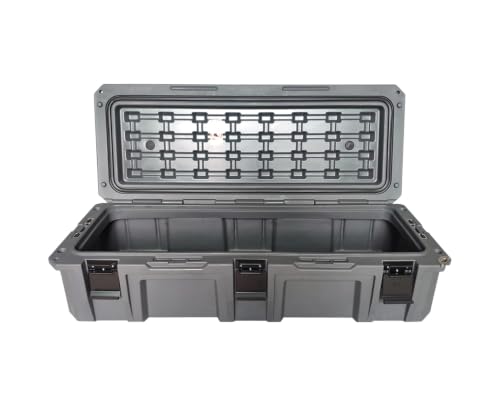
- 117-quart storage capacity
- Waterproof protection for trail gear
- Heavy-duty latches and carrying handles
Best For: Sealed storage of recovery gear, tools, clothing, and supplies
Maximum Roof Capacity

- 18 cubic feet of rooftop storage
- Dual-side opening and SKS locks
- Fits skis and snowboards up to 195 cm
Best For: Extended trips requiring generous rooftop cargo capacity
Heavy-Duty Off-Road Case
RUGCEL 126QT Waterproof Dry Box

- 126-quart waterproof storage
- Rotomolded PE construction
- Drain valve and hydraulic support rods
Best For: Bulky camping and off-road gear requiring sealed protection
Best Overall Capacity

- 14 cubic feet of enclosed storage
- Dual-sided opening for easier loading
- Push-button security with SKS locks
Best For: High-capacity road trips and overlanding
Best Rugged Storage Case

- Waterproof, impact-resistant hard shell
- Gas-strut lid and lockable latches
- Tie-down channels for roof-rack stability
Best For: Compact gear protection on off-road trips
Best for Comfort

- Compact 9-cubic-foot design
- Dual-side opening with included locks
- Fits aero, square, round, and many factory bars
Best For: Compact travel and winter-sports storage
Best Overland Storage Case

- Rugged PE shell with -40 to 90°C operating range
- Sealed, waterproof, and dustproof equipment storage
- Lock, hydraulic support, and drainage valve included
Best For: Compact camping, tool, and off-road equipment storage
Best Extra-Large Carrier

- 26 cubic feet of enclosed storage
- 150-pound stated load capacity
- Dual-side access and tool-free mounting
Best For: Bulky luggage and high-volume camping gear
Best Waterproof Touring Box

- Waterproof ABS+PC shell for exposed travel
- Dual-side opening with support arms
- Tool-free fit for common roof-bar shapes
Best For: SUV touring with luggage and bulky camping equipment
Low-Profile Pick – INNO Wedge 660
For drivers seeking roof cargo boxes for overlanding with a sleek profile, the INNO Wedge 660 offers 11 cubic feet of hard-shell storage. Its dual-side access, water-resistant construction, and quick Memory Mount installation make it practical for road trips and outdoor gear.
Best For: Overlanders carrying skis, snowboards, camping equipment, or travel luggage who want a low-profile rooftop box.
Pros:
- Dual-side opening simplifies loading from either side of the vehicle.
- 11-cubic-foot capacity accommodates up to four snowboards or six to eight pairs of skis.
- Memory Mount system supports faster installation and removal after initial setup.
- Low-profile wedge design may help reduce wind noise on highway trips.
Cons:
- Its 11-cubic-foot capacity is smaller than the larger rooftop carriers in this roundup.
- At 42 pounds, it still adds noticeable weight to the roof setup.
The INNO Wedge 660 is a strong choice when profile, access, and organized outdoor-gear storage matter more than maximum volume.
Waterproof Trail Storage – OVS 117-Quart Dry Box
Unlike a conventional rooftop carrier, this 117-quart dry box suits overlanders who need sealed equipment storage. The Overland Vehicle Systems box is designed to keep tools, recovery gear, clothing, and supplies protected from water and dust during outdoor trips.
Best For: Overlanding setups that prioritize waterproof organization for tools, recovery equipment, clothing, and supplies.
Pros:
- 117-quart capacity provides generous space for trail essentials.
- Waterproof design helps protect contents from water, dust, and harsh conditions.
- Heavy-duty latches, a weighted lid, and ballistic side handles support secure transport.
- Drain plug and built-in bottle opener add utility at camp.
Cons:
- It weighs 38 pounds before gear is added.
- The supplied notes do not list dedicated roof-mount hardware.
- Its single-compartment design offers no built-in internal separation.
This dry box is best considered a sealed gear container for a compatible overlanding cargo setup rather than a purpose-built aerodynamic roof carrier.
Maximum Roof Capacity – Yakima SkyBox NX 18 XLG
The Yakima SkyBox NX 18 XLG is a high-capacity option for roof cargo boxes for overlanding, providing 18 cubic feet of rooftop storage. Dual-side opening, SKS locks, universal mounting, and room for skis or snowboards make it useful for longer trips with bulky equipment.
Best For: Overlanders and families who need maximum rooftop capacity for camping equipment, luggage, skis, or snowboards.
Pros:
- 18 cubic feet offers the largest listed capacity among the dedicated rooftop carriers here.
- Dual-sided access makes loading and unloading more convenient.
- Full metal opening handle and SKS locks help secure the box and its contents.
- Fits skis and snowboards up to 195 cm.
Cons:
- At 53 pounds, it is the heaviest dedicated roof box in this selection.
- The supplied specifications list it as not water resistant.
- Its 16.5-inch height may be less suitable for buyers prioritizing a low-profile setup.
The SkyBox NX 18 XLG favors capacity and access over compactness, making it a practical match for extended trips where cargo volume is the priority.
Heavy-Duty Off-Road Case – RUGCEL 126QT Waterproof Dry Box
RUGCEL 126QT Waterproof Dry Box - Off-Road Case for Car Camping, Roof Rack (126QT CASE)
Check Price On AmazonFor overlanders who prefer rugged sealed storage, the RUGCEL 126QT is a rotomolded PE case designed for car camping, off-roading, and roof-rack use. Its waterproof, dustproof lid, broad temperature range, and drain valve help it handle demanding outdoor conditions.
Best For: Off-road travelers needing large waterproof storage for camping, fishing, tools, or general trail equipment.
Pros:
- 126-quart capacity provides substantial storage for bulky gear.
- Rotomolded construction offers uniform wall thickness and impact, corrosion, and pressure resistance.
- Tight-seal lid is designed to protect contents from water and dust.
- Hydraulic support rods and a bottom drain valve improve handling and cleanup.
Cons:
- The supplied notes do not list dedicated mounting hardware for a roof rack.
- Its single-compartment layout does not provide built-in organization.
- The listed warranty is limited to one year.
The RUGCEL case is a compelling rugged-storage option for a properly secured overlanding setup, especially when waterproofing and capacity outweigh aerodynamic refinement.
Best Overall Capacity – Yakima RocketBox Pro 14
For shoppers comparing roof cargo boxes for overlanding, the Yakima RocketBox Pro 14 is a strong choice when enclosed capacity is the priority. Its 14-cubic-foot hard shell offers substantial room for road-trip and camping essentials, while dual-sided access makes loading easier at camp or on the road.
Best For: Overlanders and road-trippers who need high-capacity, lockable rooftop storage.
Pros:
- Provides 14 cubic feet of enclosed storage.
- Opens from either side of the vehicle for convenient access.
- Includes push-button security and SKS locks.
- Matte-black textured finish and water-resistant construction suit outdoor travel.
Cons:
- Crossbars are not included.
- At 50.8 pounds, it is heavier than some compact roof boxes.
The RocketBox Pro 14 favors usable space and convenient access over a particularly compact footprint. Confirm your vehicle and crossbar compatibility before purchasing, then consider it a practical solution for carrying bulky overlanding gear.
Best Rugged Storage Case – ROAM Rugged Cargo Box
The ROAM Rugged Cargo Box takes a case-style approach to roof cargo boxes for overlanding, emphasizing protection and mounting flexibility. Its impact-resistant shell, waterproof seal, tie-down channels, and lockable latches are designed for demanding off-road travel and exposed gear storage.
Best For: Overlanders carrying compact tools, camping supplies, and essentials in harsh conditions.
Pros:
- Waterproof construction with a military-grade weatherproof seal.
- Mounting options include compatible rugged or rigid mounts and cinch straps.
- Gas struts support hands-free lid access.
- Threaded inserts and tie-down channels support organization and secure transport.
Cons:
- Its 83-liter capacity is smaller than the 14-cubic-foot Yakima option.
- Mounting hardware or accessories may be needed depending on the setup.
- The 52-inch length may not suit every roof-rack layout.
This box is best viewed as a durable, weather-focused gear case rather than a maximum-volume carrier. Its compact dimensions and flexible mounting design make it appealing for organized overland equipment, provided your rack can accommodate the required mounting method.
Best for Comfort – INNO Roof Box 320
If you want roof cargo boxes for overlanding that balance compact dimensions with specialized carrying capacity, the INNO Roof Box 320 is worth considering. Its 9-cubic-foot low-profile design opens from both sides, fits several crossbar styles, and is sized for skis, snowboards, and everyday travel gear.
Best For: Drivers seeking a compact roof box for mixed travel and winter-sports equipment.
Pros:
- Low-profile 10.5-inch height helps keep the design compact.
- Dual-side opening simplifies loading from either side.
- Compatible with aero, square, round, and most factory crossbars.
- Can carry up to four snowboards or six to eight pairs of skis.
Cons:
- 9 cubic feet offers less general storage than larger cargo boxes.
- It is water resistant rather than listed as waterproof.
- Winter-sports capacity may be less useful for bulky overlanding equipment.
The INNO Roof Box 320 is a sensible fit when roof space, height, or winter-sports compatibility matters more than maximum cargo volume. Its memory-mount system and broad crossbar compatibility can also simplify repeated installation and removal.
Best Overland Storage Case – RUGCEL 58L Off-Road Roof Box
For overlanders who prioritize rugged, weather-resistant gear storage, the RUGCEL 58L is a practical alternative to a traditional enclosed carrier. This roof cargo box for overlanding uses a tough PE shell, a thick seal, and a compact case format suited to camping, tools, and off-road equipment.
Best For: Overlanders needing durable, organized storage for camping equipment, tools, fishing gear, or recovery supplies.
Pros:
- PE construction is rated for a broad -40 to 90°C temperature range and offers impact, corrosion, and pressure resistance.
- Thick sealing helps provide waterproof and dustproof protection.
- Hydraulic-rod support, an external anti-theft lock, and a bottom drainage valve add useful trail-focused functionality.
- Available in 58L and 98L capacities for different storage needs.
Cons:
- The 58L capacity is substantially smaller than the large hard-shell carriers in this roundup.
- Its single-compartment design provides limited internal organization.
- The supplied dimensions and fixed-handle design may require careful roof-fit planning.
The RUGCEL is best viewed as a specialized, rugged equipment case rather than a family-luggage carrier. Its sealed construction and drainage feature make it appealing for exposed off-road use, while the smaller capacity favors compact, high-value gear.
Best Extra-Large Carrier – 26 Cu Ft Dual-Side Roof Box
If your overlanding setup needs maximum enclosed capacity, this 26-cubic-foot hard-shell carrier provides room for luggage, camping equipment, and sports gear. Its ABS+PC shell, dual-side access, and tool-free mounting make it a convenient roof cargo box for overlanding and long-distance travel.
Best For: Families and overlanders carrying bulky luggage, camping gear, or sports equipment on compatible roof racks.
Pros:
- Large 26-cubic-foot capacity with a stated 150-pound load limit.
- ABS+PC construction is designed to resist impacts, weather, UV exposure, rain, snow, and dust.
- Dual-side opening makes loading easier from either side of the vehicle.
- Tool-free mounting is designed to fit most round, square, and aerodynamic roof bars.
Cons:
- At 87.2 inches long and 52.7 pounds, it may be cumbersome to handle and may not suit every vehicle.
- The supplied notes describe it as water resistant rather than fully waterproof.
- Its large profile can still affect vehicle clearance and roof-load planning.
This is the capacity-focused choice for travelers who want to move a substantial amount of gear outside the cabin. Confirm your rack compatibility, vehicle roof limits, and available clearance before installation.
Best Waterproof Touring Box – 21 Cu Ft Dual-Side Carrier
This 21-cubic-foot carrier balances substantial storage with a slightly shorter, lighter format than the largest box here. For roof cargo boxes for overlanding, its waterproof rating, dual-side opening, integrated security locks, and tool-free installation are useful features for SUV-based touring.
Best For: SUV owners who want waterproof storage for family luggage, skis, snowboards, and bulky camping equipment.
Pros:
- Waterproof ABS+PC shell is designed to withstand impact, UV exposure, rain, snow, and road debris.
- Dual-side openings and support arms simplify access in crowded campsites or parking areas.
- Integrated locks are designed to prevent key removal unless all locking points are engaged.
- Tool-free mounting fits most round, square, and aerodynamic factory roof bars.
Cons:
- The 21-cubic-foot capacity is lower than the other large carrier’s listed 26 cubic feet.
- The stated 30-day warranty is relatively limited.
- At 72.83 inches long, it still requires checking roof-bar spacing and vehicle clearance.
Choose this model when waterproof protection and simpler access matter more than maximum volume. Its security-lock design and 150-pound stated capacity make it a versatile option, provided your vehicle and roof rack are properly rated.
How We Picked the Best Roof Cargo Boxes for Overlanding
We focused on the traits that matter most beyond ordinary highway use: durable shells or cases, dependable weather sealing, secure latches and locks, useful internal capacity, and compatibility with common roof racks. We also considered access from both sides, installation requirements, low-profile designs, and whether a product is better suited to lightweight camping gear or heavier overland equipment.
The selection includes dedicated rooftop carriers from Yakima and INNO, plus rugged waterproof storage cases from brands such as RUGCEL, ROAM, and Overland Vehicle Systems. Because these products are not identical, compare their mounting method and intended load before treating capacity as the only deciding factor.
Quick Comparison
- Best for low-profile efficiency: INNO Wedge 660 or INNO Roof Box 320.
- Best for maximum enclosed volume: Yakima SkyBox NX 18 XLG or a 26-cubic-foot hard-shell carrier.
- Best for rugged case-style storage: ROAM Rugged Cargo Box, RUGCEL 126QT, or Overland Vehicle Systems 117 QT.
- Best for moderate capacity: Yakima RocketBox Pro 14 or the 58L RUGCEL case.
Key Buying Factors for Roof Cargo Boxes for Overlanding
Capacity and Weight
Choose capacity around the gear you actually carry, not just the largest listed number. Sleeping bags, clothing, camp chairs, and soft equipment pack efficiently in a roof box. Dense tools, recovery gear, and water can quickly consume the roof’s permitted load, so check the vehicle, crossbar, and carrier limits separately.
Weather Protection and Construction
Look for a rigid shell, continuous seal, strong hinges, and latches that remain tight after vibration. Waterproof dry boxes can be excellent for smaller loads, but verify how they mount to the rack and whether their shape wastes usable roof space.
Access, Security, and Fit
Dual-side opening makes loading easier at crowded campsites and reduces the need to reach across the vehicle. Confirm that the box clears the hatch, antenna, and roof-mounted accessories. Locks are useful deterrents, but they do not replace sensible camp security.
Installation and Aerodynamics
Tool-free mounting can save time, while a low-profile design may reduce wind noise and drag. Before buying, measure crossbar spacing, available roof length, and the opening width of your vehicle’s rear hatch.
Who Should Buy Which Roof Cargo Boxes for Overlanding?
Choose the INNO low-profile models if reducing height, noise, and aerodynamic impact matters most. Pick a Yakima carrier when you want a conventional rooftop box with generous capacity and familiar access features. Select a rugged case-style product if your priority is heavy-duty, weather-resistant storage for compact equipment, especially when you already have a platform or suitable rack mounting solution.
Large families and extended expeditions should consider the 18- to 26-cubic-foot options, provided the vehicle’s roof rating supports the loaded weight. Solo travelers, smaller SUVs, and buyers carrying mainly soft gear may be better served by a 9- to 14-cubic-foot box or a compact dry case. In every case, distribute weight evenly, secure contents against movement, and recheck all fasteners after the first drive.