A shooting monopod can steady your aim without the bulk of a full tripod. The right one depends on how you hunt or shoot: quick height changes matter when targets move, while a stable base can help when you have time to set up.
This roundup covers 10 selected listings, including trigger-adjusted sticks, walking-stick designs, and models with tri-stand bases. Some listings repeat, so compare the distinct designs and their features—not just the number of entries.
Best 10 Shooting Monopods Picks for 2026
Most Versatile Base
HUNTPAL Convertible Shooting Stick

- Tilting, rotating tripod base
- 21–65-inch height range
- Monopod, tripod, or walking stick
Best For: Adjustable support on varied ground
Best for Soft Ground

- Integrated spike feet
- 33–75-inch height range
- 12.8 ounces with shoulder strap
Best For: Tall support on soft terrain
Black Finish Pick
HUNTPAL 75-Inch Shooting Stick

- Black aluminum finish
- 33–75-inch height range
- Swivel yoke and spike feet
Best For: A tall walking-stick rest in black
Best for Camera Crossover

- Removable rubber V-cradle
- 21.5–61-inch height range
- Foam grip and wrist strap
Best For: Rifle-rest and camera-stand use
Best for Added Stability
Vanguard VEO 2 AM-234TU Tri-Stand
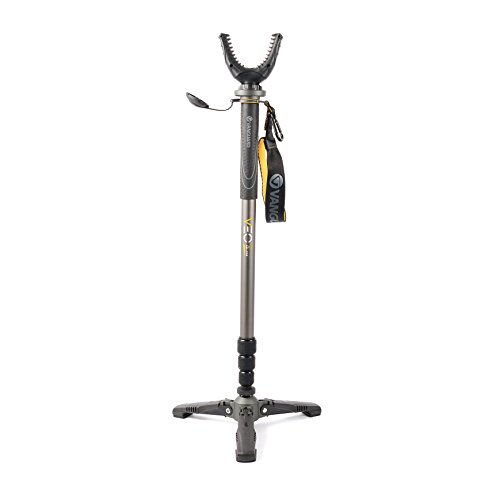
- Fold-out three-foot base with ball joint
- Removable, rotating U-yoke
- About 24–64 in.; 11 lb maximum load
Best For: Hunters wanting a steadier base and versatile mounting
Best Compact Pick
Allen Company 2164 Shooting Stick

- Weighs 5.6 oz.
- Adjusts from 14.5 to 34 in.
- Removable cradle; 4 lb maximum load
Best For: Hunters prioritizing a light, compact rest
Best for Fast Height Changes

- One-handed trigger height adjustment
- Quick-detach yoke for optics or cameras
- Listed maximum height of 65 in.
Best For: Hunters making frequent height and target changes
Best for Trekking
Allen Company Axial Shooting Stick

- Reaches up to 61 inches
- Quick-snap removable cradle
- Supports 3/8-16 accessories
Best For: Hunters seeking a trekking stick and shooting rest in one
Best Heavy-Duty Pick

- One-handed trigger adjustment
- 21- to 30-inch height range
- Quick-detach yoke for optics
Best For: Quick height changes from lower shooting positions
Best for Added Base Support
Manbily G-333 Shooting Monopod

- Adjusts from 24.4 to 70 inches
- Includes detachable mini tripod base
- 360-degree swiveling yoke
Best For: Tall support with a detachable base and camera compatibility
Most Versatile Base – HUNTPAL Convertible Shooting Stick
Among shooting monopods, this HUNTPAL model stands out for its folding tripod base. The base tilts and rotates horizontally, giving you more room to adjust your angle without repositioning the whole stick.
Best For: Hunters who want one adjustable support for shooting and walking across varied ground.
Pros:
- Converts between monopod, tripod, and walking-stick configurations.
- Adjusts from 21 to 65 inches and weighs 1.5 pounds.
- Folding, anti-slip rubber feet add support on varied surfaces.
Cons:
- The tripod base adds setup and bulk compared with a single-foot stick.
- Its 65-inch maximum is shorter than the 75-inch HUNTPAL monopods here.
Choose this one if a wider, adjustable base matters more to you than the simplest possible carry setup.
Best for Soft Ground – HUNTPAL Green 75-Inch Monopod
If you use shooting monopods on mud, snow, or other soft ground, this green HUNTPAL stick has integrated spike feet to help anchor it. Its 360-degree swivel yoke lets you adjust your aim horizontally while keeping the firearm on the rest.
Best For: Hunters who want a tall, light shooting stick for soft terrain and long walks.
Pros:
- Adjusts from 33 to 75 inches.
- Weighs 12.8 ounces and includes a shoulder strap.
- Also functions as a trekking pole or walking stick.
Cons:
- The 33-inch minimum offers less adjustment for low positions than shorter-collapsing models.
- A single support leg does not provide a tripod’s freestanding base.
This is a practical pick when reach, easy carrying, and traction in soft ground take priority over a wider base.
Black Finish Pick – HUNTPAL 75-Inch Shooting Stick
This black HUNTPAL option brings a 33-to-75-inch adjustment range to shoppers comparing shooting monopods. A 360-degree swivel yoke supports horizontal aiming adjustments, while integrated spike feet are intended for soft ground.
Best For: Hunters seeking a black, tall-adjusting monopod that doubles as a walking stick.
Pros:
- Swiveling yoke allows horizontal movement while the firearm rests on it.
- Aluminum construction, foam grip, and shoulder strap support outdoor carry.
- Includes integrated spikes for mud, snow, and other soft surfaces.
Cons:
- Its 33-inch minimum may be too tall for some low shooting positions.
- The single-leg design lacks the wider footing of a tripod.
Its listed features closely match the green HUNTPAL monopod above; the black finish is the clearest stated distinction.
Best for Camera Crossover – Allen Company Shooting Stick
The Allen Company stick is worth a look if your shortlist of shooting monopods also needs to serve as a camera stand. Its rubber V-shaped cradle removes for that second use, and quick-release leg clips make height changes straightforward.
Best For: Hunters who want a simple rifle rest that can also support a camera.
Pros:
- Adjusts from 21.5 to 61 inches for standing or kneeling positions.
- Removable cradle allows camera-stand use.
- Padded foam grip and wrist strap make it convenient to carry as a trekking pole.
Cons:
- Its 61-inch maximum is lower than the HUNTPAL sticks in this group.
- No swivel yoke or spike feet are specified in the supplied details.
Pick it for the removable cradle and straightforward adjustment rather than for maximum height or specialized footing.
Best for Added Stability – Vanguard VEO 2 AM-234TU Tri-Stand
Among shooting monopods, the Vanguard VEO 2 AM-234TU stands out for its fold-out three-foot base. Its ball joint supports smooth panning and tilting, while the rotating U-yoke holds a rifle or crossbow with rubber fins.
Best For: Hunters who want a shooting stick with a tripod-like base and the option to mount a camera or spotting scope.
Pros:
- Three feet fold and lock quickly for added stability.
- Removable, 360-degree rotating U-yoke adds mounting flexibility.
- Adjusts from about 24 to 64 inches and supports up to 11 pounds.
Cons:
- At about 2 pounds, it is heavier than the other two sticks listed here.
- Its roughly 24-inch folded length takes up more space than the compact Allen stick.
The fold-out base is the reason to choose this model; if pack size and weight matter more, a simpler monopod may suit you better.
Best Compact Pick – Allen Company 2164 Shooting Stick
The Allen Company 2164 is a compact option among shooting monopods, extending from 14.5 to 34 inches. Its aluminum staff, cam locks, padded grip, and removable cradle keep the setup straightforward.
Best For: Hunters who prioritize a light, compact rest for lower shooting positions or treestand use.
Pros:
- Weighs just 5.6 ounces.
- Adjusts from 14.5 to 34 inches with cam locks.
- Removable cradle and foam-padded handle add versatility and comfort.
Cons:
- Its 34-inch maximum height limits standing-height use for many shooters.
- Maximum listed load is 4 pounds.
Choose this stick when low weight and a short collapsed length matter most. The supplied notes recommend occasionally tightening the removable top section.
Best for Fast Height Changes – Primos Trigger Stick Gen 3
For shooting monopods that need to adapt quickly, the Primos Trigger Stick Gen 3 offers one-handed, trigger-operated height adjustment. Its quick-detach yoke also lets you switch to a panning support for optics or a camera.
Best For: Hunters who frequently change shooting height or move between a firearm rest and optics.
Pros:
- Trigger control allows fast, one-handed height changes.
- Adjusts to a listed maximum of 65 inches for a range of shooting positions.
- Quick-detach yoke and rotating joint support smooth tracking or optics use.
Cons:
- Its listed minimum height is 33 inches, so it does not collapse as short as the Allen stick.
- As a monopod, it does not provide the three-foot base of the Vanguard model.
This is the practical pick when adjustment speed matters more than the compactness of a short stick or the freestanding base of a tri-stand.
Best for Trekking – Allen Company Axial Shooting Stick
Among shooting monopods that double as walking aids, the Allen Company Axial offers a V-shaped shooting rest, an EVA-molded handle, and a carbide tip with a rubber boot. Its locking cams let you set the height for brush, inclines, or a ground blind.
Best For: Hunters who want one stick for steadying a shot, trekking, and supporting compatible optics.
Pros:
- Adjustable height reaches up to 61 inches.
- Quick-snap post makes it easy to remove the cradle.
- Accepts cameras or spotting scopes with a 3/8-16 thread.
Cons:
- A single-leg rest offers less freestanding support than a tripod.
- Supplied specifications disagree on minimum height: 29 versus 33.5 inches.
The accessory mount gives this stick more uses than a dedicated gun rest. Check the minimum height if a low shooting position is important to you.
Best Heavy-Duty Pick – PRIMOS Trigger Stick Gen3
The PRIMOS Trigger Stick Gen3 stands out among shooting monopods for its one-handed trigger adjustment. Its 21- to 30-inch range is better suited to lower shooting positions than to standing-height support.
Best For: Hunters who need to change rest height quickly while sitting or kneeling.
Pros:
- Trigger adjusts height without twisting leg locks.
- Quick-detach yoke allows a switch to panning support for optics or cameras.
- Weighs 1.2 pounds.
Cons:
- Maximum height is 30 inches, limiting its use as a standing-height rest.
- As a monopod, it still requires the user to balance the rest.
Choose this model when adjustment speed matters more than reach. The detachable yoke is a useful addition if you also carry optics or a camera.
Best for Added Base Support – Manbily G-333 Shooting Monopod
For buyers comparing shooting monopods with a wider height range, the Manbily G-333 adjusts from 24.4 to 70 inches and includes a detachable mini tripod base. Its rotating U-shaped yoke lets you follow a moving target without repositioning the whole stick.
Best For: Hunters who want a tall monopod with an included support base and camera-mounting options.
Pros:
- Five-section aluminum leg folds to 24.4 inches.
- U-shaped yoke swivels 360 degrees and has rubber fins.
- Includes a detachable base plus interchangeable rubber and spike feet.
- Reversible 1/4- and 3/8-inch screw accommodates camera equipment.
Cons:
- At 2.1 pounds, it is heavier than the listed PRIMOS monopod.
- Five twist-lock sections take more individual adjustments than a trigger-operated stick.
The G-333 offers the broadest stated height range of these three picks. Its base and mounting hardware make it especially versatile, though the extra components add weight.
How We Picked These Shooting Monopods
We organized the selected listings around practical differences: adjustment method, base design, rest or yoke style, and whether the stick also supports a camera or spotting scope. The list contains repeated HUNTPAL, Allen Company, and PRIMOS entries, so 10 listings do not mean 10 distinct models. Treat this as a feature-based comparison rather than evidence of hands-on testing or a ranking of field performance.
Quick Comparison
For fast height changes, start with the PRIMOS Trigger Stick Gen3. For a monopod with a tri-stand base, compare the Vanguard VEO 2 AM-234TU and Manbily options. The Allen Company Axial is the clearest fit on this list for buyers who also want a camera or spotting-scope base. If you want a simpler adjustable stick with a removable cradle, consider the Allen Company Monopod Shooting Stick; the HUNTPAL listings include walking-stick and tripod-style designs. Check each listing’s current configuration before buying.
Key Buying Factors for Shooting Monopods
Working Height and Adjustment
Choose a height range that fits your usual seated, kneeling, or standing position. A stick that reaches standing height may feel too tall or awkward at its minimum setting. Trigger adjustment can be convenient when you need to reposition quickly; twist- or clamp-style mechanisms are worth checking for ease of use with gloves.
Base Stability and Portability
A single ground contact point is easy to move but requires you to manage side-to-side sway. A tri-stand base may stand more securely on suitable ground, though it adds parts and can be less convenient in brush or on uneven surfaces. Compare packed length and carrying weight if you cover ground on foot.
Yoke, Cradle, and Accessory Fit
Look for a rest that fits your firearm’s fore-end and permits smooth repositioning without slipping. A removable or rotating U-shaped yoke can add flexibility, but confirm how it attaches and whether compatible replacements are available. For optics, verify the mount type and stated load capacity rather than assuming a rifle rest doubles as a scope mount.
Who Should Buy Which Shooting Monopods?
Mobile hunters who expect frequent position changes should prioritize quick adjustment and a manageable carry size. Buyers who shoot from a more fixed position may prefer the added ground contact of a tri-stand design. Choose a walking-stick style if you want one item to help with both travel and occasional support. If spotting or photography is part of your setup, choose a model with a specified accessory base. Whatever you pick, confirm the height, mounting hardware, and return policy against the exact listing before checkout.