The best snowshoes for beginners should feel secure without making every step a workout. The right pair balances flotation, traction, binding simplicity, and comfortable fit for the terrain you plan to explore.
This roundup includes approachable models from Tubbs, Retrospec, G2, and Crescent Moon, including snowshoes with heel lifts, trekking poles, and adjustable bindings. Use the guide below to narrow your choice by snow conditions, user weight, and hiking style.
Best 10 Snowshoes for Beginners Picks for 2026
Lightweight Trail Pick

- Lightweight aluminum frame
- Quick double-ratchet bindings
- Heel lifts and carry bag included
Best For: Beginners up to 120 pounds who want easy setup
Comfort-Focused Performer

- Torsion deck supports a natural gait
- Quick-Fit binding is easy to secure
- Traction rails and heel lift included
Best For: Beginners exploring uneven and hilly terrain
Complete Starter Kit
Retrospec Drifter Snowshoes & Poles

- Includes snowshoes and adjustable poles
- Glove-friendly ratchet bindings
- 25-inch size rated up to 200 pounds
Best For: Beginners wanting a ready-to-use winter setup
Mountain Traction Choice

- Toe and heel crampons add traction
- 19-degree ActiveLift supports climbs
- Includes tote bag and one-year warranty
Best For: Beginners tackling steep or mountainous trails
Versatile Starter Set
G2 Lightweight Snowshoes with Poles
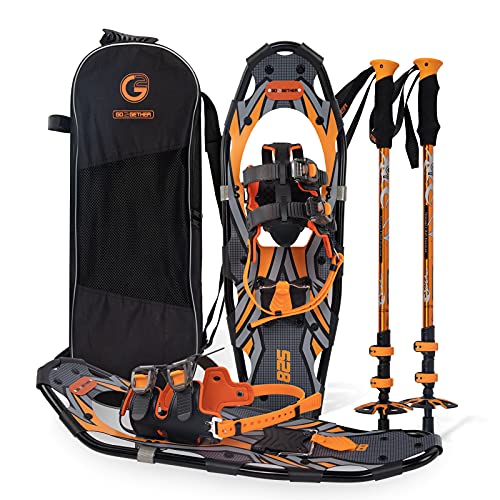
- Includes snowshoes, trekking poles, and tote bag
- Padded ratchet bindings are easy to fasten
- Aluminum crampons and heel lift support varied terrain
Best For: Beginners wanting a complete recreational snowshoeing kit
Best for Everyday Use

- Soft-Tec decking helps with flotation
- Quick-Fit binding uses easy-pull straps
- 21-inch pair weighs 2.8 pounds
Best For: Lighter beginners on recreational winter trails
High-Capacity Option
G2 36-Inch Snowshoes with Poles

- 36-inch model supports up to 300 pounds
- Includes trekking poles
- Ratchet binding and aluminum crampons aid winter travel
Best For: Higher-weight users and deeper-snow recreational hikes
Trail-Ready Stability

- 30-inch frame for deep-snow flotation
- Cobra toe crampon for varied terrain
- Quick-Fit binding and 16° heel lift
Best For: Adult beginners tackling deep snow and changing terrain
Lightweight Learning

- Ultralight 22-inch EVA foam design
- Rocker platform encourages a natural stride
- Includes trekking poles and carry bag
Best For: Lightweight trail walking and running within the stated weight limits
Kid-Friendly Fun

- Flashing LEDs light up with each step
- Molded traction rails support exploration
- QuickLock2 binding stays snug on boots
Best For: Children ages 4–8 within the 23 kg weight limit
Lightweight Trail Pick – Retrospec Drifter Snowshoes
For beginners looking for snowshoes for beginners, the Retrospec Drifter offers a lightweight aluminum frame, straightforward double-ratchet bindings, and a full-floating pivot system for comfortable movement on varied winter trails.
Best For: Beginners who prioritize easy setup and lightweight trail performance, particularly users weighing up to 120 pounds.
Pros:
- Lightweight aluminum construction helps make each step feel more manageable.
- Double-ratchet bindings are designed for quick setup.
- Built-in heel lifters can reduce strain on uphill climbs.
- Includes a mesh carrying bag for storage and transport.
Cons:
- The 21-inch size has a maximum recommended weight of 120 pounds.
- The package includes snowshoes and a carry bag, but not trekking poles.
The Drifter is a practical entry-level option for lighter users who want simple bindings, climbing assistance, and convenient storage in one package.
Comfort-Focused Performer – Tubbs Flex TRK
The Tubbs Flex TRK is a strong choice for snowshoes for beginners who want natural foot movement and dependable traction. Its torsion deck, flexible tail, and easy-pull binding system are designed for comfort on uneven terrain.
Best For: New snowshoers who expect to cover uneven trails and want added uphill support.
Pros:
- Torsion deck articulation helps preserve a natural gait.
- Quick-Fit binding uses easy-pull straps and a roller buckle heel strap.
- Toe crampon and traction rails provide grip on uphill, downhill, and sidehill terrain.
- ActiveLift heel lift can reduce calf fatigue and Achilles tendon strain.
Cons:
- The supplied details do not specify a maximum user weight.
- The package is listed as one item and does not mention trekking poles or a carry bag.
With its comfort-oriented flex and traction features, the Flex TRK is well suited to beginners who want a more responsive snowshoe for varied terrain.
Complete Starter Kit – Retrospec Drifter Snowshoes & Poles
For beginners who want more than snowshoes alone, this Retrospec bundle combines 25-inch aluminum snowshoes with adjustable trekking poles and terrain-specific attachments. The double-ratchet bindings and carrying case make it convenient for getting started.
Best For: Beginners seeking an all-in-one setup for winter trails, with a recommended maximum weight of 200 pounds.
Pros:
- Includes snowshoes, adjustable trekking poles, and a carrying bag.
- Double-ratchet bindings can be operated easily with gloves.
- Adjustable poles provide added balance and control.
- Aircraft-grade alloy frames and polyethylene decks are designed for deep snow.
Cons:
- The 25-inch snowshoes may be more equipment than users who only want a basic pair need.
- The supplied details do not specify the included pole height range.
This bundle is an appealing starting point for beginners who value convenience and stability, since it supplies the primary snowshoeing equipment in one purchase.
Mountain Traction Choice – Tubbs Mountaineer Snowshoes
The Tubbs Mountaineer is built for beginners who anticipate steeper or more demanding terrain. Its Pro-Step frame, Soft-Tec decking, ActiveFit 2.0 binding, and dedicated toe and heel crampons emphasize control and traction.
Best For: New snowshoers who want a traction-focused design for mountain routes and steep climbs.
Pros:
- Anaconda toe and Python heel crampons provide dedicated traction components.
- ActiveFit 2.0 binding and EZ Heel Buckle support a secure fit.
- ActiveLift heel lift rises to 19 degrees for steep climbs.
- Includes a tote bag and a one-year manufacturer warranty.
Cons:
- The supplied details do not specify the exact maximum weight in pounds.
- The package does not mention trekking poles.
- Its mountain-oriented traction features may be more than casual flat-trail users need.
The Mountaineer makes the most sense for beginners whose learning plans include hills or mountain terrain and who want substantial traction and climbing support from the outset.
Versatile Starter Set – G2 Lightweight Snowshoes with Poles
For beginners who want an all-in-one setup, these G2 snowshoes for beginners combine lightweight HDPE decking with trekking poles and a tote bag. The padded ratchet bindings, aluminum crampons, flex pivot bar, and heel lift provide useful features for flat trails and moderate uphill walking.
Best For: Beginners seeking a complete snowshoe-and-pole package for recreational winter hikes.
Pros:
- Includes trekking poles and a tote bag.
- One-pull ratchet buckle is designed for easy fastening in cold conditions.
- Aluminum crampons provide grip on snow and ice.
- Soft EVA padding and a heel lift add comfort and climbing support.
Cons:
- The 25-inch model is rated for up to 200 pounds, so size and load selection matter.
- The listed set weighs 6.2 pounds.
This is a practical beginner package for shoppers who value included accessories and straightforward bindings. Confirm the correct length and weight rating before ordering.
Best for Everyday Use – Tubbs Glacier Snowshoes
TUBBS Glacier, Size: 21 (X220101301210) | Why We Like The Tubbs Glacier Snowshoe
Check Price On AmazonThe Tubbs Glacier is a streamlined option for beginners who want snowshoes for beginners with a simple, secure fit. Its Soft-Tec decking is designed to provide flotation in deeper snow, while the Quick-Fit binding and recreational crampons address the basics of comfort and traction.
Best For: Beginners and recreational hikers looking for lightweight snowshoes for marked or moderate winter trails.
Pros:
- Soft-Tec decking provides flotation in deeper snow.
- Easy-pull straps and a roller-buckle heel strap support quick fitting.
- Toe and heel crampons provide grip and stability.
- At 2.8 pounds, the listed pair is relatively light.
Cons:
- The 21-inch size has a maximum recommended weight of 150 pounds.
- It does not list trekking poles or a carry bag as included components.
With its low listed weight and uncomplicated binding system, the Glacier is a sensible entry point for lighter users. Check the 150-pound recommendation and intended snow conditions before choosing it.
High-Capacity Option – G2 36-Inch Snowshoes with Poles
For larger users or deeper-snow outings, this G2 set offers 36-inch snowshoes for beginners with trekking poles and an anti-slip sole. The lightweight deck is intended to provide flotation, while the fast ratchet binding, aluminum crampons, and flex pivot bar make the set approachable for flat and uphill travel.
Best For: Beginners and families needing a higher-capacity set with poles for recreational snowshoeing.
Pros:
- The 36-inch model is rated for up to 300 pounds.
- Includes trekking poles.
- One-pull ratchet binding is designed for low-temperature use.
- Aluminum crampons and a flex pivot bar support traction and natural movement.
Cons:
- The listed 36-inch version is relatively long at 36 inches.
- The supplied details do not specify a tote bag or EVA padding.
This set stands out when flotation and weight capacity are more important than compact dimensions. Its longer design may suit deeper snow, but beginners should confirm that the size fits their trail and transport needs.
Trail-Ready Stability – Tubbs Wilderness 30
TUBBS Wilderness, Color: Black, Size: 30 (X220100801300) | Why We Like The Wilderness Snowshoe
Check Price On AmazonFor beginners looking for snowshoes for beginners that can handle deeper snow and changing terrain, the Tubbs Wilderness 30 emphasizes flotation, traction, and a secure fit. Its 30-inch aluminum design includes a heel lift for climbing comfort.
Best For: Adult beginners exploring deep snow and varied terrain.
Pros:
- 30-inch Fit Step 2.0 frame provides ample flotation in deep snow.
- Cobra toe crampon supports traction and stability on varying terrain.
- Quick-Fit binding uses easy-pull straps and a roller-buckle heel strap.
- 16-degree heel lift can assist on uphill sections.
Cons:
- The 30-inch size may feel less maneuverable than shorter snowshoes.
- The supplied details do not specify a recommended user weight range.
The Wilderness is a practical choice when flotation and dependable traction matter more than ultralight weight. Its quick-adjust binding and heel lift also make it approachable for newcomers.
Lightweight Learning – Crescent Moon Eco Eva 22
The Crescent Moon Eco Eva is a lightweight option for beginners seeking snowshoes for beginners that feel closer to athletic footwear. Its 22-inch rocker platform, intuitive hook-and-loop binding, and included trekking poles suit trail walking and running.
Best For: Adults and youth up to the listed weight limits who want lightweight trail snowshoes.
Pros:
- Each pair weighs 2 pounds 8 ounces, according to the supplied details.
- Rockered, teardrop-shaped platform supports a natural stride.
- Hook-and-loop bindings are designed for simple, secure adjustment.
- Includes a carry bag and trekking poles.
Cons:
- Recommended limits are up to 200 pounds on trail and 175 pounds off trail, while the listed maximum is 180 pounds.
- At 22 inches, the shorter deck may provide less flotation than larger snowshoes in deep snow.
With its low weight and familiar-feeling movement, the Eco Eva can reduce the learning curve for casual trail users. Check the weight guidance carefully before choosing it for off-trail conditions.
Kid-Friendly Fun – Tubbs SnowGlow 16
For families introducing children to snowshoes for beginners, the Tubbs SnowGlow adds flashing LED lights to a compact 16-inch design. Molded traction rails and a QuickLock2 binding provide basic support for young explorers.
Best For: Children ages 4 to 8, with recommended shoe sizes from kids’ 11 through adult 6.
Pros:
- Flashing LED lights activate with each step for added kid appeal.
- Molded traction rails help children explore different surfaces.
- QuickLock2 binding locks onto the boot and stays snug.
- Lightweight plastic construction weighs 0.73 kg.
Cons:
- The 23 kg maximum weight recommendation limits use to smaller children.
- The 16-inch size is intended for kids rather than adult users.
The SnowGlow is less about adult backcountry performance and more about making a child’s first snowshoe outings engaging and manageable. Confirm both the child’s weight and boot size before purchase.
How We Picked the Best Snowshoes for Beginners
We focused on features that reduce the learning curve: intuitive bindings, dependable traction, stable decks, useful flotation, and sizing options for different body weights and snow conditions. We also considered whether each design suits packed trails, fresh powder, rolling terrain, or occasional recreational use.
Included accessories such as trekking poles, carry bags, and heel lifts can improve overall value, but they do not replace a properly sized snowshoe. Always check the manufacturer’s weight range, including clothing and pack weight, before buying.
Quick Comparison
| Best for | Look for | Most useful features |
|---|---|---|
| First-time trail hikers | Stable aluminum or composite deck | Simple ratchet binding and moderate traction |
| Deep or loose snow | Longer deck and higher flotation | Heel lift and aggressive crampon |
| Packed trails | Shorter, maneuverable snowshoe | Light weight and secure toe traction |
| Budget buyers | Complete kits or basic bindings | Included poles or carry bag |
| Fast hikers and runners | Lightweight, flexible construction | Responsive rocker and low-profile fit |
Key Buying Factors for Snowshoes for Beginners
Size and Flotation
Snowshoe length should match your total load and the snow conditions. Larger decks provide more flotation in deep powder, while shorter models are easier to control on packed paths, narrow trails, and wooded terrain. Use the maker’s weight chart rather than choosing by height or shoe size alone.
Bindings and Comfort
Ratchet bindings are convenient for beginners because they can be tightened quickly with gloves and adjusted on the trail. Look for a secure toe box, minimal pressure points, and enough room for your winter boots. A binding that swivels naturally can make walking feel less awkward.
Traction and Terrain
Steel crampons and traction rails are valuable on icy slopes and hard-packed trails. For mostly level recreational routes, moderate traction may be easier to walk on and lighter to carry. Heel lifts can reduce calf strain on sustained climbs.
Weight and Included Gear
Lightweight models are less tiring, especially for newer hikers, but very light designs may offer less flotation or downhill stability. Bundles with poles and a tote can be practical for occasional users, provided the snowshoes still meet your terrain and weight requirements.
Who Should Buy Which Snowshoes for Beginners?
Choose a straightforward aluminum-frame model if you want an affordable, general-purpose introduction to winter hiking. Pick a Tubbs option when you prioritize established trail performance, secure traction, and terrain-specific sizing. A bundled G2 or Retrospec set makes sense for buyers who need poles and storage in one purchase.
For deep snow or heavier loads, favor the longest compatible size with a heel lift. For packed trails, fitness hikes, or running-oriented outings, a shorter and lighter design—such as a flexible foam-style snowshoe—can feel more natural. If you expect steep or icy terrain, prioritize crampon design and binding security over accessories or color.