A power outage is the wrong time to discover your lantern needs a full day of sun before it works. The best emergency option is one you can keep charged, find quickly, and use comfortably for hours.
These 10 picks include compact lanterns, collapsible designs, and multi-packs. Use the guide below to match their charging options and light output to your household backup plan.
Best 10 Solar Lanterns for Emergencies Picks for 2026
Best for Long Outages
Lepwings 6000mAh Solar Lantern

- Up to 80 hours of light
- 60–280-lumen dimming
- USB, solar, and phone-charging options
Best For: Home outage kits needing adjustable light and backup phone power
Best Pocket-Sized Pick
Glocusent Solar Camping Lantern
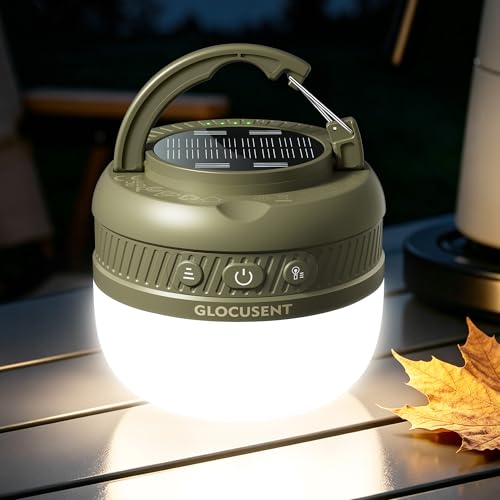
- 5.4-ounce pocket-friendly design
- Three light colors plus red SOS
- Solar full charge takes 40 hours
Best For: Go-bags and compact camping setups
Best for High Brightness
2000-Lumen Solar Camping Lantern

- Listed 2000-lumen maximum
- Five dimming levels and red SOS
- IP65 rating; solar supplements USB
Best For: Brighter campsite or outage lighting
Best Multi-Room Pack
XTAUTO Collapsible Lantern 4-Pack

- Four lanterns for separate locations
- Collapsible lantern-and-flashlight design
- USB and solar charging
Best For: Households needing lights in multiple rooms
Best for Wet Conditions
LuminAID Nova Inflatable Solar Lantern

- 75 lumens; up to 24 hours of light
- IP67 waterproof and collapsible
- Solar or micro-USB charging
Best For: Lightweight, waterproof emergency kits
Best for Everyday Use
DIBMS 4-Pack Collapsible Solar Lanterns

- Four lantern/flashlight units
- Up to 300 lumens per lantern
- USB or solar charging; IPX4
Best For: Lighting several rooms during outages
Best Simple Solar Lamp

- Up to 12 hours of light
- Adjustable handle for varied placement
- Two-year warranty
Best For: Straightforward indoor outage lighting
Compact Two-Pack
DIBMS Collapsible Solar Lanterns
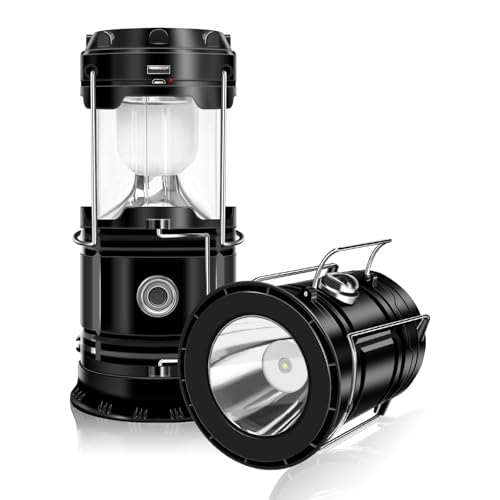
- Two lantern-and-flashlight units
- 300-lumen maximum output
- USB or solar charging
Best For: Separate rooms or go-bags
Three-Way Power Pick
LETMY Four-Pack Camping Lanterns

- Four collapsible lanterns
- Solar, USB, or AA power
- 600-lumen stated output
Best For: Multiroom kits needing an AA fallback
Long-Runtime Claim
XTAUTO Two-Pack Collapsible Lanterns

- Two lantern-and-flashlight units
- Solar or USB charging
- Claims over 25 hours per charge
Best For: Compact kits needing hangable lights
Best for Long Outages – Lepwings 6000mAh Solar Lantern
Among solar lanterns for emergencies, this Lepwings model suits households that want adjustable room lighting and a backup way to charge a phone. Its 6000mAh battery is rated for up to 80 hours of light, depending on use.
Best For: Power-outage kits that need a lantern with a larger battery and phone-charging capability.
Pros:
- Adjustable warm light from 60 to 280 lumens.
- Dual solar panels plus USB charging; the stated USB recharge time is as little as 3 hours.
- Can serve as a power bank and has IPX4 splash resistance.
Cons:
- IPX4 protection covers splashes, not immersion.
- The up-to-80-hour runtime should not be assumed at maximum brightness.
The combination of dimming, USB backup charging, and power-bank output makes this a practical home emergency light. Charge it by USB ahead of a storm rather than relying solely on available sunlight.
Best Pocket-Sized Pick – Glocusent Solar Camping Lantern
If portability matters most when choosing solar lanterns for emergencies, this 5.4-ounce Glocusent fits easily into a bag or pocket. It offers adjustable light up to 250 lumens, three color temperatures, and a red SOS mode.
Best For: Compact go-bags and campers who want flexible lighting controls.
Pros:
- Rated for up to 120 hours per charge, with a 5000mAh battery.
- USB-C charging, power-bank output, and easy-to-identify raised buttons.
- IPX5 water resistance and stated 1-meter drop protection.
Cons:
- Solar is only an auxiliary charging method; a full solar charge is stated to take 40 hours.
- Its 250-lumen maximum is lower than some larger lanterns in this roundup.
This is a strong grab-and-go option when size and lighting modes matter more than rapid solar recharging. Use USB-C to keep it ready, and treat the panel as a way to extend use in sunny conditions.
Best for High Brightness – 2000-Lumen Solar Camping Lantern
For buyers comparing solar lanterns for emergencies who prioritize light output, this model lists a 2000-lumen maximum and five dimming levels. Its 5000mAh battery also supports white, warm, natural, and red lighting, plus an SOS strobe.
Best For: Campsites or outage setups that need a brighter adjustable lantern.
Pros:
- Claims over 9 hours at maximum brightness and 85-plus hours in eco mode.
- IP65-rated dust and water resistance, with a detachable carrying or hanging handle.
- USB charging, a four-level battery indicator, and emergency phone charging.
Cons:
- The stated sunlight replenishment is 20% daily, so solar is not a quick full-recharge option.
- High-output runtime and durability figures come from the supplied product claims.
Its appeal is the range between bright task lighting and lower-power extended use. For emergency readiness, start with a USB charge and use the solar panel to supplement it outdoors.
Best Multi-Room Pack – XTAUTO Collapsible Lantern 4-Pack
This four-pack offers a different approach to solar lanterns for emergencies: place a light in several rooms or give each person one. Each XTAUTO lantern collapses for storage and works as either a lantern or flashlight.
Best For: Households building a distributed power-outage lighting kit.
Pros:
- Four lanterns provide multiple lights in one pack.
- Collapsible design, folding handles, and adjustable light by raising the lantern body.
- USB and solar charging, with a stated runtime of more than 25 hours when fully charged.
Cons:
- The listed battery capacity is 1600mAh per lantern.
- No solar charging time or lumen rating is supplied.
The value here is coverage and convenience rather than detailed brightness specifications. Charge the units before storing them, then position them where people can find them quickly during an outage.
Best for Wet Conditions – LuminAID Nova Inflatable Solar Lantern
For solar lanterns for emergencies, the LuminAID Nova is a compact choice when water exposure and pack space matter. Its inflatable, collapsible body provides up to 75 lumens and folds down for storage in an emergency kit.
Best For: Emergency kits that need a lightweight, waterproof lantern for outages or outdoor use.
Pros:
- IP67-rated waterproof, dustproof, and shatterproof construction.
- Up to 24 hours of light on a full charge, with multiple brightness settings.
- Recharges in about 10 hours of direct sunlight or 1–2 hours via micro USB.
Cons:
- Its 75-lumen output is lower than the DIBMS lantern’s stated 300-lumen maximum.
- Solar charging requires extended direct outdoor sunlight.
The Nova prioritizes portability and weather protection over maximum brightness. Charge it ahead of a storm, then use solar as an additional recharge option.
Best for Everyday Use – DIBMS 4-Pack Collapsible Solar Lanterns
If you need solar lanterns for emergencies in several rooms, this DIBMS four-pack offers separate collapsible lights rather than one shared lantern. Each unit provides 360-degree lantern illumination when extended and a built-in flashlight for directed light.
Best For: Households that want multiple rechargeable lights ready for outages.
Pros:
- Four lanterns let you distribute lights among rooms or emergency kits.
- Stated maximum output of 300 lumens, with brightness adjusted by extending the lantern.
- Solar and USB charging; stated runtime is 6–11 hours on a full charge.
- Folding hooks allow hanging as well as tabletop use.
Cons:
- IPX4 protection covers splashes, not submersion.
- Solar charging requires about nine hours of direct sunlight.
This pack makes sense when coverage matters more than keeping gear to a single compact light. USB-charge the lanterns before an outage so solar charging is a backup rather than your only plan.
Best Simple Solar Lamp – d.light S3 Solar LED Lantern
Among solar lanterns for emergencies, the d.light S3 suits buyers who want a straightforward portable lamp. Its adjustable metal handle lets you set it on a surface or hang it where light is needed.
Best For: Basic outage lighting for reading, studying, or moving around a room.
Pros:
- Up to 12 hours of light on a full charge.
- Solar panel is described as capable of charging even on cloudy days.
- Adjustable handle supports tabletop, floor, wall, or hook placement.
- Includes a two-year warranty.
Cons:
- Water-resistant rather than rated waterproof in the supplied specifications.
- No USB charging option is listed in the supplied notes.
The S3 is a practical pick if flexible placement and simple solar operation are your priorities. For wet conditions or fast USB recharging, one of the other listed lanterns may be a better fit.
Compact Two-Pack – DIBMS Collapsible Solar Lanterns
The DIBMS two-pack is a compact choice among solar lanterns for emergencies, with a collapsible 300-lumen lantern and a separate flashlight LED in each unit. You can charge the built-in batteries by USB or sunlight before adding them to an outage kit.
Best For: Households wanting two lightweight lights for separate rooms or go-bags.
Pros:
- Two lanterns with adjustable, 360-degree light and flashlight functionality.
- USB and solar charging; listed charging times are 4 hours by USB or 9 hours in direct sunlight.
- Collapsible design, folding hook, and IPX4 water resistance.
Cons:
- Solar charging requires a long stretch of direct sunlight.
- No replaceable AA-battery power option is listed.
The two-unit pack offers flexible placement during an outage. Charge by USB when possible and treat the solar panel as a backup charging method.
Three-Way Power Pick – LETMY Four-Pack Camping Lanterns
The LETMY four-pack stands out among solar lanterns for emergencies because each light has three power options: its built-in rechargeable battery, solar charging, or three AA batteries. Its collapsible COB design is rated at 600 lumens for broad, 360-degree illumination.
Best For: Households stocking multiple rooms and wanting an AA-battery fallback.
Pros:
- Four lanterns make it easier to distribute light around a home.
- Solar, included-cable USB, and AA-battery power options.
- Collapsible design with 360-degree COB illumination.
Cons:
- Three AA batteries per lantern are required for that power option and are not included.
- The supplied notes conflict on runtime: the bullets say up to 12+ hours, while the details list 2 hours.
The extra power option is the main reason to choose this set. Because the runtime information is inconsistent, plan around having charged lanterns and spare AA batteries rather than assuming a specific number of hours.
Long-Runtime Claim – XTAUTO Two-Pack Collapsible Lanterns
The XTAUTO two-pack offers another portable option for solar lanterns for emergencies. Each collapsible light combines a 360-degree lantern with a flashlight and has a built-in 1600mAh battery that charges by solar panel or USB.
Best For: Compact emergency kits that need two hangable, rechargeable lights.
Pros:
- Lantern and flashlight functions, with brightness adjusted by extending the lantern.
- Solar and USB charging with automatic power-off protection.
- Folding handle for hanging; the listing claims more than 25 hours of light on a full charge.
Cons:
- No AA-battery power option is listed.
- The supplied notes do not specify USB or solar charging times.
This set is appealing if small storage size and hanging placement matter most. The stated runtime is promising, but charge both units ahead of an outage since charging times are not provided.
How We Picked These Solar Lanterns for Emergencies
We prioritized practical backup-light features: a way to recharge before an outage, portable designs, useful lighting modes, and options for different household sizes. The selection includes single lanterns, an inflatable model, and two- and four-packs. Listed battery capacities, runtimes, and water-resistance claims can help narrow your choices, but they are not directly comparable without knowing the brightness setting and test conditions. Check the current product listing for exact specifications.
Quick Comparison: Which Type Fits Your Plan?
Single rechargeable lanterns suit a bedside table, kitchen, or go-bag when you want one flexible light. Collapsible lanterns save storage space and are easy to distribute between rooms. Multi-packs make more sense if several people may need light at once. The LuminAID Nova inflatable lantern offers a packable alternative, while a small lantern with an adjustable stand, such as the d.light S3, may fit a desk or bedside setup. Compare the actual dimensions and controls before deciding.
Key Buying Factors for Solar Lanterns for Emergencies
Charging and Storage
Treat solar charging as a backup, not your only charging plan. Sunlight varies by season, weather, window placement, and panel size. If a lantern supports USB charging, charge it before severe weather and keep the cable with your supplies. Some models also accept replaceable batteries; verify whether those are included and how the power sources work together. Rechargeable batteries lose charge in storage, so add a periodic charge check to your emergency routine.
Brightness and Runtime
Look for adjustable output. A low setting is often enough for moving around a room and can conserve power, while a brighter setting helps with cooking or shared tasks. Be cautious with maximum-runtime claims: they commonly reflect a low-output mode rather than full brightness. If you need light through multiple nights, plan for several lanterns or another reliable charging source.
Weather Resistance and Usability
For outdoor use or storm cleanup, check the stated IP rating and what it covers; water-resistant does not necessarily mean submersible. A stable base, hanging handle, easy-to-find switch, and readable charge indicator can matter as much as headline brightness. Consider whether the lantern is simple enough for everyone in your household to operate in the dark.
Who Should Buy Which Solar Lanterns for Emergencies?
Choose a USB-rechargeable single lantern if you can maintain a charged primary light. Pick a two-pack to cover two rooms or keep one with your evacuation supplies. A four-pack is more practical for larger households or distributed storage. Choose a collapsible or inflatable design when bag space is tight. Whichever you buy, test it when it arrives, store it where you can reach it, and keep a separate flashlight for directional light.