A takedown recurve lets you remove and replace its limbs, making it easier to store the bow and, on compatible models, change draw weight as your form develops. The right choice starts with a comfortable fit—not the heaviest limbs on the listing.
These 10 picks include complete starter sets and standalone bows. Several listings feature the same model, so check the exact draw weight, handedness, and included accessories before you buy.
Best 10 Takedown Recurve Bows Picks for 2026
Higher-Draw Kit
CVLIFE 62-Inch 50 lb Recurve Set

- 50 lb right-hand configuration
- Six arrows and protective accessories included
- Three-piece wood-and-fiberglass build
Best For: Right-handed archers wanting a 50 lb bow with accessories
Moderate-Draw Kit
CVLIFE 62-Inch 40 lb Recurve Set
- 40 lb right-hand configuration
- Six arrows plus guards and bowstringer
- Three-piece wooden takedown design
Best For: Right-handed archers seeking a 40 lb bundled set
Target-Practice Bundle

- 30 lb right-hand configuration
- Six arrows and six target papers
- Sight, stabilizer, and string silencers included
Best For: Right-handed beginners wanting bundled target-practice gear
Upgradeable Classic
Samick Sage 62-Inch Recurve Bow

- 40 lb right-hand configuration
- Separately available interchangeable limbs
- Threaded bushings for compatible accessories
Best For: Archers building a customizable setup with their own gear
Most Complete Accessory Set
Deerseeker 62-Inch Takedown Recurve
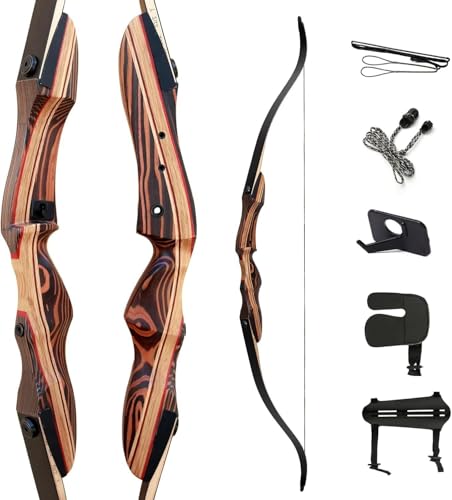
- 20–60 lb options listed
- Stringer and protective accessories included
- Threaded attachment points
Best For: Buyers wanting included basics and upgrade options
Lighter Sage Pick
- 62-inch bow with 30 lb listed draw
- Interchangeable limbs
- Rest and bowstring included
Best For: Newer archers seeking a 30 lb Sage
Midweight Sage Pick
- 62-inch bow with 35 lb listed draw
- Replaceable fiberglass-laminated limbs
- Accessory-ready brass bushings
Best For: Archers seeking a 35 lb Sage configuration
Midweight Pick
Samick Sage 45 lb. Right-Hand Bow
- 62-inch bow with a 45 lb. draw
- Interchangeable fiberglass-laminated limbs
- Threaded bushings for accessories
Best For: Right-handed archers seeking a 45 lb. setup
Heavy-Draw Pick
Samick Sage 50 lb. Right-Hand Bow
- 62-inch right-hand model
- 50 lb. draw weight
- Includes string, rest, and instructions
Best For: Right-handed archers seeking a 50 lb. draw
Light-Draw Pick
Samick Sage 25 lb. Right-Hand Bow
- 25 lb. draw weight
- 62-inch takedown design
- Interchangeable limbs sold separately
Best For: Right-handed beginners seeking a lighter draw
Higher-Draw Kit – CVLIFE 62-Inch 50 lb Recurve Set
Among takedown recurve bows, this 62-inch CVLIFE set suits right-handed archers who want a 50 lb bow with practice accessories included. Its three-piece design breaks down for storage and transport.
Best For: Right-handed archers seeking a 50 lb takedown bow and a bundled practice kit.
Pros:
- Includes six arrows, a quiver, arm guard, finger guard, bowstringer, string silencers, and arrow rest.
- Wood riser and fiberglass-laminated maple limbs.
- Three-piece construction packs down for transport.
Cons:
- Right-hand configuration only.
- The listed 50 lb draw weight may be too demanding for some beginners.
Choose this version if you specifically want the heavier listed draw weight; the included bowstringer and protective accessories make it a more complete package than a bare bow.
Moderate-Draw Kit – CVLIFE 62-Inch 40 lb Recurve Set
This 40 lb CVLIFE option is one of the takedown recurve bows here that pairs a 62-inch wooden design with arrows and protective gear. It is configured for archers who hold the riser in the left hand and draw with the right.
Best For: Right-handed archers who want a 40 lb bow with core practice accessories in one set.
Pros:
- Includes six arrows, a quiver, arm guard, finger guard, bowstringer, string silencers, and arrow rest.
- Three-piece design simplifies storage and carrying.
- Ergonomic wood riser and fiberglass-laminated maple limbs.
Cons:
- Not configured for left-handed drawing.
- The listed 40 lb draw weight may still be strenuous for a new archer.
Compared with the separately listed 50 lb CVLIFE set, this 40 lb configuration offers a lower specified draw weight while retaining the same type of accessory bundle.
Target-Practice Bundle – GQT 52-Inch Recurve Set
GQT Takedown Recurve Bow and Arrow Set for Adults & Beginners, 18/30/40 lbs(30, Pounds)
Check Price On AmazonFor shoppers comparing takedown recurve bows with bundled target gear, this 52-inch GQT set includes arrows, target papers, a sight, and protective accessories. The listed configuration is a 30 lb, right-hand bow with a composite riser and fiberglass limbs.
Best For: Right-handed beginners who want a compact bow set with targets and aiming accessories.
Pros:
- Includes six hybrid carbon-fiber arrows and six target papers.
- Comes with an arm guard, finger protection, arrow rest, and single-pin sight.
- Stabilizer and string silencers are included to help manage vibration and noise.
- Disassembles with the included Allen key for easier carrying.
Cons:
- Right-hand configuration only.
- Requires assembly before shooting.
This is the most target-oriented bundle of the four: the included papers and sight make it convenient for setting up practice, while its 52-inch length distinguishes it from the 62-inch options.
Upgradeable Classic – Samick Sage 62-Inch Recurve Bow
The Samick Sage stands out among these takedown recurve bows for its separately available, interchangeable limbs and threaded accessory bushings. This listing specifies a 62-inch, 40 lb right-hand configuration rather than an arrow-and-gear kit.
Best For: Archers who prefer a configurable bow and plan to choose their own arrows and accessories.
Pros:
- Interchangeable limbs can be purchased separately.
- Pre-installed threaded bushings accommodate compatible sights, stabilizers, and other attachments.
- Includes a 14-strand Dacron string and stick-on arrow rest.
- Ergonomic maple-wood riser.
Cons:
- The supplied contents do not list arrows or protective gear.
- This listed configuration has a 40 lb draw weight, which may be too heavy for some beginners.
Pick the Sage if future limb changes and accessory mounting matter more to you than getting a complete shooting kit in the box.
Most Complete Accessory Set – Deerseeker 62-Inch Takedown Recurve
Among takedown recurve bows, this 62-inch Deerseeker stands out for its included accessories and broad 20–60 lb draw-weight options. Check the selected configuration carefully: the supplied details list a right-handed, 50 lb version.
Best For: Buyers who want a bow with basic shooting accessories included and room to add attachments.
Pros:
- Includes a stringer, finger tab, arm guard, arrow rest, bowstring, and Allen key.
- Threaded bushings accommodate accessories such as a sight, stabilizer, or quiver.
- Fiberglass-and-wood laminated limbs pair with aluminum limb pockets.
Cons:
- Draw weight and hand orientation vary by configuration, so confirm both before ordering.
The included setup tools make this a convenient starting package, while the attachment points leave room to customize it later.
This 30 lb Samick Sage is a 62-inch option for shoppers comparing takedown recurve bows at a lighter listed draw weight. Its interchangeable limbs offer a way to change draw weight later, with replacement limbs sold separately.
Best For: Newer archers looking for a 30 lb Sage configuration for target practice.
Pros:
- Includes an arrow rest, assembly instructions, and a Dacron bowstring.
- Interchangeable fiberglass-laminated limbs allow later changes.
- Threaded brass bushings support accessories such as a sight or stabilizer.
Cons:
- Replacement limbs must be purchased separately.
- The listed package does not include a stringer or arm guard.
Choose this listing if 30 lb matches your current needs; its limb system gives you an upgrade path without replacing the riser.
For shoppers comparing takedown recurve bows, this Samick Sage listing provides a 62-inch bow at a specified 35 lb draw weight. It shares the Sage’s interchangeable-limb design and accessory-ready brass bushings.
Best For: Archers who specifically want the 35 lb Sage configuration for practice.
Pros:
- Includes an arrow rest, assembly instructions, and a 14-strand Dacron bowstring.
- Fiberglass-laminated limbs can be replaced with separately purchased limbs.
- Pre-installed threaded bushings accept compatible accessories.
Cons:
- A stringer and arm guard are not listed among the included components.
- Changing draw weight requires a separate limb purchase.
The deciding detail here is the listed 35 lb draw weight: pick it over the 30 lb Sage only if that weight suits your current strength and practice plans.
Midweight Pick – Samick Sage 45 lb. Right-Hand Bow
Among takedown recurve bows, this 62-inch Samick Sage is a midweight choice for right-handed archers who want a 45 lb. draw. Its maple riser, interchangeable fiberglass-laminated limbs, and threaded brass bushings leave room to adjust the setup over time.
Best For: Right-handed archers ready for a 45 lb. bow for target practice or hunting.
Pros:
- Includes a Dacron bowstring, stick-on arrow rest, and assembly instructions.
- Interchangeable limbs can be purchased separately.
- Threaded bushings support accessories such as a sight, stabilizer, or quiver.
Cons:
- The listed 45 lb. draw may be too demanding for someone seeking a lighter starting weight.
- Accessories such as a sight and quiver are not listed among the included components.
Choose this version if 45 lb. suits your strength and you value a bow that can accept accessories; check the listed right-hand orientation before ordering.
Heavy-Draw Pick – Samick Sage 50 lb. Right-Hand Bow
This 50 lb. Samick Sage is one of the heavier listed options in this group of takedown recurve bows. The 62-inch right-hand model pairs a maple riser with interchangeable fiberglass-laminated limbs and comes with a string, arrow rest, and assembly instructions.
Best For: Right-handed archers who have selected a 50 lb. draw weight for hunting or target practice.
Pros:
- Interchangeable limbs can be bought separately to change the setup.
- Pre-installed threaded brass bushings allow accessory mounting.
- Includes a 14-strand Dacron bowstring and stick-on arrow rest.
Cons:
- A 50 lb. draw is a poor starting point if you need a lighter bow.
- A sight, stabilizer, and quiver are mentioned as compatible attachments, not included components.
The 50 lb. specification is the deciding factor here: it offers the Sage’s adaptable takedown design, but only makes sense if that draw weight fits your ability.
Light-Draw Pick – Samick Sage 25 lb. Right-Hand Bow
For shoppers comparing takedown recurve bows at lighter draw weights, this 25 lb. Samick Sage offers the same 62-inch takedown format listed for the Sage line. It has a right-hand maple riser, interchangeable fiberglass-laminated limbs, and mounting bushings for optional accessories.
Best For: Right-handed beginners or target archers looking for a 25 lb. draw.
Pros:
- 25 lb. draw is lighter than the 45 lb. and 50 lb. Sage versions listed here.
- Includes a Dacron bowstring, stick-on arrow rest, and assembly instructions.
- Separately available interchangeable limbs offer a way to change draw weight later.
Cons:
- Right-hand orientation does not suit a left-hand bow setup.
- Sight, stabilizer, and quiver are not listed as included.
This is the clearest fit of the three for someone prioritizing a lighter listed draw weight, with interchangeable limbs providing an upgrade path if needs change.
How We Picked These Takedown Recurve Bows
We focused on the details that matter when choosing a first bow or planning an upgrade: available draw weights, right- or left-handed options, bow length, and whether a listing includes arrows and other starting gear. We also considered whether a bow is sold as a complete kit or as a bow that needs additional equipment. Multiple selected listings feature the Samick Sage or CVLIFE bow; treat those as listing options, not necessarily different designs. Check the seller’s current specifications before ordering.
Quick Comparison: Which Setup Fits Your Plans?
Want gear in one box? Compare the CVLIFE set and the other bow-and-arrow sets, but verify what each package actually contains. Want a familiar platform with limb choices? Compare the Samick Sage listings by draw weight, handedness, price, and included items. Need a left-handed option? Check the Deerseeker configuration carefully; not every listing or variant offers the same orientation. The 18/30/40 lb set offers distinct weight choices, so select the one suited to your current ability rather than assuming you can change weights without buying different limbs.
Key Buying Factors for Takedown Recurve Bows
Draw Weight and Draw Length
Draw weight is the force needed to pull the string to a specified draw length, commonly 28 inches. Your actual holding weight can differ if your draw is shorter or longer. Choose a weight you can draw smoothly and control through repeated shots. For many beginners, lighter limbs support better technique than a hunting-weight setup. If you expect to increase weight later, confirm that compatible replacement limbs are available for the exact riser.
Fit, Handedness, and Bow Length
A right-handed bow is generally held in the left hand and drawn with the right; a left-handed bow reverses that arrangement. Confirm the variant before checkout. Many options here are listed at 62 inches, but overall bow length alone does not establish comfort. Consider your draw length, grip feel, and the manufacturer’s guidance, especially if you have a longer draw.
What Comes in the Box
Check for a string, rest, stringer, arrows, and any other accessories you need. A stringer is important for safe, consistent assembly. Arrows must match the bow’s draw weight and your draw length; included arrows are not automatically the right fit. Budget for instruction, a suitable target and backstop, and protective gear if you are starting from scratch.
Who Should Buy Which Takedown Recurve Bows?
New archers should prioritize a manageable draw weight and a package that leaves room in the budget for properly matched arrows and coaching. Buyers who already own equipment may prefer a bow-only configuration rather than paying for duplicate accessories. Archers who plan to progress should check replacement-limb availability and compatibility before choosing a platform. If hunting is your goal, first build consistent form, then check local draw-weight rules and select an appropriate setup; a heavier label by itself does not make a bow the better choice.