A trail camera with live view lets you check activity remotely instead of waiting for a scheduled upload or making a trip to pull an SD card. That convenience depends on more than image resolution: cellular coverage, data costs, battery life, and app performance all affect how useful the camera is in the field.
These 10 options include fixed-view and 360-degree designs, solar-powered models, and cameras with extras such as AI detection or GPS. Use the buying guide below to narrow them down by where you’ll place the camera and how often you expect to watch live video.
Best 10 Trail Cameras with Live View Picks for 2026
Easy Setup
4G LTE 2.5K Solar Trail Camera

- 2.5K, 360° live feed
- Solar power and motion alerts
- Includes 100MB of data
Best For: First-time cellular-camera buyers
Wide-Area Viewing
SEHMUA 360° Solar Trail Camera

- Remote pan, tilt, and 4X zoom
- 2K live streaming
- 6W solar panel; IP65 housing
Best For: Large fields and other broad outdoor areas
Hunter-Focused Features

- Live view and HD photo requests
- 4K stills and 2.5K video
- GPS tracking; selectable IR flash
Best For: Hunters seeking detailed captures and GPS tracking
Best for Customizable Capture
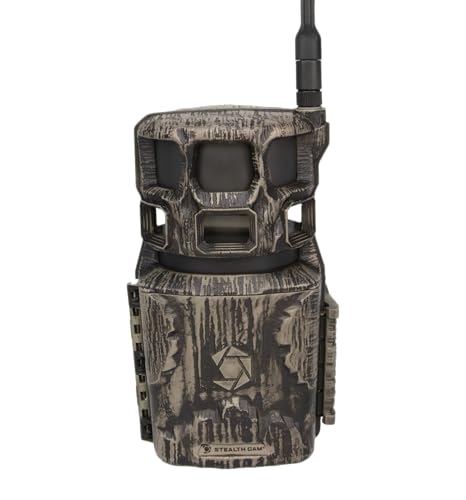
- Up to 40MP photos and 1440p video
- Adjustable bursts and capture delays
- 32GB internal memory and built-in GPS
Best For: Fine-tuning capture across a large monitoring area
Best for Shared Viewing
Loatos 2K Cellular Trail Camera
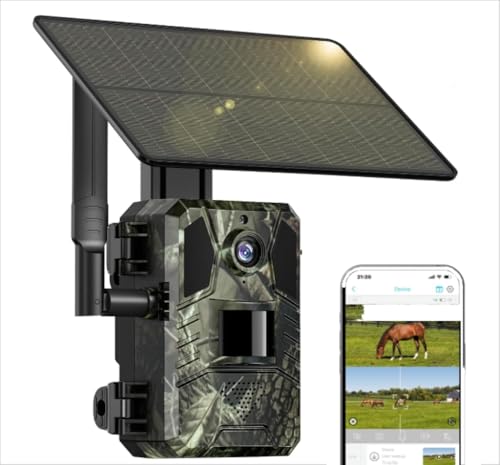
- 2K live feed for up to four viewers
- Built-in U.S. 4G SIM and solar panel
- Local recording works without an active data plan
Best For: Group wildlife scouting from a remote location
Best for Pan-and-Tilt Coverage
VOOPEAK 2.5K Cellular Trail Camera

- 2.5K live streaming over 4G LTE
- 355° pan and 100° tilt
- Solar power with motion alerts
Best For: Checking broad areas from a phone
Easy Setup – 4G LTE 2.5K Solar Trail Camera
For shoppers comparing trail cameras with live view, this 4G LTE model offers app-based access without Wi-Fi, a 360° live feed, and solar-assisted power. Its pre-inserted SIM and included 100MB of data make it straightforward to try before buying more data.
Best For: First-time cellular-camera buyers who want simple setup and phone-based monitoring.
Pros:
- 2.5K live feed with 360° viewing.
- Solar panel, motion alerts, and infrared or color night vision.
- Pre-inserted SIM includes 100MB of trial data.
Cons:
- Memory card must be purchased separately.
- Each camera needs its own data top-up; data cannot be shared.
The included data is useful for getting started, but plan costs and a separate memory card belong in your total-budget calculation.
Among trail cameras with live view, this SEHMUA model stands out for remotely adjustable 355° pan, 100° tilt, and 4X digital zoom. Its 4G connection lets you check a field or food plot through the UBox app without on-site Wi-Fi.
Best For: Monitoring broad outdoor areas where remote camera repositioning matters.
Pros:
- 2K live streaming with low-glow night vision.
- Remote pan, tilt, and digital zoom help inspect activity.
- Includes a 6W solar panel, IP65 housing, and a seven-day data trial.
Cons:
- Requires a separate paid plan for each camera after the trial.
- Built-in SIM is non-removable and intended for U.S. use only.
The movable view can cover more ground than a fixed lens, provided your installation site has cellular coverage and enough sunlight to benefit from the panel.
If you want trail cameras with live view for wildlife observation, this SEHMUA provides 2K streaming through the Ucon app alongside a fixed 120° field of view. Its optional cloud-based AI features add species identification and animal-activity predictions.
Best For: Wildlife watchers interested in live video and optional AI insights.
Pros:
- 2K live video, phone alerts, and a claimed 0.2-second trigger.
- Up to 82-foot low-glow night vision and IP66 weather protection.
- 4W solar panel and a seven-day unlimited data trial.
Cons:
- AI species identification requires a cloud storage subscription.
- Cellular data requires a per-camera plan after the trial; a memory card is not included.
This is a good fit when recognizing and reviewing wildlife matters more than remotely rotating the camera. Factor optional cloud service into the cost if AI identification is a priority.
The TACTACAM Reveal Ultra is a feature-rich option among trail cameras with live view, pairing live streaming and on-demand HD photo requests with 4K stills and 2.5K recorded video. Built-in GPS tracking adds a safeguard for hunters leaving a camera in the field.
Best For: Hunters who prioritize image detail, location tracking, and flexible night-vision settings.
Pros:
- Live video, HD photo requests, and a sub-0.5-second trigger.
- Switchable 96-foot low-glow or 80-foot no-glow infrared flash.
- GPS movement alerts, 16GB internal storage, and an SD card slot.
Cons:
- Cellular use requires a data plan.
- Solar panels and other extended-power accessories are separate options.
Its standout value is control over how you capture and check activity, rather than an included solar setup. Compare plan and power-accessory costs before committing to a long deployment.
Best for Panoramic Coverage – TKENPRO 4G LTE Solar Trail Camera
Among trail cameras with live view, this TKENPRO model stands out for app-controlled 355° pan, 120° tilt, and 2K streaming. Its cellular connection lets you check a wide area without visiting the camera, provided the site has coverage.
Best For: Monitoring broad areas such as farms, ranches, or remote cabins from your phone.
Pros:
- Pan, tilt, and 4x digital zoom help you inspect different parts of a scene.
- 0.2-second PIR trigger sends motion alerts; two-way audio adds another remote option.
- 5W solar panel, IP65 rating, and up to 85-foot infrared night vision suit outdoor placement.
Cons:
- Requires a paid cellular plan after the seven-day trial; plans start at $19.90 per camera monthly.
- The built-in SIM is non-removable, US-only, and does not support Wi-Fi.
Choose this one when remotely scanning a large scene matters more than carrier flexibility. Check cellular coverage and ongoing data costs before installing it.
Best for Customizable Capture – Stealth Cam Revolver Pro 2.0
The Stealth Cam Revolver Pro 2.0 is an option among trail cameras with live view for buyers who also want detailed capture settings. It pairs live view and on-demand access through the Command PRO app with selectable photo resolutions, burst shooting, and adjustable capture delays.
Best For: Users who want to tune how frequently a cellular camera records activity across a large monitoring area.
Pros:
- Up to 40MP photos and 1440p video with audio.
- Panoramic 360° and 180° photos, plus a stated 100-foot detection and flash range.
- 32GB internal memory, built-in GPS, and multiple mounting options.
Cons:
- Uses a 16-piece battery tray or an external power source through its 12V DC jack; a solar panel is not listed.
- The supplied specifications do not state cellular plan pricing.
Its adjustable recording options and long stated range make it worth considering for methodical wildlife monitoring. Plan separately for power and confirm service costs before committing.
Best for Fast Wildlife Triggers – SEHMUA 3rd 4G LTE Solar Trail Camera
For shoppers comparing trail cameras with live view, this SEHMUA model combines 2K app-accessible streaming with a stated 0.1-second PIR response. Its 120° lens and 65-foot detection range are aimed at watching animals pass through a defined area.
Best For: Wildlife observers who want quick motion capture and remote viewing at a sun-exposed site.
Pros:
- Captures up to 48MP photos and 2K video, with remote access to photos, videos, and live streams.
- 940nm no-glow infrared supports discreet nighttime monitoring; color night images are possible when natural light is available.
- Includes a 4W solar panel and IP66-rated weather protection.
Cons:
- A subscription is required after the seven-day data trial; the listed monthly plan is $19.90 per camera.
- Solar charging depends on placing the panel where it receives adequate sunlight.
This is a practical pick for monitoring a wildlife path without frequent battery changes. Its nighttime color capability depends on available light; in complete darkness, it switches to black-and-white night vision.
Best for Shared Viewing – Loatos 2K Cellular Trail Camera
For shoppers comparing trail cameras with live view, the Loatos offers a 2K live feed that up to four people can watch at once. Its built-in SIM connects over supported U.S. 4G LTE networks, so the camera does not need Wi-Fi at its mounting site.
Best For: Remote wildlife scouting when several people want access to the same live feed.
Pros:
- Solar panel and built-in SIM suit locations without nearby power or Wi-Fi.
- 940nm infrared captures nighttime footage without a visible flash.
- App alerts, adjustable detection zones, and recording schedules add useful control.
- Local recording to a memory card can continue if the data plan expires.
Cons:
- Live viewing requires cellular coverage and a data plan after the seven-day trial.
- Memory card is not included.
The shared stream is the main reason to choose this model. Budget for ongoing data if you plan to check live footage regularly; local recordings remain an option without it.
Best for Pan-and-Tilt Coverage – VOOPEAK 2.5K Cellular Trail Camera
Among trail cameras with live view, this VOOPEAK model stands out for its remotely controlled 355° horizontal pan and 100° vertical tilt. Its advertised 2.5K live stream lets you check a broad area from your phone over 4G LTE without site Wi-Fi.
Best For: Monitoring a large clearing, farm, or worksite where a fixed view would miss activity.
Pros:
- Pan, tilt, zoom, and playback controls are available remotely.
- Solar panel and built-in 7800 mAh battery reduce routine charging visits.
- Motion notifications and adjustable detection areas help focus alerts.
- Supports local SD storage up to 256GB or optional cloud storage.
Cons:
- The included SIM provides only 100MB of free data, so continued live streaming needs additional data.
- SD card is not included.
Choose this one for the ability to look around on demand rather than relying on one fixed frame. Night vision is specified to 65 feet, so placement still matters.
Best Dual-Lens View – VOOPEAK 2K Cellular Trail Camera
If you want trail cameras with live view that show more than one perspective, this VOOPEAK dual-lens model offers split or stitched viewing at 2K resolution. Its built-in 4G SIM provides remote access without Wi-Fi at the camera site.
Best For: Monitoring a property or wildlife area where two simultaneous views are more useful than a single frame.
Pros:
- Dual lenses support split or stitched views for wider coverage.
- Built-in LED can provide color night viewing when turned on.
- PIR and AI detection send alerts, with local SD or optional cloud storage.
- Solar panel, rechargeable battery, and two-way talk add flexibility.
Cons:
- Each camera needs its own data subscription after the included 100MB trial allowance.
- Using the LED for color night viewing introduces visible light.
The dual-lens display is its clearest advantage over a conventional fixed-view trail cam. Check the per-camera data cost before deploying the listed two-pack.
How We Picked the Best Trail Cameras with Live View
We focused on cameras that advertise remote live viewing and compared the features that matter most after installation: cellular connectivity, viewing area, power setup, detection tools, and image options. The selection spans straightforward game cameras and models designed to cover wider spaces. Specifications are a starting point, not a substitute for checking carrier coverage, subscription terms, and current app requirements before buying.
Quick Comparison: Which Type Fits Your Site?
For a known trail or feeder: A fixed-view camera is often enough when you can aim it at a predictable spot. For a clearing or multiple approach routes: A 360-degree model may let you inspect more of the surrounding area remotely, though its rotating or panoramic view does not necessarily mean it records every direction at once. For hard-to-reach placements: Consider a solar-equipped model, provided its panel will receive adequate light. For location tracking or flash flexibility: Compare the specialized features on models such as the TACTACAM Reveal Ultra with the conditions at your site.
Key Buying Factors for Trail Cameras with Live View
Cellular Coverage and Ongoing Cost
Start with the signal where the camera will sit, not the signal at home. Many live-view models rely on 4G LTE and an app; a SIM card included in the box does not necessarily mean free ongoing service. Check supported networks, activation steps, plan prices, and any limits on live-view sessions or video transfers. If coverage is uncertain, confirm the return policy before committing.
Power and Placement
Live streaming can use substantially more power than occasional motion-triggered photos. Match your expected viewing frequency to the battery capacity and available power options. Solar can reduce maintenance in a sunny clearing but may help less under dense canopy or during short winter days. Also check mounting height, antenna clearance, and whether the lens faces morning or evening sun.
What the Camera Actually Captures
Separate live-view quality from advertised photo resolution: a high-megapixel still-image specification does not tell you the resolution of a live stream. Look for useful details such as video resolution, nighttime illumination, detection range, trigger behavior, and whether live viewing is available on demand. No-glow flash can be less noticeable, while low-glow may suit buyers who prioritize nighttime illumination. AI animal detection may help sort alerts, but its accuracy can vary by scene.
Who Should Buy Which Trail Cameras with Live View?
Choose a fixed-view model if you mainly monitor one game trail, gate, or feeder and want a simple setup. Look at the 360-degree options if you need to inspect a broad clearing or adjust your view without visiting the camera. Prioritize solar support when battery changes would be difficult and sunlight is reliable. If you need to locate or manage cameras across a large property, consider GPS-enabled features—but verify how they work and whether they require a paid plan. Whatever you choose, confirm coverage and total service cost first; without a dependable connection, the main benefit of Trail Cameras with Live View disappears.