A good radio case keeps your handset accessible when you need it and protected when you don’t. But a MOLLE pouch, shoulder holster, chest harness, and hard storage case solve different problems.
These picks cover wearable options for active use and protective cases for transport. Start with your radio’s dimensions and your preferred carry position, then choose the style that fits your routine.
Best 10 Two Way Radio Cases Picks for 2026
Best for MOLLE Versatility
Tactical 1000D Nylon Radio Holster
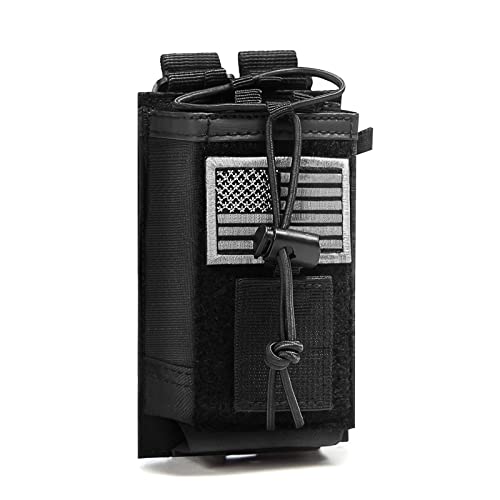
- 1000D nylon construction
- MOLLE and belt mounting
- Adjustable elastic retention
Best For: Adjustable carry on tactical gear or a belt
Best for Extended-Battery Baofeng Radios

- Fits listed Baofeng extended-battery setups
- Adjustable bungee retention
- MOLLE straps and drainage eyelet
Best For: Carrying a UV-5R or BF-F8HP with a BL-5L battery
Best for Protective Storage
BAOFENG Hard Radio Carrying Case

- Hard ABS shell with foam lining
- Mesh accessory pockets
- Handle and zipper closure
Best For: Transporting a compatible BAOFENG radio and accessories
Best for Duty-Belt Carry
LUITON Universal Nylon Radio Holster
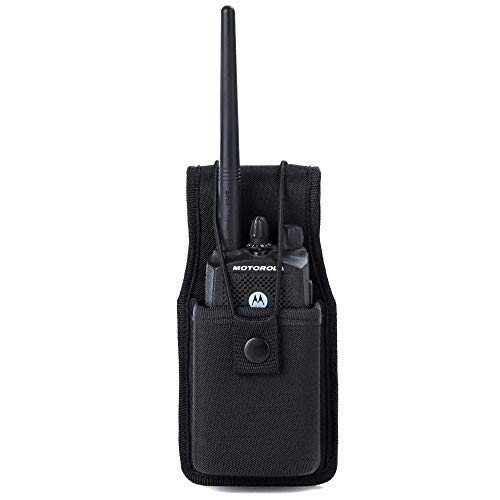
- 3.1 x 1.5 x 7.1-inch interior
- Fits belts up to 2.17 inches wide
- Lightweight nylon build
Best For: Hands-free carry of a compatible handheld radio on a duty belt
Best for Group Storage
CASEMATIX Customizable Hard Shell Radio Case

- Up to 16 radios across two foam layers
- Removable trays for custom layouts
- Hard shell with handle and dual latches
Best For: Transporting a group of radios and charging gear
Best Two-Pack Holsters
Zeadio Multi-Position Radio Holsters

- Two holsters included
- Five on-body carry positions
- Adjustable, detachable shoulder straps
Best For: Two users needing flexible hands-free carry
Best for Duty Belts

- Four stated carry configurations
- Fits belts up to 2.25 inches wide
- Single nylon pouch with buckle closure
Best For: Carrying one compatible radio on a duty belt
Most Versatile Carry
Zeadio Multi-Position Radio Holster

- Five carrying positions
- 33.5–65.4-inch detachable strap
- 1680D nylon construction
Best For: Switching between shoulder, chest, waist, and belt carry
Best for MOLLE Gear

- MOLLE-compatible attachment
- Fits belts up to 4 inches wide
- Adjustable elastic-cord retention
Best For: Mounting a radio on MOLLE gear or a duty belt
Best Chest Harness

- Reflective shoulder straps
- Adjustable radio pocket
- Front storage plus pen pockets
Best For: Chest carry with room for small essentials
Best for MOLLE Versatility – Tactical 1000D Nylon Radio Holster
Among two way radio cases, this 1000D nylon holster is a practical choice when you want to move a radio between MOLLE gear and a belt. Its open top keeps the radio accessible, while an elastic cord and adjustable hook-and-loop fastening help hold it in place.
Best For: Hikers and tactical-gear users who want an adjustable, gear-mounted radio pouch.
Pros:
- Attaches to MOLLE-compatible vests and backpacks or belts up to 4 inches wide.
- Elastic cord and adjustable fastening accommodate different radio heights.
- Open-top design allows straightforward access.
Cons:
- Check your radio against the 3.5 x 1.7 x 5.9-inch holder dimensions before buying.
- Soft pouch construction offers less rigid protection than a hard storage case.
Choose this holster if flexible mounting and quick access matter more than enclosed storage.
Best for Extended-Battery Baofeng Radios – ONETIGRIS MOLLE Radio Pouch
This ONETIGRIS option stands out among two way radio cases for its stated fit with a Baofeng UV-5R or BF-F8HP using a BL-5L extended battery. Its adjustable bungee lets you tune retention, while two snap-button MOLLE straps secure it to compatible gear.
Best For: Baofeng users carrying an extended-battery radio on a vest, battle belt, or backpack.
Pros:
- 500D nylon with reinforced seams is designed for outdoor use.
- Adjustable bungee accommodates different radio heights and hold tension.
- Bottom eyelet lets rainwater drain; a USA flag patch is included.
Cons:
- Designed to work best with the listed Baofeng models and extended battery; check other radios for fit.
- The bungee may need adjustment to make insertion and removal easier.
It is a focused pick for users who know their radio configuration and want MOLLE mounting with adjustable retention.
Best for Protective Storage – BAOFENG Hard Radio Carrying Case
If you are comparing two way radio cases for transport rather than belt carry, this BAOFENG hard-shell case offers a different approach. Its ABS exterior, soft foam lining, and elastic band help protect a compatible radio in storage, while interior mesh pockets hold accessories.
Best For: Storing or transporting a compatible BAOFENG radio with its accessories.
Pros:
- Hard ABS shell and soft foam lining provide protection against bumps during transport.
- Mesh pockets offer space for an antenna, microphone, or charger.
- Zip closure and carrying handle make it convenient to take along.
Cons:
- Bag only; a radio and accessories are not included.
- Water resistant, not specified as waterproof.
This is the better match when organized, enclosed storage takes priority over immediate access to a radio on your belt.
Best for Duty-Belt Carry – LUITON Universal Nylon Radio Holster
For shoppers seeking two way radio cases that keep a handheld radio at the waist, the LUITON nylon holster is designed for duty-belt use. Its stated inside dimensions are 3.1 inches wide, 1.5 inches deep, and 7.1 inches long, giving you concrete measurements to check against your radio.
Best For: Carrying a compatible handheld radio on a duty belt while keeping your hands free.
Pros:
- Designed to hold most handheld radios, including the Motorola models named in the listing.
- Fits belts up to 2.17 inches wide.
- Lightweight nylon construction weighs 2.4 ounces.
Cons:
- Check radio size against the stated inside dimensions rather than assuming a universal fit.
- Not described as MOLLE-compatible.
Its straightforward belt-focused design makes sense if your radio fits and you do not need MOLLE attachment or a hard travel case.
Best for Group Storage – CASEMATIX Customizable Hard Shell Radio Case
For teams moving multiple radios together, this CASEMATIX model is one of the two way radio cases built around storage rather than on-body carry. Its two removable cubed-foam trays let you shape separate spaces for radios, charging bases, and accessories.
Best For: Organizing and transporting a group of radios and their charging gear.
Pros:
- Holds up to 16 radios across two customizable foam layers, depending on their size.
- Two removable trays allow separate layouts for radios and accessories.
- Hard plastic shell, dual latches, and folding handle suit briefcase-style transport.
Cons:
- Too bulky for carrying a radio on your person.
- Each foam tray provides 1.5 inches of customizable depth, so check the dimensions of taller gear before planning the layout.
Choose this case when keeping a radio set together matters more than quick access to a single handset. Plan your foam layout around the radios and chargers you actually carry.
Best Two-Pack Holsters – Zeadio Multi-Position Radio Holsters
These Zeadio two way radio cases come as a pair of soft holsters for keeping radios accessible while your hands stay free. Each offers five carry positions and a detachable shoulder strap adjustable from 33.5 to 65.4 inches.
Best For: Two users who need flexible, on-body radio carry.
Pros:
- Includes two holsters.
- Supports chest, shoulder, waist, and belt carry positions.
- Quick-release buckle secures the radio; 1680D nylon helps resist wear.
Cons:
- Listed as not water-resistant despite the material’s stated protection against splashes.
- Soft fabric offers less rigid protection than a hard-shell transport case.
Measure your radios against the stated internal dimensions of 5.31 × 2.16 × 1.18 inches before buying. The two-pack is useful when both users need the same adjustable carry options.
Best for Duty Belts – LUITON MOLLE Radio Pouch
The LUITON pouch is a practical pick among two way radio cases if you want a single soft holder for waist, chest, shoulder, or belt carry. Its stated interior measures 5.1 × 2.5 × 1.8 inches, and it accommodates belts up to 2.25 inches wide.
Best For: Carrying one compatible radio on a duty belt or strap.
Pros:
- Four stated carry configurations offer placement flexibility.
- Compatible models listed include Baofeng UV-5R, UV-82, and F8HP, plus several other brands.
- Nylon pouch uses a buckle closure.
Cons:
- Includes one pouch rather than a pair.
- Fit depends on your radio’s dimensions and a belt no wider than 2.25 inches.
Pick this one for hands-free access to a single radio, especially on a duty belt. Check your handset’s size against the interior dimensions rather than relying on brand compatibility alone.
Most Versatile Carry – Zeadio Multi-Position Radio Holster
Among two way radio cases, this Zeadio holster stands out for its five carrying positions: front or back of the chest, shoulder, waist, or belt. Its detachable strap adjusts from 33.5 to 65.4 inches, so you can switch between hands-free carry and direct belt attachment.
Best For: Anyone who wants to change how they carry a radio throughout the day.
Pros:
- Five carrying positions offer more flexibility than a fixed belt pouch.
- Adjustable, detachable strap accommodates different wearers and setups.
- 1680D nylon helps shield the radio from scratches, dust, and splashes.
Cons:
- Soft construction offers less rigid protection than a hard case.
- Check the listed 3.15 x 1.97 x 1.18-inch dimensions against your radio before buying.
Choose this one when carry flexibility matters most; measure your radio first, since the listing does not establish a universal fit for every model.
Best for MOLLE Gear – Tactical Nylon Radio Pouch
If your kit already uses MOLLE webbing, this nylon pouch is a straightforward choice among two way radio cases. It attaches to compatible packs and vests, fits belts up to 4 inches wide, and uses an elastic cord with adjustable hook-and-loop retention to hold a radio in place.
Best For: Carrying a radio on MOLLE-compatible gear or a wide duty belt.
Pros:
- Attaches to MOLLE-compatible backpacks and tactical vests.
- Fits belts up to 4 inches wide.
- Adjustable retention accommodates different radio heights.
Cons:
- Its single compartment provides limited organization for extra items.
- At 3.5 x 1.7 x 5.9 inches, fit should be checked against your specific radio.
This is the practical pick for an existing MOLLE setup, particularly if you want an adjustable pouch rather than a chest harness. Confirm your radio’s dimensions before ordering.
Best Chest Harness – LUITON Reflective Radio Rig
For shoppers comparing two way radio cases for chest carry, the LUITON harness keeps a radio and small essentials up front. Adjustable shoulder straps and an adjustable radio pocket help with fit, while reflective strips on the straps add visibility in low light.
Best For: Hands-free chest carry when you also need quick access to small supplies.
Pros:
- Reflective shoulder-strap strips improve low-light visibility.
- Radio pocket adjusts in depth and circumference.
- Front storage and two pen pockets keep small items close at hand.
Cons:
- A chest harness is more to wear than a simple belt-mounted pouch.
- The front pouch is intended for small items, not bulky gear.
Pick this harness if front-of-body access and extra pockets are priorities. Its adjustable pocket adds flexibility, but it is still worth checking your radio’s fit.
How We Picked the Best Two Way Radio Cases
We focused on the practical differences among the selected options: wearable holsters and pouches, a chest harness, and hard cases intended for storage or transport. We also considered stated radio compatibility, mounting options, adjustability, and whether each design leaves controls accessible. These are selection criteria, not claims of hands-on durability or fit testing; check the seller’s current dimensions and specifications before ordering.
Quick Comparison by Carry Style
MOLLE and duty-belt pouches suit users who want a radio on a vest, pack, or belt. Shoulder holsters offer another carry position when the waist is crowded or difficult to reach. A chest harness puts the radio up front and may be useful when visibility and access matter. Hard cases are better suited to carrying or storing a radio and accessories between uses than to operating the handset while it is packed away.
Key Buying Factors for Two-Way Radio Cases
Fit the Entire Radio Setup
Confirm the radio’s height, width, and depth against the case’s usable interior dimensions. Check fit with the battery and any extended pack installed, and account for the antenna, side-mounted accessories, and protruding knobs. A listing that names your radio model is a useful starting point, but model compatibility does not guarantee a comfortable fit with every accessory configuration. Universal pouches may allow more adjustment, while a shaped storage case may need a closer dimensional match.
Choose the Right Mount and Access
Check that the attachment matches your gear: MOLLE webbing, a duty belt, a shoulder strap, or a chest rig. Then consider how you will remove or operate the radio. Look at whether the retention strap blocks the screen or controls, whether the push-to-talk button remains reachable, and whether the antenna can sit safely in your chosen carry position. If you often wear gloves, favor closures you can manage without fine finger movements.
Match Protection to Use
A soft pouch helps retain a radio during active use but is not a substitute for a protective transport case. A hard shell offers more structure for packed gear; check its interior layout and whether it accommodates the charger, spare battery, and other items you actually carry. Materials and features vary, so do not assume a pouch or case is waterproof or impact-rated unless the listing explicitly says so.
Who Should Buy Which Two Way Radio Cases?
Choose a MOLLE pouch or belt holster for frequent on-body use, a shoulder option if belt space is limited, and a chest harness if front-mounted access fits your work. Choose a hard case if the radio spends more time in a vehicle, bag, or storage than in your hand. If you use multiple radio models, prioritize adjustable fit—but verify the smallest and largest handsets before buying.