A thoughtful space gift can invite someone to look up, learn how the universe works, or build a mission of their own. This collection includes options for curious kids, new stargazers, and experienced night-sky photographers.
Space Gifts to Spark Discovery
1. ZWO Seestar S30 Pro Smart Telescope
App-Guided Sky Imaging
ZWO Seestar S30 Pro Smart Telescope
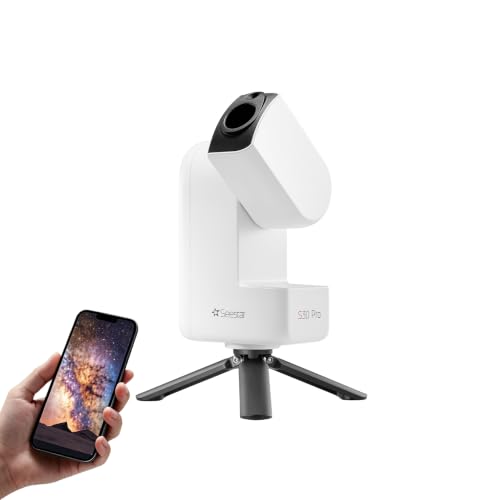
- Uses app control with automatic GoTo targeting and tracking.
- Captures images of deep-sky objects, the Moon, and the Sun.
- Portable design weighs about 3.6 pounds, according to the listing.
Best For: A tech-minded space fan interested in guided astrophotography.
2. Sky-Watcher Classic 150 Dobsonian Telescope
Aperture for Backyard Exploring
Sky-Watcher Classic 150 Dobsonian Telescope

- 6-inch Dobsonian design with 1200 mm focal length.
- Includes 25 mm and 10 mm eyepieces and a finder scope.
- Manual focus and altazimuth mount suit hands-on observing.
Best For: A beginner ready to explore the Moon, planets, and brighter deep-sky objects.
3. LEGO City Modular Space Station
Buildable Orbital Outpost
LEGO City Modular Space Station

- Includes 1,097 pieces and six astronaut minifigures.
- Builds into a station with a lab, workshop, kitchen, and other pods.
- Modules can be rearranged and connected to the included shuttle.
Best For: Ages 7 and up, especially kids who enjoy space builds and imaginative play.
4. iOptron SkyGuider Pro Camera Mount
Portable Night-Sky Tracker
iOptron SkyGuider Pro Camera Mount

- Camera mount weighs 2.2 pounds, per the product notes.
- Supports camera and lens combinations up to 11 pounds when balanced.
- Built-in rechargeable battery is listed for up to 20 hours at 20°C.
Best For: A photographer pursuing wide-field night-sky images on the go.
5. SVBONY SV305C Pro Telescope Camera
Planetary Imaging Upgrade
SVBONY SV305C Pro Telescope Camera

- Captures 1920 × 1080 video at up to 107 frames per second.
- Includes USB 3.0 connectivity and an ST4 guiding interface.
- Designed for computer use; the notes say it does not connect to iPad.
Best For: A telescope hobbyist ready to experiment with planetary imaging.
6. National Geographic Illuminated Moon Globe
A Lunar Terrain Display
National Geographic Illuminated Moon Globe

- 12-inch globe shows 750 topographic locations on the Moon.
- Highlights craters, mountain ranges, highlands, and lunar seas.
- Includes a rechargeable LED device.
Best For: A lunar enthusiast who enjoys astronomy decor and detailed maps.
7. Celestron SkyMaster 15×70 Astronomy Binoculars
Wide-Sky Stargazing
Celestron SkyMaster 15x70 Astronomy Binoculars

- 15× magnification and 70 mm objective lenses are listed.
- BaK-4 prisms are described as supporting bright views in dim conditions.
- Built-in tripod adapter; tripod is not included.
Best For: A stargazer who wants binoculars for scanning the night sky.
8. Mapsoft Topographic Mars Globe
Mars in Relief
Mapsoft Topographic Mars Globe

- 9.5-inch globe uses brown and blue to show elevation.
- Includes a guide book, magnifier, and illustrations of landers and rovers.
- The write-on, wipe-off surface works with erasable markers.
Best For: A planetary science fan curious about Mars's surface and exploration.
9. Lusweimi Binocular and Spotting Scope Tripod
Steadier Sky Viewing
Lusweimi Binocular and Spotting Scope Tripod

- Height adjusts from 16.9 inches to 69 inches; notes list 72 inches in use.
- Includes a binocular adapter, phone holder, carry bag, and two quick-release plates.
- Binoculars need a compatible 1/4-inch threaded hole for the adapter.
Best For: A binocular owner who wants a steadier setup for observing.
10. National Geographic Stargazer’s Atlas
A Guide to the Night Sky
National Geographic Stargazer's Atlas

- 432-page illustrated atlas includes more than 350 photographs.
- Features 200 maps and graphics, including eight sky maps.
- Covers all 88 constellations and observing advice.
Best For: A new observer who wants to learn the sky and plan sessions.
11. The Greatest Adventure: A History of Human Space Exploration
Spaceflight Through the Decades
The Greatest Adventure: A History of Human Space Exploration

- 368-page history traces the space race and later exploration.
- Covers early Soviet milestones and the US Moon landing effort.
- Discusses the successes, risks, and tragedies of human spaceflight.
Best For: A reader drawn to astronaut stories, mission history, and space technology.
12. Daron Space Adventure Astronaut Figure
A Poseable Astronaut
Daron Space Adventure Astronaut Figure

- 10-inch figure has eight points of articulation.
- Includes a detachable backpack with hoses.
- Listing recommends it for ages 3 and up.
Best For: A young space fan or figure collector who enjoys pretend missions.
13. Estes Tandem-X Rocket-Building Kit
Build-and-Launch Rocket Set
Estes Tandem-X Rocket-Building Kit

- Includes parts for two rockets, a launch pad, and a controller.
- Rocket engines, starters, recovery wadding, and four AA batteries are sold separately.
- Recommended for ages 10 and up; follow the listed model-rocketry safety code.
Best For: A hands-on space fan ready to build and launch model rockets.
Choosing a Space Gift for Your Recipient
Start with how the person likes to engage with space. A reader may get more from the Stargazer’s Atlas or The Greatest Adventure than from a device that requires setup. A child who likes making things might prefer the LEGO space station, while the astronaut figure offers simpler pretend play. For someone who already spends time outdoors, binoculars or a telescope can turn a clear evening into an observing session.
Consider the recipient’s experience, too. The Seestar S30 Pro is described as app-guided, with automatic targeting and tracking, while the Sky-Watcher Dobsonian uses manual focus and a traditional mount. A photography enthusiast may enjoy the SkyGuider Pro or SV305C Pro camera, but these are more specialized gifts: the first is a camera mount, and the second is a computer-connected telescope camera. Think about whether the recipient has the equipment and patience to use a new part of a hobby.
Set a Budget That Includes the Whole Activity
Prices can change, so compare current listings when you are ready to buy. Also account for what’s needed to use the gift. The Dobsonian includes two eyepieces and a finder scope, according to its listing. The binocular tripod is a separate support option, while the binoculars themselves have a built-in tripod adapter and require a compatible tripod for mounted viewing. The Tandem-X kit includes a launch pad and controller, but its listed engines, starters, recovery wadding, and batteries are sold separately.
Books, globes, and figures offer a different kind of value: they work as reading, display, or play gifts without asking the recipient to begin a technical setup. The Moon globe has an illuminated feature and topographic detail; the Mars globe includes a guide book and magnifier. Match the spend to how much the recipient is likely to use the gift, and include required add-ons in your budget when relevant.
Check Compatibility and Personalization
Before choosing a telescope camera or support, check what the recipient already owns. The SV305C Pro notes specify computer use and rule out iPad connection. The binocular tripod adapter requires a 1/4-inch threaded hole, and the listing cautions that thread depth can vary. For a camera tracker, confirm that the camera and lens combination is within the stated balanced weight limit.
Personalization can be practical rather than decorative. Pair an atlas with a note suggesting a first constellation to find, or give a Mars globe to someone fascinated by planetary missions. For a young builder, consider whether the age recommendation and the adult’s plans for supervised play fit. With a model rocket kit, read the product requirements and safety directions before planning a launch; the listing calls for an appropriate launch site and a safe distance.
Time the Gift Around the Recipient’s Plans
A book, globe, or figure is easy to enjoy indoors during the holiday break. A telescope or binoculars may be more exciting when the recipient has a clear evening and a suitable place to observe. Weather and light pollution affect what can be seen, so the best first outing may come after Christmas. The Seestar listing notes that it is designed for deep-sky imaging and that the device should remain stationary during those sessions.
For last-minute decisions, choose based on setup and completeness rather than assuming delivery timing. Check the current product page for what is included and whether any separate accessories or supplies are needed. A gift that supports an existing hobby can be especially useful, but a book or globe is a good fit when equipment compatibility is uncertain. Either way, space Christmas gift ideas work best when they give the recipient an inviting next step: read a mission story, learn a constellation, build a station, or look up at the night sky.