The best budget hiking daypacks make day hikes, travel, cycling, and outdoor errands easier without requiring a premium price. This roundup compares 10 affordable options ranging from compact foldable packs to larger hydration-ready designs.
Use the buying guide below to match capacity, carrying comfort, weather resistance, and useful features to the way you plan to hike.
Best 10 Budget Hiking Daypacks Picks for 2026
Best Compact Pick
sunhiker 20L Lightweight Daypack

- About 12.3 ounces with approximately 20–25L capacity
- Three compartments and two mesh bottle pockets
- Breathable padding plus adjustable chest and waist straps
Best For: Lightweight day trips and compact travel
Best High-Capacity Packable Pick

- 35L capacity with a wet compartment
- Folds into its own inner pocket
- Water-resistant fabric and reinforced stress points
Best For: Travelers needing expandable backup storage
Best Hydration-Ready Pick
15L Lightweight Hiking Daypack

- Hydration sleeve supports up to a 3L bladder
- Insulated pocket and ventilated padding
- Multiple zippered pockets plus helmet and bottle storage
Best For: Short hikes and cycling with hydration gear
Best Quick-Access Pick

- 0.68-pound nylon pack folds into a built-in pouch
- Shoulder-strap phone and stretch storage pockets
- Hydration-compatible with reflective strips and whistle
Best For: Short hikes, cycling, and daily carry
Best Ultralight Pick

- 10.2-ounce foldable design
- 20L capacity with multiple pockets
- Water-resistant recycled nylon
Best For: Travelers and hikers needing a compact backup pack
Best Organized Packable Option
G4Free 20L Lightweight Backpack
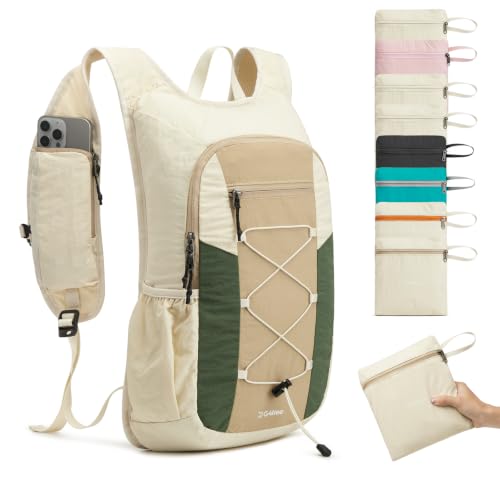
- 10.24-ounce packable 20L design
- Multiple inner, front, and side pockets
- Mesh straps, chest strap, and shoulder pockets
Best For: Light day hikes, travel, and organized everyday carry
Best Ultralight Backup

- Weighs 0.68 pounds and packs into its own pouch
- Hydration sleeve, bottle pockets, and tube port
- Chest strap includes a survival whistle
Best For: Travelers and casual hikers who prioritize minimal weight
Best Value Capacity
20L Water-Resistant Hiking Daypack

- 20L storage with five compartments
- Includes a foldable waterproof rain cover
- Padded straps and adjustable chest strap
Best For: Slim-to-medium builds needing extra daypack capacity
Best Simple Pick

- Multiple compartments plus quick-access strap pockets
- Folds down and weighs 13.4 ounces
- Reflective strips and adjustable chest strap
Best For: Travelers and hikers who want organized, accessible storage
Best Compact Pick – sunhiker 20L Lightweight Daypack
For shoppers comparing budget hiking daypacks, the sunhiker is a compact option for carrying essentials without much bulk. It offers approximately 20–25L of storage, breathable padding, and adjustable chest and waist straps for day hikes, cycling, travel, and everyday use.
Best For: Lightweight day trips and travelers who prefer a smaller, organized pack.
Pros:
- Very light at about 12.3 ounces.
- Three compartments plus two mesh bottle pockets.
- Breathable back and shoulder-strap padding with chest and waist adjustments.
- Nylon fabric has water-resistant and abrasion-resistant properties.
Cons:
- Its small size may not suit bulky gear or extended trips.
- Hand-wash care is recommended.
The sunhiker makes sense when low weight and compact organization matter more than maximum capacity. Check the listed dimensions carefully before buying, especially if you need room for larger layers or equipment.
Best High-Capacity Packable Pick – MIYCOO 35L Foldable Daypack
The MIYCOO stands out among budget hiking daypacks for combining a 35L capacity with a foldable design. It packs into its inner pocket for travel, then expands into a multi-compartment daypack with a wet compartment and water-resistant construction.
Best For: Travelers and hikers who want extra capacity that can be stored compactly.
Pros:
- Large 35L storage volume with three main compartments and multiple pockets.
- Folds into a compact inner pouch for luggage or backup use.
- Water-resistant fabric is rated for protection from splashes and light rain.
- Reinforced stress points, upgraded zippers, anti-theft zipper clips, and a survival whistle add practical features.
Cons:
- At 12.8 ounces, it is not the lightest option in this group.
- IPX4 water resistance is not the same as full waterproof protection.
This is a flexible choice if your packing needs vary from a small travel backup to a fuller daypack. Its foldability is especially useful for flights, shopping, and trips where extra storage may be needed later.
Best Hydration-Ready Pick – 15L Lightweight Hiking Daypack
For short outings, this 15L model is one of the more focused budget hiking daypacks, with space for water, snacks, a light jacket, and small essentials. Its hydration sleeve, insulated pocket, ventilation, and adjustable harness suit day hiking and cycling.
Best For: Single-day hikes and rides where hydration access and compact storage are priorities.
Pros:
- Hydration-compatible design can hold up to a 3L bladder, though the bladder is not included.
- Insulated pocket is designed to keep water cool for two to five hours.
- Five zippered locations, waist pockets, mesh bottle pockets, and an open helmet pocket help organize gear.
- Padded, adjustable shoulder, chest, and waist straps support a more secure fit.
Cons:
- At 15L, it has less capacity than the larger options.
- The water-resistant ripstop is splash proof only and should not be submerged.
- The hydration bladder must be purchased separately.
This pack is best viewed as a purpose-built short-trip bag rather than an all-day load hauler. Its storage layout and hydration features make it a practical fit for active users who want a close-fitting daypack.
Best Quick-Access Pick – 14L Packable Travel Daypack
The 14L packable daypack offers useful trail and commute features in a small footprint. Among budget hiking daypacks, it is notable for quick-access shoulder-strap storage, reflective strips, hydration compatibility, and a foldable nylon build weighing 0.68 pounds.
Best For: Hikers, cyclists, and commuters who value lightweight carry and access to small essentials.
Pros:
- Folds into its built-in pouch for compact storage.
- Shoulder-strap pockets provide quick access to a phone, snacks, or a water bottle.
- Breathable straps, adjustable chest support, and a sternum-buckle whistle help with comfort and safety.
- Compatible with a hydration bladder up to 2L, though the bladder is not included.
Cons:
- Its 14L capacity is limited for bulky layers or larger loads.
- Water resistance is intended for splashes rather than heavy exposure.
- The hydration bladder is sold separately.
This is a strong everyday option when organization and accessibility matter more than carrying capacity. Its compact format works well for short hikes, cycling, errands, and travel add-on storage.
Best Ultralight Pick – WATERFLY 20L Packable Daypack
For shoppers comparing budget hiking daypacks, the WATERFLY stands out for its low 10.2-ounce weight and foldable design. Its 20-liter capacity, water-resistant nylon construction, and multiple pockets make it practical for day hikes, travel, and everyday outings.
Best For: Travelers and hikers who want an ultralight daypack that packs into luggage or a larger bag.
Pros:
- Folds down to about 8.7 by 6.3 inches for easy storage.
- 20-liter capacity with a main compartment, front pockets, and removable zippered pocket.
- Lightweight recycled nylon shell with adjustable shoulder straps.
Cons:
- Provides basic daypack storage rather than specialized hiking features.
- Water-resistant construction is not described as fully waterproof.
The WATERFLY is a strong value when portability matters most. It is especially convenient as a backup travel bag or a light pack for short hikes, though shoppers carrying heavier loads may prefer a more structured option.
Best Hydration Features – IX INOXTO 26L/40L Hiking Backpack
Among budget hiking daypacks, the IX INOXTO offers an unusually complete setup for longer day trips. It combines a 3-liter hydration bladder, rain cover, breathable suspension system, and extensive compartment organization in a choice of 26L or 40L capacity.
Best For: Day hikers and outdoor users who want built-in hydration and extra capacity for gear.
Pros:
- Includes a 3-liter leak-resistant hydration bladder.
- Comes with a waterproof rain cover and water-resistant polyester construction.
- Features padded breathable straps, steel frame support, chest and hip storage, and reflective details.
- Multiple compartments include a bottom-access pocket for shoes or dirty clothing.
Cons:
- The larger capacity and frame support may be more than needed for short, light outings.
- The supplied details do not specify the pack’s exact empty weight.
This is the most feature-rich choice of the three for organized, hydration-focused adventures. Its capacity options and supportive carry system make it versatile, but minimalist hikers may prefer a simpler packable design.
Best Organized Packable Option – G4Free 20L Lightweight Backpack
The G4Free is a practical contender among budget hiking daypacks, pairing a 20-liter capacity with a 10.24-ounce packable design. Water-repellent Taslan nylon, dedicated pockets, a chest strap, and small-item storage on the shoulder straps give it useful organization without much added weight.
Best For: Hikers and travelers who want a lightweight, organized pack for day trips and everyday use.
Pros:
- Folds into its own pocket and measures about 6.3 by 7.1 inches when packed.
- Includes inner, front, and side pockets for organized storage.
- Shoulder-strap phone and snack pockets keep small essentials accessible.
- Adjustable mesh straps and a chest strap support a breathable, secure fit.
Cons:
- Water-repellent fabric is intended for light rain rather than fully wet conditions.
- Its lightweight construction is best suited to day-use loads.
The G4Free balances compact storage with thoughtful organization. It is a particularly good fit for travelers who want more convenience features than a basic foldaway bag while still keeping weight low.
Best Ultralight Backup – 13L Foldable Hiking Daypack
For shoppers comparing budget hiking daypacks, this 13L model stands out as an exceptionally light, packable option for day hikes, travel, and everyday carry. It folds into its own compact pouch and includes practical organization for hydration and small essentials.
Best For: Travelers, casual hikers, and anyone wanting a lightweight backup daypack.
Pros:
- Weighs just 0.68 pounds and folds to a compact self-packing pouch.
- Includes a hydration sleeve for a 3L bladder, bottle pockets, and a shoulder-strap tube port.
- Water-repellent nylon, reinforced stitching, and SBS zippers support regular outdoor use.
- Adjustable chest strap improves stability and includes a built-in survival whistle.
Cons:
- Its 13L capacity is better suited to essentials than bulky gear.
- The 3L hydration bladder is not included.
This is a practical choice when low weight and packability matter most. Its hydration features make it more trail-ready than a basic foldable daypack, while the compact design works well for travel and backup use.
Best Value Capacity – 20L Water-Resistant Hiking Daypack
Among budget hiking daypacks, this 20L model offers useful extra capacity for day hikes, commuting, and short trips. Its water-resistant nylon construction, included foldable rain cover, and padded adjustable straps make it a versatile option for carrying everyday essentials.
Best For: Teens and adults with slim-to-medium builds who need more room for daily or outdoor gear.
Pros:
- 20L capacity and multiple compartments provide room for books, supplies, clothing, and personal items.
- Includes a foldable waterproof rain cover stored in a bottom zipper compartment.
- Padded, breathable shoulder straps and an adjustable chest strap support a more secure fit.
- Lightweight 0.52-kilogram construction works for hiking, commuting, camping, and short trips.
Cons:
- The stated fit is intended for users about 4’11” to 5’9″ with slim-to-medium builds.
- It may not suit broad-shouldered or heavy-build users.
This pack is a sensible pick if you want more capacity than a compact foldable daypack without moving to a heavier hiking bag. Check the stated fit guidance carefully before ordering, especially if you have a broader frame.
Best Simple Pick – 15L Colorful Hiking Daypack
For budget hiking daypacks that balance organization with portability, this 15L pack offers several easy-access pockets and a compact foldable design. It is suited to hiking, cycling, travel, and commuting, especially for users who prefer quick access to phones, keys, and snacks.
Best For: Hikers and travelers who want organized storage, accessible pockets, and a colorful design.
Pros:
- Two main zippered compartments, an expandable front pocket, hidden back pocket, and mesh side pockets organize gear.
- The strap includes a zippered phone pocket for phones up to 7 inches and a drawstring quick-access pocket.
- Folds compactly and weighs 13.4 ounces for convenient suitcase or car storage.
- Adjustable chest strap and reflective strips add comfort and visibility for active use.
Cons:
- Its 15L capacity may be limiting for larger loads or bulky layers.
- The fit is listed as small to medium.
This pack is a strong fit for active users who value pocket organization and quick access over maximum capacity. Its low weight and foldable format also make it useful as a travel daypack or carry-on backup.
How We Picked These Budget Hiking Daypacks
We focused on practical value rather than flashy specifications. The selected packs cover common day-hiking capacities from approximately 13L to 40L, including lightweight foldable models, water-resistant everyday packs, and designs with dedicated hydration support. We considered likely use cases, portability, storage organization, weather protection, and whether each pack offers useful features for its price category.
Because budget packs can vary in construction and fit, check the current product listing for exact dimensions, materials, included accessories, and available colors before ordering. A low listed weight is helpful, but it should not replace checking strap design, back support, and load capacity.
Quick Comparison
| Pack Type | Typical Capacity | Best For | What to Check |
|---|---|---|---|
| Ultralight foldable | 13L–20L | Travel, emergency carry, short walks | Minimal structure and padding |
| Compact daypack | 15L–26L | Short hikes and daily outdoor use | Compartment layout and fit |
| Larger hiking pack | 35L–40L | Longer day trips or extra layers | Load comfort and frame support |
| Hydration-compatible pack | 20L–40L | Warm-weather hiking and active use | Bladder, hose routing, and rain cover |
Key Buying Factors for Budget Hiking Daypacks
Capacity and Organization
Choose 13L to 15L for water, snacks, a light layer, and small essentials. Around 20L is a versatile choice for most day hikes. Move toward 26L or more when you carry lunch, camera gear, extra clothing, or family supplies. Multiple compartments can make a small pack easier to use than one large cavity.
Comfort and Fit
Look for adjustable shoulder straps, breathable back panels, and a sternum strap if you expect to carry the pack for several hours. Lightweight construction helps, but a very thin pack may feel less comfortable when loaded. Match the pack length and strap range to your torso and clothing layers.
Weather Protection
Water-resistant fabric can handle light drizzle and splashes, but it is not the same as waterproof construction. For exposed routes or changeable weather, prioritize sealed zippers, a rain cover, or a separate dry bag for electronics and clothing.
Packability and Durability
Foldable packs are convenient for travel and backup use, while more structured designs generally carry heavier loads better. Inspect reinforced stress points, zipper quality, stitching, and the base fabric. A modestly heavier pack may deliver better long-term value.
Who Should Buy Which Budget Hiking Daypacks?
Choose a small 13L–15L pack for minimalist hikes, sightseeing, or commuting. A 20L pack is the safest all-purpose choice for most hikers. Select a 26L–40L model when you need more clothing, food, equipment, or hydration capacity. Travelers should favor packable designs, while frequent hikers should prioritize padding, adjustability, and durable construction over the absolute lowest weight.