Cold feet can shorten a hike quickly, especially when boots, damp conditions, and long hours outdoors combine. The best insulated hiking socks balance warmth with moisture control, cushioning, and a secure fit.
This roundup compares 10 options for winter hiking, snow travel, work, and everyday cold-weather wear, including merino wool blends, thermal synthetics, and budget-friendly multipacks.
Best 10 Insulated Hiking Socks Picks for 2026
Extreme Cold Pick
Polar Extreme Thermal Hiking Socks
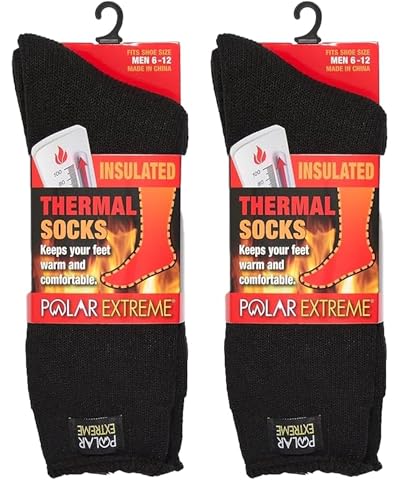
- Heavy insulated construction for severe cold
- Moisture control for wet or snowy conditions
- Reinforced heel and toe; two-pair pack
Best For: Winter hiking, skiing, camping, and freezing-weather use
Cozy Wool Comfort
Alvada Warm Thermal Wool Socks

- Soft wool blend with temperature regulation
- Cushioned footbed and arch compression
- Moisture control with breathable ventilation
Best For: Comfort-focused winter hiking and boot wear
Four-Season Merino Pick
RUIXUE Merino Wool Hiking Socks

- Moderate-weight merino blend for versatile use
- Terry-cushioned sole supports long walks
- Seamless toe helps reduce friction and bunching
Best For: Four-season hiking, travel, running, and daily wear
Heat-Retaining Value Pick
35° BELOW Thermal Insulated Socks

- Aluminized fibers help retain warmth
- Plush thermal loops cushion the foot
- Lightweight, breathable, and dryer-safe
Best For: Cold-weather outdoor activities and indoor winter comfort
Merino Comfort Pick

- 80% merino wool blend for cold-weather warmth
- Cushioned footbed supports longer hikes
- Three-pair, machine-washable set
Best For: Cold-weather hiking and camping
Maximum Insulation Pick

- Brushed fleece interior for pronounced warmth
- Heavyweight full cushioning for boot comfort
- Knee-length design with three pairs included
Best For: Skiing and very cold-weather outdoor activities
Supportive Wool-Blend Pick
Dickies Heavyweight Thermal Crew Socks

- Wool blend with moisture-wicking fibers
- Full cushioning for leg and foot comfort
- Arch compression supports stability
Best For: Hiking and active outdoor wear
Cozy Women's Pick

- Soft 55% wool blend with fuzzy lining
- Five-pair heavyweight crew-sock pack
- Fits women's US sizes 6–10
Best For: Women and teen girls needing warm socks for boots, hiking, and winter wear
Maximum Cushion Pick
Merino Wool Thermal Crew Socks

- 80% merino wool for warmth and softness
- Full cushioning supports long days
- Reinforced heel and toe for durability
Best For: Hiking, work boots, and cold-weather use where cushioning is a priority
Most Adjustable Pick
MOGGEI Merino Wool Hiking Socks

- 70% merino wool with temperature regulation
- Three size options for men and women
- Cushioning, ventilation, and compression zones
Best For: Active hikers wanting a stable fit and broad sizing options
Extreme Cold Pick – Polar Extreme Thermal Hiking Socks
For frigid-weather trekking, these insulated hiking socks emphasize heavy warmth, moisture control, and durability. The acrylic-rich blend, wind-blocking insulation, and reinforced heel and toe panels are suited to demanding winter conditions and heavier boots.
Best For: Winter hiking, skiing, snowboarding, camping, hunting, and other cold-weather activities.
Pros:
- Thermal insulation and moisture control are designed for freezing, wet, or snowy conditions.
- Reinforced heel and toe panels support durability in heavy boots.
- Two-pair pack supports rotation during multi-day adventures.
Cons:
- Heavyweight construction may feel too warm for mild conditions.
- Size information is inconsistent in the supplied listing, so confirm fit before ordering.
Choose these when maximum warmth matters more than a lightweight, everyday hiking feel. Their thick construction is particularly appropriate for winter footwear and extended exposure to cold.
Cozy Wool Comfort – Alvada Warm Thermal Wool Socks
These insulated hiking socks combine a soft wool blend with cushioning, arch compression, and moisture management. Ventilation channels and temperature-regulating fibers make them a practical choice for hikers who want warmth without sacrificing breathability.
Best For: Comfortable winter hiking, boot wear, everyday cold-weather use, and longer days on your feet.
Pros:
- Soft, itch-free wool blend helps regulate temperature.
- Fully cushioned footbed and arch compression support comfort on active days.
- Moisture-wicking fibers, ventilation channels, and odor-fighting properties help keep feet dry.
Cons:
- The supplied listing has conflicting rise details, describing both ankle and crew-length coverage.
- Wool-blend care requires attention to the listed washing and drying instructions.
These are a well-rounded option for hikers who prioritize softness and foot comfort. The cushioning and moisture features also make them useful beyond the trail, especially with winter boots.
Four-Season Merino Pick – RUIXUE Merino Wool Hiking Socks
RUIXUE offers a moderate-weight alternative to bulky insulated hiking socks, using merino wool for warmth and moisture control alongside a terry-cushioned sole. The seamless toe and stretch fit are designed to reduce friction, bunching, and sliding during active use.
Best For: Four-season hiking, travel, running, work, and hikers who need one versatile sock for varied footwear.
Pros:
- 50% merino wool blend provides softness and natural moisture control.
- Terry cushioning targets high-wear areas and helps reduce blister risk.
- Seamless toe and Lycra stretch support a secure, low-friction fit.
- Three-pair pack and four listed US size ranges offer useful rotation and fit flexibility.
Cons:
- Moderate thickness may not provide enough insulation for extreme cold.
- The supplied details list conflicting unit counts, so verify pack quantity.
This is the most adaptable choice in the group for shoppers who move between seasons and activities. It offers warmth and cushioning without the bulk associated with heavy thermal socks.
Heat-Retaining Value Pick – 35° BELOW Thermal Insulated Socks
These insulated hiking socks use woven aluminized fibers and thermal looping to retain warmth while keeping the feel soft and cushioned. Their lightweight, breathable acrylic blend is designed for outdoor activities as well as wearing around the house or inside winter boots.
Best For: Cold-weather hiking, hunting, camping, snow shoveling, and indoor winter comfort.
Pros:
- Aluminized fibers are designed to help retain body heat.
- Thermal looping provides plush cushioning for added comfort.
- Machine washable and dryer-safe for convenient care.
- Lightweight and breathable construction is intended to help reduce sweating.
Cons:
- The supplied listing describes the fabric as lightweight, so it may not suit shoppers seeking maximum bulk insulation.
- The listed option is a one-pair pack, offering less rotation than multi-pair alternatives.
This pair makes sense when you want heat-retaining features without committing to a very thick sock. It is especially practical for mixed indoor and outdoor winter use, though severe-cold hikers may prefer a heavier design.
Merino Comfort Pick – Alvada Merino Wool Crew Socks
Alvada Merino Wool Hiking Socks Thermal Warm Crew Winter Boot Sock For Men Women 3 Pairs ML
Check Price On AmazonFor hikers seeking insulated hiking socks with natural warmth, these Alvada crew socks combine 80% merino wool with nylon, polyester, and spandex. Their medium-weight construction and cushioned footbed are suited to cold-weather hikes, while the stretch fit is designed for comfortable movement.
Best For: Cold-weather hiking, camping, and mountaineering when you want merino wool warmth in a three-pair pack.
Pros:
- 80% merino wool blend provides warmth for winter outings.
- Shaped footbed cushioning helps improve comfort on long treks.
- High-stretch crew design is described as itch-free and easy to pull on.
- Machine washable on cold for straightforward care.
Cons:
- Medium-weight construction may offer less bulk than heavyweight boot socks.
- Crew length may provide less coverage than knee-length thermal socks.
The Alvada socks are a practical insulated hiking socks option for shoppers who prioritize merino content, cushioning, and versatile outdoor use. The three-pair set also makes it easier to rotate socks across multiple outings.
Maximum Insulation Pick – Welwoos Thermal Boot Socks
These insulated hiking socks use a heavyweight 92% acrylic blend with a brushed fleece interior for substantial cold-weather coverage. Full cushioning, high stretch, and knee-length coverage make them a strong choice for ski boots, winter hikes, and other outdoor activities where warmth is the priority.
Best For: Skiing, winter hiking, trekking, camping, and other activities in especially cold conditions.
Pros:
- Thick brushed fleece lining is designed to retain warmth.
- Heavyweight full cushioning adds comfort and foot protection.
- Knee-length design provides extended coverage inside boots.
- Three-pair pack is available in medium and large sizes.
Cons:
- Heavyweight construction may fit more snugly in close-fitting boots.
- Acrylic-rich fabric may not appeal to shoppers specifically seeking wool.
- Only two listed size options may limit fit flexibility.
Choose the Welwoos pair when maximum thickness and coverage matter more than a lightweight feel. The fleece interior and full cushioning emphasize warmth, though boot fit should be checked before ordering.
Supportive Wool-Blend Pick – Dickies Heavyweight Thermal Crew Socks
For shoppers comparing insulated hiking socks with added structure, these Dickies heavyweight crew socks pair a wool blend with moisture-wicking fibers and full cushioning. Arch compression, plus a reciprocated heel and toe, is intended to improve support, stability, and fit during outdoor activities.
Best For: Hiking and everyday outdoor wear when you want heavyweight cushioning, moisture management, and arch support.
Pros:
- Wool-blend fabric provides warmth in a heavyweight build.
- Moisture-wicking fibers help keep feet dry.
- Full cushioning covers both the leg and foot.
- Arch compression and a shaped heel and toe support a secure fit.
Cons:
- Crew length offers less lower-leg coverage than knee-length options.
- Medium stretch and a slim fit may feel less forgiving for some wearers.
- The supplied details list the socks as not water resistant.
The Dickies socks stand out for hikers who want a more supportive, structured feel rather than an especially high-stretch design. Their moisture-wicking fibers and full cushioning make them useful for cool-weather trail days and other active use.
Cozy Women's Pick – EBMORE Merino Wool Crew Socks
For shoppers seeking insulated hiking socks for cold-weather walks and everyday winter wear, the EBMORE set combines a soft wool blend with a fuzzy inner lining. The five-pair pack offers a practical rotation for boots, work, school, or outdoor use.
Best For: Women and teen girls who want warm, heavyweight crew socks for cold weather and casual hiking.
Pros:
- 55% wool blend with a soft, cozy inner lining.
- Breathable construction is designed for all-day comfort.
- Five-pair pack fits standard US women’s shoe sizes 6–10.
- Suitable for hiking, boots, work, school, and indoor wear.
Cons:
- Available sizing is limited to US women’s shoe sizes 6–10.
- The heavyweight, fuzzy design may feel bulky in snug footwear.
- Care guidance recommends hand washing, although the listing also specifies machine wash.
This is a versatile cold-weather value set, particularly if you prefer a soft, thick crew sock and need several pairs. Check your footwear fit carefully, since the heavyweight profile may work best with roomy boots.
Maximum Cushion Pick – Merino Wool Thermal Crew Socks
These insulated hiking socks focus on warmth, cushioning, and durability for cold-weather activities. Their merino-rich fabric helps manage moisture, while full-foot padding and reinforced high-wear areas support longer days in hiking shoes or work boots.
Best For: Men and women who prioritize heavy cushioning, moisture management, and a non-constricting top.
Pros:
- 80% merino wool fabric provides warmth and softness.
- Full cushioning helps absorb shock and reduce foot fatigue.
- Moisture-wicking, breathable fibers are designed to help keep feet dry.
- Reinforced heel and toe areas improve durability, while the soft top avoids tight pressure.
Cons:
- The heavyweight, fully cushioned construction may require extra room in footwear.
- The three-pair pack provides fewer pairs than some competing sets.
- The supplied details do not specify the available shoe-size range.
Choose this set when cushioning and merino content matter more than having the largest pack. It is especially well suited to demanding outdoor use or work boots, provided your footwear accommodates thick socks.
Most Adjustable Pick – MOGGEI Merino Wool Hiking Socks
MOGGEI offers insulated hiking socks with a merino-rich blend, targeted cushioning, and a broad size range for men and women. The ventilation system is designed to wick moisture, while compression zones help create a more secure fit during hiking, walking, trekking, or running.
Best For: Men and women who want multiple size options, a stable fit, and cushioning for active outdoor use.
Pros:
- 70% merino wool blend supports warmth and temperature regulation.
- Medium, large, and extra-large sizes cover a broad range of men’s and women’s footwear sizes.
- Wide compression zones are designed to help the socks stay in place.
- Moisture-wicking mesh, targeted cushioning, reinforced heels, and seamless toes support active use.
Cons:
- The compression-focused design may feel snug compared with relaxed-fit socks.
- The mid-calf/knee-length profile may be warmer or taller than some hikers prefer.
- Size boundaries overlap at some men’s and women’s shoe sizes, so checking the chart is important.
This is the strongest option for shoppers who need flexible sizing and a secure, feature-rich hiking sock. Its cushioning and ventilation suit active outings, while the five-pair pack makes it practical for regular use.
How We Picked These Insulated Hiking Socks
We focused on the features that matter most on cold trails: insulating materials, moisture management, cushioning, fit, construction, and pack value. Merino wool appears frequently because it offers warmth, odor resistance, and useful temperature regulation. Thermal synthetic designs can also perform well, particularly when quick drying, low cost, or maximum loft is the priority.
We also considered practical details such as seamless or reduced-seam toes, reinforced cushioning, crew-height coverage, unisex sizing, and multipack options. Since sock performance depends heavily on footwear fit, no single pair is ideal for every hiker.
Quick Comparison
| Best For | What to Look For |
|---|---|
| Maximum warmth | Thick thermal knit, dense wool, or reflective insulation |
| Wet or sweaty conditions | Merino blends, moisture-wicking fibers, and breathable construction |
| Long hikes | Cushioned soles, smooth toes, and a stay-put fit |
| Boot compatibility | Moderate thickness that does not crowd the toe box |
| Best value | Three- to five-pair multipacks with durable reinforced areas |
Key Buying Factors for Insulated Hiking Socks
Material and Insulation
Choose merino wool when you want balanced warmth, breathability, and odor control. Synthetic thermal socks may provide a plush feel and faster drying. Very thick socks are warmest only when your boots have enough room; compression from tight footwear can reduce circulation and make feet colder.
Moisture Management
Warm socks should not trap sweat against your skin. Look for moisture-wicking fibers, breathable panels, and wool blends for changing temperatures. Carrying a spare pair is still worthwhile on day-long or multi-day trips.
Cushioning and Fit
Thicker cushioning can soften rocky terrain and improve comfort, but it also takes up space. Check the product’s size range rather than relying on a one-size label, and ensure the heel and arch stay in place without bunching. A smooth toe seam is especially useful for long hikes.
Height and Durability
Crew-length socks generally work well with hiking boots by covering the ankle and reducing rubbing. Reinforced heels and toes can extend service life, while careful washing helps preserve wool’s shape and insulation.
Who Should Buy Which Insulated Hiking Socks?
Choose a merino-focused pair if you hike frequently, manage odor concerns, or move between cold and moderate temperatures. Pick a thick thermal or reflective design for stationary outdoor work, very cold walks, or roomy winter boots. Cushioned options suit hikers who prioritize underfoot comfort, while lighter or more breathable blends are better for active trips where overheating is a concern.
For families, occasional hikers, and anyone building a winter gear kit, a multipack offers the most practical value. Before ordering, compare thickness with your boot’s interior space, confirm the size range, and decide whether warmth, drying speed, or durability is your main priority.