The right insect repellent can make a campsite more comfortable, especially when mosquitoes, ticks, and biting flies are active. This roundup compares 10 options across sprays, lotions, coils, and clothing treatments so you can match protection to your trip.
Whether you need high-strength DEET for remote backcountry travel, picaridin for everyday comfort, or a treatment for tents and clothing, the best choice depends on exposure, trip length, and how you plan to apply it.
Best 10 Insect Repellents for Camping Picks for 2026
Best DEET Aerosol
OFF! Deep Woods 25% DEET 2-Pack

- Two 4-ounce aerosol cans
- 25% DEET for broad insect protection
- Powder-dry, non-greasy application
Best For: Campers wanting convenient DEET protection
Best Skin-Friendly Lotion
Sawyer Picaridin Insect Repellent

- 20% picaridin topical lotion
- Up to 12 hours against mosquitoes and ticks
- Fragrance-free and non-greasy
Best For: Campers seeking comfortable skin application
Best Campsite Area Option

- 12 coils and six stands included
- Five- to seven-hour burn time per coil
- Covers up to 10 feet outdoors
Best For: Stationary outdoor campsite areas
Best Clothing and Gear Treatment

- Treats clothing, tents, and outdoor gear
- Lasts up to six weeks or six washings
- 24-ounce fragrance-free trigger spray
Best For: Campers treating fabric and gear before a trip
Maximum DEET Protection

- 98.11% DEET formula
- Protection for up to 10 hours
- Repels mosquitoes, ticks, and more
Best For: Extended trips and severe insect conditions
Comfort-Focused Picaridin
OFF! Clean Feel Picaridin Spray
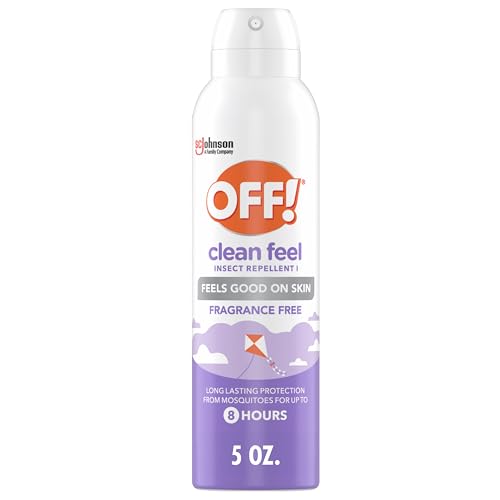
- DEET-free 20% picaridin
- Dries quickly without a sticky feel
- Up to 8 hours of protection
Best For: Lightweight, fragrance-free camping protection
Continuous-Spray Strength

- 100% DEET formula
- Up to 10 hours of protection
- Sprays at all angles
Best For: Strong coverage and convenient campsite application
Family-Friendly Lotion
Lightweight Picaridin Protection

- Picaridin lotion for adults and children 6 months and up
- Lightweight, non-greasy, and unscented
- 3.8-ounce bottle for controlled application
Best For: Families seeking fragrance-free lotion protection
Deep-Woods Defense

- 25% DEET formula
- Protects against mosquitoes, ticks, flies, gnats, and chiggers
- 6-ounce aerosol for continuous sweeping application
Best For: Camping and hunting in insect-heavy outdoor areas
Plant-Based Pick

- Botanically inspired, plant-based formula
- Repels mosquitoes, black flies, gnats, and no-see-ums
- Portable 4-ounce pump bottle
Best For: Campers wanting a compact plant-based spray
Best DEET Aerosol – OFF! Deep Woods 25% DEET 2-Pack
For campers who want straightforward personal protection, this two-pack of OFF! Deep Woods is a practical choice among insect repellents for camping. Its 25% DEET aerosol is designed for long-lasting protection against mosquitoes, ticks, biting flies, gnats, and chiggers, and applies powder-dry rather than oily.
Best For: Campers and hikers who prefer an aerosol DEET repellent for broad outdoor insect protection.
Pros:
- Two 4-ounce cans provide a convenient supply for outdoor trips.
- 25% DEET formula targets mosquitoes, ticks, biting flies, gnats, and chiggers.
- Powder-dry, non-greasy application is designed not to stain.
- Unscented aerosol format is easy to apply.
Cons:
- Aerosol application may be less suitable for shoppers who prefer lotion.
- Contains DEET, which some users may prefer to avoid.
This is a solid pick when coverage and convenience matter most. The two-can package is particularly useful for longer trips or shared camp supplies.
Best Skin-Friendly Lotion – Sawyer Picaridin Insect Repellent
Sawyer Products SP564 Premium Insect Repellent with 20% Picaridin, Lotion, 4-Ounce
Check Price On AmazonSawyer’s 20% picaridin lotion offers a comfortable alternative for shoppers comparing insect repellents for camping. The fragrance-free, non-greasy formula dries quickly and provides up to 12 hours of protection from mosquitoes and ticks, with shorter stated protection times against flies, gnats, and chiggers.
Best For: Campers who want a fragrance-free topical lotion that is comfortable on skin and suitable for extended outdoor activities.
Pros:
- 20% picaridin formula provides up to 12 hours against mosquitoes and ticks.
- Fragrance-free, odorless, non-greasy lotion dries quickly.
- Won’t damage plastics or synthetic coatings such as those on watches, sunglasses, and backpacks.
- Suitable for camping, backpacking, fishing, hunting, and other outdoor activities.
Cons:
- Single 4-ounce bottle offers less included quantity than a multipack.
- Lotion application may be less convenient than an aerosol for some users.
Choose this Sawyer lotion if comfort and gear compatibility are priorities. Its long stated mosquito and tick protection makes it well suited to full-day adventures.
Best Campsite Area Option – W4W Mosquito Repellent Coils
W4W mosquito coils provide an area-focused option for shoppers choosing insect repellents for camping. The three-pack includes 12 citronella coils and six stands; each coil burns for five to seven hours and covers up to 10 feet, making it suited to outdoor campsite, patio, or pool areas.
Best For: Campers who want to help cover a defined outdoor area rather than apply repellent directly to skin.
Pros:
- Three-pack includes 12 coils and six stands.
- Each coil burns for approximately five to seven hours.
- One coil covers up to 10 feet.
- Useful for patios, porches, campsites, pool areas, and backyards.
Cons:
- For outdoor use only.
- Area coverage is limited to the stated 10-foot range per coil.
- Does not replace a topical repellent for exposed skin.
These coils make sense for stationary outdoor setups where campers want localized coverage around a seating or gathering area. They are less appropriate for hiking or other activities away from camp.
Best Clothing and Gear Treatment – Sawyer Permethrin Spray
Sawyer SP657 adds a fabric-based layer of protection for campers comparing insect repellents for camping. This 24-ounce trigger spray treats clothing, shoes, sleeping bags, tents, netting, and other gear, bonding to fabric fibers for up to six weeks or six washings, whichever comes first.
Best For: Campers, backpackers, and hunters who want to treat clothing and gear in addition to using a topical skin repellent.
Pros:
- Designed for clothing, shoes, tents, sleeping bags, netting, and outdoor gear.
- Protection lasts up to six weeks or six washings, whichever comes first.
- Fragrance-free and formulated not to stain or damage listed fabrics, plastics, or finished surfaces.
- Effective against more than 55 kinds of insects, according to the supplied product notes.
Cons:
- Must be applied to clothing or gear rather than directly to skin.
- Effectiveness decreases with UV exposure or washing-machine agitation.
- Treating gear requires advance preparation and drying time.
This is a strong supplemental choice for trips where clothing and shelter protection matter. Pairing it with a topical repellent can create a broader campsite protection strategy, as suggested in the product notes.
Maximum DEET Protection – Repel 100 98% DEET
For campers heading into severe insect conditions, Repel 100 is a high-strength option among insect repellents for camping. Its 98.11% DEET formula is designed to repel mosquitoes, ticks, gnats, biting flies, chiggers, and fleas, with protection lasting up to 10 hours.
Best For: Extended camping trips and areas with heavy insect activity.
Pros:
- Contains 98.11% DEET for high-strength protection.
- Helps repel mosquitoes, ticks, gnats, biting flies, chiggers, and fleas.
- Provides protection for up to 10 hours.
- Compact 4-ounce pump spray is convenient for outdoor travel.
Cons:
- High-DEET formula may be more protection than needed for mild conditions.
- Pump spray requires application by hand rather than continuous spraying.
Choose Repel 100 when maximum DEET strength and long coverage are priorities. It is a practical fit for demanding outdoor conditions, especially when carrying compact gear matters.
Comfort-Focused Picaridin – OFF! Clean Feel Picaridin Spray
OFF! Clean Feel is a DEET-free choice for shoppers comparing insect repellents for camping. Its 20% picaridin aerosol dries quickly, feels non-sticky, and provides up to 8 hours of protection against mosquitoes, ticks, and biting flies when used as directed.
Best For: Campers who prefer a fragrance-free, lightweight repellent with a clean skin feel.
Pros:
- DEET-free 20% picaridin formula.
- Dries quickly and is designed not to feel sticky.
- Provides protection for up to 8 hours.
- Aerosol format makes application straightforward.
Cons:
- Listed protection time is shorter than the 10-hour options in this roundup.
- Protection is specified for mosquitoes, ticks, and biting flies rather than a broader range of pests.
OFF! Clean Feel stands out for campers prioritizing a lighter, fragrance-free application. It offers a convenient balance of wearability and extended flying-insect protection.
Continuous-Spray Strength – Coleman 100 Max 100% DEET
Coleman 100 Max is built for campers who want strong, easy-to-apply coverage from insect repellents for camping. The 100% DEET formula protects for up to 10 hours against mosquitoes, ticks, chiggers, biting flies, gnats, fleas, and flies, and its continuous spray works at all angles.
Best For: Campers seeking maximum DEET strength and convenient all-angle application.
Pros:
- Uses 100% DEET for strong insect protection.
- Protects for up to 10 hours and withstands water and perspiration.
- Helps repel mosquitoes, ticks, chiggers, biting flies, gnats, fleas, and flies.
- Continuous spray works at all angles for even coverage.
Cons:
- 100% DEET may be excessive for short outings or lighter insect pressure.
- Aerosol packaging may be less compact-feeling than a pump bottle despite the 4-ounce size.
Coleman 100 Max is a strong choice when durable coverage and easy spraying are more important than a lower-strength formula. The all-angle can design is particularly useful when applying repellent around outdoor gear and clothing.
Family-Friendly Lotion – Lightweight Picaridin Protection
For campers who prefer a low-mess option, this insect repellents for camping pick is a lightweight, unscented picaridin lotion. It is designed for adults and children ages 6 months and up when used as directed, with a non-oily, non-greasy feel.
Best For: Families and campers who want fragrance-free lotion protection in a compact 3.8-ounce bottle.
Pros:
- Suitable for children ages 6 months and older and adults when used as directed
- Lightweight formula does not feel oily, greasy, or sticky
- Unscented and designed for smooth, even application
Cons:
- Lotion application may take longer than using an aerosol spray
- The 3.8-ounce bottle provides one unit of product
This is a practical family option when comfort and controlled application matter more than spray coverage. Its picaridin formula and fragrance-free finish make it especially suitable for campers who dislike greasy-feeling repellents.
Deep-Woods Defense – 25% DEET Aerosol
For demanding outdoor trips, this insect repellents for camping option uses a 25% DEET formula in an aerosol can. It is designed to protect against mosquitoes, ticks, biting flies, gnats, and chiggers, making it suited to camping, hiking, fishing, and hunting.
Best For: Campers and outdoor enthusiasts who want broad insect coverage in a long-lasting aerosol spray.
Pros:
- Contains 25% DEET
- Targets mosquitoes, ticks, biting flies, gnats, and chiggers
- Aerosol format supports application in a continuous sweeping motion
- Useful for camping, fishing, hiking, and hunting
Cons:
- DEET-based formula may not suit shoppers seeking a plant-based option
- Aerosol packaging may be less convenient for campers who prefer a pump spray or lotion
With its higher DEET concentration and broad listed coverage, this spray is a strong fit for trips where ticks and several types of biting insects are a concern. The 6-ounce aerosol balances packable size with easy spray application.
Plant-Based Pick – Botanicals Pump Spray
Campers looking for a plant-based choice may prefer this insect repellents for camping spray. Its botanically inspired active ingredient is designed to repel mosquitoes, black flies, gnats, and no-see-ums, while the pump bottle packs easily in a backpack.
Best For: Hikers, runners, and campers who want a portable pump spray with a botanically inspired formula.
Pros:
- Plant-based and botanically inspired formula
- Protects against mosquitoes, black flies, gnats, and no-see-ums
- Convenient pump spray for application before outdoor activities
- Compact 4-ounce bottle is easy to pack
Cons:
- Its listed coverage does not include ticks
- Plant-based formulation may not be the preferred choice for shoppers specifically seeking DEET or picaridin
This compact pump spray is a convenient alternative for outdoor activities when portability and a botanically inspired formula are priorities. Consider its listed insect coverage when choosing protection for a particular campsite or trail.
How We Picked These Insect Repellents for Camping
We selected products representing the main repellent types campers use: DEET, picaridin, permethrin, botanical formulas, lotions, and mosquito coils. We considered active ingredient, stated protection level, application method, pack size, portability, and suitability for different camping situations. Because formulas vary, always read the product label for approved uses, application limits, reapplication timing, and age guidance.
This list includes personal repellents as well as products designed for clothing, gear, tents, or campsite areas. Those categories are not interchangeable: permethrin is intended for treated fabrics and gear, while skin-applied products must be used only as directed on exposed skin.
Quick Comparison
| Type | Best For | Key Consideration |
|---|---|---|
| DEET | Heavy mosquito and tick exposure | Strong protection; can feel oily and requires careful use around some materials |
| Picaridin | Comfortable everyday coverage | Generally lighter-feeling and less odor-forward than many DEET formulas |
| Permethrin | Clothing, tents, and gear | Not a substitute for skin-applied repellent; follow fabric-treatment directions |
| Botanical formulas | Lower-intensity outings and ingredient preferences | Protection may be shorter-lived or less broad, depending on the formula |
| Coils | Stationary campsite areas | Need ventilation, safe placement, and protection from wind |
Key Buying Factors for Insect Repellents for Camping
Active Ingredient and Exposure Level
DEET and picaridin are common choices for skin protection. Higher-concentration DEET products can be useful for extended exposure, but more is not automatically better for every trip. Picaridin is often a practical compromise for campers who want effective coverage with a lighter feel. Botanical products may suit short, lower-risk outings, but check the label’s protection claims.
Application and Coverage
Sprays are fast for arms, legs, and clothing, while lotions can provide controlled application and reduce overspray. For ticks and mosquitoes, cover exposed skin evenly without applying repellent to cuts, irritated skin, eyes, or mouth. Never spray directly into the face; apply to hands first, then spread carefully.
Gear Compatibility and Campsite Safety
Some repellents can damage plastics, finishes, synthetic fabrics, or other materials. Keep skin repellents away from food and cooking surfaces, and wash treated skin as directed after outdoor activity. Coils and other area products require stable placement, clearance from flammable materials, and adequate ventilation. Use permethrin only according to its clothing, gear, or tent-treatment instructions.
Pack Size and Trip Conditions
For car camping, larger bottles or multi-packs can be convenient. Backpackers may prefer compact containers and a formula that works for both short hikes and evenings at camp. Consider heat, rain, wind, sweat, and how often you will need to reapply.
Who Should Buy Which Insect Repellents for Camping?
- Choose a DEET spray if you expect intense or prolonged mosquito and tick activity and prioritize maximum labeled strength.
- Choose picaridin if you want versatile protection with a comfortable feel for hiking, family camping, or repeated use.
- Choose permethrin treatment if you want to add a protective barrier to clothing, tents, or camping gear rather than apply repellent directly to skin.
- Choose a lotion if precise, low-overspray application matters, particularly around children when used according to the label.
- Choose coils for a stationary, outdoor seating area where wind is limited and safe burning conditions can be maintained.
- Choose a botanical option if plant-based ingredients are your priority and your trip has relatively modest insect pressure.
For many campers, the most flexible setup combines a skin-applied repellent with sensible clothing coverage and a separately treated gear layer. Follow every label, and remember that no repellent replaces basic precautions such as long clothing, checking for ticks, and removing standing water around camp.