Replacing a traditional deadbolt with a WiFi-connected model can make everyday entry easier while giving you remote control, activity alerts, and flexible access for family, guests, or service providers.
We selected 10 WiFi smart deadbolts spanning fingerprint readers, keypads, app control, Matter compatibility, and built-in handles to help you find the right fit for your door and smart-home setup.
Best 10 WiFi Smart Deadbolts Picks for 2026
Best Overall

- Remote app control with built-in WiFi
- Supports up to 100 access codes
- Security alerts and voice-assistant support
Best For: Homeowners wanting broad access management and dependable smart features
Best Fingerprint Access

- Six ways to unlock, including fingerprint
- Built-in WiFi requires no bridge
- Eight-month battery rating and IP53 protection
Best For: Households wanting biometric entry and eufy ecosystem integration
Best Complete Entry Set
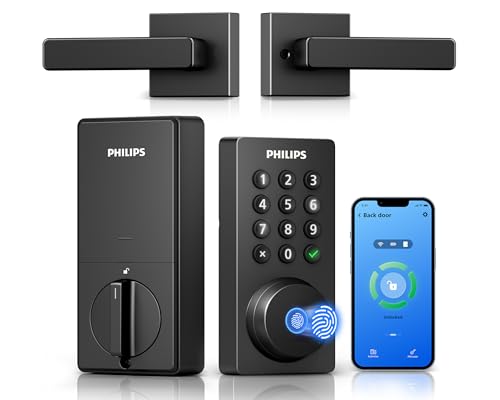
- Includes matching handle set
- Fingerprint access and flexible PIN codes
- Remote control over 2.4GHz WiFi
Best For: Front-door upgrades needing a coordinated handle and deadbolt
Best Battery Backup

- Fingerprint access with AI-learning scanner
- Up to eight months from eight AA batteries
- USB-C emergency power for lockouts
Best For: Users prioritizing flexible entry and emergency power access
Best Balanced Pick
Tapo DL100 Smart WiFi Deadbolt

- Up to 200 customizable codes with app monitoring
- Alexa, Google Home, and SmartThings support
- BHMA Grade 3, IP54, and USB-C emergency power
Best For: Families wanting flexible access and smart-home compatibility
Best for Advanced Access
ULTRALOQ Bolt SE WiFi Deadbolt

- Seven entry methods, including fingerprint access
- Remote control and sharing without a Wi-Fi hub
- Matter over Thread support and up to 18-month battery life
Best For: Smart-home users and rentals needing biometric entry
Best Fingerprint Option

- Fingerprint, app, passcode, key, and voice entry
- Up to 100 custom codes plus scheduled guest access
- Away Mode, alerts, history, and adjustable auto-lock
Best For: Households wanting biometric access and guest-code flexibility
Best All-Around Choice
Schlage Encode Smart WiFi Deadbolt

- Built-in WiFi with remote app control
- Supports up to 100 access codes
- Alarm, auto-lock, and voice control
Best For: Households wanting versatile remote access and easy installation
Best Overall – Schlage Encode WiFi Deadbolt
The Schlage Encode is a strong all-around choice among WiFi smart deadbolts, combining remote app control, flexible access codes, voice-assistant compatibility, and a touchscreen keypad. Its built-in WiFi eliminates the need for a separate hub, while the included physical key provides a backup entry method.
Best For: Homeowners who want dependable remote access, extensive code management, and a recognizable security-focused brand.
Pros:
- Built-in WiFi enables remote locking, unlocking, notifications, and lock-history monitoring.
- Supports up to 100 access codes and works with Alexa and Google Home.
- Includes customizable forced-entry and door-movement alerts.
- Installs with a screwdriver and includes four AA batteries plus a backup key.
Cons:
- Typical battery life is up to six months, so regular battery monitoring is still necessary.
- It uses a touchscreen keypad rather than fingerprint entry.
The Encode balances smart-home convenience with practical physical controls. Its broad code capacity and security alerts make it particularly useful for households that regularly provide access to guests, family, or service providers.
Best Fingerprint Access – eufy Security Smart Lock C220
The eufy Security Smart Lock C220 stands out among WiFi smart deadbolts for its fingerprint reader and six entry methods. Built-in WiFi provides remote access without a bridge, while the long-rated battery life and weather-resistant design add convenience for exterior doors.
Best For: Users who prioritize fast fingerprint entry, multiple unlocking options, and integration with other eufy devices.
Pros:
- Offers fingerprint, app, keypad, physical-key, Apple Watch, and voice-assistant unlocking.
- Built-in WiFi enables remote control without a separate bridge.
- Includes eight AA batteries rated for around eight months of use.
- BHMA Grade 3 certified, IP53 waterproof, and rated for a wide temperature range.
Cons:
- Its BHMA Grade 3 certification is below the highest residential rating referenced for some competing locks.
- Fingerprint recognition may require users to rely on another entry method if a scan does not register.
The C220 is a flexible pick for households that want quick biometric entry without giving up keys, codes, or app access. Its eufy ecosystem support is an added benefit for existing eufy doorbell owners.
Best Complete Entry Set – Philips WiFi Keypad Deadbolt
The Philips WiFi Keypad Deadbolt is a practical option among WiFi smart deadbolts when you also need a matching handle set. It connects directly to a 2.4GHz network, supports remote app management, and combines fingerprint access with several types of PIN codes.
Best For: Front-door upgrades where a complete deadbolt-and-handle set, fingerprint entry, and flexible guest codes are priorities.
Pros:
- Includes a matching handle set, avoiding the need to purchase compatible hardware separately.
- Supports permanent, one-time, periodic, and recurring passcodes.
- Offers 0.3-second fingerprint access plus remote status and access-history checks.
- Installs with a screwdriver and supports doors 1-3/8 to 1-3/4 inches thick.
Cons:
- Works on 2.4GHz WiFi and should remain within about 33 feet of the router for connectivity.
- Batteries are not included, and the manufacturer specifies standard 1.5V alkaline batteries.
- Auto-lock is off by default and must be enabled in the app.
The Philips model is especially appealing for a coordinated front-door replacement rather than a deadbolt-only installation. Before buying, confirm the router distance, door swing, and included-hardware requirements for your installation.
Best Battery Backup – WYZE Auto-Lock Bolt v2
The WYZE Auto-Lock Bolt v2 is one of the more flexible WiFi smart deadbolts for entry and backup power. It combines an AI-learning fingerprint scanner with app, code, and key access, and its USB-C emergency power port can help unlock the door from a power bank if the batteries run out.
Best For: Users who want fingerprint convenience, multiple backup entry methods, and an emergency power option.
Pros:
- Fingerprint scanner unlocks in a stated 0.5 seconds and learns from repeated touches.
- Built-in WiFi enables remote lock management through the Wyze app.
- Eight AA batteries are rated for up to eight months of use.
- USB-C emergency power supports unlocking with a common power bank.
Cons:
- Integration with a Wyze Video Doorbell is needed for unlocking from a live video feed.
- The listed product details do not specify a voice-assistant platform despite identifying voice as a control method.
The Lock Bolt v2 is a sensible pick for anyone concerned about lockouts, thanks to its combination of keys, keypad, app access, and USB-C backup power. Its fingerprint reader also makes everyday entry faster without sacrificing alternatives.
Best Balanced Pick – Tapo DL100 Smart WiFi Deadbolt
The Tapo DL100 is a practical choice among WiFi smart deadbolts, combining keypad entry, app control, Bluetooth access, voice commands, and physical-key backup. Its standard-door installation and built-in security features make it suitable for everyday household use.
Best For: Families and homeowners wanting flexible access management, remote control, and broad smart-home compatibility.
Pros:
- Supports up to 200 customizable access codes, with app-based profiles and activity history.
- Works with Alexa, Google Home, and Samsung SmartThings, including voice control with PIN verification.
- Includes auto-lock, anti-peeping passcodes, failed-attempt protection, USB-C emergency power, and two backup keys.
- BHMA Grade 3 certified and IP54 weather resistant.
Cons:
- Wi-Fi battery life is listed at up to 200 days, shorter than Bluetooth-mode operation.
- Remote features require the Tapo app and a compatible Wi-Fi connection.
The DL100 stands out for its balanced feature set and straightforward retrofit design. It is a strong all-around option if you want multiple entry methods without giving up physical-key backup.
Best for Advanced Access – ULTRALOQ Bolt SE WiFi Deadbolt
The ULTRALOQ Bolt SE is one of the more versatile WiFi smart deadbolts in this group, offering fingerprint entry, passcodes, app control, web access, voice control, and mechanical keys. Built-in Wi-Fi enables remote management without a hub, while Matter over Thread adds another smart-home connectivity option.
Best For: Smart-home users, rentals, and households that want fingerprint access and extensive code-sharing options.
Pros:
- Offers seven entry methods, including fingerprint identification, app access, passcodes, voice control, and keys.
- Stores up to 50 fingerprints and 50 passcodes, with temporary, scheduled, or permanent sharing.
- Built-in Wi-Fi supports remote control without a hub; Matter over Thread is also supported with a compatible hub.
- Advertises up to 18 months of battery life through Thread and has an IP65 weather-resistant design.
Cons:
- Matter over Thread features require a compatible Thread Border Router.
- Built-in Wi-Fi supports 2.4 GHz networks only, and the door sensor is not included.
The Bolt SE is especially compelling when biometric entry and detailed guest access matter more than keeping the setup minimal. Verify your network and Matter-hub requirements before buying.
Best Fingerprint Option – Philips Wi-Fi Smart Deadbolt
The Philips Wi-Fi Smart Deadbolt gives WiFi smart deadbolt shoppers several convenient ways to enter, including fingerprint, passcode, smartphone app, physical key, and voice control. Built-in Wi-Fi enables remote access without an extra hub, while scheduled codes and access history support family and guest management.
Best For: Busy households and hosts who want fingerprint unlocking, remote access, and flexible temporary codes.
Pros:
- Combines fingerprint, passcode, app, physical-key, and Alexa or Google Assistant access.
- Supports up to 100 custom passcodes plus one-time or scheduled guest codes.
- Provides remote control, real-time alerts, access history, and adjustable auto-lock timing from 10 to 180 seconds.
- Away Mode disables all unlock methods except the master code.
Cons:
- Batteries are not included, and the lock requires AA alkaline batteries.
- Supports 2.4 GHz Wi-Fi only, with a recommended router distance of 65 feet or less.
- No door sensor is included.
The Philips lock is a strong fit for users who prioritize fingerprint convenience and guest-code flexibility. Its network and battery requirements are straightforward, but they should be checked during installation planning.
Best All-Around Choice – Schlage Encode Smart WiFi Deadbolt
The Schlage Encode is a practical pick among WiFi smart deadbolts, combining built-in WiFi, keypad entry, app control, and strong residential security features. It supports up to 100 access codes and installs with a screwdriver without hardwiring.
Best For: Households wanting broad remote-access features, customizable alerts, and a straightforward installation.
Pros:
- Built-in WiFi enables remote locking, unlocking, history viewing, and notifications through the Schlage Home app.
- Stores up to 100 access codes and supports Alexa and Google Home voice control.
- Includes a customizable alarm, fingerprint-resistant touchscreen, and BHMA-certified residential security rating.
- Auto-lock offers selectable time delays, and four included AA batteries can last up to six months with typical use.
Cons:
- Remote features depend on the Schlage Home app and a secure WiFi connection.
- Battery life varies with usage and requires periodic battery replacement.
With its combination of app access, keypad convenience, voice compatibility, and physical backup key, the Encode is a well-rounded WiFi smart deadbolt for everyday front-door use.
Best for Flexible Entry – Yale Assure Lock 2 WiFi Smart Deadbolt
The Yale Assure Lock 2 offers flexible keyless entry for shoppers comparing WiFi smart deadbolts. It connects directly to 2.4 or 5 GHz WiFi without a hub, while the Yale Access app supports remote control, alerts, and scheduled access sharing.
Best For: Families, caregivers, and rental hosts who need multiple entry methods and flexible code management.
Pros:
- Provides keypad, smartphone, Apple Watch, automatic unlock, and backup-key entry options.
- Connects directly to 2.4 or 5 GHz WiFi without requiring a separate hub or bridge.
- Supports shared, scheduled, and revocable access codes, with no stated code limit in the supplied notes.
- DoorSense confirms the door is fully closed, while auto-lock and low-battery alerts add convenience.
Cons:
- Yale Access remote app control is limited to the US and Canada.
- Its one-year electronics warranty is shorter than its lifetime finish and mechanical warranties.
The Assure Lock 2 stands out for entry flexibility and access scheduling, making it especially useful when different people need different ways or times to enter.
Best for Apple Home Users – Schlage Encode Plus Smart WiFi Deadbolt
The Schlage Encode Plus is a strong choice among WiFi smart deadbolts for Apple households. Along with built-in WiFi and Schlage Home app control, it supports Apple HomeKit and Apple home keys for tap-to-unlock access with an iPhone or Apple Watch.
Best For: Apple users who want tap-to-unlock convenience alongside keypad, app, and voice control.
Pros:
- Apple home keys allow an iPhone or Apple Watch to tap the lock for entry.
- Built-in WiFi supports remote control, lock history, notifications, and up to 100 access codes.
- Works with Apple HomeKit, Amazon Alexa, and Google Assistant.
- Includes a customizable forced-entry alarm, fingerprint-resistant touchscreen, and BHMA-certified residential security rating.
Cons:
- Some smart features require the Schlage Home app, compatible devices, and a WiFi connection.
- The supplied notes do not specify battery life or include a physical backup key.
For iPhone and Apple Watch owners, the Encode Plus adds a particularly convenient tap-to-unlock option without giving up keypad entry or remote WiFi control.
How We Picked the Best WiFi Smart Deadbolts
We focused on the features that matter most in daily use: reliable wireless connectivity, straightforward installation, secure locking mechanisms, useful access controls, battery practicality, and compatibility with major smart-home platforms. We also considered the convenience of keypads, fingerprint sensors, physical keys, auto-locking, remote management, and activity notifications.
Because door hardware varies, a smart lock’s fit is just as important as its app features. Before buying, check your door thickness, backset, existing deadbolt layout, and whether the selected model replaces only the deadbolt or includes a matching handle.
Quick Comparison
- Best-known all-around option: Schlage Encode models offer built-in WiFi, keypad access, and a familiar deadbolt design.
- Best for biometric entry: Fingerprint-enabled models from eufy, WYZE, and ULTRALOQ reduce the need to remember codes or carry keys.
- Best for smart-home flexibility: The ULTRALOQ Bolt SE supports Matter, which may simplify integration across compatible platforms.
- Best for Apple users: Schlage Encode Plus adds tap-to-unlock functionality for compatible devices.
- Best for a complete entry set: Philips models with handles can coordinate the deadbolt and lever in one installation.
Key Buying Factors for WiFi Smart Deadbolts
Connectivity and Smart-Home Compatibility
Built-in WiFi lets you lock or unlock the door remotely without relying on a separate hub, but app quality and network stability still matter. Confirm compatibility with your preferred ecosystem, such as Alexa, Google Home, Apple Home, or Matter, if voice control and automations are priorities.
Entry Methods and Access Management
Keypads are useful for families and guests because each person can receive a unique code. Fingerprint readers can be faster for residents, while phone-based access is convenient when you already carry your smartphone. Look for temporary codes, scheduled access, activity logs, and the ability to revoke permissions remotely.
Power, Security, and Backup Access
Review expected battery life and whether the lock provides low-battery alerts. A physical key, emergency power connection, or another backup method is valuable if batteries run out or wireless access is unavailable. Auto-locking is convenient, but adjustable timing helps prevent accidental lockouts.
Installation and Door Fit
Most replacement deadbolts are designed for standard residential doors, but measurements still matter. Check clearance, door handing, strike-plate alignment, and whether the lock works with your existing hardware. If your door sticks or the frame is misaligned, correct that problem before installing a motorized lock.
Who Should Buy Which WiFi Smart Deadbolts?
Choose a Schlage Encode if you want a well-rounded keypad lock with built-in WiFi and a conventional design. Consider the Encode Plus if tap-to-unlock and Apple-focused features are especially important. A fingerprint model from eufy, WYZE, or ULTRALOQ is a strong fit for households that want quick key-free entry with minimal code sharing.
Choose a Philips model with a handle when you are replacing more than the deadbolt or want coordinated front-door hardware. Tapo’s DL100 is worth considering for shoppers seeking tactile buttons and app-based control, while the ULTRALOQ Bolt SE is appealing to buyers planning a broader Matter-compatible smart home. Whichever model you choose, prioritize correct fit, dependable backup entry, and an access system that matches how your household actually uses the door.