The best indoor motion detectors for families can help you monitor children, older adults, pets, entryways, and rooms without installing a complicated security system. The right choice depends on whether you need a gentle chime, caregiver notification, bright visual alert, or a loud deterrent.
We compared these 10 options by detection range, alert types, volume, power requirements, remote controls, connectivity, and everyday family usability so you can choose a practical fit for your home.
Best 10 Indoor Motion Detectors for Families Picks for 2026
Caregiver Alert Pick
EverNary Wireless Motion Sensor Pager

- Receiver and motion sensor included
- Visual alerts, 58 ringtones, and five volume levels
- Up to 16.4-foot detection range
Best For: Caregiver monitoring in bedrooms and nearby rooms
Smart Automation Pick
YoLink Indoor Radar Motion Sensor

- Radar detection with adjustable sensitivity
- Motion and no-motion app automations
- Up to two-year battery life
Best For: YoLink smart-home users wanting connected alerts
Multi-Room Chime Pick
TECKNET Wireless Motion Sensor Door Chime

- Two sensors and one RGB receiver included
- 61 sounds, five volume levels, and silent mode
- 20-foot detection range with 110-degree coverage
Best For: Multi-location entry and room alerts
Loud Standalone Alarm Pick
TECKNET 125dB Indoor Motion Alarm
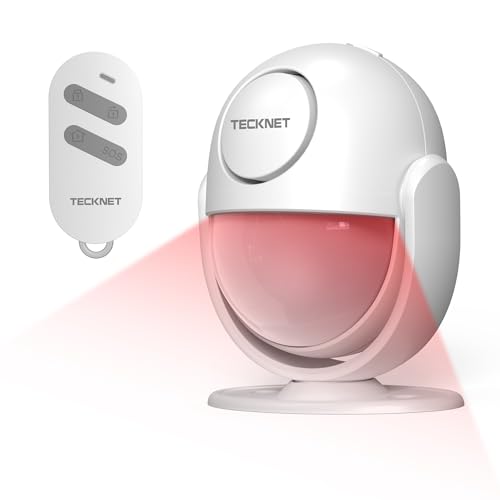
- 125dB siren with flashing strobe
- Remote control reaches up to 328 feet in open areas
- Battery or USB-C power options
Best For: Indoor areas needing a loud local alarm without Wi-Fi
Flexible Chime Coverage
METAK Wireless Motion Sensor Alarm
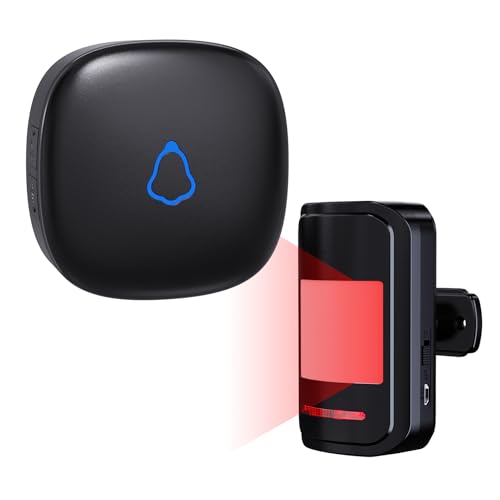
- 26-foot detection range with a 110° angle
- 500-foot transmission range and expandable receiver
- 32 ringtones with five adjustable volume levels
Best For: Customizable entryway, garage, pet, or elderly monitoring
Whole-Home Alert Bundle
BESTOONE Motion Sensor Alarm System

- Four detectors and two alarm units included
- 300-foot wireless range with roughly 20-foot detection
- 38 chimes plus volume, mute, and LED options
Best For: Multi-area household monitoring with several alert choices
High-Volume Room Protection
luckydeer 2-Pack Motion Sensor Alarm

- 125 dB siren paired with a strobe light
- 110° detection angle with up to 26-foot range
- Two units and a remote with SOS activation
Best For: Loud, visible protection across two indoor areas
Connected Family Coverage

- App alerts plus a 125dB local siren
- Includes PIR and four entry sensors
- Expandable with no required monthly fees
Best For: Families wanting app-based alerts across multiple indoor entry points
Simple Remote Security
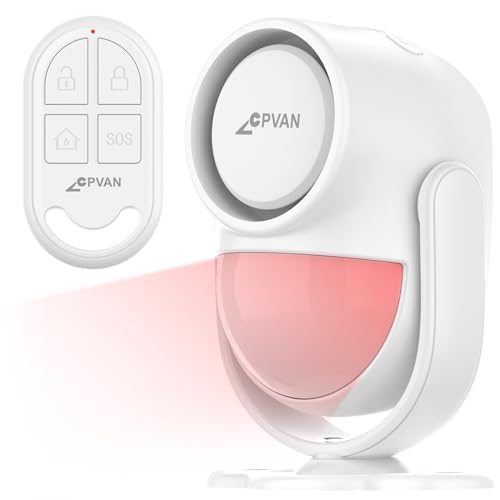
- Loud 125dB alarm with chime mode
- Works without WiFi, an app, or a hub
- Portable battery-powered installation
Best For: WiFi-free protection in rooms, garages, sheds, and vehicles
Caregiver Alert Pick – EverNary Wireless Motion Sensor Pager
For families comparing indoor motion detectors for families, this EverNary system offers a straightforward way to monitor movement without an app or hub. The motion sensor detects activity within about 16.4 feet and sends alerts to the plug-in receiver, making it practical for bedrooms, hallways, or caregiving areas.
Best For: Caregivers monitoring children, older adults, or family members from another room.
Pros:
- Includes one motion sensor and one plug-in receiver.
- Offers visual LED alerts plus adjustable sound, with 58 ringtone choices and five volume levels.
- Supports wireless transmission up to 260 feet in open areas, with shorter range through walls.
- Can pair each receiver with up to 20 transmitters and each transmitter with up to 20 receivers.
Cons:
- The motion detection area is limited to approximately 16.4 feet and 110 degrees.
- Actual transmission range can drop considerably through walls or doors.
- It is a standalone receiver system rather than an app-connected smart-home device.
This is a useful family-monitoring choice when audible and visual alerts matter more than remote app access. Test the detection area before permanent mounting, especially in larger rooms.
Smart Automation Pick – YoLink Indoor Radar Motion Sensor
Families seeking indoor motion detectors for families with smart-home capabilities may prefer the YoLink radar sensor. Its radar-based detection includes adjustable sensitivity and motion/no-motion settings, while LoRa connectivity supports long-distance communication with a compatible YoLink hub.
Best For: Families who already use, or plan to build, a YoLink smart-home system.
Pros:
- Radar technology is designed for precise indoor motion detection with fewer false alarms.
- Supports adjustable sensitivity, alert suppression, alert hold, and no-motion detection.
- Can send app notifications and trigger compatible lights, sirens, or other devices.
- Included batteries are designed to last up to two years.
Cons:
- A YoLink Hub or SpeakerHub is required for app connectivity and remote alerts.
- The listed 2,034-foot range is an open-air wireless range, not the motion detection distance.
- This listing is for the sensor only, so a hub may add to the setup cost.
The YoLink is the most flexible option here for connected family routines, such as turning on lights or sending alerts when motion stops. It makes the most sense for households comfortable with hub-based setup.
Multi-Room Chime Pick – TECKNET Wireless Motion Sensor Door Chime
For households that want indoor motion detectors for families to announce movement audibly, this TECKNET kit combines two motion sensors with an RGB receiver. It provides a choice of chimes, adjustable volume, and visual signaling for entryways, hallways, or rooms where family members need an immediate alert.
Best For: Families needing coverage in multiple locations with customizable sound and visual notifications.
Pros:
- Includes two motion sensor transmitters, one RGB receiver, and mounting hardware.
- Offers 60 melodies plus an alarm tone, five volume levels, and silent mode.
- Detects movement up to about 20 feet across a 110-degree field of view.
- Advertises wireless transmission up to 1,000 feet and weather-resistant components.
Cons:
- The alert repeats every 10 seconds when the alarm is triggered.
- The listed detection range is shorter than the wireless transmission range.
- Its chime and alarm design may be more than needed for simple room-to-room monitoring.
This kit is a practical fit when families want both sound and a visible RGB indicator, particularly for monitoring entrances or multiple nearby areas. Its two-sensor configuration adds flexibility without requiring wiring.
Loud Standalone Alarm Pick – TECKNET 125dB Indoor Motion Alarm
Families wanting indoor motion detectors for families without Wi-Fi or app setup may find this TECKNET alarm appealing. It combines PIR detection, a flashing strobe, selectable alarm or doorbell modes, and a remote control for convenient arming and disarming.
Best For: Indoor spaces where a very loud local alarm and remote control are priorities.
Pros:
- Provides selectable 80dB, 100dB, or 125dB alarm volume with a flashing strobe.
- Offers alarm and doorbell chime modes.
- The remote works up to 328 feet in open areas for arming, disarming, mode changes, or SOS activation.
- Supports battery operation or USB-C continuous power.
Cons:
- It is designed primarily for indoor use and does not provide app notifications.
- Alarm mode sounds continuously for two minutes after a trigger.
- Detection varies by placement and is approximately 16 to 26 feet with 120-degree coverage.
This model suits families who want an immediate, unmistakable local warning rather than connected monitoring. Its portable installation options and remote control also make it useful for garages, hallways, storage rooms, or vehicles.
Flexible Chime Coverage – METAK Wireless Motion Sensor Alarm
For families comparing indoor motion detectors for families, the METAK wireless sensor offers a flexible way to monitor doorways, hallways, garages, mailboxes, or pet areas. Its sensor sends alerts to a plug-in receiver, which supports customizable chimes and volume levels.
Best For: Families wanting a customizable motion chime for entryways, garages, or pet and elderly monitoring.
Pros:
- 110° detection angle with coverage up to 26 feet.
- 500-foot sensor-to-receiver transmission distance.
- 32 ringtones and five volume levels, including up to 110 dB.
- Expandable to support up to 20 motion sensors on one receiver.
Cons:
- The receiver requires an outlet, while the sensor uses AAA batteries or Micro USB power.
- The package includes one motion detector and one receiver, so larger spaces require additional sensors.
This is a practical choice when families want notification flexibility rather than a standalone siren. Its long transmission range and expandable design can help cover multiple areas, while the adjustable chime options make it easier to choose a suitable alert.
Whole-Home Alert Bundle – BESTOONE Motion Sensor Alarm System
Families seeking indoor motion detectors for families may appreciate this BESTOONE bundle for covering several locations at once. It includes four motion detectors and two alarm units, with wireless transmission up to 300 feet and selectable chimes, LED alerts, or mute mode.
Best For: Families that want multiple sensors for doors, windows, walkways, or other indoor areas.
Pros:
- Includes four motion detectors and two alarm units.
- Motion detection reaches about 20 feet, with wireless transmission up to 300 feet.
- Offers 38 ringtones, three volume levels, and a silent LED-only mode.
- Can be used for doorbell, garage, child or elderly care, and intruder alerts.
Cons:
- AAA batteries are required but not included.
- The detectors are not waterproof and should be kept away from rain.
- Wind and obstructions can contribute to false alarms.
The multi-piece configuration makes this a useful option for families that need coverage in several spots without buying separate starter kits. Installation should be planned carefully around wind, obstructions, and moisture to support more reliable detection.
High-Volume Room Protection – luckydeer 2-Pack Motion Sensor Alarm
For families comparing indoor motion detectors for families, this luckydeer two-pack emphasizes immediate local warning. Each battery-operated alarm combines a 125 dB siren with a strobe light, while its 110° sensor covers up to 26 feet and supports doorbell or alert modes.
Best For: Families wanting loud, visible alarms in two indoor rooms, such as a bedroom, living room, or garage.
Pros:
- Two alarms help cover multiple areas simultaneously.
- 125 dB alarm and strobe light provide prominent alerts.
- 110° detection angle covers up to 26 feet.
- Includes a remote control with a stated 328-foot range and emergency SOS activation.
Cons:
- The device does not support Wi-Fi.
- A loud 125 dB alarm may be excessive for households seeking quiet notifications.
- Each unit requires three AAA batteries, although USB charging is also supported.
This two-pack is geared toward families who prioritize a strong audible and visual response over app connectivity. Doorbell mode adds a less aggressive option for visitors, while alert mode and remote SOS provide additional ways to trigger the alarm.
Connected Family Coverage – CPVAN WiFi Alarm Kit
For families comparing indoor motion detectors for families, the CPVAN WiFi Alarm Kit adds app alerts to a motion sensor and four door/window sensors. It can send notifications to your phone and shared family members while also sounding a built-in 125dB siren.
Best For: Families wanting phone alerts and coverage for multiple indoor entry points.
Pros:
- Combines PIR motion detection with four door/window sensors.
- Smart Life/Tuya app supports alerts, arming, disarming, and Home mode.
- Expandable design and no required subscription or monthly fees.
- Backup battery provides temporary emergency power.
Cons:
- The host requires continuous AC power for normal operation.
- App notifications require an active 2.4GHz WiFi connection.
- It is a larger system than a standalone motion alarm.
This is the most connected option of the three, especially for households that want several family members to receive alerts. Keep in mind that the accessories use 433.92MHz communication, while the host connects to 2.4GHz WiFi only.
Simple Remote Security – CPVAN 125dB PIR Alarm
For shoppers seeking indoor motion detectors for families without app setup, the CPVAN 125dB PIR Alarm offers straightforward battery-powered protection. It detects motion up to 40 feet and uses a remote control for operation from up to 328 feet in open areas.
Best For: Families needing a portable, WiFi-free alarm for a room, garage, shed, or vehicle.
Pros:
- 125dB siren provides a strong local alert.
- Alarm and chime modes support security or gentler notifications.
- Battery-powered installation works without an app, hub, or WiFi.
- Can be mounted with adhesive or screws or placed on a surface.
Cons:
- It is not waterproof.
- It provides local and remote-control operation rather than phone alerts.
- Detection performance is best within approximately 10–26 feet.
This standalone model is a practical choice when family members need simple controls and immediate on-site sound rather than smartphone notifications. Its portable design also suits temporary indoor security needs.
Family-Friendly Alert Modes – Luckydeer PIR Alarm
The Luckydeer PIR Alarm is one of the more flexible indoor motion detectors for families, with alarm and doorbell modes, two volume levels, and a remote SOS button. Its portable battery-powered design can help monitor rooms, exits, or areas where children and pets need attention.
Best For: Families wanting a combined security alarm, entry chime, or caregiver-style pager.
Pros:
- 125dB siren and infrared motion detection provide a noticeable alert.
- Doorbell and alarm modes cover everyday notification and security needs.
- Remote includes an SOS panic button for immediate activation.
- Mounts with included tape or screws and runs on three AA batteries.
Cons:
- It does not provide stated smartphone or app notifications.
- The listed detection range is approximately 16–26 feet.
- Setup requires following the included instruction manual.
Its dual-purpose design makes this a useful fit for families who want more than a burglar alarm. The doorbell mode and SOS control can support routine household monitoring, while alarm mode provides a louder response to detected motion.
How We Picked These Indoor Motion Detectors for Families
We focused on features that matter in busy households: dependable motion detection, straightforward setup, useful alert options, and controls that work from a reasonable distance. The selection includes standalone PIR alarms, sensor-and-receiver kits, caregiver-oriented alerts, door chimes, radar-based detection, and Wi-Fi systems with phone notifications.
We also considered practical details such as detection angle, stated range, adjustable volume, visual indicators, battery operation, plug-in receivers, and whether a device can support more than one monitoring need. Product claims such as decibel ratings and wireless range are manufacturer specifications, so actual performance can vary with walls, furniture, interference, and room layout.
Quick Comparison
| Best for | Look for | Most useful feature |
|---|---|---|
| Caregiver monitoring | Receiver alerts and simple controls | Notification from another room |
| Children and family routines | Chime, light, and adjustable volume | Less intrusive alerts |
| Entryway awareness | Wide detection angle and reliable range | Fast motion notification |
| Deterrence | Loud siren and remote control | Immediate audible alarm |
| Whole-home notifications | Wi-Fi connectivity and app support | Alerts when you are away |
Key Buying Factors for Indoor Motion Detectors for Families
Alert Style and Volume
A loud siren may be useful for a garage, basement, or entry point, but it can be startling around sleeping children, older adults, or pets. Adjustable volume, chimes, flashing lights, and silent app alerts provide more control. If different family members have different needs, choose a system with multiple alert modes.
Detection Coverage and Placement
Check the stated detection range and angle, then consider the room’s layout. Mount sensors where people naturally pass, while avoiding direct heat sources, strong airflow, and locations that create unwanted triggers. A wide-angle sensor can cover an entryway, but multiple sensors may be better for a large or divided floor plan.
Power, Connectivity, and Reliability
Battery-powered units are flexible but require battery checks. Plug-in receivers reduce maintenance, while Wi-Fi models can send phone alerts but depend on a stable network and app support. A local sensor-and-receiver system may be preferable when you want alerts to continue without internet access.
Controls and Family Usability
Remote controls, clear indicators, easy pairing, and simple arming procedures make a system more useful day to day. For caregiving, prioritize dependable notifications and accessible controls over extra smart-home features. For children, consider whether the device can be muted or adjusted during bedtime.
Who Should Buy Which Indoor Motion Detectors for Families?
Choose a caregiver pager or receiver-based sensor if your priority is monitoring a bedroom, bathroom, hallway, or vulnerable family member from another room. A chime-style detector is better for gentle awareness when someone enters a room or approaches a doorway. For a stronger deterrent, select a loud alarm with a remote control and confirm that its volume is appropriate for your household.
Families wanting alerts while away should consider a Wi-Fi model with app notifications, provided the home has dependable wireless coverage. Multi-sensor kits make more sense for several doors and rooms, while a compact standalone detector is usually the simplest choice for one specific location. Before buying, map the areas you want to monitor, decide whether alerts should be audible or sent to a phone, and verify the power and range specifications.