A bivy sack can give solo campers weather protection with less weight, bulk, and setup than a traditional tent. The right model depends on whether you need a breathable overnight shelter, a sleeping-bag cover, or compact emergency protection.
We compared 10 bivy sacks for solo camping across waterproofing, breathability, packed size, durability, comfort, and intended use so you can choose a practical match for backpacking, bikepacking, mountaineering, or emergency kits.
Best 10 Bivy Sacks for Solo Camping Picks for 2026
Lightweight Comfort Pick
Sierra Designs Backcountry Bivy

- 16-ounce 20D nylon ripstop construction
- Waterproof/breathable top with mesh ventilation
- Large U-shaped opening for easy access
Best For: Weight-conscious backpackers and bikepackers
Four-Season Ultralight Shelter
Outdoor Research Helium UL Bivy

- Fully seam-taped waterproof Pertex Shield shell
- Includes stakes, loops, and guy line hardware
- Mesh screen and passive vents reduce condensation
Best For: Weather-conscious mountain backpackers
Compact Weatherproof Cover

- Waterproof-breathable 70D nylon shell
- Packs into an integrated cylindrical stuff sack
- Long fit with dual side-access zippers
Best For: Campers wanting simple, spacious 3-season coverage
Generous-Cut Utility Cover

- Roomy 33.5-inch width fits varied sleeping bags
- Breathable three-layer waterproof laminate
- Two-way zipper and standalone-shelter versatility
Best For: Utility-focused campers and survivalists
Best All-Weather Shell
U.S. Military Modular Bivy Cover

- Breathable waterproof Gore-Tex shell
- Sealed seams and two-way zipper
- Fits modular sleeping bag systems
Best For: Solo campers needing rugged wet-weather protection
Best Ultralight Insect Shelter

- Only 8.96 ounces
- Mesh helps block insects
- Packs down very small
Best For: Ultralight trips in insect-heavy conditions
Best Emergency Backup

- Tear- and puncture-resistant PE
- Thermo-Mylar heat-retaining lining
- Two-pack with emergency whistle
Best For: Emergency kits and cold-weather backup protection
Best Ultralight Wet-Weather Pick

- 5,000 mm waterproof rating
- 70D ripstop shell with reflective coating
- 87 x 33 inches for one adult
Best For: Solo hikers and exposed wet-weather bivouacs
Best Emergency-Ready Option
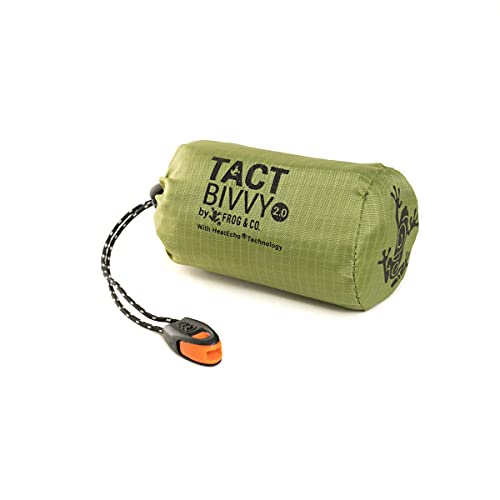
- Only 4.8 ounces
- Reflective, waterproof, and windproof
- Includes whistle, carabiner, and tinder drawstring
Best For: Emergency kits and ultralight backup shelter
Best Multi-Purpose Value

- 78 x 47 inches for a roomy fit
- Reflects up to 95% of body heat
- Works as shelter, blanket, ground cover, or signal
Best For: Emergency kits and versatile outdoor backup use
Lightweight Comfort Pick – Sierra Designs Backcountry Bivy
For solo campers who want bivy sacks for solo camping with easier access, the Sierra Designs Backcountry Bivy combines a lightweight 20D nylon ripstop shell with a large U-shaped opening. Its waterproof/breathable top fabric and mesh ventilation panel make it a practical minimalist shelter for varied conditions.
Best For: Backpackers and bikepackers prioritizing low weight, ventilation, and convenient entry.
Pros:
- Light 16-ounce design for weight-conscious trips
- Waterproof/breathable top fabric helps balance weather protection and comfort
- Large U-shaped opening makes entry and exit easier
- Mesh window and guy line loop support ventilation and added peak height
Cons:
- Designed around compatibility with a Sierra Designs Backcountry Bed and sleeping pad
- Maximum height recommendation is 77 inches
The Backcountry Bivy is a strong choice when pack weight and accessibility matter more than extra interior room. Its ventilation features add comfort for minimalist overnight setups.
Four-Season Ultralight Shelter – Outdoor Research Helium UL Bivy
The Outdoor Research Helium UL Bivy is built for solo campers seeking bivy sacks for solo camping with waterproof protection and a more structured setup. Its seam-taped Pertex Shield NetPlus construction, mesh screen, ventilation flaps, and included stakes suit fast-moving trips in wet or changeable conditions.
Best For: Four-season backpacking and mountain missions where weather protection and ventilation are priorities.
Pros:
- Fully seam-taped waterproof construction
- Includes four aluminum stakes, six stake loops, and a guy line loop
- No-see-um mesh screen helps keep bugs out
- High-volume toe box and dual passive ventilation flaps improve comfort
Cons:
- At approximately 18.02 ounces, it is heavier than the lightest bivy options listed
- Its one-person interior is 28 inches wide
With a 4-season rating and a complete pitching setup, the Helium UL Bivy offers a capable balance of protection and livability. It is especially appealing for solo trips where rain, snow, or insects are concerns.
Compact Weatherproof Cover – AquaQuest Pharaoh Bivy Sack
The AquaQuest Pharaoh is a straightforward option for solo campers looking for bivy sacks for solo camping that envelop a sleeping bag and pad without requiring a complicated setup. Its waterproof-breathable nylon shell, dual zippers, and elasticated hood provide adaptable protection in a compact package.
Best For: Campers wanting a lightweight, no-setup sleeping bag cover with room for users up to 6 feet 6 inches.
Pros:
- 10,000 mm waterproof rating and 10,000 gr/m²/day moisture vapor transmission rating
- Weighs about 1.1 pounds and packs into its integrated stuff sack
- Dual YKK zippers provide access from both sides
- Generous long fit accommodates users up to 6 feet 6 inches
Cons:
- Listed as a 3-season product rather than a dedicated 4-season shelter
- At about 0.5 kg, it is heavier than the lightest bivy in this roundup
The Pharaoh emphasizes simplicity and broad sleeping-bag compatibility. Its long cut and integrated stuff sack make it a practical pick for campers who want reliable coverage without poles or a lengthy pitch.
Generous-Cut Utility Cover – Mil-Tec Trilaminate Bivy
The Mil-Tec Trilaminate Bivy is a roomy sleeping bag cover for solo campers comparing bivy sacks for solo camping, especially when broad compatibility and rugged weather protection are important. Its three-layer laminate is designed to be waterproof and breathable, while the generous cut fits various sleeping bags.
Best For: Campers and survivalists who need a versatile, roomy cover for different sleeping bags.
Pros:
- Generous 33.5-inch width accommodates various sleeping bags
- Three-layer laminate provides waterproof and breathable protection
- Two-way side zipper supports easier access
- Can function as a standalone shelter or bivy sack
Cons:
- At 1.33 kg, it is substantially heavier than the other listed options
- Its 5.0 mm water column specification is lower than the Pharaoh’s stated 10,000 mm rating
- Listed as a 3-season cover
The Mil-Tec stands out for versatility and interior room rather than ultralight performance. Choose it when a durable, multi-use cover matters more than minimizing pack weight.
Best All-Weather Shell – U.S. Military Modular Bivy Cover
For solo campers who want dependable coverage around a sleeping bag, this U.S.-made bivy cover is a rugged choice. Its breathable waterproof Gore-Tex material, sealed seams, and adjustable zipper ventilation are suited to wet, windy, and snowy conditions.
Best For: Solo campers seeking a durable outer shell for modular sleeping bags and four-season field use.
Pros:
- Breathable waterproof material helps limit condensation while blocking wet weather.
- Heat-sealed seams and nylon construction support rugged outdoor use.
- Two-way side zipper allows adjustable ventilation from either end.
- At 1.9 pounds, it packs efficiently for camping, hiking, and emergency kits.
Cons:
- Designed primarily to fit over sleeping bags, so standalone comfort may be limited.
- One-size dimensions may not suit every sleeper or sleep system.
This is the most substantial shelter-style option in the group. Choose it when weather protection, durability, and compatibility with a modular sleep system matter more than ultralight weight.
Best Ultralight Insect Shelter – Ultralight Mesh Bivy Sack
For backpackers counting every ounce, this bivy sack for solo camping combines mesh, breathable 20D nylon, and silicone-coated 40D nylon in a compact package. It is designed to isolate mosquitoes and insects while offering a raised, stakeable sleeping space.
Best For: Ultralight solo backpackers and climbers who prioritize insect protection and minimal packed weight.
Pros:
- Weighs only 8.96 ounces for low-impact backpacking.
- Compact 7.87-by-3.93-by-3.34-inch packed size leaves room for other gear.
- Mesh construction helps isolate mosquitoes and insects.
- Head and foot traction ropes plus corner loops can increase interior space and stability.
Cons:
- Limited interior space can reduce comfort, especially with an inflatable mat.
- Its basic water resistance and mesh-focused design are less suited to sustained heavy rain.
- Guy lines or stakes may be useful depending on the sleeping pad and setup.
This is a specialized minimalist shelter rather than a fully protective rain bivy. It makes the most sense for warm-weather or insect-heavy trips where low weight and ventilation take priority.
Best Emergency Backup – Ironstripe XL Thermal Bivy
This two-pack is geared toward emergency preparedness rather than lightweight backpacking comfort. The XL bivy sacks use tear- and puncture-resistant PE material, reinforced seams, a built-in hood, and Thermo-Mylar insulation for compact cold-weather contingency gear.
Best For: Solo campers, hikers, and emergency-kit owners who want a reusable thermal backup for cold or unexpected conditions.
Pros:
- Extra-thick PE material and reinforced seams are designed to resist tears and punctures.
- Thermo-Mylar is intended to retain up to 90% of body heat.
- XL 94.5-by-49.2-inch dimensions provide generous coverage for adults.
- Includes two bivy sacks and an emergency whistle.
Cons:
- At 0.44 kg per listed item, it is heavier than the ultralight bivy option.
- Drawstring closure is less adjustable than a full-length zipper.
- Its emergency thermal design may be less breathable and less comfortable for routine camping.
Keep this set in a vehicle, go bag, or camping emergency kit when durability and heat retention are priorities. It offers useful redundancy for solo trips, but it is not the first choice for regular ultralight shelter use.
Best Ultralight Wet-Weather Pick – Reflective Ripstop Solo Bivy
For campers seeking bivy sacks for solo camping, this ripstop model emphasizes rain protection, low weight, and added warmth. Its 5,000 mm waterproof rating and heat-reflective coating make it a practical choice for exposed, damp conditions, while the 87-by-33-inch dimensions are suited to one adult.
Best For: Solo hikers, bikepackers, and mountaineers who want a reusable bivy with strong water resistance and reflective warmth.
Pros:
- 5,000 mm hydrostatic-head rating helps block rain and ground moisture.
- 70D ripstop construction balances durability with a listed weight of about 474 g.
- Heat-reflective coating is designed to add approximately 9°F of warmth.
- Ventilating properties help reduce moisture buildup inside.
Cons:
- The 33-inch width may feel restrictive for larger sleepers or bulky insulation.
- Buyers should use the product size chart rather than Amazon’s size chart.
This is the most conventional camping-oriented option in the group, offering a more structured shell than emergency film bivies. Confirm the fit before ordering, especially if you plan to use it over a sleeping bag.
Best Emergency-Ready Option – Survival Frog Tact Bivvy 2.0
If your search for bivy sacks for solo camping includes emergency preparedness, the Survival Frog Tact Bivvy 2.0 adds useful survival accessories to an ultra-compact shelter. It weighs 4.8 ounces, packs into a small stuff sack, and uses reflective material for warmth and visibility.
Best For: Emergency kits, car kits, bug-out bags, and campers who want a lightweight backup shelter with signaling features.
Pros:
- Reflects 90% of body heat according to the supplied product information.
- Waterproof, windproof, tear-resistant material has reinforced taped seams.
- Includes a 120-decibel whistle, carabiner, and para-tinder drawstring.
- 84-by-36-inch design accommodates users up to 7 feet tall.
Cons:
- The thin emergency-film construction is less suited to regular comfort-focused camping than a fabric bivy.
- Its primary strength is compact emergency protection rather than a fully featured sleeping system.
At just 4.8 ounces, this is the easiest option to keep permanently in a pack or vehicle. Choose it when backup warmth, weather protection, and signaling capability matter more than a traditional bivy’s comfort features.
Best Multi-Purpose Value – Zmoon Mylar Emergency Bivy
For shoppers comparing bivy sacks for solo camping on a budget or building a group emergency supply, this Zmoon mylar option provides a roomy 78-by-47-inch shelter in a compact format. Its reflective foil material is intended to block wind and water while returning body heat.
Best For: Emergency preparedness, hiking, travel, and campers who value a wide emergency bivy that can also serve as a blanket, ground cover, or signal.
Pros:
- Mylar foil is described as waterproof, windproof, and resistant to tears and punctures.
- Reflects up to 95% of body heat according to the supplied notes.
- Generous 78-by-47-inch dimensions provide more width than the other listed emergency bivy.
- Can be reused and repurposed as a shelter, blanket, ground cover, or signaling surface.
Cons:
- It has no buckle or listed closure system.
- The supplied sizing and pack details are inconsistent, so verify the specific package before ordering.
- Mylar construction is better suited to emergency use than extended everyday bivy camping.
This is a flexible emergency shelter rather than a technical sleeping-bag replacement. Its broad profile and multiple uses make it attractive for preparedness kits, but confirm the quantity and color variation shown in the listing.
How We Picked the Best Bivy Sacks for Solo Camping
We organized these picks around real-world solo-camping needs rather than treating every bivy as interchangeable. We considered shell materials, stated waterproof and breathable construction, sleeping-bag compatibility, interior space, closures, packed size, and the difference between a purpose-built shelter and an emergency bivy. We also looked at use cases ranging from minimalist backpacking to tactical outdoor use and vehicle-based emergency preparedness.
Specifications and construction can vary by size and production run, so verify the current dimensions, materials, and included accessories before buying. A waterproof label alone does not guarantee comfortable condensation management, and an emergency heat-reflective bag is not necessarily suitable for repeated overnight camping.
Quick Comparison
| Best For | Look For | Typical Trade-Off |
|---|---|---|
| Ultralight backpacking | Low weight, compact pack size, breathable fabric | Less room and fewer features |
| Wet or windy conditions | Waterproof shell, secure closure, durable floor | More weight or reduced ventilation |
| Large sleeping bags | Generous cut and wide opening | Bulkier packed size |
| Emergency preparedness | Reflective insulation, whistle, stuff sack | Limited breathability and long-term comfort |
Key Buying Factors for Bivy Sacks for Solo Camping
Waterproofing and Breathability
Choose a waterproof, breathable membrane or coated fabric when you expect sustained rain. Fully nonbreathable emergency materials can trap condensation, so they are better for short-term survival use than routine camping. Check whether the design includes a storm flap, taped seams, or a raised hood area.
Fit and Sleeping-Bag Compatibility
Measure your sleeping bag’s shoulder, foot, and loft dimensions against the bivy’s interior. A tight sack can compress insulation and make entry difficult, while an oversized model may add unnecessary weight. Side or top openings are generally easier to use than narrow foot-end access.
Weight, Durability, and Setup
For backpacking, every ounce matters, but ultralight fabrics require more care around rocks, sticks, and abrasive ground. Consider a groundsheet if the manufacturer recommends one. Check whether the bivy needs trekking poles, stakes, or guy lines to keep the opening elevated and improve ventilation.
Who Should Buy Which Bivy Sacks for Solo Camping?
Backpackers and bikepackers should prioritize a lightweight, breathable bivy designed for regular overnight use. Campers expecting heavy rain or exposed wind should favor stronger waterproof protection and a secure hood or closure. Those carrying bulky or highly insulated sleeping bags should choose a roomier cut, even if it adds a little packed weight.
For emergency kits, a compact reflective bivy with a whistle and storage pouch can be useful for unexpected exposure, roadside incidents, or short-term shelter. However, do not substitute a thin emergency sack for a breathable camping bivy on multi-night trips. If you are deciding between two similar models, choose the one that fits your sleeping system comfortably and provides the ventilation you can realistically use in the conditions you expect.