A quality door reinforcement bar can add a practical layer of resistance against forced entry without requiring a complicated installation. The best options use sturdy steel construction, secure floor contact, and adjustable designs that fit common door types.
We compared these 10 door security bars for build quality, fit, stability, portability, and everyday usability so you can choose the right brace for your front door or another vulnerable entry point.
Best 10 Door Reinforcement Bars for Front Doors Picks for 2026
Portable Protection
BRINKS Adjustable Door Security Bar

- 20-gauge steel construction
- Adjusts from 25 to 43 inches
- Tool-free, travel-friendly setup
Best For: Portable protection for hinged, patio, and sliding doors
Flexible Door Defense
AceMining Adjustable Security Bar

- 21- to 46-inch adjustment range
- Includes rubber and Y-type caps
- Three-stage design for quick deployment
Best For: Multipurpose home, patio-door, window, and travel use
Heavy-Duty Reinforcement
Doorricade Inward-Door Security Bar

- Up to 2,000 pounds of stated resistance
- Anchors into wall studs
- Lifetime warranty included
Best For: Permanent reinforcement of a single inward-opening door
Two-Pack Versatility
SecurityMan 2-in-1 Door Security Bars

- Two bars included
- 18.25- to 47.5-inch adjustment range
- Interchangeable door and sliding-door caps
Best For: Multi-door households needing hinged and patio-door coverage
Portable Steel Brace

- 1.2-inch stainless steel tube with wide rubber base
- Adjusts from 25.5 to 52 inches without tools
- Removable head supports select sliding doors and windows
Best For: Renters, travelers, and compatible inward-opening doors
Two-Pack Value Pick
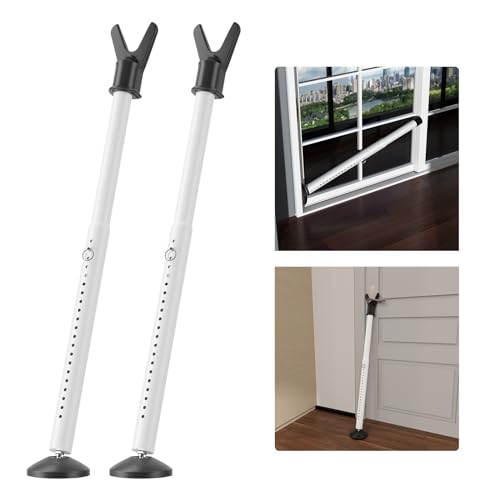
- Two heavy-duty metal bars included
- 18–51-inch range with 18+ adjustment positions
- Large rubber base and quick-release design
Best For: Multiple entryways, apartments, dorms, and travel
Best Wall-Mount Reinforcement

- Fits 26–37-inch doors
- Powder-coated structural steel
- Includes screws and wall anchors
Best For: Permanent home security and childproofing
Best Portable Value
Adjustable 2-Pack Security Bars

- Adjusts 17.5–46 inches
- No installation required
- Two bars with 20-month warranty
Best For: Renters, travel, and flexible door security
Best Permanent Floor Brace
Heavy-Duty Anti-Kick Barricade

- For inward-swing doors
- 3/8-inch steel base plate
- Requires floor and door drilling
Best For: Permanent anti-kick reinforcement for entry doors
Portable Protection – BRINKS Adjustable Door Security Bar
For shoppers comparing door reinforcement bars for front doors, the BRINKS Door Security Bar is a flexible, tool-free option. Its adjustable steel design works with hinged, patio, and sliding doors, while the padded foot helps protect flooring.
Best For: Travel, dorm rooms, apartments, and households needing portable door reinforcement.
Pros:
- Adjusts from 25 to 43 inches for different door and sliding-door setups.
- Uses heavy-duty 20-gauge steel construction.
- Installs without tools beneath knobs or levers and between sliding doors.
- Non-marring yoke and pivoting padded foot help protect floors.
Cons:
- Designed as a portable brace rather than a permanently mounted reinforcement.
- Its fit depends on having a suitable knob, lever, or door position for propping.
This BRINKS bar is a practical pick when portability and broad adjustability matter more than a fixed installation. Its compact design also makes it convenient to take on trips.
Flexible Door Defense – AceMining Adjustable Security Bar
The AceMining Door Security Bar is a versatile choice among door reinforcement bars for front doors, with a three-stage adjustable design and interchangeable components for door and sliding-door use. It is intended for quick setup at home, in an apartment, or while traveling.
Best For: Users who want one adjustable bar for hinged doors, patio doors, windows, or travel.
Pros:
- Adjusts from 21 to 46 inches and weighs 2.2 pounds.
- High-strength alloy connections and a thickened 1.57-inch pipe design support a sturdy build.
- Includes rubber and Y-type caps for different security applications.
- Offers 20 months of customer service.
Cons:
- Requires careful placement so there are no gaps between the rubber foot and floor.
- The manufacturer notes it may not prevent entry in every situation.
With its broad adjustment range and included caps, the AceMining bar is useful for buyers seeking a multipurpose brace. Correct positioning is important for getting the intended support.
Heavy-Duty Reinforcement – Doorricade Inward-Door Security Bar
For a permanent approach to door reinforcement bars for front doors, the Doorricade Security Bar anchors into wall studs on both sides of an inward-opening door jamb. Its marine-grade aluminum bar and stainless-steel brackets are designed for substantial impact resistance.
Best For: Homeowners reinforcing a single inward-opening door with a mounted, heavy-duty system.
Pros:
- Designed to provide up to 2,000 pounds of battering-ram resistance.
- Uses marine-grade aluminum and 316 stainless-steel hinge brackets.
- Includes screws, drill bit, foam spacer, and security decal.
- Backed by a lifetime warranty.
Cons:
- Requires drilling and installation into wall studs.
- Compatible with single inward-opening doors only.
- Correct sizing is essential; the bar should be at least 2 inches wider than the door.
The Doorricade is the most installation-focused option here, trading portability for a fixed reinforcement system. Measure carefully before ordering and follow the mounting guidance for proper clearance.
Two-Pack Versatility – SecurityMan 2-in-1 Door Security Bars
The SecurityMan 2-in-1 set is a useful option for comparing door reinforcement bars for front doors, especially if you also need sliding patio-door coverage. Interchangeable caps allow each iron bar to function as a hinged-door brace or a sliding-door and window security bar.
Best For: Households wanting two adjustable bars with support for both hinged and sliding-door applications.
Pros:
- Two-pack provides multiple security bars for different locations.
- Adjusts from 18.25 to 47.5 inches for hinged doors.
- Interchangeable caps support hinged doors, sliding doors, and windows.
- Angled rubber bottom helps maintain floor contact without scratching.
Cons:
- Sliding-door caps reduce the maximum length to 46.5 inches.
- Requires manual adjustment and cap changes between applications.
- The stated pressure rating is 400 pounds.
This set stands out for coverage and flexibility rather than permanent installation. It is a sensible choice when you want matching braces for multiple doors or rooms and appreciate interchangeable configurations.
Portable Steel Brace – Heavy-Duty Door Security Bar
For shoppers comparing door reinforcement bars for front doors, this adjustable steel security bar adds a removable physical barrier without drilling. Its Y-shaped head is designed for compatible inward-opening doors, while the removable head supports use with certain sliding doors and windows.
Best For: Renters, travelers, and households wanting a portable brace for compatible doors and windows.
Pros:
- Heavy-duty 1.2-inch stainless steel tube with a 0.8 mm wall.
- Wide grooved rubber base and 360° pivoting joint help maintain floor contact.
- Tool-free assembly and adjustable 25.5–52-inch length.
- Separates into compact sections and weighs about 2 pounds for travel.
Cons:
- Designed for compatible inward-opening doors; measurements should be checked first.
- Requires a clean, suitable surface for proper rubber-base contact.
This is a practical choice when portability and no-drill setup matter. Confirm the door direction, available height, and floor surface before ordering.
Two-Pack Value Pick – Adjustable Door Security Bars
If you need door reinforcement bars for front doors and other entry points, this two-pack provides adjustable floor-mounted braces for compatible hinged and sliding doors. The metal bars extend from 18 to 51 inches and use a large rubber base for grip across common floor surfaces.
Best For: Homes, apartments, dorms, offices, and travel situations needing two portable security bars.
Pros:
- Includes two bars with heavy-duty metal construction.
- 18+ adjustment positions cover an 18–51-inch range.
- Three-inch non-slip rubber base is intended for tile, hardwood, carpet, and concrete.
- Tool-free setup and one-hand quick release allow fast placement and removal.
Cons:
- Compatibility still depends on the door or sliding opening’s measurements.
- The set is floor-mounted, so adequate floor contact is required.
The two-pack is useful for covering multiple entryways without buying separate hinged- and sliding-door devices. Its broad adjustment range and quick-release design make it a flexible option for everyday or temporary use.
Door-Mount Reinforcement – French Security Door Brace
Among door reinforcement bars for front doors, this door-mounted French security brace stands out for its fixed installation style rather than a removable floor prop. Three rotating knobs help adjust placement, making it suitable for various compatible single or double doors.
Best For: Users seeking a durable door-mounted brace for single or double doors.
Pros:
- Door-mounted metal construction designed for long-term use.
- Three rotating knobs allow adjustment of the brace’s distance from the door.
- Wider slot handle is designed for a more comfortable grip.
- Rust- and wear-resistant construction supports use in varied conditions.
Cons:
- Installation takes up to 10 minutes and requires careful measurement.
- Needs at least 1/2 inch of clearance for the door to swing over the floor plate.
- Its door-mount design is less portable than a removable floor brace.
This model is better suited to a more permanent reinforcement setup than travel or rental use. Measure from the door bottom to the floor and verify the clearance before installation.
Best Wall-Mount Reinforcement – Patented Steel Door Barricade
For shoppers comparing door reinforcement bars for front doors, this wall-mounted barricade stands out for its powder-coated structural steel construction and broad 26- to 37-inch door-width compatibility. It is designed as a permanent home-security enhancement and includes installation hardware.
Best For: Homeowners seeking a wall-mounted brace for front, bedroom, or bathroom doors, with added childproofing functionality.
Pros:
- Fits doors from 26 to 37 inches wide.
- Made from powder-coated structural steel.
- Includes wood screws and wall anchors.
- Can serve as both a security brace and childproofing device.
Cons:
- Requires wall mounting and installation.
- Only one bar is included.
This is a practical choice if you want a dedicated, permanently mounted barricade rather than a portable under-door bar. Confirm the door width and mounting surface before purchase.
Best Portable Value – Adjustable 2-Pack Security Bars
These adjustable door reinforcement bars for front doors offer a portable, no-installation approach to home security. The bars adjust from 17.5 to 46 inches, with a listed 43-inch range for sliding doors, making them adaptable to several door setups.
Best For: Renters, travelers, and households that want a portable brace for standard doors, sliding doors, apartments, hotel rooms, or screen doors.
Pros:
- Adjusts from 17.5 to 46 inches.
- Listed to withstand pressure up to 400 pounds.
- Requires no installation and is portable.
- Includes two bars and a 20-month warranty.
Cons:
- Under-door mounting may depend on adequate floor and door clearance.
- Its white finish may be less discreet on some doors.
Choose this set when flexibility and portability matter more than a permanent installation. Measure the intended door and verify that the under-door design can seat securely before relying on it.
Best Permanent Floor Brace – Heavy-Duty Anti-Kick Barricade
For front doors that swing inward, this heavy-duty reinforcement brace uses a screw-in floor-and-door installation to create a fixed barrier against forced entry. Its 3/8-inch steel base plate is built for entry points where permanent reinforcement is preferred.
Best For: Homeowners who want a permanent, floor-mounted brace for inward-swinging front or back doors and are comfortable drilling during installation.
Pros:
- Designed specifically for inward-swing doors.
- Uses a durable 3/8-inch thick steel base plate.
- Mounts to both the floor and door for stability.
- Suitable for front, back, and other entry doors.
Cons:
- Requires drilling into the door and floor.
- Needs at least 1/2 inch of clearance beneath the door.
- Not ideal for shoppers seeking a portable or renter-friendly option.
This brace is the most installation-intensive option in the group, but its floor-and-door mounting suits buyers prioritizing a fixed anti-kick barrier. Measure the clearance and plan the screw-in installation carefully.
How We Picked the Best Door Reinforcement Bars for Front Doors
We focused on the features that matter most during real-world use: strong materials, dependable contact with the floor or door frame, useful adjustment ranges, and compatibility with the door style being reinforced. We also considered whether each bar is suited to inward-swinging hinged doors, sliding patio doors, French doors, travel, or multiple applications.
A reinforcement bar is only effective when it fits correctly and can be positioned firmly. Products with broad rubber feet, stable door brackets, interchangeable ends, or clearly defined size ranges received particular attention. We also favored designs that are easy to set up and remove without permanently modifying the door.
Quick Comparison
| Best For | Look For |
|---|---|
| Front entry doors | Heavy-duty steel, a stable floor foot, and a secure door contact point |
| Sliding patio doors | Long adjustment range and a compatible sliding-door cap or bracket |
| French or double doors | A brace designed for wider or paired door configurations |
| Travel and dorm rooms | Compact construction, tool-free setup, and portability |
| Multiple doors | Two-pack value or a versatile 2-in-1 design |
Key Buying Factors for Door Reinforcement Bars for Front Doors
Door Type and Swing Direction
Most floor-mounted security bars are designed for inward-opening doors. Confirm the direction of swing before ordering, and avoid assuming that a bar made for a hinged entry door will work on a sliding patio door. Sliding doors generally need a different end cap, track placement, or dedicated locking arrangement.
Adjustment Range
Measure the door and the available floor space first. Adjustable models are more versatile, but the listed range still needs to include your opening. A bar that is too short may not create adequate pressure, while one that is too long may be difficult to seat securely.
Construction and Floor Grip
Look for steel tubing, reinforced joints, a substantial pivot or bracket, and a wide nonslip rubber base. The floor surface matters: smooth hard flooring, thick carpet, and uneven surfaces can affect stability. Keep the foot fully planted and aligned with the door.
Installation and Daily Use
Tool-free braces are convenient for renters and temporary security, while permanently mounted brackets may provide a more consistent setup. Check whether the bar can be removed quickly in an emergency and whether it interferes with normal door operation.
Who Should Buy Which Door Reinforcement Bars for Front Doors?
Choose a heavy-duty inward-door barricade if your priority is reinforcing a primary front entry. Select a longer adjustable bar or a patio-specific model for sliding glass doors. French-door owners should choose a design explicitly intended for wider or paired doors rather than relying on a standard short brace.
For renters, students, and travelers, a compact adjustable jammer is usually the most practical choice. If you want to protect more than one entrance, a two-pack or interchangeable-cap system can offer better value. Whichever model you choose, treat it as a supplemental security device—not a replacement for a quality deadbolt, properly secured frame, exterior lighting, and other layers of home protection.