Keeping goats where they belong takes more than a fence line—it takes the right charger to deliver consistent, dependable power. The best setup matches your pasture size, fence material, and power source.
Below, we’ve rounded up 10 of the best electric fence chargers for goats in 2026, with choices for solar and AC-powered systems, small enclosures, and larger predator-prone properties.
Best 10 Electric Fence Chargers for Goats Picks for 2026
Heavy-Duty AC Power Pick
Zareba 50 Mile AC-Powered Low Impedance Electric Fence Charger

- 2-joule AC charger rated up to 50 miles
- Low-impedance output helps in weedier fence lines
- Works with high tensile, polywire, and polytape
Best For: Large goat properties needing a plug-in charger with strong weed tolerance
Solar Long-Line Guardian
Solar Electric Fence Charger LD02, 1.2J with Short Circuit Alarm

- 1.2J solar charger with 7–11kV pulse output
- Short-circuit alarm helps spot fence problems fast
- 8W solar panel with AC backup and 45-mile coverage
Best For: Remote goat fencing that benefits from solar power and backup charging
Compact Plug-In Contender
Zareba 10 Mile AC Powered Low Impedance Fence Charger, 0.5 Joule Output

- 0.5-joule AC charger rated up to 10 miles
- Low-impedance design helps maintain output around weeds
- Indicator light shows fence status
Best For: Smaller goat paddocks that need a simple plug-in charger
Portable Solar Patrol
20 Miles Solar Electric Fence Charger with Short Circuit Alarm, 0.32J Powered

- 0.32-joule solar charger with 5700 to 10200 volts
- Short-circuit alarm and maintenance-free operation
- Can run up to 14 days after a full charge
Best For: Portable or temporary goat fences that need easy solar operation
Solar Remote Pasture Charger
Zareba Solar Electric Fence Charger
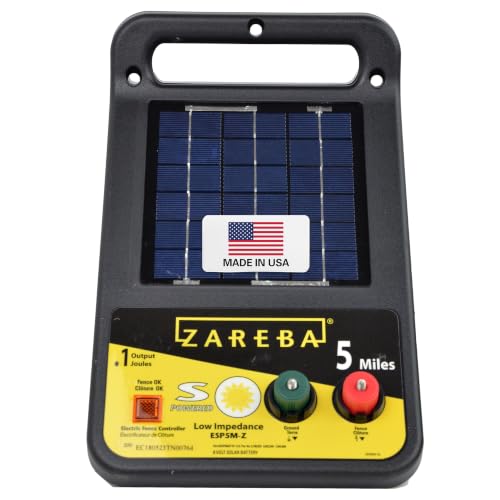
- Solar-powered and no AC outlet required
- Low-impedance output helps with weeds
- Mounts on T-posts, Y-posts, and round-wood posts
Best For: Remote goat pastures needing solar power
High-Power Farm Energizer
Electric Fence Charger 6.7 Joule AC Powered

- AC-powered unit rated for up to 100 miles
- 6.7 joules with 10.2 kV max output
- Indicator lights and separate terminals simplify setup
Best For: Large goat farms needing maximum fence coverage
LCD Monitor Fence Energizer
Ortis 12,000V 3 Joules Electric Fence Charger

- Backlit LCD shows voltage in real time
- 3 joules and up to 6.2-mile range
- Tool-free knobs speed up installation
Best For: Small goat pens needing easy monitoring
Portable Solar Boundary Charger
10 Miles Solar Powered Electric Fence Charger

- 0.18J solar output for goats and small livestock
- Portable all-in-one design with built-in battery
- Waterproof, snow-resistant, and easy to move
Best For: Portable goat fencing and temporary grazing boundaries
High-Power Dual-Source Energizer
5.5J Electric Fence Charger Energizer

- 5.5J storage energy with 4.5J output
- AC, battery, or solar-battery power options
- LCD display and fence-touch alarm
Best For: Larger goat fencing setups needing stronger output
24/7 Solar Livestock Guard
24-Hour Solar Electric Fence Charger
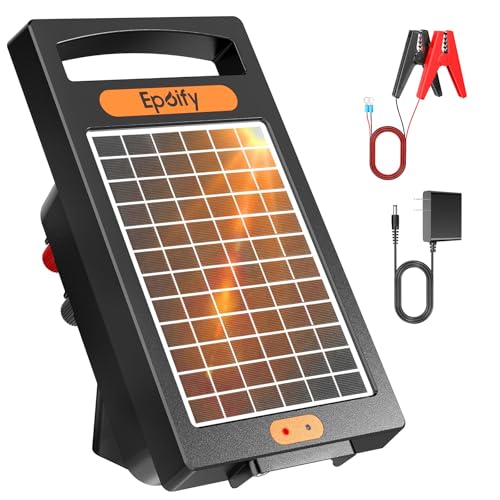
- 0.18J solar pulse with 10-mile coverage
- Built-in battery supports overnight operation
- Portable all-in-one design for easy installation
Best For: Continuous solar-powered goat fencing in small to medium pastures
Heavy-Duty AC Power Pick – Zareba 50 Mile AC-Powered Low Impedance Electric Fence Charger
If you need electric fence chargers for goats on a larger property, this AC-powered Zareba unit is built for long runs and tougher fencing setups. Its 2-joule output is rated for up to 50 miles in ideal conditions, and the low-impedance design helps it keep working when weeds start touching the line.
Best For: Goat owners with large acreage who want dependable plug-in power and strong weed performance.
Pros:
- 2-joule output rated for up to 50 miles in ideal conditions
- Low-impedance design maintains performance in heavy and light weeds
- Works with high tensile, polywire, and polytape fencing
- Rugged cabinet and UL-listed design for safer plug-in use
Cons:
- Requires access to standard electrical power
- May be more charger than needed for small goat paddocks
This is a strong fit for farmers who want a hard-working mains charger and expect fence pressure from vegetation or longer fence layouts. It is especially appealing if you want one unit that can support goats plus other livestock on the same system.
Solar Long-Line Guardian – Solar Electric Fence Charger LD02, 1.2J with Short Circuit Alarm
For electric fence chargers for goats where you want solar flexibility, this LD02 model combines 1.2J of stored energy with a stable 7–11kV pulse output. The listing also calls out 45-mile coverage, an 8W solar panel, and AC backup, which makes it a practical option for remote fencing setups.
Best For: Goat fences in off-grid or mixed-power locations that need solar with backup charging.
Pros:
- 1.2J stored energy with 7–11kV pulse output
- 8W solar panel plus AC backup for more charging flexibility
- Built-in short-circuit alarm to alert you to fence issues
- Listed 45-mile coverage for longer fence layouts
Cons:
- Solar performance depends on sunlight availability
- Heavier than some compact fence chargers
This charger stands out if you want a solar-based system that can still handle a longer fence line and give you quick fault alerts. It’s a useful fit for goat containment where convenience and backup power matter.
Compact Plug-In Contender – Zareba 10 Mile AC Powered Low Impedance Fence Charger, 0.5 Joule Output
If you’re comparing electric fence chargers for goats for a smaller setup, this Zareba AC model keeps the focus on practical containment. It delivers 0.5 joules and up to 10,500 volts, with a 10-mile ideal-condition rating and low-impedance design to help maintain performance when weeds show up.
Best For: Smaller goat paddocks or farm fences where a simpler plug-in charger is enough.
Pros:
- 0.5-joule output with up to 10,500 volts
- Rated for up to 10 miles in ideal conditions
- Low-impedance design helps with weed contact
- Indicator light shows fence status
Cons:
- Only rated for 1 mile in heavy weed conditions
- Requires nearby AC power
This is a straightforward choice if your goat fencing is modest in length and you want a reliable, made-in-the-USA plug-in unit. It offers the core features most owners need without moving into oversized charger territory.
Portable Solar Patrol – 20 Miles Solar Electric Fence Charger with Short Circuit Alarm, 0.32J Powered
For goat owners who want a compact solar option, this 0.32-joule electric fence charger is designed around portability and quick setup. The listing highlights a short-circuit alarm, 5700 to 10200 volts of output, and up to 14 days of runtime once fully charged, making it a convenient pick for temporary or remote fences.
Best For: Portable goat fencing where easy setup and solar runtime matter more than raw power.
Pros:
- Compact solar charger with a built-in short-circuit alarm
- 0.32-joule output and 5700 to 10200 volts
- Can run up to 14 days after a full charge
- Tempered-glass surface with waterproof and dustproof design
Cons:
- Lower output than higher-joule fence chargers
- Better suited to lighter-duty or shorter fence needs
This model makes sense when you want a lightweight, low-maintenance charger for movable fencing or a smaller goat area. It’s less about maximum fence power and more about convenience, portability, and alerting you to problems.
Solar Remote Pasture Charger – Zareba Solar Electric Fence Charger
If you need electric fence chargers for goats in a remote pasture, this solar unit is built for fence lines without easy access to AC power. It can energize up to 5 miles in ideal conditions, uses low-impedance output to help resist power loss from weeds, and stores enough energy to run for up to 2 weeks without sunlight.
Best For: Goat owners fencing remote areas who want a solar-powered charger with flexible mounting.
Pros:
- Solar-powered operation avoids the need for AC power access.
- Low-impedance design helps maintain performance around fence-line weeds.
- Built-in mounting bracket works with T-posts, Y-posts, and round-wood posts.
- Can run up to 2 weeks without sunlight in stored-energy mode.
Cons:
- 5-mile range is listed for ideal conditions, not every setup.
- 0.15 output joules is modest compared with larger AC-powered chargers.
- Solar charging depends on weather and sun exposure.
This is a practical choice if your goat fencing is far from power and you want a portable solar setup with straightforward mounting. It is designed for livestock containment, including goats, but works best when your fence layout and sunlight conditions are favorable.
High-Power Farm Energizer – Electric Fence Charger 6.7 Joule AC Powered
For larger goat enclosures, this AC-powered option is one of the strongest electric fence chargers for goats in this lineup. It is rated to power up to 100 miles of fencing, delivers 6.7 joules, and includes indicator lights plus separate ground and fence terminals for a more traditional farm setup.
Best For: Large farms or estates that need strong AC-powered fence coverage for goats and other livestock.
Pros:
- High output rating with up to 100 miles of fencing coverage.
- 6.7 joules and 10.2 kV max output support a powerful low-impedance setup.
- Indicator lights make operating status easy to monitor.
- Includes separate terminals for ground rod and fence wire connections.
Cons:
- Requires 110V AC power, so it is not for off-grid use.
- The product is not waterproof and needs rain protection outdoors.
- Larger output may be more than needed for small goat pens.
If your goat fencing spans a lot of ground, this charger offers serious range and a straightforward hardwired layout. It is best suited to users who want maximum coverage and have a protected location for the unit.
LCD Monitor Fence Energizer – Ortis 12,000V 3 Joules Electric Fence Charger
If you want electric fence chargers for goats with easy status monitoring, this Ortis unit stands out for its LCD display and pulse indicator. It delivers up to 12,000V and 3 joules for fences up to 6.2 miles, making it a solid fit for small farms, coops, and garden-adjacent goat areas.
Best For: Small goat setups that benefit from an LCD readout and simple troubleshooting.
Pros:
- Backlit LCD display shows voltage at a glance.
- Red LED flashes with each pulse, and stops flashing if a fault occurs.
- Tool-free terminal knobs make installation quick.
- Compatible with most soil types and useful for gardens, coops, and small farms.
Cons:
- 6.2-mile range is aimed more at small to mid-size layouts.
- Outdoor use may benefit from a waterproof cover.
- Not as powerful as the larger AC unit in this group.
This is a convenient option when you want a fence charger that is easy to read and easy to wire. For goats, it makes sense if your goal is practical animal control rather than maximum-distance coverage.
Portable Solar Boundary Charger – 10 Miles Solar Powered Electric Fence Charger
If you want electric fence chargers for goats that are easy to move and don’t depend on grid power, this solar unit is built for simple, portable containment. It delivers 0.18J output, supports up to 10 miles of fence line, and is designed to run day and night with built-in battery storage, making it a practical option for small grazing setups and temporary boundaries.
Best For: Portable goat fencing near the house, grazing areas, and remote spots where you want an all-in-one solar setup.
Pros:
- Lightweight, ultra-portable design is easy to move between fences.
- Solar-powered operation stores energy for nighttime use and claims year-round reliability.
- Upgraded larger solar panel helps collect more solar energy.
- Waterproof, snow-resistant, and anti-collision for outdoor use.
Cons:
- 0.18J output is better suited to smaller livestock setups than heavy-duty containment.
- Performance depends on sunlight and proper grounding.
- Best results are tied to maintaining the fence line and installation conditions.
Overall, this is a convenient pick when mobility matters more than raw power. For goat owners who need a solar charger that can be set up quickly and moved as needed, it offers a straightforward balance of portability, weather resistance, and fence coverage.
High-Power Dual-Source Energizer – 5.5J Electric Fence Charger Energizer
When you need electric fence chargers for goats with more punch, this 5.5J energizer is built for stronger containment and broader use across farm fencing. It offers up to 10 miles of coverage in no-weed conditions, supports AC, battery, or solar-panel-and-battery power, and includes an LCD display plus alarm function for easier monitoring.
Best For: Goats and other livestock in larger farm setups that need flexible power options and higher output.
Pros:
- 5.5J storage energy and 4.5J output provide a stronger energizing option.
- AC, battery, or solar-battery combinations support flexible installation.
- LCD display shows input voltage and battery level in real time.
- Alarm triggers when an animal touches the fence.
Cons:
- Best coverage is stated for 10 miles only in no-weed conditions.
- Requires correct power setup for the chosen installation scenario.
- Not a portable solar-only unit; setup may be more involved than simpler chargers.
This model makes sense if you want more output and monitoring features than a basic solar charger can offer. It’s a strong fit for goat fencing where flexibility, distance, and a more powerful energizer matter more than ultra-simple portability.
24/7 Solar Livestock Guard – 24-Hour Solar Electric Fence Charger
This solar option is aimed at buyers comparing electric fence chargers for goats who want round-the-clock operation with low maintenance. It delivers a 0.18J pulse, supports up to 10 miles of coverage, and uses built-in battery storage so the fence can stay energized overnight after charging during the day.
Best For: Small to medium goat pastures, rotational grazing, and remote fence lines that need continuous solar operation.
Pros:
- 24/7 continuous operation with daytime charging and nighttime protection.
- 0.18J output and 5700–10200V pulses for livestock control and predator deterrence.
- Portable all-in-one design is easy to move and install.
- Includes detailed grounding and setup guidance for proper installation.
Cons:
- Performance depends on sunlight, grounding, and vegetation management.
- Requires an initial battery charge before first use.
- Proper insulation and wire setup are important to avoid short-circuiting.
For goat owners who want a solar charger that stays simple after setup, this is a practical all-in-one choice. It is best treated as a dependable low-maintenance fence energizer for managed pasture conditions rather than a high-output heavy-duty unit.
How We Picked These Electric Fence Chargers for Goats
We focused on chargers that offer the right balance of output, range, and reliability for goat containment. For goats, consistent voltage matters as much as raw joule rating, so we prioritized low-impedance models, clear range claims, and designs suited to real-world pasture conditions.
We also considered power flexibility. Some buyers need plug-in AC units for dependable long-term use, while others need solar chargers for remote paddocks, temporary fencing, or off-grid setups.
Quick Comparison
In simple terms: AC-powered chargers are usually the best fit for fixed fencing and higher-output needs, while solar chargers work well when portability and installation flexibility matter more. Smaller pastures can often use lower-output units, but larger acreage or brushy fence lines may require a stronger energizer to maintain performance.
Key Buying Factors for Electric Fence Chargers for Goats
Fence Length and Terrain
Choose a charger rated for more than your actual fence length, especially if you have vegetation touching the wire. Grass, weeds, and moisture can drain output quickly.
Power Source
AC chargers are ideal if you have reliable grid access and want steady performance. Solar models are better for remote areas, backup protection, or mobile fencing, but they depend on battery capacity and sunlight exposure.
Joules and Voltage
Goats are curious and can be persistent, so a charger needs enough punch to discourage testing the fence. Higher joules generally help maintain effectiveness across longer runs, multiple strands, or challenging conditions.
Low-Impedance Design
Low-impedance Electric Fence Chargers for Goats are better at handling small amounts of fence load loss caused by weeds or minor shorts, which makes them more practical for pasture use.
Portability and Monitoring
If you move fencing often, look for compact solar units. Features like short-circuit alarms or LCD displays can make troubleshooting much easier and help you spot problems before containment is affected.
Who Should Buy Which Electric Fence Chargers for Goats?
If you have a small paddock or short fence line, a modest-output solar or AC charger may be enough. For medium to large goat properties, choose a stronger low-impedance unit with enough rated range to handle real conditions. Off-grid users should lean toward solar, while fixed farms with dependable power may prefer AC for simplicity and consistency.
If your fencing also needs to handle brush, uneven ground, or longer runs, it usually pays to choose more power than you think you need. That extra headroom helps keep goats contained day after day.