Choosing the right charger can make the difference between a fence that simply exists and one that consistently helps keep horses contained.
Below, we focus on the best options for different pasture sizes, power setups, and containment needs so you can shop with confidence.
Best 10 Electric Fence Chargers for Horses Picks for 2026
Large-Property Power
Zareba 50 Mile AC-Powered Low Impedance Charger

- 50-mile rating in ideal conditions
- Low-impedance design for weeds
- Works with high tensile, polywire, and polytape
Best For: Large horse properties needing plug-in coverage
Flexible Power Choice
FarmNix 12KV 2J Multi-Power Charger

- AC, battery, or solar-ready power options
- 12KV output with 2J energy
- LED status display and water-resistant build
Best For: Horse fences that need flexible power sources
Mid-Range Fence Control
Zareba 25 Mile AC Powered Charger

- 25-mile rating in ideal conditions
- Low-impedance design for weeds
- Supports high tensile, polywire, and polytape
Best For: Medium horse enclosures with plug-in power
Weatherproof Budget Pick
1.5J AC Fence Charger for Horses

- 1.5J pulses for livestock control
- Weatherproof outdoor enclosure
- Works with polywire, polytape, and steel wire
Best For: General horse and cattle fencing
High-Power Portable Pick
12KV DC AC Powered Electric Fence Charger

- 15-mile rating with 4 joules output
- AC, DC battery, and solar compatible
- Waterproof design for outdoor use
Best For: Horse owners needing a flexible charger for larger perimeters
Heavy-Duty Wide-Coverage Choice
Zareba 100 Mile AC Powered Electric Fence Charger
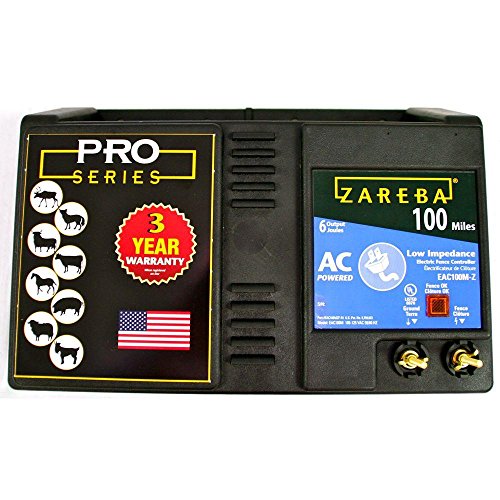
- 100-mile rating in ideal conditions
- 6.0 joules supports horses and other large animals
- Works with high tensile, polywire, and polytape
Best For: Large permanent horse fences powered by AC electricity
Off-Grid Daily-Use Pick
24-Hour Solar Electric Fence Charger
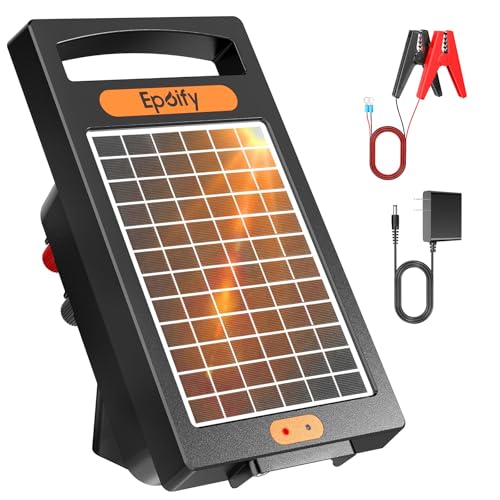
- Solar-powered with built-in battery
- Up to 10 miles of coverage
- Portable all-in-one design
Best For: Portable horse fencing and remote paddocks without grid power
Heavy-Duty 2J All-Purpose Energizer
15-Mile AC/DC Solar-Ready Charger

- 2-joule output covers up to 15 miles
- Runs on AC, 12V battery, or solar-ready setup
- Digital display and alarm add easy monitoring
Best For: Flexible horse and livestock fencing with off-grid options
Reliable AC Farm Charger
10-Mile Low-Impedance Energizer

- Up to 10 miles in ideal conditions
- Low-impedance design helps in weedier areas
- Works with high tensile, polywire, and polytape
Best For: AC-powered horse fencing with simple, dependable operation
Portable Solar Pasture Charger
5-Mile Low-Impedance Energizer
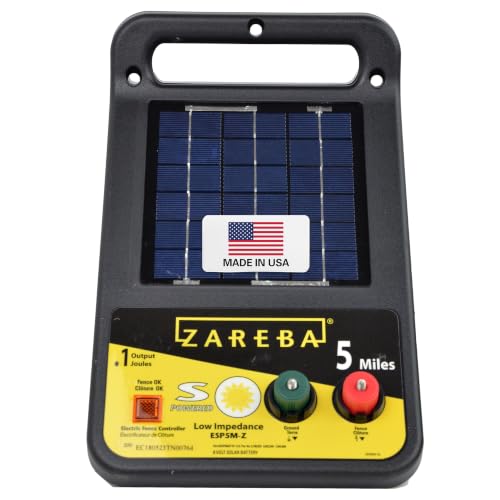
- Solar-powered with up to 5 miles coverage
- Runs up to 2 weeks without sunlight
- Mounts on T-posts, Y-posts, or round-wood posts
Best For: Remote horse pastures and portable solar fencing
Large-Property Power – Zareba 50 Mile AC-Powered Low Impedance Charger
If you’re comparing electric fence chargers for horses on a larger pasture, this Zareba AC-powered unit is built for broad coverage and dependable output. Its low-impedance design is meant to keep performance up even when weeds become a factor, and it works with high tensile wire, polywire, and polytape.
Best For: Horse owners with larger acreage who want a plug-in charger for multi-wire fence systems and weed-prone sections.
Pros:
- 50-mile rating in ideal conditions gives it strong reach for larger enclosures
- Low-impedance design helps maintain output through light and heavy weed growth
- Compatible with high tensile, polywire, and polytape fencing
- Rugged cabinet and UL-listed construction support outdoor use
Cons:
- AC-powered design requires access to a standard electrical outlet
- May be more charger than needed for small paddocks or short runs
For horse containment on a sizeable property, this model stands out for range and practical weed handling. It is a straightforward plug-in option when you want a durable charger that can support a wide fence layout.
Flexible Power Choice – FarmNix 12KV 2J Multi-Power Charger
When you need electric fence chargers for horses in places where power can be inconsistent, this FarmNix model offers AC, DC battery, and solar-ready flexibility. It also includes an LED display for checking fence status, and its 12KV, 2J output is positioned for livestock control on farms, ranches, and gardens.
Best For: Horse owners who want a versatile charger that can run on wall power now and adapt to battery or solar later.
Pros:
- Three power options: AC, DC battery, and solar
- 12KV output and 2J energy support livestock control
- LED display makes fence status easier to monitor
- Water-resistant construction is rated for cold and hot conditions
Cons:
- Battery and solar panel are sold separately
- Best for a 10-mile range rather than very large installations
This is a practical pick if you want a more adaptable charger without committing to one power source. The included accessories and simple setup also make it easier for first-time fence owners to get started.
Mid-Range Fence Control – Zareba 25 Mile AC Powered Charger
For horse owners who want a more moderate option among electric fence chargers for horses, this Zareba plug-in model offers AC power with low-impedance performance. It is designed for all common fence types and is rated to handle horses along with cattle, pigs, goats, and other livestock.
Best For: Medium-size horse enclosures where a dependable plug-in charger with weed tolerance is enough.
Pros:
- 25-mile rating in ideal conditions for mid-size fencing needs
- Low-impedance design performs better in light and heavy weeds
- Works with high tensile, polywire, and polytape systems
- Rugged cabinet and lightning protection support long-term use
Cons:
- Requires AC power and a nearby outlet
- Lower output and range than the larger Zareba 50-mile model
This charger makes sense when you want a balanced mix of reach, durability, and straightforward plug-in operation. It is a solid middle-ground choice for horse containment without moving into oversized farm-scale power.
Weatherproof Budget Pick – 1.5J AC Fence Charger for Horses
If you’re shopping electric fence chargers for horses and want a simple AC-powered unit, this 1.5J model focuses on basic livestock control with weather-resistant construction. The notes also highlight compatibility with polywire, polytape, and galvanized steel wire, which gives you useful setup flexibility for a farm fence.
Best For: Horse and cattle owners who want a straightforward plug-in charger for general farm use.
Pros:
- 1.5J pulses are designed for reliable livestock control
- Weatherproof enclosure helps protect the controller outdoors
- Compatible with polywire, polytape, and galvanized steel wire
- Runs on 110V-240V AC for simple installation
Cons:
- Range is not specified in the supplied notes
- Product details are more general than the other models listed here
This unit is a practical choice if you want a no-frills charger that fits common fencing materials and standard AC power. It is aimed more at general farm security than at detailed range planning.
High-Power Portable Pick – 12KV DC AC Powered Electric Fence Charger
If you need electric fence chargers for horses that can handle a wider pasture, this FarmNix unit is built around a 15-mile rating, 4 joules of output energy, and multiple power options. It is a practical pick for long-term perimeter use where you want flexibility between AC, DC battery, and solar setups.
Best For: Horse owners who want a versatile charger for larger paddocks, mixed power options, and outdoor use.
Pros:
- Rated for up to 15 miles with 4 joules and 12 kV output.
- Supports AC outlet, DC battery, and solar power use.
- Built-in on/off switch and LED display make operation easy to monitor.
- Fully waterproof for outdoor use in rain, snow, and temperatures from -20°C to +60°C.
Cons:
- Solar panel and battery are sold separately.
- The main unit is recommended for use in a protective box to extend service life.
- Best suited to straightforward containment rather than highly specialized fencing needs.
For a horse fence where reliability and installation flexibility matter, this charger offers a strong balance of output and convenience. Its weather-resistant build and broad power compatibility make it a useful option for owners who want a capable setup without being locked into one power source.
Heavy-Duty Wide-Coverage Choice – Zareba 100 Mile AC Powered Electric Fence Charger
Among electric fence chargers for horses, this Zareba model stands out for large-scale coverage and a rugged AC-powered design. It is rated for up to 100 miles in ideal conditions, and the 6.0 joule output is aimed at supporting larger livestock, including horses, on demanding fence lines.
Best For: Horse owners with large permanent fencing systems who want strong AC-powered output.
Pros:
- Up to 100 miles in ideal conditions and up to 12 miles in heavy weeds.
- 6.0 output joules for larger animals such as horses.
- Works with high tensile, polywire, and polytape fence types.
- Heavy-duty cabinet is designed to protect circuitry from weather extremes.
Cons:
- Requires AC power, so it is not a portable off-grid option.
- Performance drops as weeds increase.
- Designed for permanent-style systems more than quick temporary setups.
If your priority is maximum reach and dependable power from an AC source, this charger is the strongest fit in the group. It is especially useful for established horse fencing where coverage, durability, and compatibility with multiple fence materials matter most.
Off-Grid Daily-Use Pick – 24-Hour Solar Electric Fence Charger
If you want electric fence chargers for horses in a remote or temporary setup, this all-in-one solar energizer is designed for low-maintenance use. It provides continuous day-and-night operation, a built-in battery, and up to 10 miles of coverage for small to medium pasture fencing.
Best For: Horse owners who need a portable solar charger for remote paddocks or temporary fencing.
Pros:
- Solar-powered operation with built-in battery for 24/7 use.
- Up to 10 miles of coverage for pasture fencing.
- Portable, all-in-one design is easy to move and install.
- Useful for livestock containment and predator deterrence.
Cons:
- Requires proper grounding and good sunlight for best performance.
- Initial battery charging is required before first use.
- Works best in small to medium grazing areas rather than very large fences.
This is a smart choice when you need a fence charger that can travel with the setup and run without daily manual charging. For horse owners managing rotational grazing or off-grid boundary lines, its solar design and portable format make it especially practical.
Heavy-Duty 2J All-Purpose Energizer – 15-Mile AC/DC Solar-Ready Charger
If you need electric fence chargers for horses that can also handle mixed livestock and perimeter jobs, this 2-joule unit is built for flexibility. It runs on AC power, can connect to a 12V battery, and becomes solar-ready with an added panel, making it a practical choice for fixed fences or remote paddocks.
Best For: Horse owners who want one charger for pastures, temporary paddocks, and multi-species fencing.
Pros:
- 2-joule output with coverage up to 15 miles of fence line
- AC/DC operation plus solar-ready setup for off-grid use
- Digital display shows real-time voltage and battery status
- Audible alarm alerts you to voltage drops or tampering
Cons:
- Solar panel is sold separately
- Works best when matched to the right fence setup and conditions
This is the most versatile option in the group, especially if you want one charger that can move between barnyard use, rotational grazing, and wildlife control. The low-impedance design and weather-resistant housing make it a strong fit for everyday farm use.
Reliable AC Farm Charger – 10-Mile Low-Impedance Energizer
For a straightforward pick among electric fence chargers for horses, this AC-powered Zareba model focuses on reliable containment without extra complexity. It delivers up to 10 miles of coverage in ideal conditions and uses low-impedance design to help maintain performance when weeds contact the line.
Best For: Horse, cattle, pig, and goat containment on an AC-powered fence system.
Pros:
- Up to 10 miles of fence in ideal conditions
- Low-impedance design helps maintain output through weeds
- Compatible with high tensile, polywire, and polytape
- Heavy-duty cabinet and moisture-resistant internal components for year-round use
Cons:
- Requires AC power, so it is not suited to remote off-grid fences
- 5.5-joule? No, the supplied notes only specify 0.5 joule output, which is relatively modest for larger or heavily overgrown setups
This is a practical farm charger for users who already have mains power available and want a dependable, no-frills energizer. It is especially appealing if you need a compact American-made unit for everyday horse fencing.
Portable Solar Pasture Charger – 5-Mile Low-Impedance Energizer
If your horse fence is in a remote spot without AC access, this solar option keeps things simple. Among electric fence chargers for horses, it stands out for portable, solar-powered containment with low-impedance performance and a built-in mounting bracket for easier placement.
Best For: Remote horse pastures and temporary fencing where solar power is needed.
Pros:
- Solar-powered operation with up to 5 miles of fence coverage in ideal conditions
- Can run continuously for up to 2 weeks without sunlight
- Built-in mounting bracket works with T-posts, Y-posts, and round-wood posts
- Low-impedance design helps reduce power loss from weeds
Cons:
- Lower output than the larger AC/DC model, so it is better suited to smaller or simpler fences
- Coverage is limited to 5 miles in ideal conditions
This charger is a strong fit for portable horse fencing when you need solar convenience more than maximum power. Its long no-sunlight runtime and easy mounting options make it especially useful for outlying paddocks and rotational setups.
How We Picked the Best Electric Fence Chargers for Horses
We looked for Electric Fence Chargers for Horses that balance reliable output, appropriate coverage, and practical power options. Key considerations included joule rating, advertised range, low-impedance design, and whether the charger is AC, solar, or dual-powered.
Because horse fencing needs vary, we favored models that can handle real-world fence load better than headline range alone suggests.
Quick Comparison
Use advertised range as a starting point, not the only factor. Smaller paddocks and simple setups often do fine with modest-output chargers, while larger or vegetation-prone fences usually need more power reserve. AC units are best when you have access to outlet power, solar works well for remote areas with good sun, and dual-powered models offer the most flexibility.
Key Buying Factors for Electric Fence Chargers for Horses
Power Source
Choose AC for the most consistent performance, solar for off-grid convenience, or AC/DC and solar-compatible models if you want backup flexibility. For horses, consistency matters more than convenience alone.
Output and Fence Size
Higher joule output generally supports longer fence runs and heavier weed load, but too much power is not automatically better. Match the charger to the size of the enclosure and the amount of fence vegetation you expect.
Low-Impedance Design
Low-impedance chargers help maintain useful pulse strength even when some fence energy is lost to weeds, moisture, or imperfect connections. That makes them a smart choice for pasture fencing.
Safety and Containment Needs
Horse fencing should deliver a strong deterrent without encouraging risky contact. Look for dependable pulse spacing, clear indicator lights, and a setup that is properly grounded and maintained.
Who Should Buy Which Electric Fence Chargers for Horses?
Small paddocks and basic enclosures can usually get by with lower-output chargers, especially when the fence line is short and well maintained. Medium to large horse properties may benefit from stronger AC units or dual-powered chargers with more margin for real-world conditions.
If your fence is remote, a solar charger makes sense, but only if the location gets enough sunlight. If you want the most dependable everyday performance, AC-powered Electric Fence Chargers for Horses are usually the safest first choice.