Laser rangefinder binoculars let you glass and measure distance without switching between two devices. The right pair can simplify a hunt, but advertised ranging distances and ballistic features do not tell the whole story.
These 10 listings span straightforward 10×42 options and advanced ballistic models. Use the comparisons below to match the optics, ranging tools, and price to how you actually hunt.
Best 10 Laser Rangefinder Binoculars Picks for 2026
Best Weather Protection
BOSHIWEI ED 10x42 Rangefinder Binoculars

- IP67-rated, nitrogen-filled construction
- ED glass and fully multi-coated lenses
- Up to 2,624 yards on reflective surfaces
Best For: Wet-weather hunting and outdoor use
Best Measurement Options
VISTAGET 10x42 Rangefinder Binoculars

- 5–1,600-yard stated ranging span
- Scan, height, and angle modes
- Tripod socket and included CR2 battery
Best For: Varied field measurements
Best Long-Range Pick
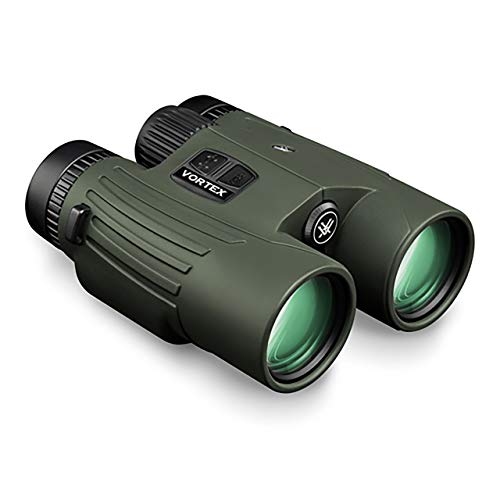
- 5,000-yard max reflective range
- HCD, LOS, Best, and Last modes
- Waterproof build and transferable VIP warranty
Best For: Angle-aware hunting and shooting
Best Deer-Range Clarity

- Up to 1,100 yards on deer
- Near/Hunt, Sport, and Scan modes
- Waterproof build and Forever Warranty
Best For: Deer hunting in mixed terrain
Best for Readout Visibility
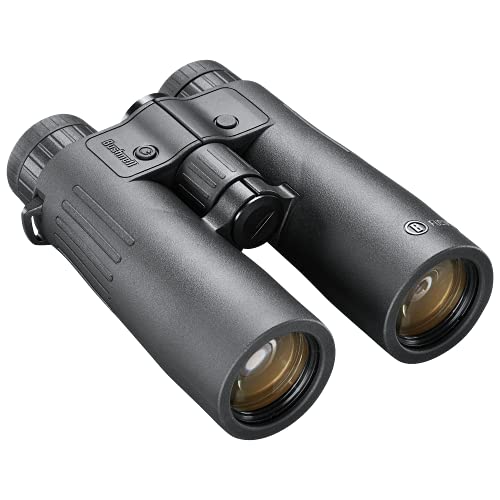
- Auto-adjusting black-to-red display
- ARC horizontal and line-of-sight distances
- IPX7 waterproof construction
Best For: Hunters who value a readable display and angle compensation
Best for Ballistic Features

- Up to 25 custom ballistic profiles
- Five target and five range modes
- Bluetooth BDX 2.0 connectivity
Best For: Hunters who use ballistic profiles and connected tools
Best for Simple Field Use
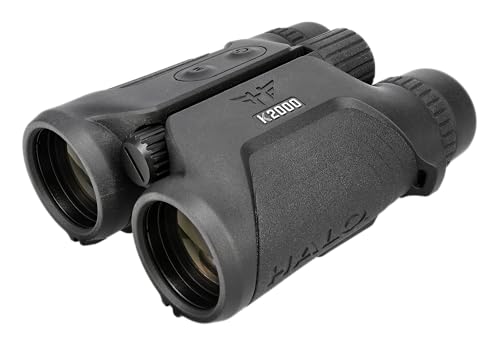
- Angle Intelligence horizontal distance
- Scan mode for repeated readings
- IPX7 waterproof/fogproof design
Best For: Hunters seeking core ranging features and weather protection
Versatile Hunting Pick

- 10x42 optics with anti-reflection coatings
- Up to 1,500 yards on non-reflective targets
- Fast scan mode and eight ballistic groups
Best For: Hunters wanting quick ranging and multiple shooting modes
Long-Range 12x Pick

- 12x50 HD optical system
- Up to 2,600 yards on game
- In-display GeoBallistics solutions
Best For: Long-range hunters prioritizing magnification and game-ranging reach
Lighter Talon Pick

- 10x42 format at a listed 2.6 pounds
- Up to 2,400 yards on game
- Onboard sensors and GeoBallistics
Best For: Hunters seeking Talon ballistic tools in the lighter listed model
Best Weather Protection – BOSHIWEI ED 10×42 Rangefinder Binoculars
These laser rangefinder binoculars pair 10×42 ED-glass optics with fast distance readings and an IP67-rated body. They suit buyers who want one instrument for viewing and ranging across varied outdoor conditions.
Best For: Hunters and outdoor users who prioritize waterproofing and a carry-ready setup.
Pros:
- Advertised 0.15-second readings, ±0.5 m accuracy, and up to 2,624 yards on reflective surfaces.
- ED glass, BAK4 prisms, and fully multi-coated lenses support clear viewing.
- IP67 protection, nitrogen filling, and an included binocular chest pack.
Cons:
- The maximum ranging distance is specified for reflective surfaces, not typical wildlife.
- Listed 14.9 mm eye relief may be worth checking if you wear glasses.
The combination of scan and angle-compensated modes adds flexibility, while the stated reflective-target limit should not be mistaken for a guaranteed hunting range.
Best Measurement Options – VISTAGET 10×42 Rangefinder Binoculars
For shoppers comparing laser rangefinder binoculars by measurement features, this VISTAGET 10×42 model offers a stated 5–1,600-yard range plus continuous scan, two-point height, and angle measurement modes.
Best For: Field users who want several measuring modes and a tripod socket.
Pros:
- Normal, continuous scan, two-point height, and angle measurement modes.
- Fully multi-coated optics and coated Bak-4 prisms, with claimed light transmission above 87%.
- Includes a CR2 battery and accessories; rated for approximately 10,000 measurements per battery.
Cons:
- Water-resistant rather than listed as waterproof.
- Its 1,600-yard stated maximum is shorter than several other models here.
The tripod socket and measurement modes make this a versatile field option. If prolonged heavy rain is likely, note its water-resistant specification.
Best Long-Range Pick – Vortex Fury HD 5000 10×42
The Vortex Fury HD 5000 stands out among these laser rangefinder binoculars for its listed 5,000-yard maximum reflective range and shooting-oriented controls. Its 10×42 optics and tripod-compatible design suit deliberate glassing as well as ranging.
Best For: Hunters, archers, and shooters who want angle-aware ranging and target-selection modes.
Pros:
- HCD angle-compensated and LOS modes address different shot setups.
- Best and Last target modes help select a ranging result around obstructions.
- HD optics, waterproof and fogproof construction, and an unlimited transferable VIP warranty.
Cons:
- At a listed 916 g, it is heavier than the VISTAGET model in this roundup.
- The 5,000-yard maximum applies to reflective targets; expect target-dependent results.
This is the more specialized choice when ranging controls matter as much as optical viewing. Check the conditions behind the maximum range before treating it as a wildlife-distance benchmark.
Best Deer-Range Clarity – Burris Signature HD LRF 10×42
These Burris laser rangefinder binoculars give buyers two useful range figures: up to 2,600 yards on reflective targets and up to 1,100 yards on deer. The 10×42 HD optics are intended to maintain clear views around dawn and dusk.
Best For: Deer hunters who want a stated animal-range figure and a mode for brushy sightlines.
Pros:
- Specified ranging limits for both reflective targets and deer.
- Near/Hunt mode is designed to ignore foreground brush; Scan mode updates readings as you pan.
- Angle-compensated horizontal distance, waterproof construction, and a transferable Forever Warranty.
Cons:
- At a listed 2.3 pounds, it may feel substantial on long walks.
- Its 2,600-yard maximum applies to reflective targets, not deer.
The separate deer-range specification makes this model easier to assess for hunting than one advertised only by reflective range. Its weight is the main carry consideration.
Best for Readout Visibility – Bushnell Fusion X 10×42
The Bushnell Fusion X is a practical pick among laser rangefinder binoculars if you want to keep watching through 10×42 optics while checking distance. Its ActivSync display switches between black and red to keep the readout visible against changing backgrounds.
Best For: Hunters who prioritize an easy-to-read display, angle-compensated distances, and waterproof construction.
Pros:
- ActivSync adjusts the reticle and readout for contrast.
- ARC provides both horizontal and line-of-sight distances.
- IPX7-rated construction withstands submersion in 1 meter of water for 30 minutes.
Cons:
- The listed measuring range is 700 yards, shorter than the SIG model’s stated reflective-target range.
- At 2.2 pounds, it is the heaviest of the models here with a listed weight.
Choose the Fusion X for its readable display and straightforward angle compensation; check whether its listed range covers the distances you expect to measure.
Best for Ballistic Features – SIG SAUER KILO6K HDX 10×42
For buyers who want more than a basic distance readout from laser rangefinder binoculars, the SIG SAUER KILO6K HDX combines 10×42 HDX optics with onboard environmental sensors and Applied Ballistics Ultralight. Its range and target modes give you several ways to tailor readings to the situation.
Best For: Hunters who plan to use ballistic profiles, multiple ranging modes, and connected devices or apps.
Pros:
- Supports up to 25 custom Applied Ballistics Ultralight profiles.
- Offers five target modes and five range modes, plus Hyperscan updates four times per second.
- Bluetooth BDX 2.0 supports ballistic data exchange and waypoint creation with compatible apps.
- Lumatic OLED display adjusts to ambient light.
Cons:
- Its many modes and connectivity features add setup decisions for users who only need simple ranging.
- The supplied specifications describe it as water resistant, without an IPX7 rating.
The KILO6K HDX makes the most sense if you will use its ballistic and connectivity tools; otherwise, its extensive feature set may be more than you need.
Best for Simple Field Use – Halo Optics K2000 10×42
The Halo Optics K2000 keeps the focus on core field features for shoppers comparing laser rangefinder binoculars: 10×42 viewing, Angle Intelligence for true horizontal distance, and a scan mode for repeated readings. Its no-slip design and magnesium chassis are suited to hands-on outdoor use.
Best For: Hunters who want angle-adjusted ranging, scan mode, and IPX7 protection without a long list of connected features.
Pros:
- Angle Intelligence calculates true horizontal distance for targets at different elevations.
- Scan mode supports repeated ranging.
- IPX7 waterproof/fogproof design and a durable magnesium chassis.
Cons:
- The supplied notes do not specify a maximum ranging distance.
- No ballistic profiles or app connectivity are listed.
The K2000 is a good fit when you want the essentials in a rugged 10×42 design. Confirm its ranging specifications if a particular maximum distance matters to you.
Versatile Hunting Pick – SIG SAUER Canyon 10×42
The SIG SAUER Canyon is a practical choice among laser rangefinder binoculars if you want 10×42 viewing, quick ranging, and several shooting modes in one device. Its Lightwave DSP engine is rated to 4,000 yards on reflective surfaces and 1,500 yards on non-reflective targets such as deer and elk.
Best For: Hunters and shooters who want fast ranging and onboard ballistic options without stepping up to the Talon HD 10K’s longer-range feature set.
Pros:
- Scan mode updates ranges four times per second, with RangeLock options for closest, furthest, or most recent results.
- Line-of-sight, angle-modified, ballistic-group, and archery modes cover different field situations.
- SpectraCoat anti-reflection coatings and a red OLED display support clear viewing and readable range data.
Cons:
- Its stated non-reflective target range is 1,500 yards, less than either Talon HD 10K model listed here.
- The supplied specifications list 15 mm of eye relief, worth checking if you wear glasses.
Choose the Canyon for its mix of hunting-oriented modes and rapid updates; compare the Talon models if longer stated game-ranging distances or integrated environmental sensing matter more.
For buyers prioritizing reach and magnification, these laser rangefinder binoculars pair a 12×50 HD optical system with stated ranging to 10,000 yards on reflective targets and 2,600 yards on game. The Talon HD 10K also puts GeoBallistics wind and drop solutions on its red OLED display.
Best For: Long-range hunters who want 12x viewing, the higher stated game-ranging distance of these three models, and in-display ballistic data.
Pros:
- Rated to 2,600 yards on game and 10,000 yards on reflective targets.
- Integrated GeoBallistics uses onboard environmental sensors to provide in-display wind and drop solutions.
- Multiple range and target modes, including ELR and Rain/Fog, offer flexibility in varied conditions.
- Waterproof, fogproof, and shockproof construction is backed by Vortex’s stated VIP warranty.
Cons:
- At a listed 2.9 pounds, it weighs more than the 10×42 Talon HD 10K.
- Its extensive ballistic controls may be more than a buyer needs for straightforward distance readings.
The 12×50 version makes the most sense when magnification and its stated 2,600-yard game range outweigh the portability advantage of the 10×42 model.
These 10×42 laser rangefinder binoculars retain the Talon HD 10K’s ballistic and environmental tools in a listed 2.6-pound configuration. Vortex rates them to 10,000 yards on reflective targets and 2,400 yards on game, with range, wind, and drop information shown on a customizable red OLED display.
Best For: Hunters who want the Talon HD 10K’s integrated ballistic tools in a lighter 10×42 option than the listed 12×50 model.
Pros:
- Integrated GeoBallistics supplies in-display wind and drop solutions using onboard environmental readings.
- Rated to 2,400 yards on game and 10,000 yards on reflective targets.
- HCD, LOS, and BAL modes combine with target settings such as First, Last, and Rain/Fog.
- Listed at 2.6 pounds, versus 2.9 pounds for the 12×50 version.
Cons:
- Its stated game-ranging limit is 200 yards shorter than the 12×50 Talon HD 10K’s.
- The 10x magnification is lower than the 12×50 model’s.
Pick this version if you favor the lighter listed weight and 10×42 format while still wanting the Talon’s in-display ballistic solutions and extensive ranging modes.
How We Picked These Laser Rangefinder Binoculars
We organized the selected listings around practical buying questions: optical format, stated ranging capability, available angle or ballistic features, and the likely trade-offs between simpler and more advanced models. A maximum-distance claim is not a promise of performance on a deer-sized target in poor light or bad weather. This guide is a comparison of listed features, not a hands-on test, so confirm current specifications, included accessories, and warranty terms before buying.
Quick Comparison: Which Type Fits Your Hunt?
For a straightforward range-and-glass setup, start with the Halo K2000, SIG SAUER Canyon, Bushnell Fusion X, or the two generically named 10×42 listings; compare their stated modes and display details rather than relying on yardage figures alone. The Bushnell Fusion X is worth a look if angle-compensated ranging is a priority. The Vortex Fury HD 5000, Burris SignatureHD LRF, and SIG SAUER KILO6K HDX are alternatives for buyers comparing established hunting optics and more extensive ranging features. If integrated ballistic tools are central to your decision, examine the Vortex Talon HD 10K Ballistic closely. It appears twice in the supplied list, so check whether those entries represent different offers or the same binocular before counting them as separate choices.
Key Buying Factors for Laser Rangefinder Binoculars
Optics and Handling
All the listed models use a 10×42 format or are described as 10×42. That is a versatile size for open country, but 10x magnification can be harder to hold steady than lower power. Compare field of view, eye relief if you wear glasses, focus feel, weight, and low-light clarity. Lens-coating and ED-glass claims can be useful, but they do not replace looking through a pair when possible.
Ranging and Ballistics
Check the stated range on reflective objects versus targets resembling game, plus minimum ranging distance, measurement speed, and how easily you can read the display against dark backgrounds. Angle-compensated distance can help on steep shots. Ballistic calculations may add value if you will set up and verify a rifle or arrow profile; otherwise, extra menus may be more complication than benefit. Always confirm a shot with your own equipment and field conditions.
Durability and Ownership
Look for clearly stated waterproofing, usable controls with gloves, a secure grip, and an understandable battery indicator. Check battery type and availability, warranty coverage for both electronics and optics, and whether a harness or case is included. Price differences are easier to justify when they improve features you will use regularly.
Who Should Buy Which Laser Rangefinder Binoculars?
Choose a simpler model if you mainly need reliable distances while scouting or hunting at moderate ranges. Prioritize display readability and angle compensation for hilly terrain. Consider a ballistic-focused option if you already know your load data and want ranging and shot-planning tools in one device. For long glassing sessions, prioritize comfortable optics and manageable weight over the largest advertised yardage number.