Choosing your first predator decoy can feel complicated, especially when products range from simple silhouette targets to remote-controlled motion systems. The right option should be realistic, easy to deploy, durable enough for repeated field use, and suited to the predators and terrain you hunt.
We compared these 10 selections by examining their movement, setup, portability, construction, control options, and intended use. This guide highlights the practical differences so you can spend less time sorting through features and more time choosing a decoy that fits your calling strategy.
Best 10 Predator Decoys for Beginners Picks for 2026
Best Compact Spinner

- Intermittent 360-degree spinning motion
- Adjustable speed control
- Compact design with stake holder
Best For: Beginners wanting a packable motion decoy for a Primos electronic caller
Best Ready-to-Use Option

- Built-in cottontail distress sound
- Intermittent spinning action
- Up to 20 hours on four AA batteries
Best For: Beginners wanting sound, motion, and remote-caller compatibility in one decoy
Best Caller-Matched Decoy
Western Rivers Mantis Pro Motion

- Ultra-quiet motor with speed control
- Syncs with Mantis caller sounds
- Includes fur and kite stick assemblies
Best For: Mantis 400 users adding coordinated motion to their calling setup
Best Full-Size Coyote Decoy
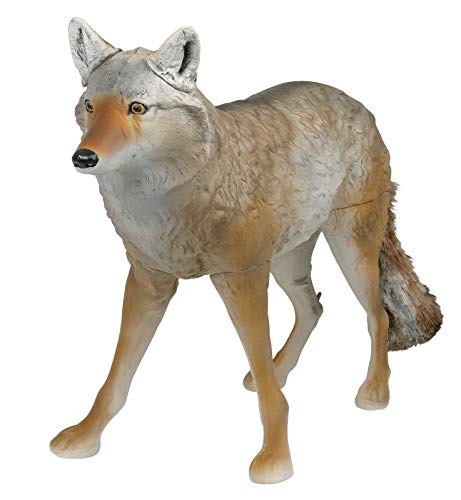
- Realistic full-size coyote body
- Removable legs ease storage
- Poseable ears and adjustable faux-fur tail
Best For: Beginners wanting a realistic, non-electronic coyote decoy or deterrent
Adjustable Universal Pick

- Two quick-change prey toppers
- Speed dial for adjustable motion
- Includes stake and universal connector cable
Best For: Beginners using a compatible caller
Simple Portable Lure

- Erratic motion attracts predators
- Adjustable 10- to 18-inch height
- Flat base and simple on-off operation
Best For: Beginners wanting a portable motion lure
Long-Run Motion and Sound

- Built-in MOJO Cottontail sound
- Up to 20 hours on four AA batteries
- Tripod legs and camera-thread mounting
Best For: Beginners wanting extended, versatile operation
Best Electronic Predator Decoy Combo
Icotec Furnado Caller and Decoy Combo

- 150-yard remote range
- 15 included predator sounds
- Up to 40 hours of battery life
Best For: Beginners seeking an all-in-one electronic caller and decoy setup
Best Moving 3D Decoy
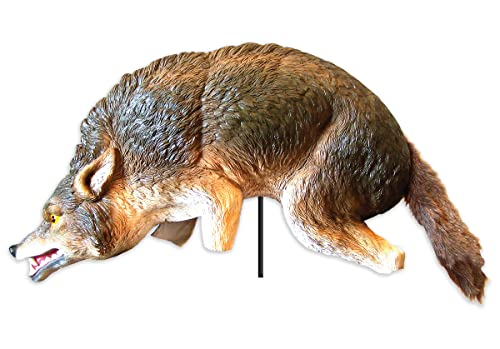
- Wind-powered moving fur tail
- 360-degree 3D design
- Covers areas up to one acre
Best For: Passive outdoor bird and nuisance-animal deterrence
Best Budget Flat Decoy

- Manual, battery-free design
- Lightweight cardboard construction
- Intended for birds and small pests
Best For: Simple visual deterrence around gardens and outdoor areas
Best Compact Spinner – Primos Sit-N-Spin
The Primos Sit-N-Spin is a practical starting point for hunters comparing predator decoys for beginners. Its fur-covered critter design uses intermittent 360-degree spinning motion and an adjustable speed control to create an attention-grabbing presentation.
Best For: Beginners who want a small, packable motion decoy that can be controlled with a Primos electronic caller.
Pros:
- Intermittent 360-degree spinning motion imitates an injured, panicking critter.
- Adjustable speed lets you choose a faster or slower presentation.
- Compact design includes an integrated ground-stake holder.
Cons:
- Control is intended for use with a Primos electronic caller.
- The package notes list a predator call and manual, but do not specify a battery runtime.
Its straightforward setup, adjustable movement, and compact size make the Sit-N-Spin an approachable option for learning how visual motion can complement predator calling.
Best Ready-to-Use Option – MOJO Outdoors Critter Decoy
The MOJO Outdoors Critter Decoy combines a fur-covered prey-style topper, intermittent spinning action, and a built-in cottontail distress sound. For shoppers evaluating predator decoys for beginners, its ready-to-use setup and long stated battery life make it an easy system to understand.
Best For: Beginners who want an electronic decoy with onboard sound, remote-caller compatibility, and up to 20 hours of operation.
Pros:
- Speaker is programmed with a cottontail distress sound.
- Intermittent spinning action adds visual movement.
- Runs on four AA batteries for up to 20 hours.
- Can be controlled from most remote callers through a 3.5 mm auxiliary port.
Cons:
- At 1.3 pounds, it is heavier than some compact decoy options listed here.
- Remote control depends on a compatible caller and auxiliary connection.
This is a versatile beginner-friendly choice when you want sound and movement in one unit, with the flexibility to use a remote caller when the setup supports it.
Best Caller-Matched Decoy – Western Rivers Mantis Pro Motion
The Western Rivers Mantis Pro Motion is designed as an add-on for the Mantis caller system. It gives beginners considering predator decoys for beginners a compact electronic option with quiet motor operation, speed control, and sound-synchronized movement.
Best For: Hunters who already use a Mantis 400 caller and want to add controlled motion to the calling spread.
Pros:
- High-speed ultra-quiet motor provides unpredictable motion.
- Speed control can sync motor movement with sounds from the Mantis call.
- Includes two stick assemblies: fur and kite.
- Compact design is powered by four AA batteries.
Cons:
- Designed to connect to and sync with the Mantis caller system.
- Four AA batteries are required but not included.
Its system-specific design is less flexible than a standalone decoy, but Mantis users get a tidy, purpose-built way to add quiet, coordinated motion.
Best Full-Size Coyote Decoy – Flambeau Lone Howler
The Flambeau Outdoors Lone Howler takes a different approach from electronic spinners, using a full-size hard-plastic coyote body with a faux-fur tail and poseable ears. It suits beginners comparing predator decoys for beginners who want a realistic, stationary presentation that can also serve as a nuisance-animal deterrent.
Best For: Hunters wanting a full-size coyote decoy for predator setups, or a visual deterrent for areas such as barns, gardens, orchards, and ponds.
Pros:
- Ultra-realistic body detail and mature-male coloration.
- Removable legs fit inside the body cavity for storage and transport.
- Faux-fur tail has a wire backbone for manipulation and wind movement.
- Poseable ears and a scent-pad spike support varied presentations.
Cons:
- Its full-size design is less compact than the electronic critter decoys.
- It does not provide motorized motion or built-in sound.
The Lone Howler is a good fit when realism and presence matter more than automation, though its larger body makes it better suited to hunters who can accommodate a full-size decoy.
Adjustable Universal Pick – Icotec PD200
For beginners comparing predator decoys for beginners, the Icotec PD200 is a practical choice when compatibility and straightforward speed control matter. It includes two quick-change prey toppers, an aluminum stake, and a cable for connecting to competitive-brand callers.
Best For: Beginners who already use a compatible caller and want adjustable motion in a compact setup.
Pros:
- Works with all brands of callers through the included connection cable.
- Two quick-change prey toppers provide setup flexibility.
- Speed dial and included 8-inch threaded aluminum stake simplify field use.
- Backed by a one-year warranty.
Cons:
- Requires a separate caller for full use.
- Its plastic construction may be less rugged than heavier materials.
The PD200 stands out as an adaptable entry-level decoy for hunters who want simple controls and broad caller compatibility without a complicated setup.
Simple Portable Lure – Lucky Duck Lil' Critter
Lucky Duck Lil' Critter Quiver Lure for Coyote, Bobcat, Predator Hunting Decoy
Check Price On AmazonThe Lucky Duck Lil’ Critter is a compact option for beginners shopping for predator decoys for beginners. Its erratic motion is designed to attract coyotes, foxes, and other predators, while the flat base and adjustable height make placement relatively simple across different terrain.
Best For: New predator hunters who prioritize portability, uncomplicated operation, and flexible placement.
Pros:
- Erratic motion is designed to entice coyotes, foxes, and other predators.
- Simple on-off button keeps operation beginner-friendly.
- Adjustable height ranges from 10 to 18 inches.
- Flat base rests on a variety of terrains.
Cons:
- Four AA batteries are required and are not included.
- It does not list built-in sound or remote-control features in the supplied details.
With its small footprint and basic controls, the Lil’ Critter is a sensible starting point for hunters who want motion without adding a complex control system.
Long-Run Motion and Sound – MOJO Outdoors Critter
Hunters evaluating predator decoys for beginners may appreciate the MOJO Outdoors Critter when longer operation and built-in sound are priorities. It combines a magnetically connected topper, built-in MOJO Cottontail sound, multiple mounting options, and up to 20 hours of runtime from four AA batteries.
Best For: Beginners who want a versatile decoy with built-in sound and extended battery life.
Pros:
- Combines realistic motion with built-in MOJO Cottontail sound.
- Runs for up to 20 hours on four AA batteries.
- Offers disappearing tripod legs and a 1/4-inch camera-thread peg for mounting flexibility.
- Durable ABS housing is designed for rugged outdoor use.
Cons:
- AA batteries are not included.
- A double-male cord is sold separately for connection to a remote caller.
- Its broader feature set may be more than beginners seeking a minimal setup need.
The MOJO Critter is a feature-rich beginner option for hunters who value sound, flexible positioning, and fewer battery changes during extended outings.
Best Electronic Predator Decoy Combo – Icotec Furnado Caller and Decoy Combo
For beginners comparing predator decoys for beginners, the Icotec Furnado combines an electronic caller with a fur-wrapped decoy and topper. Its simple remote and included sounds make it a practical starting point for coyote, fox, bobcat, or raccoon hunting.
Best For: Beginners who want a caller-and-decoy setup with flexible placement and multiple predator sounds.
Pros:
- 150-yard remote range helps keep the caller away from your position.
- Includes 15 professionally recorded sounds and an easy-to-use remote.
- Realistic-looking fur and furry decoy topper support visual attraction.
- Up to 40 hours of battery life and a two-year manufacturer warranty.
Cons:
- Requires four AA batteries and one A23 battery.
- More involved than a passive decoy because it includes electronic components.
The Furnado is the most complete beginner-oriented option here for hunters who want sound and motion-free visual appeal in one portable package. Its extended remote range and long battery life add practical flexibility in the field.
Best Moving 3D Decoy – Bird-X 3D Coyote Decoy
For beginners choosing predator decoys for beginners, the Bird-X 3D Coyote Decoy offers a straightforward, wind-powered design. Its lifelike shape, realistic markings, and moving fur tail are intended to deter geese, ducks, birds, and other small animals without sound or batteries.
Best For: Property owners who want a passive coyote replica for outdoor bird and nuisance-animal deterrence.
Pros:
- Three-dimensional design provides a 360-degree visual presence.
- Wind-powered fur tail adds movement without batteries.
- Includes a mounting stake for simple installation.
- Designed to cover areas up to one acre.
Cons:
- Effectiveness depends on wind and visual placement rather than electronic sounds.
- Should be moved periodically to help maintain its impact.
This is a simple entry point for beginners who need a visual deterrent rather than a hunting caller. The included stake and moving tail keep setup easy, while the need to reposition it adds a small maintenance task.
Best Budget Flat Decoy – Bird-X 2D Coyote Decoy Cutout
For shoppers evaluating predator decoys for beginners, the Bird-X 2D Coyote Decoy is a basic manual option. This gray cardboard cutout is intended to scare geese and deter small pests such as rodents and garden animals without batteries or electronic equipment.
Best For: Beginners who want a lightweight, simple visual deterrent for gardens, lawns, or outdoor areas.
Pros:
- Manual design requires no batteries or power source.
- Lightweight cardboard construction is easy to place.
- Targets birds and several small garden or household pests.
- Includes an instruction guide.
Cons:
- Flat cardboard construction is less dimensional than a 3D decoy.
- Does not provide movement or electronic sounds.
- Supplied notes do not specify a coverage area or warranty.
The 2D Coyote Decoy is best viewed as a straightforward, low-complexity visual deterrent. It may suit beginners who prioritize easy placement and a manual setup, but it lacks the movement and depth of the other decoy options.
How We Picked the Best Predator Decoys for Beginners
We evaluated each decoy around the concerns that matter most to new predator hunters: how quickly it sets up, how convincingly it attracts attention, how easily it packs for a walk-in stand, and how much maintenance it is likely to require. We also considered whether a decoy uses passive realism, a moving tail, spinning motion, or an electronic motor.
The selection includes standalone animal decoys, compact motion devices, electronic decoy-and-caller combinations, and visual deterrent-style models. Because hunting conditions vary, no single design is ideal for every beginner. A lightweight manual decoy may be best for occasional use, while a remote-controlled model can add movement without requiring you to leave cover.
Quick Comparison
| Decoy type | Best for | Main advantage | Potential trade-off |
|---|---|---|---|
| Static 3D or 2D decoy | Simple setups and visual realism | Easy to use and maintain | No active movement |
| Spinning or moving decoy | Adding attention-grabbing motion | Can increase visibility at distance | Requires batteries or a motor |
| Remote electronic decoy | Hunters who want control from the stand | Change motion or operation without exposing yourself | More components and setup considerations |
| Decoy-and-caller combo | Building a complete beginner kit | Combines visual and audio attraction | Typically costs more than a decoy alone |
Key Buying Factors for Predator Decoys for Beginners
Realism and Visibility
Choose a form and color pattern that match the species and setting you plan to hunt. A three-dimensional coyote or critter decoy can look more convincing from multiple angles, while a flat silhouette is lighter and easier to transport. Consider how well the decoy will stand out without appearing unnaturally bright or oversized.
Motion and Noise
Movement can draw a predator’s attention, but a loud motor or abrupt action may work against you. Look for adjustable speed, quiet operation, or a natural-looking moving tail when motion is a priority. Passive decoys are often the simplest choice for learning stand placement and calling fundamentals.
Setup, Range, and Power
Check the stake, legs, connector cables, remote range, and battery requirements before buying. A decoy that takes only a few minutes to assemble is more practical for beginners and changing stand locations. Electronic models are most useful when their controls remain dependable in the cold and from your normal shooting position.
Portability and Durability
Compact designs work well for public-land hunters or anyone carrying a caller, firearm, seat, and other gear. For frequent use, prioritize sturdy stakes, weather-resistant materials, secure joints, and replaceable parts. A slightly heavier decoy may be worthwhile if it stays stable in wind.
Who Should Buy Which Predator Decoys for Beginners?
Buy a static 3D decoy if you want the lowest-maintenance introduction to predator hunting. Choose a moving-tail or spinning model if you hunt open ground where motion can help attract attention. A remote electronic decoy is a better fit for hunters who want to reposition movement from cover, while a caller-and-decoy combo makes sense if you are assembling a complete setup in one purchase.
For most people shopping for Predator Decoys for Beginners, the best first choice is the model that matches their terrain, transport needs, and comfort with electronic features—not necessarily the most advanced option.