Public-land predator hunting rewards adaptable gear. The best decoy can add movement, create a convincing visual target, and help pull attention away from your position without making your setup cumbersome.
This roundup compares 10 predator decoys and decoy systems suited to changing stands, shared hunting areas, and uneven terrain. We focus on portability, realism, controls, setup speed, and practical field use.
Best 10 Predator Decoys for Public Land Picks for 2026
Compact Motion Decoy

- Intermittent 360-degree spinning action
- Adjustable movement speed
- Compact design with stake holder
Best For: Mobile predator hunters wanting adjustable motion
Long-Run Fuzzy Decoy

- Intermittent spinning prey action
- Built-in cottontail distress sound
- Up to 20 hours on four AA batteries
Best For: Hunters wanting sound and motion in one portable unit
Long-Range Caller Option

- 300-yard remote range
- 15 included professional sounds
- Decoy port for compatible accessories
Best For: Concealed setups built around remote calling
Run-and-Gun Concealment
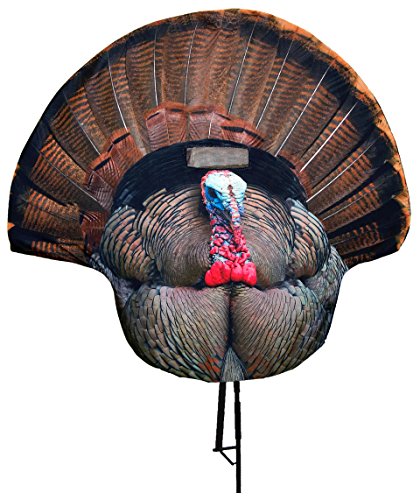
- Folds to about paper-plate size
- One-handed secure handle
- Handheld or stakeable design
Best For: Mobile turkey hunters needing a compact reaping decoy
Best Motion Upgrade
Mantis Pro Motion Predator Electronic Decoy

- Quiet motor with unpredictable movement
- Syncs with the Mantis 400 caller
- Compact design with two stick assemblies
Best For: Mantis 400 users adding synchronized motion
Best Full-Size Profile
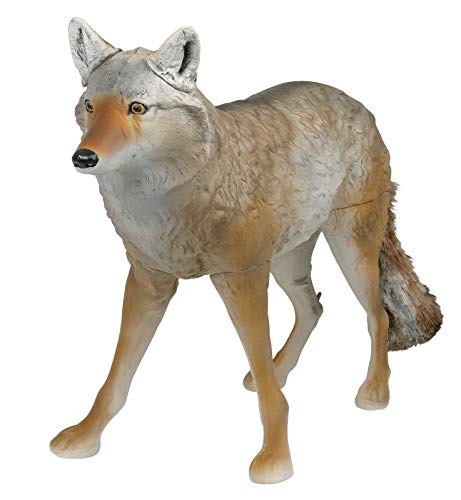
- Realistic mature-male coyote appearance
- Removable legs simplify storage
- Poseable ears and wire-backed tail
Best For: Hunters wanting a realistic non-electronic decoy
Best Compact Motion Lure
Lucky Duck Lil' Critter Quiver

- Erratic motion attracts multiple predators
- Height adjusts from 10 to 18 inches
- Flat base and compact portable design
Best For: Mobile hunters needing simple motion in a small package
Lightweight Field Profile

- 13.5 ounces with pole
- Folds to 9 by 10 inches
- 31-by-16-inch unfolded profile
Best For: Mobile hunters wanting a compact visual decoy
Remote Caller Combo

- 150-yard remote range
- 15 included predator sounds
- Up to 40 hours of battery life
Best For: Hunters wanting an integrated caller and decoy
Long-Range Calling System
MOJO Triple Threat E-Caller Decoy
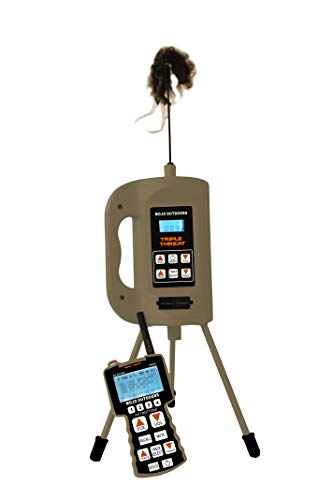
- 80 onboard sounds
- 300-plus-yard remote range
- Raised motion decoy and tripod
Best For: Feature-focused hunters needing long-range calling control
Compact Motion Decoy – Primos Sit-N-Spin
For hunters comparing predator decoys for public land, the Primos Sit-N-Spin offers eye-catching movement in a small, packable design. Its fur-covered critter body, white-tipped tails, and intermittent 360-degree spinning motion are intended to imitate an injured, panicking animal.
Best For: Run-and-gun hunters who want an adjustable-speed decoy that is easy to carry and can be controlled with a compatible Primos electronic caller.
Pros:
- Intermittent 360-degree spinning motion attracts attention.
- Adjustable speed lets you choose faster or slower movement.
- Compact design includes an integrated ground-stake holder.
- Realistic fur and flaring white-tipped tails add visual detail.
Cons:
- Caller-control capability is specifically tied to a Primos electronic caller.
- Its small design may provide less visual presence than larger decoys.
The Sit-N-Spin is a practical lightweight option when portability matters on public land. Its adjustable motion and compact storage make it particularly suited to mobile setups.
Long-Run Fuzzy Decoy – MOJO Outdoors Critter
The MOJO Outdoors Critter combines realistic prey-type fur with intermittent spinning action, making it a useful consideration among predator decoys for public land. It includes a programmed cottontail distress sound and runs on four AA batteries for up to 20 hours.
Best For: Hunters who want a ready-to-use decoy with its own sound capability, extended battery runtime, and remote-caller compatibility through a 3.5 mm auxiliary port.
Pros:
- Intermittent spinning action adds movement and visual interest.
- Built-in cottontail distress sound helps create a complete setup.
- Four AA batteries provide up to 20 hours of operation.
- Lightweight, portable design is convenient for field use.
Cons:
- At 1.3 pounds, it is heavier than some compact decoy-only options.
- Remote on/off control depends on a compatible caller with a 3.5 mm auxiliary port.
With sound, motion, and long stated battery life in one unit, the Critter suits hunters who prefer a self-contained decoy setup. Its portability still makes it practical for changing locations on public land.
Long-Range Caller Option – Icotec 300+ Predator Call
Although it is primarily a predator call rather than a standalone decoy, the Icotec 300+ can support a public-land setup where staying concealed matters. Its 300-yard remote range, backlit controls, 15 included sounds, and decoy port provide useful flexibility for remote calling and decoy integration.
Best For: Hunters who prioritize extended remote range and want to add a compatible decoy, such as the recommended AD400, to a concealed calling setup.
Pros:
- 300-yard remote range helps keep the hunter hidden.
- High-fidelity sound technology and 15 professional sounds are included.
- Can play multiple sounds simultaneously.
- Includes a decoy port and a remote power switch.
Cons:
- It is not a complete decoy by itself.
- Required four AA and one A23 batteries are not included.
- Decoy integration requires a compatible accessory, with the AD400 recommended.
The Icotec 300+ is best viewed as the control center for a remote predator setup rather than as a direct decoy alternative. Its range and decoy connectivity can be valuable when concealment is the priority.
Run-and-Gun Concealment – MONTANA DECOY Fanatic
The MONTANA DECOY Fanatic is designed for mobile hunting, folding to roughly the size of a paper plate for transport. While it is a turkey reaping decoy rather than a predator-specific model, its one-handed handle, see-through viewing window, and stakeable 2-D format may appeal to hunters considering versatile decoys for public land.
Best For: Run-and-gun turkey hunters who need a portable reaping decoy that can also be staked into the ground for traditional use.
Pros:
- Folds compactly for easier transport.
- Secure handle supports one-handed operation and gun control.
- See-through mesh window helps maintain concealment until the shot.
- Can be handheld or staked as a traditional gobbler decoy.
Cons:
- It is a turkey decoy, not a predator-specific decoy.
- The 2-D fabric-and-wire construction may offer less depth than a 3-D decoy.
The Fanatic is a specialized reaping tool rather than a predator option. Its value on public land comes from compact storage, mobile handling, and the ability to switch between handheld and staked use.
Best Motion Upgrade – Mantis Pro Motion Predator Electronic Decoy
For hunters comparing predator decoys for public land, the Western Rivers Mantis Pro is a compact electronic option designed to add movement to an existing Mantis calling setup. Its quiet motor, adjustable speed, and sound synchronization can provide visual activity without adding much bulk to your gear.
Best For: Hunters who already use a Mantis 400 caller and want a compact, synchronized motion decoy.
Pros:
- High-speed, ultra-quiet motor provides unpredictable motion.
- Motor speed can sync with sounds from the Mantis caller.
- Includes fur and kite stick assemblies for setup flexibility.
- Compact design measures about 7.3 inches long.
Cons:
- Designed to connect to the Mantis caller system, limiting standalone versatility.
- Requires four AA batteries, which are not included.
The Mantis Pro is a focused choice rather than a full-bodied decoy. Its strongest advantage is the coordinated movement and sound integration, making it particularly practical for hunters building around compatible Western Rivers equipment.
Best Full-Size Profile – Lone Howler Coyote Decoy
Among predator decoys for public land, the Flambeau Lone Howler stands out as a full-size visual decoy with a realistic coyote profile. Its removable legs make transport easier, while the poseable ears and movable tail let you adjust the presentation in the field.
Best For: Hunters who want a realistic, non-electronic coyote decoy with adjustable positioning and easy storage.
Pros:
- Ultra-realistic body detail and mature-male coloration.
- Removable legs store inside the decoy body for transport.
- Poseable ears support relaxed, alert, or curious presentations.
- Faux fur tail has a wire backbone for wind-driven motion.
Cons:
- Its full-size form is bulkier to carry than compact motion decoys.
- Provides wind-driven movement rather than motorized motion.
The Lone Howler favors realism and presence over electronics. It is a sensible public-land option when you want a substantial coyote silhouette, flexible posing, and no batteries to manage.
Best Compact Motion Lure – Lucky Duck Lil' Critter Quiver
Lucky Duck Lil' Critter Quiver Lure for Coyote, Bobcat, Predator Hunting Decoy
Check Price On AmazonFor hunters seeking portable predator decoys for public land, the Lucky Duck Lil’ Critter Quiver offers erratic movement in a small, easy-to-place package. Its flat base, adjustable height, and simple on-off operation make it convenient for varied terrain and quick setups.
Best For: Hunters who prioritize lightweight portability and simple motion for coyote, bobcat, and other predator setups.
Pros:
- Erratic motion is designed to attract coyotes, foxes, and other predators.
- Adjustable height ranges from 10 to 18 inches.
- Flat base rests on a variety of terrain.
- Compact design is easy to carry and operate.
Cons:
- Requires four AA batteries, which are not included.
- Offers a lure-style profile rather than a full-size animal silhouette.
The Lil’ Critter Quiver is a practical choice when pack space matters. It gives hunters straightforward, battery-powered motion without the bulk of a full-body decoy, though it is better suited to movement-focused setups than silhouette realism.
Lightweight Field Profile – Montana Decoy Sitting Coyote
For hunters comparing predator decoys for public land, the Montana Decoy Sitting Coyote Decoy offers a compact, low-weight profile that is easy to carry between stands. It unfolds to 31 by 16 inches and packs down to 9 by 10 inches with its pole.
Best For: Mobile hunters who prioritize a lightweight, packable visual decoy.
Pros:
- Weighs just 13.5 ounces with the pole.
- Folds to a compact 9 by 10 inches for transport.
- Provides a 31-by-16-inch unfolded sitting-coyote profile.
Cons:
- It is a visual decoy only, with no caller or electronic features listed.
- The supplied notes do not specify a remote, sounds, or motion system.
This is a straightforward choice when portability matters more than integrated calling features. Its compact folded size and low weight suit long walks or multiple stand locations on public land.
Remote Caller Combo – Icotec Furnado Predator Decoy
The Icotec Furnado combines an electronic caller and furry decoy topper for hunters choosing predator decoys for public land. Its 150-yard remote range allows the caller to be placed away from the hunter, while 15 included sounds support coyote, fox, bobcat, and raccoon setups.
Best For: Hunters seeking a compact caller-and-decoy combination with flexible placement.
Pros:
- 150-yard remote range supports separated caller placement.
- Includes 15 professionally recorded sounds.
- Fur wrap and furry decoy topper add a realistic-looking presentation.
- Offers up to 40 hours of battery life and includes a two-year manufacturer warranty.
Cons:
- Requires four AA batteries and one A23 battery.
- The remote range is shorter than the 300-plus-yard range listed for the MOJO system.
The Furnado is a practical all-in-one option for public-land stands where caller placement and a visible lure both matter. Its included sounds and extended battery claim reduce the need to assemble separate components.
Long-Range Calling System – MOJO Triple Threat E-Caller Decoy
For hunters evaluating predator decoys for public land, the MOJO Outdoors Triple Threat pairs a remote electronic caller with a moving critter decoy and tripod. It includes 80 onboard sounds, a 300-plus-yard remote range, and a raised setup designed to get the decoy and sound above some brush.
Best For: Hunters who want an advanced, long-range calling and motion-decoy system.
Pros:
- Includes 80 sounds with four hot buttons for favorite calls.
- Offers a 300-plus-yard remote range with a signal meter.
- Built-in critter decoy and tripod lift the decoy and sound above ground-level obstructions.
- Supports custom sounds on an SD card and includes an AC smart charger.
Cons:
- Operates on eight AA batteries, which are not included.
- At 1.51 kg package weight, it is less packable than a simple standalone decoy.
- The extensive calling features may be more than needed for hunters seeking only a visual decoy.
The Triple Threat is the most feature-rich option in this group. Its long remote range, large sound library, and raised motion decoy make it well suited to deliberate setups where calling control matters more than minimum carry weight.
How We Picked the Best Predator Decoys for Public Land
We evaluated these options around the challenges that define public-land hunting: longer walks, limited control over stand locations, changing wind and visibility, and the need to pack out every piece of equipment. The lineup includes spinning and motion decoys, full-size silhouettes, electronic caller combinations, and compact visual lures.
Our comparison emphasizes useful field features rather than novelty. We considered portability, setup time, motor noise, remote-control range, battery dependence, durability, realism, and how easily each decoy can be adjusted for coyotes, foxes, bobcats, or other predators. Because public-land conditions vary widely, no single design is ideal for every stand.
Quick Comparison
| Decoy type | Best for | Main advantage | Potential trade-off |
|---|---|---|---|
| Motion decoy | Adding visible activity | Can attract attention from a distance | May require batteries and make sound |
| Electronic decoy or caller combo | Remote operation and calling setups | Combines sound and movement | More components to carry |
| Silhouette or full-body decoy | Fast, quiet deployment | Lightweight and simple | Needs favorable positioning and wind |
| Reaping decoy | Close-range movement or concealment | Can support an aggressive approach | Requires specialized tactics and safety discipline |
Key Buying Factors for Predator Decoys for Public Land
Packability and Setup
Choose a design that fits your access method. Collapsible or lightweight decoys are easier for walk-in hunts, while integrated caller systems can reduce the need to carry separate gear. Check how quickly legs, poles, or motion components assemble when you are setting up in low light.
Noise and Motion
Motion can make a decoy more noticeable, but a loud motor may compromise a quiet stand. Look for smooth operation and consider whether the decoy offers useful movement without forcing you to remain close by. On pressured public land, subtle motion may be preferable to constant activity.
Remote Range and Power
Remote-controlled units are most useful when the control range exceeds the distance between your position and the decoy. Confirm battery requirements, expected runtime, and whether the remote is simple to operate with gloves. Keep spare batteries protected from cold and moisture.
Realism and Placement
Shape, posture, color, and scale should match the species and terrain you are hunting. Place the decoy where approaching animals can see it, while keeping it offset from your shooting lane and away from your exact position. Always follow local rules regarding electronic callers, decoys, and shooting direction.
Who Should Buy Which Predator Decoys for Public Land?
Buy a lightweight silhouette or simple full-body decoy if you hike into remote stands and value silent, fast deployment. Choose a motion decoy if visible activity is central to your calling strategy and you can manage battery use. An electronic decoy-and-caller combination makes sense for hunters who want remote operation and fewer separate decisions during a stand.
Reaping-style designs suit experienced hunters who understand close-approach tactics, safe firearm handling, and the added risks of moving while carrying a decoy. For most first-time buyers, a compact visual decoy or quiet motion model is the more versatile starting point. Before purchasing, verify your state and property regulations, then match the decoy to your terrain, target species, access distance, and preferred calling method.