The best compact bivy sacks provide a lightweight layer of protection when you need emergency warmth, weather resistance, or a simple backup shelter. The options in this roundup range from disposable thermal mylar bags to reusable waterproof bivy covers.
Use the comparison and buying advice below to match capacity, durability, insulation, and packed size to your emergency kit, hiking setup, or outdoor sleep system.
Best 10 Compact Bivy Sacks Picks for 2026
Best Emergency Pick
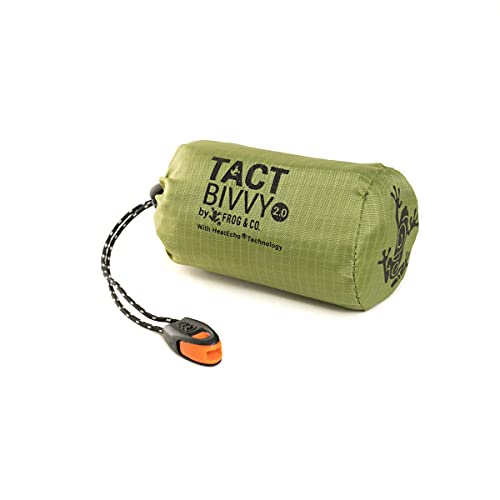
- 4.8-ounce ultra-compact design
- Waterproof and heat-reflective
- Includes whistle, carabiner, and tinder drawstring
Best For: Emergency kits, car storage, and bug-out bags
Best Rugged Shell
Genuine U.S. Military Modular Sleep System Bivy

- Breathable waterproof Gore-Tex shell
- Sealed seams and two-way zipper
- Designed for modular sleeping bags
Best For: Rugged camping and modular sleep systems
Best Two-Pack Value
Leberna Emergency Mylar Sleeping Bags

- Two lightweight emergency bags
- Each packs to 7 by 3 inches
- Reflective, waterproof, and windproof Mylar
Best For: Household, vehicle, and backup emergency kits
Best Lightweight Weather Shell

- Waterproof-breathable 70D nylon
- Packs to 9 by 5 inches
- Fits users up to 6 feet 6 inches
Best For: Minimalist backpacking and wet-weather camping
Best Ultralight Emergency Pick

- Under 4 ounces and about soda-can size
- Reflects up to 90% of body heat
- Includes whistle and tinder paracord
Best For: Ultralight emergency and hiking kits
Best Reusable Thermal Option
Sierra Madre Emergency Sleeping Bag

- Reflects 90% of body heat
- Reusable and includes stuff sack
- Waterproof, windproof, and 6 ounces
Best For: Repeated emergency, camping, and hiking use
Best Two-Pack Survival Kit

- Includes two reflective emergency bags
- Adds pouches, whistles, carabiners, and guide
- Designed for backpacks and vehicle kits
Best For: Family, household, and car emergency preparedness
Best Emergency Whistle Bivy
Life Bivy Thermal Survival Sleeping Bag

- Only 4.1 ounces
- Waterproof thermal design
- Built-in 120-decibel whistle
Best For: Solo emergency kits and lightweight backpacking
Best Multi-Pack Bivy Set
NovaMedic Thermal Mylar Emergency Sleeping Bags

- Five-bag preparedness pack
- 84-by-36-inch full-body coverage
- Compact, water- and wind-resistant design
Best For: Family, roadside, and group emergency kits
Best Three-Pack Bivy Value
Mylar Emergency Thermal Sleeping Bags

- Three emergency sleeping bags
- Reflective, lightweight Mylar
- Includes Velcro storage pouches
Best For: Shared go bags and budget preparedness
Best Emergency Pick – Survival Frog Tact Bivvy 2.0
For compact bivy sacks intended for emergency kits, the Survival Frog Tact Bivvy 2.0 emphasizes minimal packed size, weather resistance, and visibility. It weighs just 4.8 ounces, fits users up to 7 feet tall, and includes several preparedness-focused accessories.
Best For: Car kits, bug-out bags, and emergency shelter supplies where low weight and visibility matter.
Pros:
- Ultra-lightweight 4.8-ounce design packs into a small stuff sack.
- Waterproof, windproof, tear-resistant material with reinforced taped seams.
- Heat-reflective material, bright orange color, whistle, carabiner, and para-tinder drawstring add emergency utility.
Cons:
- Thin reflective-film construction is more emergency-oriented than a traditional fabric bivy.
- The supplied details list a comfort temperature rating rather than a specific temperature threshold.
This is a strong choice when packability and emergency features take priority over long-term comfort. Its reusable construction offers more versatility than a basic blanket-style shelter.
Best Rugged Shell – Genuine U.S. Military Modular Sleep System Bivy
Among compact bivy sacks, this U.S.-made military-style cover is designed as a durable outer shell for modular sleeping bags. Its breathable waterproof fabric, sealed seams, and two-way zipper make it suited to demanding field and camping use.
Best For: Campers, hikers, and preparedness users who want a protective shell compatible with sleeping bag systems.
Pros:
- Breathable waterproof Gore-Tex material helps limit condensation while blocking wet conditions.
- Heat-sealed seams improve water resistance and durability.
- Two-way side zipper enables adjustable ventilation from either end.
- Made in the USA and designed to fit patrol and cold-weather sleeping bags.
Cons:
- At 1.9 pounds, it is substantially heavier than ultralight emergency bivy options.
- Its 80-by-32-inch dimensions may offer less room than longer bivy models.
This cover makes the most sense for users building a modular sleep system rather than seeking the absolute lightest emergency shelter. It can also function as a standalone sleep cover in mild conditions.
Best Two-Pack Value – Leberna Emergency Mylar Sleeping Bags
If you need compact bivy sacks for multiple emergency kits, this two-pack provides highly portable coverage at a low carried weight. Each Mylar bag weighs 2.8 ounces, folds into a 7-by-3-inch package, and is designed to reflect body heat while blocking wind and water.
Best For: Shared household supplies, vehicle emergency kits, and lightweight hiking or camping backups.
Pros:
- Two sleeping bags provide convenient coverage for separate kits or users.
- Each bag is lightweight, reusable, waterproof, and windproof.
- Reflective Mylar is designed to retain or reflect 90% of body heat.
- Includes individual drawstring carry bags and 120-decibel whistles.
Cons:
- The very thin Mylar material is designed for compactness rather than robust fabric durability.
- The listed maximum height recommendation is 5.83 feet.
This two-pack is an efficient way to distribute emergency shelter across cars, backpacks, and home kits. Choose it when minimal storage space and quantity matter more than the durability of a heavier bivy shell.
Best Lightweight Weather Shell – AquaQuest Pharaoh Bivy Sack
The AquaQuest Pharaoh is one of the more versatile compact bivy sacks for protecting a sleeping bag and pad in wet weather. Its waterproof-breathable nylon shell weighs 1.1 pounds, packs into an integrated stuff sack, and accommodates users up to 6 feet 6 inches tall.
Best For: Minimalist backpacking and camping where a waterproof-breathable sleeping-bag shell is preferred over a full tent.
Pros:
- 10,000 mm waterproof rating and 10,000 gr/m²/day moisture-vapor transmission rating.
- Compact 9-by-5-inch packed size and 1.1-pound weight.
- Universal long fit, dual-side zipper access, and an elasticated drawstring hood.
- Integrated stuff sack and lifetime warranty add practical convenience.
Cons:
- It is an outer shell with no fill, so it does not replace an insulated sleeping bag.
- At 1.1 pounds, it is heavier than ultra-light emergency-film bivies.
For regular outdoor use, the Pharaoh offers a useful balance of packability, coverage, and weather protection. It is particularly compelling for minimalist trips where quick setup and a small packed footprint are priorities.
Best Ultralight Emergency Pick – SOL Emergency Bivvy
For hikers building a kit around compact bivy sacks, the SOL Emergency Bivvy is an especially lightweight option. It weighs less than 4 ounces, packs about as small as a soda can, and is designed to reflect body heat while shielding you from rain, wind, and snow.
Best For: Ultralight hiking kits, emergency preparedness, and backpackers who want integrated signaling and fire-starting features.
Pros:
- Reflects and traps up to 90% of body warmth.
- Waterproof, windproof, and tear-resistant construction.
- Includes a survival whistle and tinder paracord drawstring.
- Measures 36 by 84 inches while weighing less than 4 ounces.
Cons:
- Designed as emergency protection rather than a conventional insulated sleeping bag.
- The plastic-based material may offer fewer comfort features than fabric bivy systems.
The SOL stands out when packed size and weight matter most. Its rescue-oriented extras and weather protection make it a practical compact bivy sack for carrying as a backup, though it is best viewed as emergency shelter rather than a full-featured sleep system.
Best Reusable Thermal Option – Sierra Madre Emergency Sleeping Bag
The Sierra Madre Emergency Sleeping Bag is a reusable choice for shoppers comparing compact bivy sacks for camping, hiking, or emergency storage. It weighs 6 ounces, folds into a small package, and combines reflective heat retention with waterproof and windproof coverage.
Best For: Campers, hikers, and preparedness-minded buyers who want a lightweight emergency bag intended for repeated use.
Pros:
- Reflects 90% of body heat.
- Waterproof and windproof PET construction.
- Reusable design with a drawstring stuff sack.
- 84-by-36-inch dimensions provide full coverage for more body types.
Cons:
- At 6 ounces, it is heavier than the SOL option in this roundup.
- The open closure may provide less enclosure than a traditional sleeping bag.
Choose the Sierra Madre if repeat use and full coverage are higher priorities than achieving the absolute smallest pack weight. Its bright orange color may also be useful in emergency situations where visibility matters.
Best Two-Pack Survival Kit – Wallaby Mylar Sleeping Bags
For shared emergency supplies, the Wallaby set provides two compact bivy-style sleeping bags with storage pouches and signaling accessories. These compact bivy sacks are designed to fold small for backpacks, glove boxes, and car kits while reflecting heat and protecting against wet or windy conditions.
Best For: Couples, families, vehicle emergency kits, and buyers who want two emergency bags plus basic survival accessories.
Pros:
- Includes two thermal, waterproof, heat-reflective sleeping bags.
- Comes with nylon storage pouches, whistle pulls, and paracord with carabiners.
- Includes a pocket survival guide.
- Compact format suits backpacks, glove boxes, and emergency kits.
Cons:
- The supplied notes do not specify the individual packed dimensions of each bag.
- Mylar construction may be more focused on emergency protection than sleeping comfort.
- At 0.35 kg for the listed set, it is not the lightest single-bag option here.
The Wallaby package offers the broadest accessory bundle and the convenience of two bags in one purchase. It is a sensible choice for household or vehicle preparedness, especially when signaling and basic shelter improvisation are useful priorities.
Best Emergency Whistle Bivy – Life Bivy Thermal Survival Sleeping Bag
For hikers and emergency-preparedness users seeking compact bivy sacks, the Go Time Gear Life Bivy combines a lightweight polyethylene shell with a reflective Mylar liner. At 4.1 ounces, it is easy to add to a backpack, go bag, or emergency kit.
Best For: Solo emergency shelter, backpacking kits, and situations where an integrated signaling whistle is useful.
Pros:
- Very lightweight and compact at 4.1 ounces.
- Waterproof design helps protect against wind and rain.
- Integrated 120-decibel safety whistle supports emergency signaling.
- Can be used alone or as an additional sleeping-bag liner.
Cons:
- Designed primarily as emergency gear rather than a fully featured camping bivy.
- Single-piece packaging may be less suitable for group preparedness.
This is a practical choice when minimum pack weight and basic weather protection matter most. Its whistle and liner compatibility add useful versatility for emergency kits.
Best Multi-Pack Bivy Set – NovaMedic Thermal Mylar Emergency Sleeping Bags
The NovaMedic set is a practical option for shoppers who want compact bivy sacks in quantity. Its reflective Mylar construction is designed to retain body heat, while the 84-by-36-inch format provides full-body coverage for most adults.
Best For: Family emergency supplies, roadside kits, camping gear, and distributing lightweight shelters across multiple packs.
Pros:
- Pack-of-five format supports group preparedness.
- Reflective Mylar helps retain and reflect body heat.
- Water- and wind-resistant material provides a barrier against moisture and weather.
- Folds compactly for backpacks, glove compartments, and travel luggage.
Cons:
- At 16 ounces for the listed pack, it is heavier than a single emergency bivy.
- No warranty is specified.
- Emergency-grade construction is better suited to backup use than routine overnight camping.
Choose this set when quantity and easy storage are more important than having one ultralight shelter. The full-body dimensions and multi-pack format make it useful for broader preparedness planning.
Best Three-Pack Bivy Value – Mylar Emergency Thermal Sleeping Bags
These three-pack compact bivy sacks are built for emergency warmth during camping, hiking, storms, and power outages. Each 84-by-36-inch Mylar bag is lightweight, reflective, and supplied with a Velcro pouch for storage.
Best For: Budget-conscious preparedness, shared outdoor kits, and carrying backup shelters for adults or children.
Pros:
- Three-bag package provides multiple emergency shelters.
- Reflective Mylar construction is lightweight and designed for thermal protection.
- 84-by-36-inch size offers full-body coverage.
- Velcro pouches support organized storage and portability.
Cons:
- Emergency-focused design may be less durable for repeated camping use.
- Sealed seams and a bivy format offer limited sleeping-bag features.
This pack makes sense for building several go bags or keeping spare shelters in different locations. Its three-unit format balances portability with useful backup capacity.
How We Picked the Best Compact Bivy Sacks
We focused on the features that matter most when space and weight are limited: packed size, weather protection, thermal performance, materials, included accessories, and intended use. Emergency mylar bivies can be excellent for short-term warmth and preparedness kits, while fabric bivy covers are generally better suited to repeated outdoor use.
We also considered whether each product is designed as an emergency sleeping bag, a shell for a sleeping bag, or a minimalist shelter. Those categories are not interchangeable, so choose based on how you expect to use the bivy.
Quick Comparison
- Best for basic emergency kits: Lightweight mylar bivies and two-packs offer inexpensive, compact backup protection.
- Best for hiking backups: Models with whistles, tinder, paracord, or stuff sacks add useful functionality without much extra bulk.
- Best for repeated outdoor use: A purpose-built waterproof bivy cover with more durable fabric is usually the better investment.
- Best for sleeping-bag compatibility: Look for a roomy shell rather than a close-fitting emergency blanket design.
Key Buying Factors for Compact Bivy Sacks
Material and Weather Protection
Mylar and other reflective films help retain body heat and block wind, but they may tear more easily and are often intended for short-term use. Woven or coated fabrics typically provide better durability and water resistance. Check whether the bivy is genuinely waterproof or simply water resistant.
Size and Packed Weight
Confirm the unfolded dimensions before buying, especially if you plan to use the bivy over a sleeping bag. A sack that is too narrow can compress insulation and reduce comfort. For everyday carry, compare both listed weight and packed dimensions.
Breathability and Condensation
Fully waterproof materials can trap moisture from perspiration and breathing. If you will sleep in a bivy for more than an emergency overnight, ventilation and breathability become important. A breathable outer shell may be preferable to a sealed thermal bag.
Features and Reusability
Stuff sacks, carabiners, whistles, and fire-starting accessories can improve emergency readiness. Still, accessories should not outweigh the basics: reliable coverage, adequate dimensions, and a construction suited to your planned use.
Who Should Buy Which Compact Bivy Sacks?
Choose a simple thermal bivy for a vehicle emergency kit, home preparedness bin, festival backup, or occasional day hike. Choose a feature-packed emergency bivy if you want an all-in-one addition to a hiking or survival kit. Choose a durable waterproof bivy cover if you regularly camp in wet or windy conditions and need a protective shell for a sleeping bag.
Before storing your new bivy, inspect the packaging, verify the dimensions, and test how it packs with the rest of your gear. Keep disposable models sealed until needed, and replace damaged or brittle emergency bags rather than relying on them in severe weather.