Early-season predators can be cautious, pattern-focused, and quick to abandon a setup that looks unnatural. The right decoy adds visual interest, supports your calling strategy, and helps make a stand look more convincing without creating unnecessary bulk in your pack.
This roundup compares 10 predator decoys for early season, including motion decoys, coyote forms, rabbit-style options, and budget-friendly silhouettes. Use the guide below to match the decoy’s realism, movement, portability, and durability to your hunting conditions.
Best 10 Predator Decoys for Early Season Picks for 2026
Best Adjustable Spinner

- Adjustable speed and intermittent 360-degree motion
- Fur-covered critter with white-tipped tails
- Compact design with integrated stake holder
Best For: Portable, adjustable motion in a predator calling setup
Best Long-Runtime Critter

- Up to 20 hours on four AA batteries
- Intermittent spinning fur-style topper
- Built-in cottontail distress sound
Best For: Extended hunts requiring motion and integrated sound
Best Caller-Synced Option

- Syncs motion with Mantis caller sounds
- Quiet motor with speed control
- Includes fur and kite stick assemblies
Best For: Mantis 400 users wanting coordinated motion
Best Full-Size Visual Decoy

- Life-sized coyote profile with glass eyes
- Lightweight EVA body and two-piece stake
- Faux fur tail adds visual realism
Best For: Simple, stationary coyote presence in the field
Compact Photo Realism
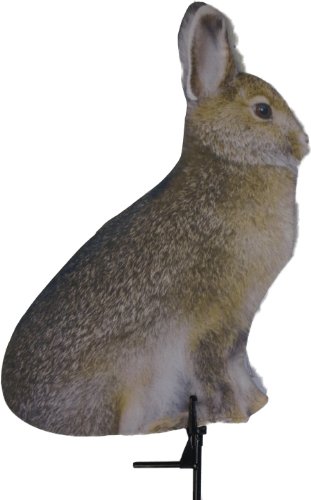
- Actual Plains Cottontail photo
- Folds to 10" x 5"
- Fast, quiet setup
Best For: Mobile hunters who want a lightweight visual rabbit decoy
Motion and Sound Option

- Moving topper and cottontail sound
- Multiple mounting options
- Up to 20 hours on four AA batteries
Best For: Hunters wanting an active decoy for extended outings
Full-Size Territorial Presentation
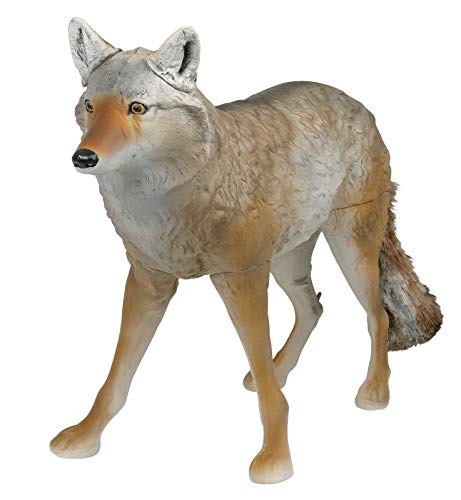
- Mature-male coyote appearance
- Removable legs for storage
- Poseable ears and moving tail
Best For: Hunters wanting a durable, full-size coyote presentation
Wind-Activated Coverage
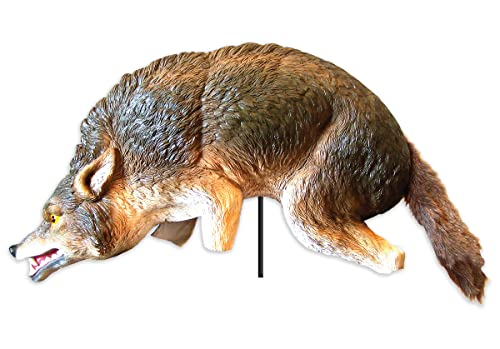
- 3D design with wind-moving fur tail
- Coverage listed up to 1 acre
- Includes mounting stake for quick setup
Best For: Large open properties needing a humane visual deterrent
Three-Pose Visibility
3-Pack Coyote Silhouette Decoys

- Three different coyote poses
- Large silhouettes for open areas
- Metal stakes included
Best For: Covering lawns, patios, gardens, and broad outdoor spaces
Flexible Yard Placement

- Two poses for varied visual deterrence
- Six metal stakes included
- Lightweight and easy to reposition
Best For: Yards, ponds, gardens, docks, and smaller outdoor areas
Best Adjustable Spinner – Primos Sit-N-Spin
For hunters comparing predator decoys for early season, the Primos Sit-N-Spin offers portable motion and adjustable speed in a compact package. Its fur-covered, spinning critter is designed to imitate an injured animal and add visual activity to a calling setup.
Best For: Hunters who want adjustable, intermittent movement from a packable decoy.
Pros:
- Adjustable speed lets you run the motion fast or slow.
- Intermittent 360-degree spinning movement creates visual interest.
- Realistic fur and white-tipped tails provide a visible prey-style profile.
- Compact design includes an integrated ground-stake holder.
Cons:
- Electronic-caller control depends on using a compatible Primos caller.
- The supplied information does not specify battery runtime or included batteries.
The Sit-N-Spin is a practical choice when adjustable motion and easy transport matter more than a full-sized decoy profile. Its compact format should fit well in mobile early-season setups.
Best Long-Runtime Critter – MOJO Outdoors Fuzzy Critter
The MOJO Outdoors Critter is a strong option among predator decoys for early season when you want realistic movement and extended field use. It combines a fur-style topper, intermittent spinning action, and a built-in cottontail distress sound.
Best For: Hunters seeking a ready-to-use decoy with long battery life and caller compatibility.
Pros:
- Runs on four AA batteries for up to 20 hours.
- Intermittent spinning action helps attract and hold predator attention.
- Built-in speaker is programmed with a cottontail distress sound.
- 3.5 mm auxiliary port allows on/off control from most remote callers.
Cons:
- At 1.3 pounds, it is heavier than some compact decoy options.
- Remote control compatibility may vary by caller.
Choose this MOJO model if all-day runtime and integrated sound are priorities. Its combination of motion, fur-like realism, and remote-caller support makes it versatile for mobile or extended stands.
Best Caller-Synced Option – Western Rivers Mantis Pro
For predator decoys for early season built around the Western Rivers Mantis system, the Mantis Pro adds synchronized motion to the calling spread. Its compact assembly features a quiet motor, speed control, and two stick assemblies for different decoy presentations.
Best For: Mantis 400 users who want synchronized, unpredictable motion in a compact setup.
Pros:
- Designed to connect to the Mantis caller attachment area.
- High-speed ultra-quiet motor helps limit mechanical noise.
- Motor speed can sync with sounds from the Mantis call.
- Includes fur and kite stick assemblies.
Cons:
- Designed specifically for the Mantis 400 system rather than universal use.
- Four AA batteries are required and not included.
- Its compatibility benefits are limited if you do not use a Mantis caller.
This is the most system-specific option in the group, but it is compelling for existing Mantis users. The quiet motor and sound-linked speed control add coordinated movement without a bulky field accessory.
Best Full-Size Visual Decoy – Lucky Duck Yote Coyote Decoy
The Lucky Duck Yote Coyote takes a different approach to predator decoys for early season with a life-sized, stationary coyote profile. Its glass eyes, faux fur tail, lightweight EVA construction, and included stake make it useful when a realistic visual presence is the priority.
Best For: Hunters wanting a life-sized coyote silhouette with simple, stake-based setup.
Pros:
- Life-sized design provides a substantial visual profile.
- Glass eyes and faux fur tail add realistic details.
- Lightweight EVA rubber construction supports easy transport.
- Includes a two-piece stake for straightforward setup.
Cons:
- Unlike the other listed options, the supplied notes do not describe motorized movement.
- Its 2-pound weight and larger profile may take more space in a pack.
- The decoy is also marketed for bird deterrence, so it is less specialized than a small prey-style spinner.
The Yote is a good fit when visual realism and a coyote-shaped profile matter most. It trades electronic motion for simple deployment and a larger presence that can serve multiple outdoor applications.
Compact Photo Realism – Miss Hoptober
For hunters looking for predator decoys for early season, the Montana Decoy Miss Hoptober offers a lightweight, quiet setup with a realistic Plains Cottontail image. Its folding design makes it convenient to carry into changing early-season setups.
Best For: Mobile predator hunters who prioritize fast, quiet deployment and easy transport.
Pros:
- Uses an actual Plains Cottontail photo for realistic visual detail.
- Folds to 10″ x 5″ for compact transport.
- Sets up quickly and quietly.
- Can be paired with a Garden Kojo decoy for added realism.
Cons:
- Provides a visual rabbit presentation without the built-in motion and sound of an electronic decoy.
- Its lightweight folded format may offer less physical presence than a full-size molded decoy.
The Miss Hoptober is a practical choice when concealment, portability, and low-noise setup matter most. It is especially suited to run-and-gun hunts where gear needs to pack small.
Motion and Sound Option – MOJO OutdoorsCritter
The MOJO OutdoorsCritter combines a lifelike moving topper with built-in cottontail sound, making it a feature-rich option among predator decoys for early season. Multiple mounting choices also help position it on uneven ground or integrate it with a remote caller.
Best For: Hunters seeking active motion, sound, and flexible placement for extended predator hunts.
Pros:
- Magnetically connected topper provides realistic motion.
- Built-in MOJO Cottontail sound adds an audible attraction.
- Includes disappearing tripod legs and a 1/4-inch camera-thread peg.
- Runs up to 20 hours on four AA batteries, which are not included.
Cons:
- Requires four AA batteries, sold separately.
- A double-male cord is sold separately for connection to compatible remote callers.
- Its electronic components add more setup considerations than a simple visual decoy.
Choose the OutdoorsCritter if you want a decoy that can create both movement and sound and remain useful through long outings. Its ABS housing and mounting options support use in rugged, uneven outdoor locations.
Full-Size Territorial Presentation – Lone Howler Coyote Decoy
The Flambeau Outdoors Lone Howler presents a mature-male coyote profile for hunters who want a full-size option among predator decoys for early season. Removable legs make the hard-plastic decoy easier to transport and store between setups.
Best For: Predator hunters who want a realistic coyote presentation with poseable features and durable construction.
Pros:
- Ultra-realistic body detail and mature-male coyote coloration.
- Removable legs fit inside the body cavity for transport or storage.
- Faux fur tail includes a wire backbone for wind-driven movement.
- Poseable ears and a rear-leg scent-pad spike support varied presentations.
Cons:
- Its full assembled size of 30 x 9 x 25 inches is less compact than a folding decoy.
- Hard-plastic construction and removable leg hardware require more setup than a simple silhouette.
- The product is designed as a coyote decoy, so it is less versatile as prey-themed visual cover.
The Lone Howler stands out when a substantial coyote form and adjustable presentation are more important than minimum pack size. It can also serve as a nuisance-animal deterrent around barns, gardens, orchards, and ponds.
Wind-Activated Coverage – Bird-X 3D Coyote Decoy
For early season predator decoys, the Bird-X 3D Coyote Decoy stands out with a three-dimensional design and a fur tail that moves in the wind. It is intended to discourage geese, ducks, birds, and other small animals without relying on sound or chemicals.
Best For: Large outdoor areas such as parks, golf courses, sports fields, corporate grounds, and airport properties.
Pros:
- Three-dimensional coyote replica offers visibility from multiple directions.
- Wind-powered moving tail adds motion for a more lifelike appearance.
- Designed to cover up to 1 acre and includes a mounting stake.
- Lightweight rubber construction is easy to reposition.
Cons:
- Effectiveness depends on periodically moving the decoy.
- Its primary design is for deterring nuisance animals rather than serving as a hunting concealment decoy.
Choose this model when broad, 360-degree visibility and wind-driven movement matter more than portability alone. Its simple stake-in setup makes it practical for open properties that need a humane visual deterrent.
Three-Pose Visibility – 3-Pack Coyote Silhouette Decoys
Among predator decoys for early season use, this three-pack provides multiple coyote poses for rotating around a lawn, garden, or other open space. The large silhouettes are designed to remain visible while metal stakes simplify installation.
Best For: Buyers who want several large decoys to distribute across lawns, patios, gardens, or other broad areas.
Pros:
- Includes three decoys in different poses for varied placement.
- Large silhouettes measure about 27.56 by 24.8 inches at maximum size.
- Metal stands support straightforward outdoor installation.
- Corrugated plastic and hollow-core construction are lightweight and durable.
Cons:
- Plastic may reflect light slightly in outdoor conditions.
- Flat silhouettes do not provide the 360-degree appearance of a three-dimensional decoy.
- Regular repositioning may be needed to maintain the visual effect.
This set makes sense when coverage and placement flexibility are priorities. Having three different poses allows you to spread the decoys out or change their positions as conditions and animal behavior change.
Flexible Yard Placement – 2-Pack Coyote Decoys
This two-pack is a practical option for early season predator decoys when you want lightweight silhouettes that can be moved often. The standing and crouching poses, along with six included metal stakes, support flexible placement around ponds, lawns, gardens, and other outdoor areas.
Best For: Smaller properties, pond edges, docks, patios, farms, orchards, and yards where repositioning is convenient.
Pros:
- Includes two different poses for varied visual coverage.
- Six 15.7-inch metal stakes provide multiple support points.
- Lightweight plastic-board construction is easy to move.
- Suitable for discouraging geese, birds, ducks, rabbits, and small animals.
Cons:
- Two-dimensional printed designs may look less lifelike than a 3D decoy.
- Results can vary by location and animal habits.
- Requires regular movement for better results.
Consider this set if you value easy relocation over a larger multi-decoy package. Its compact two-pose format and extra stakes make it convenient for changing placement around water features, garden beds, and residential outdoor spaces.
How We Picked the Best Predator Decoys for Early Season
We focused on the factors that matter most during early-season predator stands: believable appearance, useful movement, setup speed, portability, and field durability. The selection includes compact electronic decoys, spinning or motion-driven designs, full-size coyote forms, rabbit-style prey decoys, and two-dimensional silhouettes. That range matters because early-season hunting may involve anything from short walk-in setups to property edges where a larger, more visible decoy is practical.
We also considered whether each design is better suited to calling predators, deterring nuisance wildlife, or serving both purposes. Products with motors or moving tails can attract attention from a distance, while static decoys generally offer simpler operation, quieter transport, and fewer parts to fail.
Quick Comparison
| Decoy type | Best use | Main advantage |
|---|---|---|
| Electronic motion | Calling stands and open terrain | Movement and visibility |
| Rabbit or prey form | Pairing with distress calls | Creates a believable hunting scene |
| Coyote form | Territorial setups and deterrence | Predator recognition and presence |
| 2D silhouette | Budget or fixed-position use | Lightweight, compact, and affordable |
Key Buying Factors for Predator Decoys for Early Season
Movement and Noise
Motion can draw a predator’s eyes toward the calling position, especially in open fields. Look for quiet motors, stable bases, and movement that remains natural rather than overly repetitive. If you hunt close to cover or expect calm conditions, a silent static decoy may be the better choice.
Realism and Scale
Choose a prey decoy when your setup emphasizes distress or feeding behavior. A coyote decoy is more appropriate for territorial responses, visual intimidation, or nuisance-animal control. Realistic proportions, natural coloring, and believable posture are more useful than excessive detail that adds weight.
Portability and Setup
Early-season stands often require longer walks through vegetation. Check packed dimensions, removable legs, included stakes, and battery requirements before buying. A compact decoy that takes seconds to deploy is often used more consistently than a larger model that is difficult to carry.
Durability and Weather Resistance
Decoys may face dew, dust, wind, and repeated stake removal. Favor sturdy materials, secure connections, and bases that resist tipping. Electronic models should be protected from moisture and transported with batteries removed when stored.
Who Should Buy Which Predator Decoys for Early Season?
Choose an electronic motion decoy if you hunt open ground and want movement to complement calling. A rabbit-style model suits hunters building a prey-in-distress presentation, while a full-size coyote decoy is a stronger fit for territorial setups or wildlife deterrence. Pick a 2D coyote silhouette if low weight, quick deployment, and price are top priorities. For frequent travel, prioritize compact storage and removable components; for fixed blinds or property protection, visibility and stability may matter more than packability.