The best wireless indoor motion detectors can alert you to movement, trigger smart-home routines, monitor entrances, or help caregivers respond quickly without running cables through your home.
Our roundup includes hub-based smart sensors, standalone alarms, entry chimes, and caregiver-focused systems. Use the buying guide below to match detection range, connectivity, sound, and monitoring features to your space.
Best 10 Wireless Indoor Motion Detectors Picks for 2026
Best Hub-Based Pick

- Up to 2-year CR2450 battery life
- 120° detection up to 23 feet
- Requires Tapo H100 hub
Best For: Tapo smart-home users
Best Long-Range Wireless

- Radar detection helps reduce false alarms
- LoRa range up to 2,034 feet in open air
- Supports motion and no-motion alerts
Best For: Extended-range YoLink installations
Best Standalone Alarm
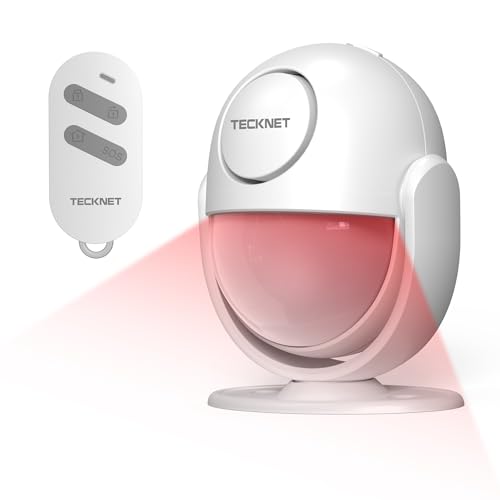
- 125dB siren and flashing strobe
- 328-foot open-area remote range
- No Wi-Fi or app required
Best For: Local indoor and vehicle alerts
Best Zigbee Pick

- Three-year CR2477 battery life
- Zigbee 3.0 compatibility
- Supports local automations and alerts
Best For: Zigbee smart-home users seeking long battery life
Best Caregiver Alert
EverNary Wireless Motion Pager

- Motion sensor with plug-in receiver
- 58 ringtones and five volume levels
- Sound and flashing LED alerts
Best For: Caregiver and room-movement monitoring
Best Overall Entry Alert
AMHEY Wireless Motion Sensor Door Chime

- 32 chimes and five volume levels
- 500-foot receiver range
- Expandable to 20 sensors
Best For: Customizable home or business entry alerts
Best Multi-Sensor Value
BESTOONE Indoor Motion Sensor Alarm

- Four detectors and two alarms
- 38 chimes with silent LED mode
- 300-foot wireless range
Best For: Monitoring multiple indoor locations
Best for Caregiving
EverNary Bed and Fall Prevention Alarm

- Two sensors with one plug-in pager
- 58 ringtones and five volume levels
- 500-foot open-area signal range
Best For: Caregiver movement and entry monitoring
Best Hub-Based Pick – Tapo T100 Motion Sensor
The Tapo T100 is a practical choice for shoppers comparing wireless indoor motion detectors within the Tapo smart-home ecosystem. It offers adjustable sensitivity, a 120-degree field of view, detection up to 23 feet, and low-power Sub-1G communication for extended battery life.
Best For: Tapo users who want dependable motion-triggered notifications and smart-home automations.
Pros:
- Up to two years of battery life from one included CR2450 battery under stated usage.
- Adjustable detection distance from 3 to 7 meters and a 120-degree viewing angle.
- Compact adhesive or magnetic mounting supports flexible indoor placement.
- Can trigger Tapo lighting and other compatible smart devices through Smart Actions.
Cons:
- Requires a Tapo H100 hub and a secured 2.4 GHz Wi-Fi network.
- Remote notifications and smart actions depend on the Tapo ecosystem.
The T100 is a strong ecosystem-focused option when you already use Tapo products or plan to build around them. The required hub adds cost, but it also supports multiple sensors and responsive automations.
Best Long-Range Wireless – YoLink Radar Motion Sensor RT
The YoLink Indoor Radar Motion Sensor RT is designed for shoppers seeking wireless indoor motion detectors with long-distance hub communication. Its radar sensing, adjustable settings, and LoRa connection can support more flexible monitoring across larger or obstructed spaces.
Best For: YoLink users who need configurable motion and no-motion alerts across extended indoor areas.
Pros:
- Radar technology is designed to provide precise detection with fewer false alarms.
- Communicates with a compatible YoLink hub up to 2,034 feet in open air.
- Offers adjustable sensitivity, alert hold, alarm suppression, and no-motion detection.
- Included AA batteries can provide up to 24 months of operation.
Cons:
- Requires a YoLink Hub or SpeakerHub for app connectivity and remote alerts.
- Actual wireless range varies with walls, obstacles, and placement.
This sensor stands out for its combination of radar detection and long-range LoRa communication. It is most useful when you want advanced alert behavior, but the separate hub requirement should be included in the budget.
Best Traditional Security Sensor – Honeywell 5800PIR
The Honeywell 5800PIR is a straightforward option among wireless indoor motion detectors for compatible residential or commercial security systems. Its battery-powered design, wall-mount format, and stated 12-meter maximum range suit conventional security installations.
Best For: Honeywell security-system users seeking a traditional wireless PIR motion detector.
Pros:
- Provides a stated maximum detection range of 12 meters.
- Designed for residential and commercial security applications.
- Wall-mount installation and battery operation support common security setups.
Cons:
- The supplied notes do not specify smart-app notifications or automation features.
- Compatibility with an existing security system should be confirmed before purchase.
- The listed battery-life detail appears unusually brief, so expected runtime should be verified.
The 5800PIR makes the most sense as a replacement or expansion sensor within a compatible Honeywell setup. It is less feature-rich on paper than newer smart sensors, but its conventional security focus may be preferable for established systems.
Best Standalone Alarm – TECKNET 125dB Motion Sensor
The TECKNET motion sensor alarm is a practical standalone choice for shoppers comparing wireless indoor motion detectors without Wi-Fi or an app. It combines PIR sensing with a loud siren, strobe light, remote control, and flexible battery or USB-C power.
Best For: Homes, garages, shops, hallways, storage rooms, and vehicles needing a self-contained audible alert.
Pros:
- 125dB maximum siren with a flashing strobe for prominent alerts.
- Offers Alarm Mode and Doorbell Chime Mode with three volume levels.
- Included remote works up to 328 feet in open areas for arming and mode changes.
- Can run on three AAA batteries or USB-C continuous power.
Cons:
- USB-C powers the alarm but does not recharge the batteries.
- It does not provide Wi-Fi or app-based notifications.
- Detection distance varies with installation height, angle, and environment.
The TECKNET is a strong fit when immediate local sound and light alerts matter more than connected monitoring. Its portable installation options and remote control add convenience, while the lack of app connectivity limits off-site awareness.
Best Zigbee Pick – SONOFF SNZB-03P
The SONOFF SNZB-03P is a compact choice for shoppers comparing wireless indoor motion detectors for Zigbee-based home automation. It can detect motion quickly, trigger lights or security actions, and uses a CR2477 battery rated for more than three years. A compatible Zigbee hub is required.
Best For: Zigbee smart-home users who want long battery life and local automations.
Pros:
- Up to three years of battery life with the included CR2477 battery.
- Supports Zigbee 3.0 hubs and local scenes that can continue working during a Wi-Fi outage.
- Can trigger lights, cameras, alarms, and app notifications.
- Motion-triggered lighting can switch off after as little as five seconds.
Cons:
- Requires a compatible Zigbee hub.
- Listed maximum detection range is 19.7 feet.
This detector makes the most sense when you already use, or plan to build, a Zigbee ecosystem. Its long battery rating and local-scene support are useful for routine automation and basic home security.
Best No-Hub Option – COTINSE WiFi Motion Sensor
The COTINSE WiFi Motion Sensor is a flexible option among wireless indoor motion detectors because it connects directly to 2.4GHz Wi-Fi without a separate hub. It offers app alerts through Smart Life or Tuya and can run wirelessly on two AA batteries or continuously from a 5V USB connection.
Best For: Users who want direct Wi-Fi setup, app notifications, and flexible power options.
Pros:
- No hub is required; it connects directly to 2.4GHz Wi-Fi.
- Supports battery operation or 5V USB power for continuous monitoring.
- Provides Smart Life or Tuya app alerts and automation triggers.
- Offers a 128-degree detection angle, up to 26 feet of range, and a rotating base.
Cons:
- It does not support Home Assistant.
- Requires a 2.4GHz Wi-Fi connection for setup and operation.
Choose this model if avoiding a dedicated gateway is a priority. Its USB option suits fixed locations, while battery power keeps installation flexible; compatibility should be checked before relying on Alexa, Google, or SmartThings automations.
Best Caregiver Alert – EverNary Wireless Motion Pager
The EverNary Wireless Motion Pager is designed for room monitoring rather than smart-home automation. This set pairs an indoor motion sensor with a plug-in receiver to alert a caregiver when movement is detected, making it a practical alternative to wireless indoor motion detectors that rely on smartphone apps.
Best For: Caregiver monitoring, entry alerts, and movement notifications in homes with older adults or children.
Pros:
- Includes one motion sensor and one plug-in pager receiver.
- Provides sound and flashing LED alerts when motion is detected.
- Offers 58 ringtones and five volume levels up to 110dB.
- Transmits up to 260 feet in open areas, with multiple transmitter and receiver pairing options.
Cons:
- The motion sensor’s detection range is limited to 16.4 feet with a 110-degree angle.
- Performance through walls or doors is listed at 10 to 40 meters.
- It is a standalone pager system rather than an app-connected smart-home sensor.
This is a better fit for audible or visual on-site notifications than remote smartphone alerts. Test the detection area before permanent installation, especially in bedrooms, hallways, or rooms divided by doors.
Best Overall Entry Alert – AMHEY Wireless Motion Sensor Door Chime
For shoppers comparing wireless indoor motion detectors, the AMHEY DW520+P827 combines a 500-foot receiver range with flexible chime and alarm settings. Its compact wall-mounted sensor is designed for doorways, stores, garages, mailboxes, and indoor monitoring.
Best For: Homes and small businesses needing a customizable entry alert with long wireless range.
Pros:
- Offers 32 chimes, five volume levels, silent mode, and a visual LED alert.
- Detects movement within approximately 16–26 feet across a 110° area.
- Supports expansion with up to 20 sensors and unlimited receivers.
- Includes the receiver, sensor, mounting hardware, manual, and two AAA batteries.
Cons:
- The package includes only one sensor and one receiver.
- The maximum detection distance is shorter than the receiver’s wireless transmission range.
This is a versatile choice when you want one detector now but may expand coverage later. The combination of adjustable alerts and a 500-foot open-area transmission range makes it practical for entry monitoring across separated rooms or work areas.
Best Multi-Sensor Value – BESTOONE Indoor Motion Sensor Alarm
The BESTOONE MSA-42 stands out among wireless indoor motion detectors by including four motion detectors and two alarm receivers. With a 300-foot wireless transmission range, multiple chimes, and a silent LED-only mode, it can provide alerts from several locations around a home.
Best For: Buyers who want several monitored zones and two receivers in one package.
Pros:
- Includes four motion detectors, two alarms, and four sets of mounting screws.
- Provides about 20 feet of infrared detection and up to 300 feet of wireless transmission.
- Offers 38 ringtones, three volume levels, silent mode, and LED alerts.
- Can be used for entry, garage, driveway, child or elderly care, and wildlife warnings.
Cons:
- AAA batteries are required but are not included.
- The detectors are not waterproof and should be protected from rain.
- Placement near wind or obstructions may contribute to false alarms or reduced performance.
Choose this kit if coverage across multiple indoor points matters more than having the longest transmission range. Careful placement away from wind and obstructions is important for more reliable detection.
Best for Caregiving – EverNary Bed and Fall Prevention Alarm
Designed with movement monitoring in mind, the EverNary IR07-NWX02D is one of the more specialized wireless indoor motion detectors in this roundup. It includes two sensors and a plug-in pager for notifying caregivers when movement is detected near a room, doorway, mailbox, garage, or driveway.
Best For: Caregivers monitoring elderly adults, dementia patients, children, or movement near an entry point.
Pros:
- Includes two motion sensors and one plug-in pager.
- Detects movement within 16.4 feet across a 110° field and transmits up to 500 feet in open areas.
- Provides 58 ringtones, five volume levels up to 110 dB, and a flashing LED indicator.
- Each receiver and transmitter can pair with up to 20 devices for expanded coverage.
Cons:
- The sensors are not waterproof without an added protective cover.
- The listed detection range is shorter than the wireless transmission range.
- The package requires four AAA batteries, although the notes indicate batteries are included for the sensor use.
This kit is a strong fit when the main goal is remote movement awareness rather than a conventional doorbell. Its visual and audible alerts give caregivers flexibility, while the pairing capacity allows coverage to grow as needs change.
How We Picked the Best Wireless Indoor Motion Detectors
We evaluated these Wireless Indoor Motion Detectors by looking at the features that matter most in everyday use: detection coverage, wireless range, power requirements, alert options, setup complexity, and compatibility with existing security or smart-home systems. We also considered whether each device is designed for automation, basic intrusion alerts, entry notification, or caregiver monitoring.
Because these products serve different purposes, there is no single best option for every household. A Zigbee or hub-based sensor may be ideal for automations, while a standalone alarm or receiver-based system can be easier for bedrooms, hallways, and assisted-living applications.
Quick Comparison
- Smart-home automation: Choose a Tapo, YoLink, SONOFF, or app-connected sensor if you want alerts, routines, or integration with other devices.
- Standalone security: A loud alarm with a remote or receiver can work without a complex smart-home setup.
- Entry notification: Motion chimes are useful for businesses, front doors, offices, and rooms where you need an audible arrival alert.
- Caregiver monitoring: Pager-based systems with plug-in receivers are better suited to bedrooms, bedsides, fall-prevention routines, and family caregivers.
Key Buying Factors for Wireless Indoor Motion Detectors
Connectivity and Compatibility
Check whether the detector requires a dedicated hub, Zigbee bridge, Wi-Fi network, or no network at all. Hub-based models generally offer better automation potential, but standalone systems are often faster to install. Confirm compatibility before buying, especially if you already use a particular smart-home platform.
Detection Area and Placement
Review the stated range, viewing angle, and mounting options. Place the sensor where people naturally pass, avoiding direct sunlight, heaters, vents, and moving objects that can cause false alarms. Radar and PIR technologies may behave differently around pets, furniture, and room dividers.
Alerts, Sound, and Response
Decide whether you need phone notifications, a siren, a door chime, a remote control, or a dedicated pager. App alerts are convenient when you are away, while loud receivers and plug-in alarms are more practical when someone must respond immediately inside the home.
Battery Life and Maintenance
Long battery life reduces upkeep, but actual runtime depends on detection frequency, wireless protocol, and temperature. Look for low-battery notifications where available, and test the detector regularly after installation.
Who Should Buy Which Wireless Indoor Motion Detectors?
Smart-home users should prioritize hub or app-compatible sensors that can trigger lights, cameras, notifications, and other routines. Security-focused buyers may prefer a loud standalone alarm or remote-controlled system for simple, immediate deterrence. Businesses and homeowners monitoring entrances should look for an audible chime with suitable volume and range. Caregivers should choose a receiver or pager system that is easy to hear, simple to reset, and appropriate for the monitored person’s room and daily routine.