Indoor motion detectors can give caregivers earlier notice when a senior gets out of bed, enters an unsafe area, or needs assistance. The right system can support safer routines without requiring constant in-person monitoring.
We compared sensor coverage, alert methods, receiver options, volume controls, installation, and smart features to help you choose a practical solution for home care.
Best 10 Indoor Motion Detectors for Seniors Picks for 2026
Visual Alert Caregiver Pager

- 58 ringtones and five volume levels
- Audible and flashing LED alerts
- Battery or USB-powered sensor
Best For: Customizable room and doorway monitoring
Long-Range PIR Chime
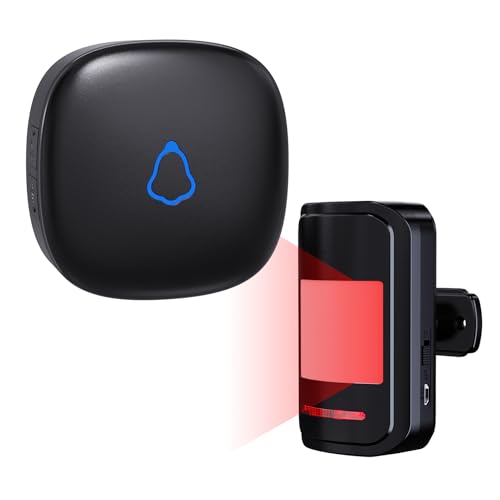
- 26-foot diameter detection range
- 32 ringtones and five volume levels
- Supports up to 20 sensors per receiver
Best For: Expandable monitoring across multiple areas
Extended-Range Bed Alarm
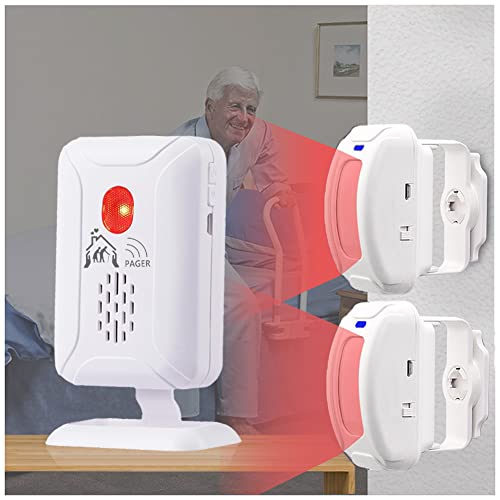
- Designed for under-bed or doorway placement
- Four alert modes, including 113 dB alarm
- Stated 918-foot open-area range
Best For: Bed-exit and doorway fall-prevention monitoring
Portable Bedside Pager

- Portable pager clips to a pocket or belt
- Flat-surface or wall mounting
- Chime and continuous alarm modes
Best For: Mobile caregiver alerts around beds and doorways
Top Pick
EverNary Two-Sensor Indoor Motion Alarm

- Two sensors with a plug-in pager
- Visual and audible alerts
- 500-foot open-area transmission range
Best For: Multi-area indoor monitoring
Best Two-Point Setup

- Two sensors and one plug-in receiver
- Chime plus flashing-light alerts
- No Wi-Fi or app required
Best For: Bedroom and hallway monitoring
Best Simple Pager
Smart Caregiver Wireless Motion Alarm

- One sensor and caregiver pager
- Remote alerts away from the bedside
- Adjustable mounting bracket
Best For: Simple one-room monitoring
Best Overall Wireless Coverage
EverNary 2-Receiver Motion Alert

- Two sensors and two plug-in receivers
- 16.4-foot PIR detection range
- 58 tones and five volume levels
Best For: Multi-room monitoring without Wi-Fi
Best App-Based Option
EverNary Wi-Fi Smart Bed Sensor Alarm

- Smartphone alerts through the Smart Life app
- Two sensors for bed or doorway placement
- Supports shared notifications
Best For: Remote caregiver alerts over 2.4GHz Wi-Fi
Best for Multiple Zones
EverNary 3-Sensor Caregiver Pager

- Three motion sensors and two receivers
- Up to 500-foot open-area transmission
- Audible and flashing LED alerts
Best For: Monitoring multiple rooms or entry points
Visual Alert Caregiver Pager – EverNary Indoor Motion Sensor
For shoppers comparing indoor motion detectors for seniors, this EverNary kit combines a motion sensor with a plug-in caregiver receiver. It detects movement within a stated 16.4-foot range and sends alerts through walls or doors, while the receiver offers visual and audible notification options.
Best For: Caregivers who want customizable alerts for bedrooms, doorways, or room monitoring, including a visual signal for hearing-impaired users.
Pros:
- Offers 58 ringtones and five volume levels from 0 to 110 dB.
- Provides both flashing LED and audible alerts.
- Supports battery or USB operation and can pair with multiple transmitters and receivers.
- Includes an adjustable mounting bracket.
Cons:
- The stated sensor detection range is limited to 16.4 feet.
- Actual transmission distance can vary significantly when walls or doors are present.
- Range and positioning should be tested before permanent installation.
This is a flexible choice when alert customization and visual notification matter most. Its shorter detection range makes careful placement especially important in larger rooms.
Long-Range PIR Chime – METAK Indoor Motion Sensor
This METAK model is one of the more versatile indoor motion detectors for seniors, using PIR detection to alert a plug-in receiver when movement occurs. Its 26-foot diameter detection range, 110-degree angle, and stated 500-foot transmission distance suit doorways, hallways, garages, and other monitored areas.
Best For: Homes needing a long transmission range, customizable chimes, or expandable monitoring for several areas.
Pros:
- Provides 32 selectable ringtones and five volume levels up to 110 dB.
- Supports a stated 26-foot diameter detection range with a 110-degree angle.
- Can support up to 20 motion sensors on one receiver.
- Runs on AAA batteries or Micro USB power.
Cons:
- The sensor requires three AAA batteries when used on battery power.
- It is supplied with one sensor and one receiver, so additional coverage requires compatible expansion units.
- Transmission performance may vary depending on walls and other obstructions.
With its broad detection specifications and expandable receiver, this kit is a practical fit for multi-area monitoring. The receiver’s chime settings also allow the alert to be adjusted for different household environments.
Extended-Range Bed Alarm – Nesthao Caregiver Pager
Designed for bed and doorway monitoring, this Nesthao system is a strong option among indoor motion detectors for seniors who need fall-prevention alerts. The sensor can sit on the floor under a bed or be placed near a doorway, then sends notifications to a receiver with a stated open-area range of up to 918 feet.
Best For: Caregivers monitoring bed exits or room departures who want multiple alert modes and a long open-area transmission range.
Pros:
- Can be positioned under a bed or in a doorway.
- Offers sound-and-light, light-only, LED-only, and 113 dB alarm modes.
- Supports battery or Micro USB power for the sensor and receiver.
- Includes a battery pack and Micro USB cable.
Cons:
- The stated 918-foot range applies to open areas and may be lower indoors.
- The sensor performs a 20-second startup self-test before entering its working state.
- Placement and sensing direction should be tested before fixing it in position.
This kit stands out for bed-exit use because it can be placed directly under the bed and offers several alert styles. Its long-range specification is useful for larger properties, but indoor testing remains important.
Portable Bedside Pager – SYNLETT Wireless Bed Alarm
This SYNLETT kit pairs a wireless motion sensor with a portable caregiver pager, making it a practical option for indoor motion detectors for seniors. The sensor can sit on a flat surface or mount to a wall, while the pager can be carried in a pocket or clipped to a belt.
Best For: Caregivers who need portable alerts for bedrooms, bedside floors, doorways, or room exits.
Pros:
- Supports flat-surface or wall mounting with a convertible bottom stand.
- Includes a rotatable bracket and adhesive or screw installation options.
- Offers DINGDONG chime and continuous ALARM modes.
- Provides a stated operating range of up to 500 feet in open areas.
Cons:
- The system uses five AA batteries.
- Open-area range may be reduced by walls and other indoor obstacles.
- The kit includes one motion sensor and one pager, limiting coverage to one monitored point initially.
Its portable pager and flexible mounting options make this a convenient choice for in-home caregiver use. It is especially suited to smaller care setups where the caregiver needs to carry the alert rather than rely on a fixed receiver.
Top Pick – EverNary Two-Sensor Indoor Motion Alarm
The EverNary system is a flexible choice among indoor motion detectors for seniors, combining two motion sensors with a plug-in pager. It can monitor movement from up to 16.4 feet away and transmit alerts to the receiver from as far as 500 feet in an open area.
Best For: Caregivers who want coverage at multiple indoor locations, such as a bedroom, doorway, mailbox, or hallway.
Pros:
- Includes two motion sensors and one plug-in receiver.
- Offers visual LED alerts plus 58 ringtone choices and five volume levels up to 110 dB.
- Each receiver can pair with up to 20 transmitters, supporting expanded monitoring.
Cons:
- The sensors are not waterproof for outdoor use without added protection.
- The motion detection range is limited to 16.4 feet.
With adjustable mounting and battery or USB operation, this is a practical option when you need customizable alerts and more than one monitored area.
Best Two-Point Setup – CallToU Bed Exit Motion Alert
This CallToU kit is designed for straightforward indoor motion monitoring without Wi-Fi or an app. Place the two sensors near a bed, bedroom door, hallway, or other pathway, and use the single receiver to provide both a chime and flashing-light alert.
Best For: Caregivers monitoring a senior’s bed exit and subsequent movement through a doorway or hallway.
Pros:
- Uses two motion sensors with one plug-in receiver.
- Provides both audible chimes and a flashing visual alert.
- Offers a stated transmission range of up to 500 feet.
- Requires no Wi-Fi, app, monthly fee, floor mat, or hardwiring.
Cons:
- Placement requires avoiding curtains, fans, direct sunlight, pets, and busy walkways to help reduce false alerts.
- It provides one receiver for the two monitored points.
Its focused two-location design makes it especially useful when bed exit and movement toward a doorway are the main concerns.
Best Simple Pager – Smart Caregiver Wireless Motion Alarm
The Smart Caregiver TL-5102MP is a compact option for indoor motion detectors for seniors, pairing one mountable motion sensor with a caregiver pager. It sends movement alerts remotely, helping keep alarm noise away from the bedside while providing up to 300 feet of stated range.
Best For: A caregiver who needs a simple one-room bed or doorway movement alert with a portable pager.
Pros:
- Includes one motion sensor and one caregiver pager.
- Supports remote monitoring and removes alarm noise from the bedside.
- Includes an adjustable mounting bracket for placement flexibility.
Cons:
- Batteries are listed as sold separately in the product bullets.
- This standalone system cannot be used with other Smart Caregiver products.
- Its stated range is up to 300 feet, less than some alternatives in this roundup.
This is a focused, portable solution for caregivers who prefer a basic pager-and-sensor setup rather than a multi-sensor system.
Best Overall Wireless Coverage – EverNary 2-Receiver Motion Alert
For shoppers comparing indoor motion detectors for seniors, this EverNary kit offers two motion sensors and two plug-in receivers for monitoring movement around a home. The PIR sensors detect motion up to 16.4 feet away across a 110° field, while the receivers can be reached from up to 260 feet in open areas.
Best For: Caregivers who want audible and visual alerts from multiple locations without relying on Wi-Fi.
Pros:
- Includes two motion sensors and two plug-in receivers.
- Offers 58 ringtones and five volume levels, from silent to 110 dB.
- LED alerts provide a visual notification for hearing-impaired users.
- Each receiver and transmitter can support up to 20 paired devices.
Cons:
- Motion range is limited to 16.4 feet.
- Requires four AAA batteries, though USB power is also supported.
- Not waterproof for outdoor use without additional protection.
This is a practical choice for room, doorway, garage, mailbox, or driveway monitoring when a caregiver prefers a straightforward wireless receiver system. Its adjustable alerts and two-receiver layout make it especially flexible for larger homes.
Best App-Based Option – EverNary Wi-Fi Smart Bed Sensor Alarm
This EverNary system is one of the more connected indoor motion detectors for seniors, combining two motion sensors with a Wi-Fi hub and Smart Life app alerts. It can notify a smartphone when movement is detected, making it useful when the caregiver is away from home.
Best For: Families who want smartphone notifications and remote monitoring for bed exits, doorways, or room departures.
Pros:
- Phone alerts can be received remotely through the app.
- Sensors can be placed under a bed or on a doorframe.
- Supports shared alerts and records calling activity.
- One hub supports up to 20 transmitters and can be expanded with additional hubs.
Cons:
- Supports only 2.4GHz Wi-Fi.
- Only one phone connects to the hub directly through Wi-Fi; additional phones use sharing.
- Indoor sensor-to-hub range is approximately 30 to 150 feet.
Choose this model if remote app notifications matter more than a simple plug-in receiver. It offers broader caregiver reach, but setup depends on compatible 2.4GHz Wi-Fi and a working smartphone connection.
Best for Multiple Zones – EverNary 3-Sensor Caregiver Pager
For homes needing several monitoring points, this EverNary kit combines three motion sensors with two plug-in receivers. The sensors detect movement within 16.4 feet and send alerts to receivers from up to 500 feet in open areas, making it a useful addition to a senior-care monitoring setup.
Best For: Caregivers monitoring several rooms, entrances, or activity zones with one receiver system.
Pros:
- Includes three motion sensors and two plug-in receivers.
- Long open-area transmission range of up to 500 feet.
- Provides flashing LED and audible alerts.
- Offers 58 ringtones and five volume levels up to 110 dB.
Cons:
- Each sensor detects movement only within 16.4 feet.
- Requires six AAA batteries across the motion sensors.
- Does not provide app-based smartphone alerts.
This kit stands out when coverage across multiple locations is the priority. Its extra sensor is useful for separate rooms or entry points, while the two receivers help caregivers hear alerts from different parts of the home.
How We Picked the Best Indoor Motion Detectors for Seniors
We focused on products designed for indoor caregiver alerts, bed-exit monitoring, fall prevention, and wandering awareness. Our comparison considered sensor range, detection consistency, receiver design, alert volume, visual signals, setup requirements, and the number of sensors or pagers included.
We also separated simple plug-in systems from models with multiple receivers, wall-mountable sensors, or app connectivity. Because every home-care situation is different, the best choice depends on room layout, caregiver distance, hearing needs, and whether the senior is comfortable with wearable or smart-home technology.
Quick Comparison
- Best for straightforward monitoring: A basic motion sensor with a dedicated plug-in receiver is usually easiest to install and operate.
- Best for bedrooms: Bed-exit systems can alert a caregiver when someone rises, helping with nighttime supervision.
- Best for larger homes: Multiple sensors or receivers can cover bedrooms, hallways, and common areas.
- Best for hearing difficulties: Choose a model with adjustable volume, flashing lights, or both.
- Best for remote awareness: Wi-Fi-connected systems can send app notifications, but they require reliable internet and more setup.
Key Buying Factors for Indoor Motion Detectors for Seniors
Detection Area and Placement
Check whether the sensor is intended for a bed, doorway, hallway, or general room coverage. A narrow bed-exit monitor may be more useful than a wide-area detector when the main concern is nighttime movement. Mounting height and angle affect reliability, so look for adjustable or wall-mountable designs when placement is important.
Alert Type and Volume
Receivers may use chimes, alarms, flashing lights, or combinations of these alerts. Adjustable volume is valuable when the caregiver and senior occupy different rooms or when household noise varies. A visual indicator can provide useful backup for caregivers with hearing limitations.
Range, Receivers, and Sensor Count
Measure the distance between the monitored room and the caregiver’s usual location. Multiple receivers are helpful in multilevel homes, while several sensors can cover more than one entrance or room. Confirm what is included before buying, since extra sensors or pagers may cost more.
Power and Connectivity
Plug-in receivers reduce battery concerns but limit placement near an outlet. Battery-powered sensors are more flexible and should have accessible battery compartments. Wi-Fi models add app alerts and remote access, but they depend on network availability and smartphone setup.
Who Should Buy Which Indoor Motion Detectors for Seniors?
Choose a simple plug-in system if you want fast setup, local alerts, and minimal maintenance. It suits caregivers who are usually at home and need notification from a nearby bedroom or living area.
Choose a multi-sensor or multi-receiver kit for larger homes, multiple monitored rooms, or more than one caregiver. These systems can reduce missed alerts when people move between floors or rooms.
Choose a bed-exit alarm when nighttime rising, unassisted walking, or bathroom trips are the main concerns. Positioning is especially important to avoid false alarms.
Choose a Wi-Fi smart model when remote notifications and app access matter. It is best for families who can manage connectivity and want alerts while away from the home.
These devices support supervision but do not replace regular check-ins, mobility assessments, or professional medical advice. Test the detector in its final position and adjust sensitivity, volume, and alert placement before relying on it.