The right coveralls can simplify deer hunting by combining warmth, quiet movement, weather protection, and camouflage in one practical layer. This roundup compares 10 options ranging from lightweight scent-control systems to heavily insulated suits for cold, wet sits.
Use the guide below to match insulation, fabric noise, waterproofing, fit, and layering compatibility to the conditions you actually hunt in.
Best 10 Hunting Coveralls for Deer Hunting Picks for 2026
Wet-Weather Warmth

- 150-gram Thinsulate insulation
- Waterproof, breathable membrane
- Hood and multiple storage pockets
Best For: Cold, wet-weather deer hunts
Insulated Scent-Control Comfort
ArcticShield Classic Elite Coverall

- Waterproof, windproof, breathable shell
- Heat retention and scent-control lining
- Two-way leg zippers with storm flaps
Best For: Cold, windy hunts with layered comfort
Heavyweight Cold-Weather Value

- 6-ounce polyfiber insulation
- Rugged polycotton twill shell
- Storm flap and boot-friendly leg zippers
Best For: Cold hunts and outdoor work
Lightweight Early-Season Stealth
ScentLok Savanna Fuse Coverall
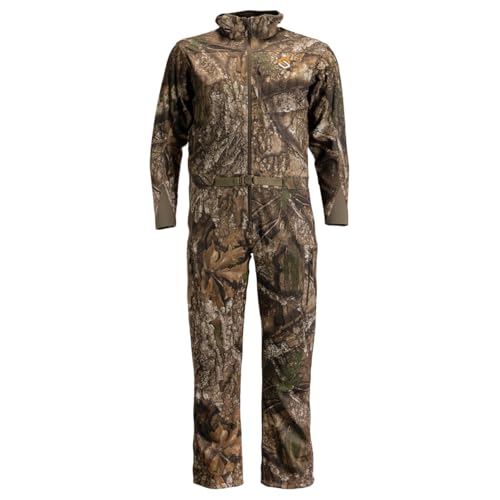
- Cooling, moisture-wicking polyester
- Carbon Alloy odor-control technology
- Integrated hood and facemask
Best For: Warm-weather and early-season deer hunts
Quiet Layering Pick
TIDEWE Silent Fleece Hunting Suit

- Quiet fabric with magnetic closures
- Water-resistant shell and fleece lining
- Nine pockets with adjustable fit features
Best For: Layered deer hunts in light rain or snow
Wet-Weather Coverall
SCENTBLOCKER Drencher Insulated Coverall

- Waterproof and windproof hooded design
- 180 grams of insulation
- Five pockets and odor-control technology
Best For: Cold, rainy deer hunts requiring one-piece coverage
Stealth Bib System
TIDEWE Silent Hunting Suit with Face Mask

- 170g quiet velvet with magnetic buckles
- Water-repellent shell and 120g insulation
- Eight pockets and adjustable bib features
Best For: Quiet, insulated deer hunts with customizable coverage
Best Insulated Coverall
HOT SHOT Insulated Twill Camo Coverall

- Warm polyester insulation with quilted lining
- Quiet cotton twill full-body coverage
- Zippers make layering and removal easier
Best For: Cold-weather deer hunters wanting a one-piece insulated layer
Best Lightweight Concealment System
HECS Lightweight 3-Piece Deer Hunting Suit

- Shirt, pants, and head cover included
- Lightweight, breathable, and layer-friendly
- Carbon-grid fabric targets bioelectric concealment
Best For: Close-range deer hunters needing a breathable base-layer system
Best Insulated Bibs
Water-Resistant Quiet Camo Hunting Bibs

- 300 gm weather-resistant shell with fleece lining
- Quiet leaf camouflage for approaching game
- Multiple pockets and easy-access zippers
Best For: Cold-weather hunters preferring adjustable bibs over one-piece coveralls
Wet-Weather Warmth – Guide Gear Dry Hunt Coveralls
Guide Gear Men's Dry Waterproof Hunting Coveralls with Hood, Insulated Camo Hunt Overalls RT APX XL
Check Price On AmazonFor hunting coveralls for deer hunting in cold, soggy conditions, the Guide Gear Dry Hunt Coveralls combine 150-gram Thinsulate insulation with a waterproof, breathable membrane. The polyester shell, hood, camouflage pattern, and regular fit are designed for demanding outdoor use.
Best For: Cold, rainy, or snowy deer hunts where warmth and weather protection matter most.
Pros:
- 150-gram Thinsulate insulation provides warm layering comfort.
- Waterproof, breathable membrane helps protect against rain and snow.
- Includes a hood and multiple snap- and zipper-closure pockets.
- Durable Realtree APX camouflage supports concealed field use.
Cons:
- Medium-weight insulation may be too warm for mild-weather hunts.
- The regular fit may require careful sizing over additional layers.
This is a practical choice when wet weather is the main concern. Its insulation and hood favor colder sits, while the pocket layout adds useful storage for small essentials.
Insulated Scent-Control Comfort – ArcticShield Classic Elite Coverall
The ArcticShield Classic Elite is a strong option among hunting coveralls for deer hunting when heat retention, weather protection, and scent control are priorities. Its waterproof, windproof, breathable construction includes heat-retention technology and X-System scent control in the lining.
Best For: Cold and windy deer hunts requiring insulation, scent-control lining, and easy access while layered.
Pros:
- Waterproof, windproof, breathable construction protects against changing conditions.
- Heat-retention technology and X-System scent control are built into the lining.
- Inner suspenders allow the coverall to be worn open when needed.
- Two-way leg zippers, storm flaps, and adjustable ankle cuffs improve practical usability.
Cons:
- Its insulated design may be excessive for warm early-season hunts.
- The supplied listing specifies a large size, so fit availability should be checked.
With dedicated handwarmer, chest, and slash pockets plus weather-sealed leg features, this coverall is geared toward extended cold-weather use rather than lightweight mobility.
Heavyweight Cold-Weather Value – Rothco Insulated Coveralls
For hunters who also need work-ready durability, Rothco Insulated Coveralls offer a heavyweight polycotton twill shell and 6-ounce polyfiber insulation. These hunting coveralls for deer hunting are built for prolonged cold-weather outdoor use, with a two-way zipper, storm flap, and boot-friendly leg zippers.
Best For: Cold hunts and outdoor work where substantial insulation, utility storage, and a rugged shell are useful.
Pros:
- Heavyweight 65% polyester/35% cotton shell is designed for rigorous outdoor use.
- 6-ounce polyfiber insulation helps retain body heat.
- Two-way zipper, snap-button storm flap, and elastic knit wrist cuffs add heat protection.
- Front slash pockets and a chest pocket provide practical storage.
Cons:
- The heavyweight, non-stretch fabric may feel less mobile than lightweight options.
- The supplied details do not indicate waterproof or breathable construction.
- Its work-oriented design may be less specialized for scent control.
Rothco is a sensible pick when warmth and durability outweigh low bulk. The Woodland Camo pattern and true-to-size regular fit support straightforward field use, while the utility features extend beyond hunting.
Lightweight Early-Season Stealth – ScentLok Savanna Fuse Coverall
The ScentLok Savanna Fuse is designed for warm-weather deer hunting, pairing lightweight cooling fabric with moisture-wicking performance and Carbon Alloy odor-control technology. Its built-in hood, integrated facemask, stretch-fit cuffs, and Realtree APX camouflage create an all-in-one concealment layer.
Best For: Early-season and warm-weather deer hunts where cooling, breathability, and scent management are priorities.
Pros:
- Cooling-infused polyester is lightweight and intended for warm-weather comfort.
- Carbon Alloy technology adsorbs and traps human scent.
- Moisture-wicking, breathable fabric helps manage sweat.
- Seven pockets, articulated knees, gusseted crotch, and a built-in webbing belt support mobility and storage.
Cons:
- Lightweight construction is not positioned for severe cold-weather insulation.
- The built-in hood and facemask may be unnecessary for hunters who prefer separate layers.
- The supplied listing specifies a large size, so availability should be verified.
This coverall fills a different role from insulated winter suits. Choose it for hot or mild conditions when movement, moisture control, and integrated concealment are more important than maximum warmth.
Quiet Layering Pick – TIDEWE Silent Fleece Hunting Suit
For hunters seeking hunting coveralls for deer hunting in milder, changeable weather, this two-piece TIDEWE suit combines a quiet outer fabric with fleece lining. The water-resistant jacket and pants leave room for a base layer and include adjustable features for movement and coverage.
Best For: Deer hunters who prefer a flexible jacket-and-pants system for light rain, snow, and layered fall hunts.
Pros:
- Quiet fabric and magnetic closures help reduce noise.
- Water-resistant shell and fleece lining provide warmth for light precipitation.
- Nine total pockets keep small hunting essentials accessible.
- Adjustable cuffs, hood, hem, and elastic waistband support a flexible fit.
Cons:
- It is a two-piece suit rather than a one-piece coverall.
- The fabric has no stretch.
- The safety strap is not included.
This is a practical choice when layering flexibility matters more than one-piece coverage. Its regular fit, quiet construction, and woodland camouflage make it suitable for deer hunting as well as other outdoor activities.
Wet-Weather Coverall – SCENTBLOCKER Drencher Insulated Coverall
For hunters who want hunting coveralls for deer hunting with full-body weather protection, the SCENTBLOCKER Drencher uses waterproof, windproof construction, taped seams, and 180 grams of insulation. Its breathable polyester blend is designed to layer over base clothing while providing practical storage.
Best For: Deer hunters facing rain, wind, and colder conditions who want insulated one-piece coverage.
Pros:
- RainBlocker technology and taped seams help keep water out.
- Windproof, insulated construction provides warmth in the field.
- Five pockets help protect and organize essential gear.
- S3 Silver Technology is designed for odor prevention.
Cons:
- The regular fit may require careful sizing over multiple layers.
- Its insulation may be warmer than needed for early-season hunts.
- It has fewer pockets than some jacket-and-bib systems.
The Drencher stands out for wet-weather hunts where staying dry and warm is a priority. The hooded coverall is also built for active pursuits such as spot-and-stalk hunting, tree-stand use, and tree-saddle movement.
Stealth Bib System – TIDEWE Silent Hunting Suit with Face Mask
For hunters comparing hunting coveralls for deer hunting, this TIDEWE jacket-and-bib system offers a quiet alternative to a traditional one-piece suit. It combines 170-gram mercerized velvet fabric, magnetic buckles, a water-repellent windproof shell, sealed seams, and 120-gram insulation.
Best For: Deer hunters who want quiet, insulated coverage with adjustable bibs, odor protection, and an included face mask.
Pros:
- Ultra-quiet material and magnetic buckles help support stealth.
- Water-repellent, windproof construction includes sealed seams.
- Eight pockets provide storage across the jacket and bibs.
- Adjustable suspenders, cuffs, hem, hood, and foot improve customization.
Cons:
- The safety strap is not included.
- Insulation may be more than needed for warm early-season hunts.
- The relaxed fit and multiple adjustable components can require setup before heading out.
This system is a strong fit for hunters who value quiet movement and configurable coverage. The detachable face mask, odor-protection liner, and safety-harness-compatible back design add useful field features, while the bib format allows more flexibility than a fixed coverall.
Best Insulated Coverall – HOT SHOT Insulated Twill Camo Coverall
For hunters comparing hunting coveralls for deer hunting in cold weather, the HOT SHOT insulated coverall emphasizes warmth, quiet movement, and full-body coverage. Its generous fit leaves room for layering, while the cotton twill shell and camouflage options support concealed movement in the woods.
Best For: Cold-weather deer hunters who want a warm, one-piece layer with easy on-and-off access.
Pros:
- Polyester fill and quilted lining provide insulation for early-morning and late-season hunts.
- Quiet cotton twill shell is designed for stealthy movement.
- Two-way front zipper and side leg zippers extending to the hips simplify dressing and boot access.
- Generous regular fit accommodates layers underneath.
Cons:
- Insulated construction may be too warm for mild-weather hunts.
- One-piece design can be less convenient than separate bibs and a jacket for changing layers.
This is a practical choice when warmth and quiet full-body coverage matter most. Choose it for cold sits and frosty walks, especially if you prefer a single garment over coordinating multiple layers.
Best Lightweight Concealment System – HECS Lightweight 3-Piece Deer Hunting Suit
Among hunting coveralls for deer hunting, the HECS Lightweight System takes a different approach: it provides head-to-toe coverage through a breathable three-piece set rather than a one-piece coverall. Its conductive carbon grid is designed to block up to 90% of bioelectrical output, and the lightweight fabric can be worn alone or layered under heavier hunting clothing.
Best For: Bow, crossbow, muzzleloader, and gun hunters seeking a lightweight system for close-range deer encounters.
Pros:
- Includes a long-sleeve shirt, pants, and pull-over head cover for complete coverage.
- Approximately 15 ounces total and breathable for mild or early-season conditions.
- Designed to wick perspiration and layer beneath bibs or an insulated jacket.
- Built-in thumb holes, elastic cuffs, pockets, and an adjustable head-cover drawstring add practical usability.
Cons:
- It is a three-piece system rather than a traditional one-piece coverall.
- Lightweight, almost-mesh fabric is intended for layering and may not provide standalone warmth in cold weather.
The HECS system is best viewed as a lightweight concealment layer, not a cold-weather outer suit. It suits hunters who value breathability and complete coverage and already have outer layers for insulation and weather protection.
Best Insulated Bibs – Water-Resistant Quiet Camo Hunting Bibs
For shoppers comparing hunting coveralls for deer hunting, these insulated bibs offer flexible lower-body coverage with a relaxed fit, adjustable suspenders, and room for hunting essentials. The water-resistant, wind-resistant fabric, fleece lining, quiet construction, and leaf camouflage are aimed at cold-weather approaches and stationary hunts.
Best For: Cold-weather deer hunters who prefer bibs with storage, adjustable fit, and easier boot access than a one-piece suit.
Pros:
- 300 gm wind- and water-resistant fabric combines with a 170 gm fleece lining for warmth.
- Quiet fabric and noiseless zippers support stealthy movement.
- Quick-release shoulder straps, an extended front zipper, and ankle-to-calf zippers simplify on/off.
- Two chest, two hand, and two leg pockets provide substantial storage.
Cons:
- Bibs cover the torso and legs but do not provide full-body coverage like a coverall.
- The supplied warranty description is limited to one month.
- Sizing requires attention to the manufacturer’s size chart.
These bibs are a strong option when you want insulation and quiet fabric without committing to a full one-piece garment. They also make a practical layering choice because the relaxed fit and adjustable suspenders can accommodate additional clothing.
How We Picked These Hunting Coveralls for Deer Hunting
We focused on the features that matter most in a deer-hunting outer layer: insulation, weather resistance, fabric noise, mobility, camouflage, storage, and overall versatility. The lineup includes one-piece coveralls, bib-style options, layered systems, and suits with integrated face coverage, so you can compare different approaches rather than choosing among nearly identical designs.
We also considered whether each option suits a specific hunting style, such as cold-weather treestand hunting, wet conditions, early-season scouting, or long walks through brush. Product descriptions and stated materials were weighed carefully, but real-world performance still depends on fit, layering, activity level, and care.
Quick Comparison
| Priority | Look for | Best suited to |
|---|---|---|
| Maximum warmth | Heavy insulation and full-body coverage | Cold, mostly stationary hunts |
| Wet-weather protection | Water-resistant or waterproof shell fabric | Rain, snow, and damp brush |
| Quiet movement | Soft, low-noise fabric and smooth closures | Stalking and close-range bowhunting |
| Layering flexibility | Roomy cut or lightweight shell design | Changing temperatures and active hunts |
| Scent management | Scent-control materials or systems | Hunters prioritizing odor reduction |
Key Buying Factors for Hunting Coveralls for Deer Hunting
Insulation and Layering
Choose insulation according to how much you move and how long you sit still. Thickly insulated coveralls are useful in frigid conditions but can become too warm during hikes. Lightweight coveralls are easier to layer over base layers and midlayers, giving you more flexibility across the season.
Noise, Fit, and Mobility
A quiet shell is especially important for bowhunting and close encounters. Check how the fabric sounds when you walk, draw a bow, or climb into a stand. The fit should allow unrestricted movement without creating excessive bulk. Articulated knees, adjustable cuffs, and a two-way front zipper can improve comfort in the field.
Weather Protection
Water resistance helps with light precipitation and damp vegetation, while waterproof construction is more valuable during sustained rain or wet snow. Look for protective hoods, sealed or covered zippers, adjustable openings, and enough room to wear insulating layers underneath.
Coverage and Storage
One-piece coveralls reduce exposed gaps between jacket and pants and can be convenient when sitting or crawling. Bibs provide similar torso coverage while pairing easily with a separate jacket. Evaluate pocket placement, zipper access, reinforced areas, and whether the garment works with a harness or other safety equipment.
Who Should Buy Which Hunting Coveralls for Deer Hunting?
Cold-weather treestand hunters: Choose a heavily insulated coverall or bib system with wind and moisture protection. Prioritize warmth and comfortable storage over minimum weight.
Active hunters and mild-season users: A lightweight coverall or three-piece system is easier to layer and less likely to overheat during long walks.
Bowhunters and stalkers: Favor quiet fabric, flexible construction, and a close but nonrestrictive fit. Avoid bulky materials that interfere with drawing or crawling.
Hunters in wet climates: Select waterproof or strongly water-resistant construction, then verify that the garment still offers enough breathability for movement.
Scent-conscious hunters: Consider scent-control apparel as one part of a broader odor-management routine that includes clean storage, careful washing, and wind awareness.