Wind can turn a promising predator setup into a frustrating one. Lightweight decoys may tip, moving parts can become noisy, and subtle motion is harder to see across an open field.
This roundup compares 10 predator decoys and related calling systems selected for different windy-hunting scenarios, from compact motion decoys to larger silhouettes and electronic combinations. Use the guide below to match stability, realism, portability, and control to your terrain and hunting style.
Best 10 Predator Decoys for Windy Conditions Picks for 2026
Best Spinning Decoy

- Adjustable intermittent 360-degree motion
- Realistic fur and white-tipped tails
- Compact with integrated stake holder
Best For: Mobile hunters wanting adjustable visual motion
Best Long-Runtime Decoy

- Up to 20 hours on four AA batteries
- Intermittent spinning fur-covered topper
- Works with many remote callers
Best For: All-day hunts needing portable electronic motion
Best Caller-and-Decoy Combo

- Includes electronic caller and moving decoy
- 100 permanent sounds with remote control
- Decoy uses a high-speed ultra-quiet motor
Best For: Hunters wanting an integrated calling setup
Best Full-Size Wind-Activated Decoy
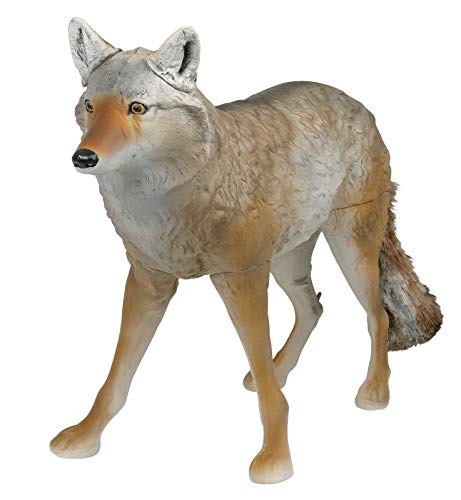
- Full-size realistic coyote profile
- Wind-movable faux-fur tail
- Removable legs ease storage and transport
Best For: Windy setups favoring natural movement and realism
Best Motion Upgrade
Mantis Pro Motion Predator Decoy

- Quiet motor delivers unpredictable movement
- Syncs with compatible Mantis calling equipment
- Compact design with fur and kite assemblies
Best For: Mantis 400 users wanting synchronized visual motion
Best Wind-Powered Option
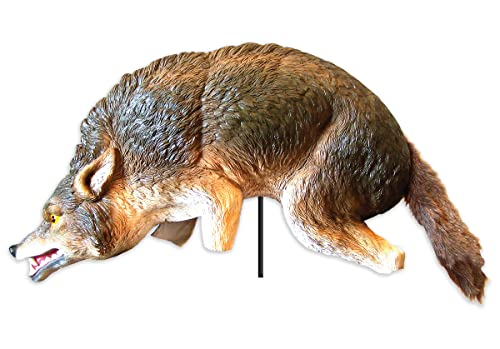
- Wind moves the realistic fur tail
- Three-dimensional design offers 360-degree visibility
- Covers up to one acre according to the listing
Best For: Windy-property bird and small-animal deterrence
Best Windy-Day Call
Circe P-1 Rabbit Distress Call

- Loud gravelly rabbit-distress sound
- Designed for windy days and open country
- Hand-tuned stainless steel reed
Best For: Long-range predator calling in windy open country
Compact Motion Decoy
Lucky Duck Lil' Critter Quiver Lure

- Erratic motion targets coyotes and foxes
- Adjusts from 10 to 18 inches
- Compact with a flat base
Best For: Mobile hunters wanting a small motion decoy
High-Visibility Silhouettes

- Includes three different coyote poses
- Large 27-inch-class silhouettes
- Metal stakes included for setup
Best For: Open areas needing broad stationary coverage
Remote Caller Combo

- 150-yard remote range
- 15 included predator sounds
- Furry wrap and decoy topper
Best For: Remote calling with a visual predator lure
Best Spinning Decoy – Sit-N-Spin Predator Decoy
For hunters comparing predator decoys for windy conditions, the Primos Sit-N-Spin offers adjustable, intermittent movement designed to keep visual attention on the setup. Its compact, packable design and integrated stake holder make it practical for mobile hunts.
Best For: Hunters who want a lightweight spinning decoy with adjustable motion and a realistic fur-and-tail profile.
Pros:
- Intermittent 360-degree spinning motion imitates an injured, panicking critter.
- Adjustable speed lets you run the decoy faster or slower.
- Realistic fur and three white-tipped tails provide noticeable movement.
- Compact design includes an integrated ground stake holder.
Cons:
- The supplied notes do not specify a battery runtime or wind-resistance rating.
- Movement is intermittent rather than continuously spinning.
The adjustable speed and flaring tail movement are useful when you need to tailor the presentation, while the small footprint keeps transport simple. It is a focused motion decoy rather than a full electronic calling system.
Best Long-Runtime Decoy – MOJO Outdoors Critter Decoy
Among predator decoys for windy conditions, the MOJO Outdoors Critter Decoy combines a lightweight, portable design with intermittent spinning action and a fur-covered prey-style topper. Its extended battery runtime is useful for long sessions in the field.
Best For: Hunters seeking a portable electronic critter decoy with remote-caller compatibility and long battery life.
Pros:
- Intermittent spinning action adds movement and visual realism.
- Realistic prey-type fur is designed to attract and hold predator attention.
- Runs on four AA batteries for up to 20 hours.
- 3.5 mm auxiliary port allows on/off control from most remote callers.
Cons:
- It weighs 1.3 pounds, making it less light than some compact decoys.
- The supplied notes do not provide a wind-resistance rating.
The combination of intermittent motion, fur texture, and up-to-20-hour runtime makes this a practical all-day option. Its auxiliary connection is especially useful if you already hunt with a compatible remote caller.
Best Caller-and-Decoy Combo – Mantis Pro 100 with Decoy
For hunters building a complete setup around predator decoys for windy conditions, the Western Rivers Mantis Pro 100 combines an electronic caller with an included decoy. Its remote control, swiveling legs, and high-speed ultra-quiet decoy motor support flexible placement and operation in the field.
Best For: Hunters who want a programmable electronic caller and moving decoy in one portable combo.
Pros:
- Includes a decoy with unpredictable motion and a high-speed ultra-quiet motor.
- Stores 100 permanently downloaded sounds in 32 MB of internal memory.
- Remote control offers up to a 300-yard range with a backlit screen.
- Caller provides adjustable loudness, direction, and call sequences.
Cons:
- The 5.7-pound listed item weight is heavier than standalone compact decoys.
- The caller is weatherproof but not waterproof.
- Operation requires eight AA batteries, including power for the remote.
This is the most comprehensive option in the group, pairing visual motion with a large library of sounds and remote control. Its weatherproof—not waterproof—construction calls for care during extreme weather or wet conditions.
Best Full-Size Wind-Activated Decoy – Lone Howler Coyote Decoy
For a physical option among predator decoys for windy conditions, the Flambeau Lone Howler uses a full-size coyote body and a faux-fur tail with a wire backbone that can move in the wind. Its removable legs also make the large decoy easier to transport and store.
Best For: Hunters wanting a realistic, full-size coyote decoy with a wind-movable tail and poseable features.
Pros:
- Ultra-realistic body detail and mature-male coloration create a convincing profile.
- Faux-fur tail with wire backbone allows realistic wind-driven movement.
- Removable legs fit inside the body cavity for transport and storage.
- Poseable ears support relaxed, alert, or curious presentations.
Cons:
- Its full-size 30-inch length is less compact than small spinning decoys.
- The supplied notes do not mention electronic movement or an included caller.
- Hard plastic construction can require more storage space despite removable legs.
The Lone Howler is a strong choice when silhouette and natural wind movement matter more than electronic spinning. The removable legs improve portability, while the tail, ears, and scent-pad spike allow further setup customization.
Best Motion Upgrade – Mantis Pro Motion Predator Decoy
For hunters comparing predator decoys for windy conditions, the WESTERN RIVERS Mantis Pro adds electronic motion and can sync with compatible Mantis calling equipment. Its compact design and quiet motor make it a practical visual supplement to an active calling setup.
Best For: Hunters using a Mantis 400 caller who want synchronized motion in a compact decoy.
Pros:
- High-speed, ultra-quiet motor creates unpredictable movement.
- Motor speed can sync with sounds from the Mantis call.
- Includes fur and kite stick assemblies.
- Compact unit powered by four AA batteries.
Cons:
- Designed to connect to the Mantis caller attachment area.
- AA batteries are not included.
The Mantis Pro is a focused choice when motion is the priority. Its compatibility requirements make it less universal than a standalone decoy, but it offers useful integration for hunters already using the Mantis system.
Best Wind-Powered Option – 3D Coyote Decoy
The Bird-X 3D Coyote Decoy is a wind-powered predator display with a moving fur tail, making it a straightforward option for predator decoys for windy conditions. Its lifelike form is intended to discourage birds and other small animals across larger outdoor areas.
Best For: Property managers seeking a wind-activated coyote replica for bird and small-animal deterrence.
Pros:
- Moving tail uses wind for a lifelike effect.
- Three-dimensional design provides 360-degree visibility.
- Listed coverage extends up to one acre.
- Installs with the included mounting stake.
Cons:
- Designed primarily for deterring birds and small animals, not calling predators.
- Effectiveness can require periodically moving the decoy.
This is the most directly wind-oriented product in the group. It requires no listed electrical power, but its intended use is property and bird deterrence rather than a hunting call setup.
Best Windy-Day Call – Circe P-1 Rabbit Distress Call
Although it is a predator call rather than a physical decoy, the Flambeau Outdoors Circe P-1 is relevant to hunters considering predator decoys for windy conditions because it is designed for extra-long-range calling on windy days. Its hand-tuned rabbit distress sound suits open-country setups.
Best For: Predator hunters needing a loud, long-range distress call for open country and windy weather.
Pros:
- Produces a loud, gravelly rabbit-in-distress scream.
- Designed for extra-long-range calling and windy days.
- Hand-tuned call has reportedly reached predators over a mile away.
- Uses a non-corrosive stainless steel reed.
Cons:
- It is a handheld call, not a visual decoy.
- Its coarse jackrabbit sound may not suit every calling situation.
The Circe P-1 makes the most sense as an audio companion to a decoy. Its emphasis on volume and range can help maintain a calling presence when wind makes quieter sounds harder to carry.
Compact Motion Decoy – Lucky Duck Lil' Critter Quiver Lure
Lucky Duck Lil' Critter Quiver Lure for Coyote, Bobcat, Predator Hunting Decoy
Check Price On AmazonFor hunters comparing predator decoys for windy conditions, the Lucky Duck Lil’ Critter Quiver Lure offers a compact, battery-powered motion option. Its erratic movement is designed to attract coyotes, foxes, and other predators while helping draw attention away from the hunter.
Best For: Mobile predator hunters who want an adjustable, easy-to-carry motion decoy.
Pros:
- Erratic motion can entice coyotes, foxes, and other predators.
- Adjustable height from 10 to 18 inches and a flat base suit varied terrain.
- Simple on-off operation and compact portable design.
Cons:
- Requires four AA batteries, which are not included.
- Its small design may be less visible across large, open areas.
The Lil’ Critter is a practical choice when portability and movement matter more than maximum visual size. Its notes do not specify wind-resistance features, so placement on a stable surface is particularly important in windy conditions.
High-Visibility Silhouettes – Three-Pack Coyote Decoys
For predator decoys for windy conditions, this three-pack emphasizes size, visibility, and ground anchoring. Each 27-inch-class coyote silhouette includes a metal stake, giving hunters or property owners a straightforward setup for open areas, lawns, patios, or gardens.
Best For: Covering broad, open spaces with multiple stationary coyote silhouettes.
Pros:
- Includes three decoys in different poses for visual variety.
- Large silhouettes are easier to see across open areas.
- Corrugated plastic construction and metal stakes support outdoor placement.
Cons:
- These are stationary silhouettes rather than motion decoys.
- The plastic may reflect light slightly.
- The supplied notes do not provide a specific wind-rating or anchoring system beyond the included stakes.
This set makes sense when broad visual coverage is the priority. The included stakes are useful in breezy areas, but buyers seeking active movement or more specialized wind stabilization may prefer a different design.
Remote Caller Combo – Icotec Furnado Predator Decoy
Among predator decoys for windy conditions, the Icotec Furnado combines a furry decoy topper with remote-controlled calling. Its 150-yard remote range lets hunters position the unit away from their setup, while 15 included sounds add an audio element to the visual lure.
Best For: Hunters who want remote calling, a furry decoy, and flexible caller placement in one unit.
Pros:
- 150-yard remote range allows flexible placement away from the hunter.
- Includes 15 professionally recorded sounds.
- Fur wrap and furry decoy topper provide a realistic-looking presentation.
- Offers up to 40 hours of battery life.
Cons:
- Requires four AA batteries and one A23 battery.
- More components may mean more setup than a simple stationary silhouette.
- The notes do not specify a dedicated wind-stabilization feature.
The Furnado is the most feature-rich option here for hunters who value remote operation and sound as much as visual attraction. Its remote range can help reduce movement near the setup, while the supplied notes leave wind anchoring details unspecified.
How We Picked the Best Predator Decoys for Windy Conditions
We focused on the features that matter most when gusts, exposed terrain, and uneven ground complicate a setup. The selection includes spinning and quivering designs, full-size coyote figures, flat silhouettes, electronic decoy-and-caller combinations, and predator calls that can support a decoy presentation.
Our comparison emphasizes anchoring options, overall profile, motion, operating noise, setup time, portability, and versatility. Because wind performance depends heavily on terrain and installation, no single design is ideal for every hunt. A decoy that works well on short grass may be less practical in brush, snow, or rocky ground.
Quick Comparison
| Decoy type | Best suited for | Main advantage | Wind-related consideration |
|---|---|---|---|
| Motion decoy | Open fields and brush edges | Creates attention-grabbing movement | Needs a stable stake or base |
| Full-body coyote | Territorial setups and deterrence | Strong visual profile | Requires more space and secure anchoring |
| Flat silhouette | Fast, portable setups | Lightweight and easy to carry | More vulnerable to twisting or lifting |
| Electronic decoy/caller combo | Remote operation and flexible placement | Combines sound with visual motion | Battery life and motor noise matter |
| Predator call | Minimalist setups | Light and simple backup option | Not a visual decoy by itself |
Key Buying Factors for Predator Decoys for Windy Conditions
Stability and Anchoring
Prioritize metal stakes, sturdy mounting points, wide bases, or legs that can be pushed deeply into the ground. If a product has a removable or adjustable support, check that it locks securely. Carrying an extra stake, cord, or ground anchor is worthwhile for exposed locations.
Motion and Motor Noise
Motion can make a decoy more noticeable, but excessive or erratic movement may look unnatural. In windy conditions, choose a design with controlled motion and a quiet motor. Battery-powered units should have an accessible compartment and enough runtime for the expected stand.
Visibility and Realism
Match the profile to the distance and background. Full-size predator shapes are easier to see across open ground, while smaller rabbit-style decoys may look more natural near cover. Color, tail movement, and three-dimensional construction can improve visibility without requiring constant repositioning.
Portability and Setup
Compact decoys are useful when walking long distances or making several stands. Larger models can be more convincing but may take longer to transport and secure. Consider packed size, removable legs, included stakes, and whether the decoy can be deployed quietly.
Who Should Buy Which Predator Decoys for Windy Conditions?
Choose a spinning or quivering motion decoy if you hunt field edges and want movement to attract attention. A full-body coyote decoy is a better fit for territorial presentations, nuisance-animal deterrence, or locations where a prominent silhouette is useful. Flat coyote silhouettes suit hunters who value low weight, quick setup, and multiple-decoy arrangements.
Hunters who want to change position or operate from cover should consider an electronic decoy-and-caller combination with remote control. If reliability and simplicity matter most, pair a basic visual decoy with a separate mouth or electronic call. Whichever style you choose, test the stake and movement system before the hunt, secure every component against gusts, and keep batteries and backup anchors in your kit.