The best budget indoor motion detectors make it easier to spot unexpected movement without investing in a complex security system. This roundup compares affordable sensors, alarms, and app-connected options for rooms, entryways, offices, and small businesses.
Features vary widely, from standalone 125dB sirens and remote controls to Wi-Fi notifications, pet-friendly settings, and smart-home hubs. Use the buying guide below to match detection range, alert style, installation, and ongoing costs to your space.
Best 10 Budget Indoor Motion Detectors Picks for 2026
Long-Range Smart Pick

- Claimed 2,034-foot LoRa range
- Tool-free magnetic installation
- Requires a YoLink hub
Best For: Large properties and expandable YoLink systems
Simple Room Coverage

- 9.1-meter range and 90-degree view
- Pet-friendly settings for pets under 50 pounds
- No base station required
Best For: Ring users monitoring individual rooms
Loud Standalone Alarm
TECKNET Indoor Motion Sensor Alarm
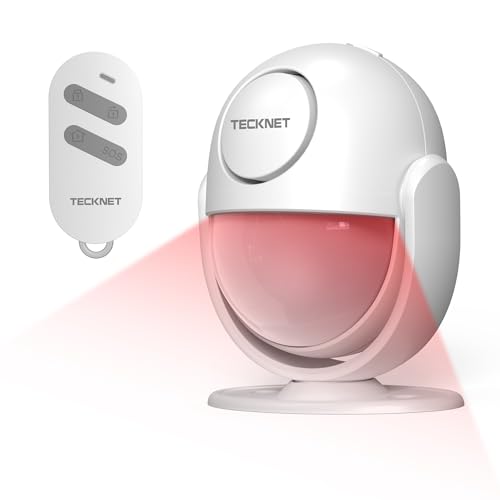
- 125dB siren and flashing strobe
- No Wi-Fi or app required
- Includes 328-foot remote control
Best For: Standalone protection in garages, hallways, and storage areas
Long-Battery Smart Choice

- Up to two years from one CR2450 battery
- Adjustable 3-, 5-, and 7-meter detection
- Requires a Tapo H100 hub
Best For: Tapo users wanting automation and low maintenance
Best Value Zoned Alert

- 35 tones with five volume levels and mute
- 500-foot receiver signal range
- Supports up to 20 sensors per receiver
Best For: Multi-zone audible alerts in homes, offices, and stores
Best Loud Chime Alarm

- Three modes include chime and alarm siren
- Four volume levels with a stated 125 dB alarm
- Battery or USB-powered with low-battery reminder
Best For: Indoor entrances needing welcome or security alerts
Best Smart Pick
Tuya WiFi Motion Sensor 2-Pack

- Hub-free 2.4GHz WiFi setup
- App alerts, records, and battery monitoring
- 128° coverage with 6–40-foot detection
Best For: Remote monitoring and Tuya-compatible automation
Best Loud Alarm Value
CPVAN 125dB Indoor Motion Alarm
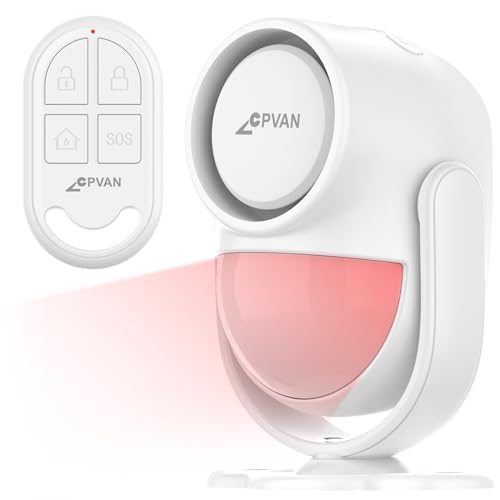
- 125dB siren for prominent alerts
- Alarm and chime modes
- 328-foot open-area remote range
Best For: Standalone security in garages, sheds, vans, and storage areas
Best Multi-Mode Option

- Alarm and doorbell modes
- Remote SOS button and two volume levels
- 16–26-foot PIR detection range
Best For: Indoor entry alerts, pet or child monitoring, and caregiver use
Long-Range Smart Pick – YoLink Indoor Motion Sensor
For budget indoor motion detectors in larger homes or outbuildings, the YoLink Indoor Motion Sensor stands out for its claimed 2,034-foot LoRa-based range. It requires a YoLink hub for full functionality, including app access, but avoids adding another Wi-Fi device to your network.
Best For: Large properties, multi-floor coverage, and users building a broader YoLink automation or security system.
Pros:
- Very long claimed range with obstruction penetration across multiple floors and buildings.
- Tool-free installation with a built-in magnet, metal disc, and included 3M tape.
- Supports app notifications and automation, including lighting control.
- Device-to-device pairing can support operation during internet or power interruptions.
Cons:
- A YoLink hub is required for full functionality and sold separately in some configurations.
- SMS notifications have usage limits.
The YoLink is more than a standalone alarm sensor: it is an expandable component for a connected security and automation setup. Factor the hub requirement into the total cost before choosing it as a budget option.
Simple Room Coverage – Ring Motion Detector
Among budget indoor motion detectors, the Ring Motion Detector is a straightforward choice for monitoring a room without adding a separate base station. It covers up to 9.1 meters with a 90-degree field of view and can be configured to reduce alerts from pets under 50 pounds.
Best For: Ring users who want simple room monitoring and app-based intruder alerts.
Pros:
- One sensor covers an entire room with a 9.1-meter range and 90-degree view.
- Pet-friendly settings help reduce false alerts from pets under 50 pounds.
- No base station is required.
- Optional compatible Ring subscription support includes 24/7 Pro Monitoring.
Cons:
- Amazon Sidewalk is required, and coverage may vary.
- Advanced monitoring features require a compatible Ring subscription.
This Ring sensor is a practical fit when convenience matters more than local standalone operation. Check Sidewalk availability and any subscription costs before relying on it for broader security coverage.
Loud Standalone Alarm – TECKNET Indoor Motion Sensor Alarm
If you want budget indoor motion detectors that make an immediate local sound, the TECKNET Indoor Motion Sensor Alarm is designed around a 125dB siren and flashing strobe. It requires no Wi-Fi or app, and it can run on AAA batteries or USB-C power.
Best For: Garages, hallways, storage rooms, shops, and other indoor areas needing a self-contained audible alarm.
Pros:
- 125dB maximum alarm with a flashing strobe light.
- Alarm and doorbell chime modes with three volume levels.
- Included remote works up to 328 feet in open areas for arming, disarming, and mode changes.
- Flexible placement using adhesive, screws, or a flat surface.
Cons:
- It is primarily designed for indoor use and has no app connectivity.
- USB-C supplies power but does not recharge the batteries.
- Alarm mode sounds for two minutes after triggering.
The TECKNET is a strong choice for simple, immediate deterrence rather than remote notifications or smart-home integration. Its adjustable volume and remote make it especially convenient for spaces where approaching the sensor is impractical.
Long-Battery Smart Choice – Tapo T100 Motion Sensor
The Tapo T100 is one of the more flexible budget indoor motion detectors for users already considering the Tapo ecosystem. It detects motion within a 120-degree angle and up to 23 feet, while its low-power wireless connection is designed to extend battery life.
Best For: Tapo households wanting long battery life, adjustable sensitivity, and motion-based smart actions.
Pros:
- Uses one included CR2450 battery for up to two years under stated usage conditions.
- Offers 120-degree detection and adjustable ranges of 3, 5, or 7 meters.
- Supports real-time app notifications and Tapo smart actions.
- Compact magnetic and 3M adhesive mounting options simplify installation.
Cons:
- A Tapo H100 hub and secured 2.4 GHz Wi-Fi network are required.
- The sensor’s maximum stated range is 7 meters, or about 23 feet.
The Tapo T100 balances low maintenance with useful automation features, but its hub requirement affects the overall budget. It makes the most sense when you already use, or plan to add, compatible Tapo devices.
Best Value Zoned Alert – Wireless Motion Sensor Alarm
For shoppers comparing budget indoor motion detectors, this wireless alarm stands out as a practical choice for rooms, garages, offices, stores, and warehouses. It combines a long receiver range with adjustable detection angles, multiple alert tones, and flexible mounting.
Best For: Businesses and households that need audible alerts from multiple indoor zones.
Pros:
- Offers 35 tones, five volume levels, and mute, with volume up to 110 dB.
- Provides a stated 500-foot signal range between the sensor and receiver.
- Supports adjustable detection angles and a 13–26-foot detection range.
- One receiver can pair with up to 20 motion sensors.
Cons:
- Alerts are delivered through the included receiver rather than a smartphone app.
- Uses two AAA batteries, so battery replacement is part of ongoing maintenance.
- Its many tone and zoning options may be more than needed for a single-room setup.
This is a strong budget indoor motion detector for audible, location-based notifications. It is especially useful when you want several sensors feeding one receiver without adding a hub or app system.
Best Smart Budget Pick – WiFi Motion Sensor
This WiFi model is a useful option among budget indoor motion detectors when app notifications and smart-home automation matter. It connects directly to 2.4GHz WiFi without a hub and can run wirelessly on batteries or continuously through USB power.
Best For: Smart-home users who want phone alerts and motion-triggered automations.
Pros:
- Connects directly to 2.4GHz WiFi without requiring a gateway.
- Sends smartphone alerts through the Smart Life or Tuya app.
- Offers battery operation or 5V USB power for continuous monitoring.
- Provides a 128-degree viewing angle, 26-foot range, and rotating base.
Cons:
- It requires 2.4GHz WiFi and app setup.
- Smart-home triggers require pairing with the app first.
- Home Assistant is not supported.
Choose this detector if connected alerts are more valuable than a standalone siren or chime. Its dual-power design also makes it easier to use in locations where regular battery changes would be inconvenient.
Best Loud Chime Alarm – Wireless Motion Sensor Alarm
For budget indoor motion detectors designed to announce arrivals, this wireless alarm emphasizes loud alerts, welcome chimes, and simple operating modes. Its PIR sensor is rated to detect human movement up to 26 feet while filtering out pets and airflow, making it suited to indoor entrances and walkways.
Best For: Storefronts, offices, reception areas, and homes that need a welcome chime or loud alarm.
Pros:
- Includes welcome chime, alarm siren, and no-repeat modes.
- Provides four adjustable volume levels and a stated 125 dB alarm.
- Runs on batteries or USB 5V power and includes a low-battery voice reminder.
- Detects stated human movement up to 26 feet while filtering pets and airflow.
Cons:
- It is intended for indoor use and has a stated maximum range of 8 meters.
- It uses a remote control rather than app-based notifications.
- The loud siren may be excessive for quiet rooms or small offices.
This is a practical pick when immediate audible awareness is the priority. The selectable chime and alarm modes let it serve as either a customer welcome device or a basic indoor security alert.
Best Smart Pick – Tuya WiFi Motion Sensor 2-Pack
For shoppers comparing budget indoor motion detectors, this two-pack is a practical choice when app alerts and smart-home integration matter. It connects directly to 2.4GHz WiFi without a hub and works with the Tuya or Smart Life app for notifications, activity records, and battery monitoring.
Best For: Remote monitoring and Tuya-compatible home automation.
Pros:
- No hub required; setup uses a one-key 2.4GHz WiFi connection.
- Sends smartphone alerts and tracks motion history and battery level in the app.
- Wide 128-degree coverage with a stated 6–40-foot detection range.
- Includes batteries, adhesive mounting, low-battery alerts, and a 24-month warranty.
Cons:
- Requires 2.4GHz WiFi and app setup.
- Smart-home automations depend on compatible Tuya or Smart Life devices.
- Battery life is rated at about six months, so replacements will eventually be needed.
This is the most connected option in the group, offering useful records and automation rather than only a local siren. Choose it if phone notifications are more valuable to you than a built-in high-volume alarm.
Best Loud Alarm Value – CPVAN 125dB Indoor Motion Alarm
Among budget indoor motion detectors, the CPVAN CP2 Pro stands out for shoppers who want a straightforward local alarm without WiFi or an app. Its PIR sensor detects movement up to 40 feet, while the included remote handles arming, disarming, and mode changes from up to 328 feet in open areas.
Best For: Garages, sheds, vans, and other indoor spaces needing a loud standalone alert.
Pros:
- Powerful 125dB siren provides a prominent alert when motion is detected.
- Includes alarm and chime modes for security or gentler notifications.
- Remote control works up to 328 feet in open areas.
- Battery-powered installation requires no WiFi, hub, or app.
Cons:
- Not waterproof, so it is intended for indoor use.
- Remote range can vary from the stated open-area maximum.
- PIR sensing does not work through walls, windows, or glass doors.
The CPVAN is a solid fit when simplicity and volume take priority. It offers flexible placement with adhesive, screws, or a tabletop setup, making it useful for temporary or permanent indoor monitoring.
Best Multi-Mode Option – Luckydeer 125dB Motion Alarm
This Luckydeer unit is one of the more versatile budget indoor motion detectors for homes and outbuildings. It combines a 125dB siren with doorbell mode, two volume levels, a remote panic button, and a PIR detector rated for up to 16–26 feet of movement detection.
Best For: Indoor alerts, entry chimes, pet or child monitoring, and caregiver notifications.
Pros:
- Offers both alarm and doorbell modes with two volume levels.
- Includes a remote with up to 328 feet of open-area range and an SOS button.
- Uses infrared analysis designed to distinguish human movement from interference.
- Includes three AA batteries, mounting tape, screws, and a one-year warranty.
Cons:
- Its stated detection range of 16–26 feet is shorter than some alternatives.
- Designed for indoor use rather than weather exposure.
- Requires reading the manual for setup and operation.
The Luckydeer makes sense if you want more than a basic siren. Its chime, alarm, volume, and SOS functions support several indoor use cases, though the shorter stated detection range favors smaller rooms and entry areas.
How We Picked These Budget Indoor Motion Detectors
We focused on affordable indoor options with practical features for everyday monitoring. The selection includes standalone PIR alarms, remote-controlled sirens, Wi-Fi sensors with app notifications, and hub-based devices such as the Tapo and YoLink models. We considered detection range, alert volume, setup requirements, power source, smart-home compatibility, and suitability for homes, apartments, offices, and small businesses.
Because product designs differ, check the current listing for included batteries, required hubs, app compatibility, and exact coverage specifications before buying.
Quick Comparison
| Type | Best For | What to Expect |
|---|---|---|
| Standalone siren | Immediate local warnings | Loud alarm, simple setup, usually remote-controlled |
| Wi-Fi sensor | Remote notifications | App alerts, records, and a compatible wireless network |
| Hub-based sensor | Connected smart homes | More automation, but a separate hub may be required |
| Door chime-style sensor | Business or entry monitoring | Audible visitor alerts and straightforward operation |
Key Buying Factors for Budget Indoor Motion Detectors
Detection Area and Placement
Check the stated detection distance and viewing angle, then position the sensor across a likely path rather than directly facing a window or heat source. A 40-foot range can work well in many rooms, while wide-angle coverage is useful for open spaces.
Alert Type
A loud siren is useful when someone is nearby, but it will not notify you while away. Wi-Fi models can send app alerts and, in some cases, activity records. Hub-based devices may also trigger lights, cameras, or other automations.
Pets, False Alarms, and Sensitivity
If you have pets, look for a pet-friendly mode or adjustable sensitivity. Keep sensors away from heating vents, direct sunlight, and areas with frequent temperature changes to reduce false triggers.
Power and Connectivity
Battery-powered units are easy to install, but check battery type and expected replacement frequency. Wi-Fi and hub-connected models require stronger setup and may depend on internet service or a specific ecosystem.
Who Should Buy Which Budget Indoor Motion Detectors?
Choose a standalone 125dB alarm if you want the simplest, lowest-cost warning for a room, garage, office, or storefront. A remote control is especially helpful when you need to arm or disarm the unit from a distance.
Choose a Wi-Fi motion sensor if remote phone alerts matter more than a local siren. These are a better fit for travelers, apartment residents, and anyone who wants notifications when nobody is home.
Choose the Ring, Tapo, or YoLink option when you already use that brand’s ecosystem or want broader smart-home automation. Confirm hub requirements before ordering. For flexible business entry monitoring, a motion-sensor chime may be more appropriate than an alarm designed primarily for intrusion warnings.